
Now I’m wondering about the gulls.
You never know what we'll churn up in cleaning a stall
Now I’m wondering about the gulls.
When we think of many of the technological advances that impact our daily lives, we usually don’t know the names of their inventors, even when we know the businessmen who got wealthy as a result. Elon Musk did not invent the Tesla, for instance, nor did Bill Gates invent the internet or Henry Ford, the auto. The list is actually a long one.
Consider John William Lambert, mentioned in a previous Tendrils.
I remember visiting an early coworker and, upon seeing an old car with an impressive Lambert name in brass across the radiator sitting at an open garage door, I asked, “Ann? Is that car any relation to you?” She replied that her grandfather used to make them but otherwise conveyed no knowledge that he had been so prominent a figure.
Here are ten facts from his life.
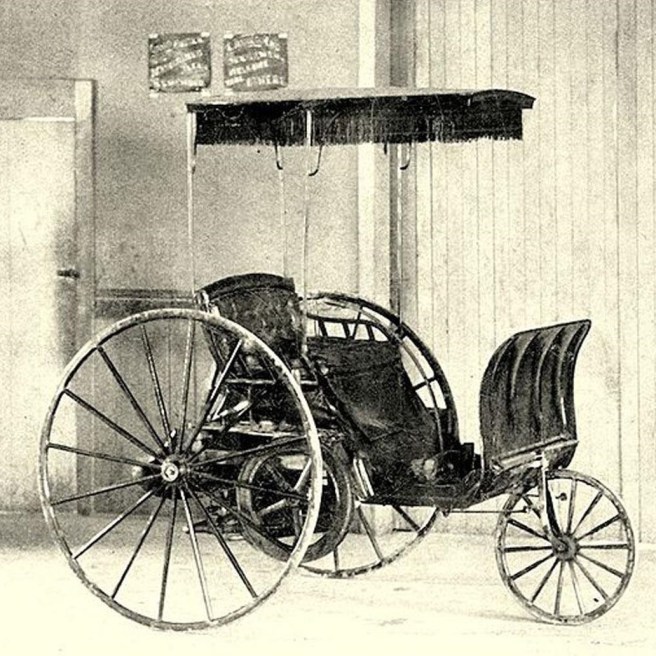
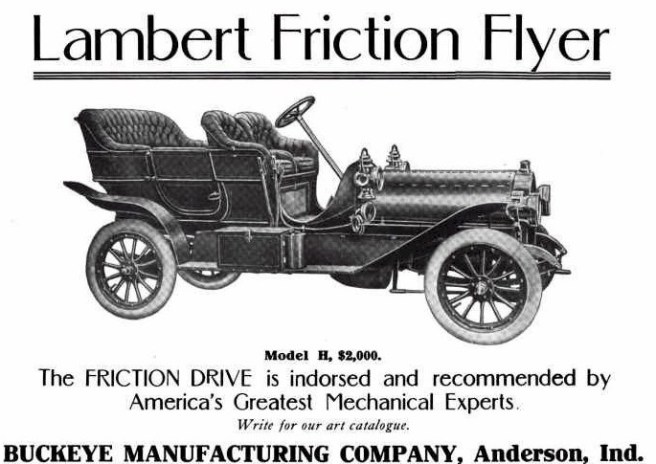
(Prompted by artist Jane Kaufmann.)
CHAINSAW
LAWYERS
ARTISTS
GALLERY
(sounding like a franchise)
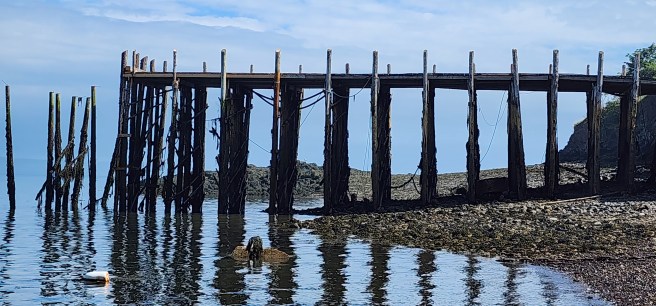
Welcome to where I now live, more or less.
Beardsley Cove, Eastport, Maine.
The Shackfords and Olmsteads had more in common than their livelihoods on and around the sea.
The oldest church in Eastport, founded in either 1798 or 1802, was the Calvinist Baptists, as some in town knew them, or more accurately, Particular Baptists, largely in line with the majority of Baptists today. That group moved into its Washington Street house of worship in 1837. (Today, it’s the Eastport Arts Center.)
The second congregation in town was the Free Will Baptists, organized in 1816 and incorporating with the state in 1820. Darius and Ethel Olmstead along with John and William Shackford and their brothers-in-law John Hinkley and John C. Lincoln were named in the incorporation papers.
Among other things, Free Will Baptists avoided alcohol consumption and, in its Northern stream, opposed slavery. As a rite, it practiced foot-washing. The denomination stemmed from the Dutch Mennoninte-influenced General Baptists in England, unlike the Baptists just down the hill. I am curious to learn how much our Shackfords and Olmsteads hewed to the denomination’s values. The General Baptists, I should point out, were earlier a strong influence on the emerging Quaker movement in Britain. My Quaking Dover book details more.
The Free Will Baptists dedicated their first meetinghouse in town in 1819, a year before the other Baptists had theirs. They were later known as North Christian Church, with the building at Washington and High streets.
Next to organize in town were the Congregationalists, 1819, and Unitarians, 1821. Roman Catholics had a chapel in 1828, early for New England.
The 1820 Census for Eastport has the brothers Darius, Ethell, and Jesse Olmstead as heads of household.
Two years later, Mrs. Darius Olmstead (Elsie Haddon) and Mrs. Ethel Olmstead (Nancy Ann Haddon) were among the charter members of the Eastport Benevolent Female Society, as were Mrs. William Shackford, Mrs. Jacob Shackford, and Mrs. John Shackford.
The Olmsteads and Shackfords obviously shared in an emerging social structure, having arrived in the Passamaquoddy region at the same time.
All of it, of course, has relevance on the house we bought.
A poetry editor a decade or two ago asked why I write poems, and in response I came up with this:
I’ve been writing poetry and fiction for so long the questions of “how” and even “when” and “where” arise long before any consideration of “why.” That is, the practice quickly turns directly to “just sit down, start keyboarding, and see where it goes.” Even so, my “why” quickly turns to a succession of motivations within an evolving exploration that continued to present itself as poetry. So here are some of my primary Whys along the way:
Well, that’s what I wrote at the time, and the editor fired back with a round of questions I didn’t have time to answer. Way back then. I have no idea how I would answer now. I do hope it would be less ethereal.
One of the things about the history of my far end of Maine is seeing how much of it springs from Dover, New Hampshire.
Neighboring Pembroke, for instance, was founded by Hatevil Nutter Leighton, a descendant of both a Dover Quaker family and one of the faith’s fiercest oppressors.
Daniel Hill, the first permanent resident of Calais (1779), came there from Jonesboro, though he had been a pioneer settler of Machias in 1763, along with a J. Hill – his half-brother Japhet.
Knowing that the Hills were a prominent extended family in the Dover Quaker Meeting, I became curious and found confirmation in the fact that Daniel is thought to have been born in Kittery, Maine – on the other side of the Piscataqua River from Dover – around 1734. Close enough. Dover Friends had a neighborhood Meeting on the Eliot/Kittery town line.
But in his case, forget any Quaker influence. That was at least two generations earlier in his line, which did gravitate in and around Dover.
Daniel fought in the French & Indian War and again in the American Revolution. He was rumored to be a skilled Indian fighter. There’s even a controversy over whether he was a Rebel or a Loyalist, considering that he apparently lived for a time on the Canadian side of the border. His father, though, died in Nova Scotia in 1782, befitting a Loyalist position.
Loyalists? You’ll hear more about them later here. Please stay tuned.
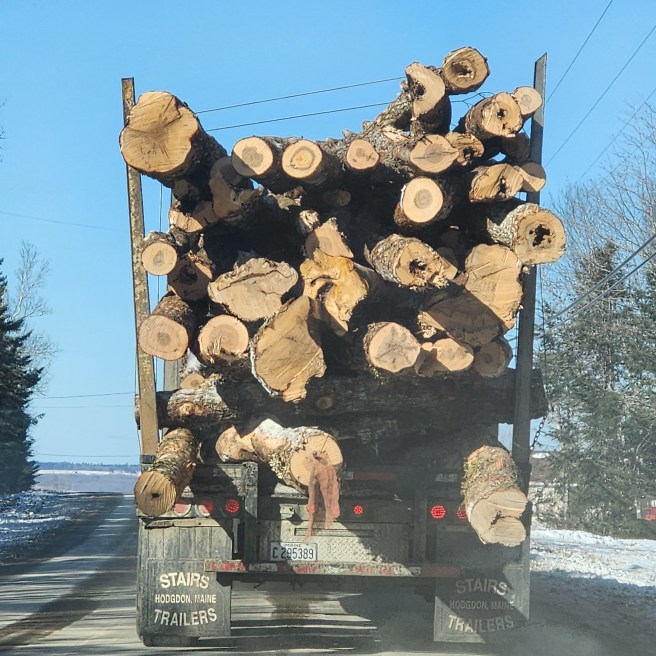
Winter is when lumber is cut in the forests. The ground is frozen solid and there are no bugs in the air. Load up the trucks, then, and head off to the nearest sawmill.
Among the things we truly miss living on our remote corner of Maine is a first-class bakery, the kind that can turn out genuine baguettes and croissants.
Previous posts here at the Barn have touched on these distinctively French delights, but today the attention turns to matters of what makes something as basic as bread so marvelous.
Consider.
 Jnana's Red Barn