

You never know what we'll churn up in cleaning a stall
Especially when the sun barely rises above the horizon.
Somewhere in the winter ahead.
Many know the Robert Frost poem, “The Road Not Taken,” but few know of its underlying Puritan foundation, expressed in Daniel Read’s 1785 shape-note hymn, Windham, based on lyrics by Isaac Watts. As the first stanza proclaims:
Broad is the way that leads to death
And thousands walk together there;
But wisdom shows a narrow path,
With here and there a traveler.
Frost, in contrast, has none of that grim Calvinist view, one that leads the next stanza to open, “Deny thyself and take thy cross,” and builds to a closing plea, “Create my heart entirely new, which hypocrites could ne’er obtain, which false apostates never knew.”
I can say that singing Windham in a choir is a rigorous experience. And, my, it feels incredible to bite on that final phrase, self-righteous though it can be.
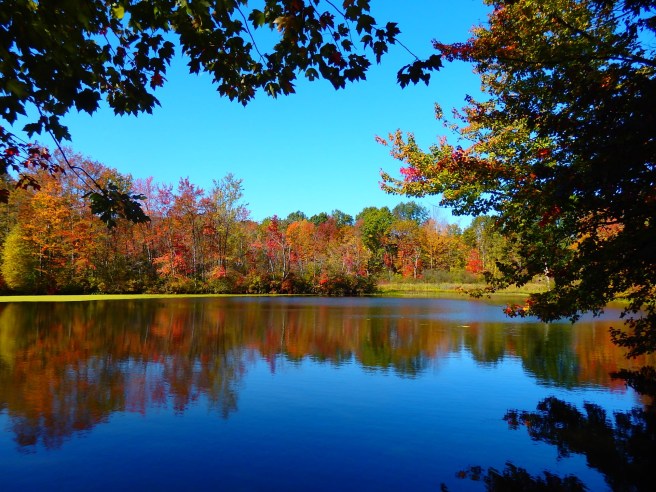
Others can debate which piece better expresses New England terroir, but in contrast to Frost and his leisurely stroll in autumn foliage, I’d say the ideal embedded in the hymn remains the road less taken. Winter here is a much, much longer season than the fleeting falling of leaves..

Once Cassia gets a clearer picture of her father’s past, she can ask her aunt Nita more pointed questions.
Here’s some of what she learned before the final revisions of my novel What’s Left:
He just felt Vietnam was wrong. Said he sensed it in his bones. I think he was beginning to identify some of his bloodlines that support pacifist witness, once he started looking into genealogy just a few years before his passing. These are all part of what he called the hidden histories that Americans need to know.
~*~
In another deleted passage, she hears her uncle Dimitri’s take on the newspaper work her father was doing:
The public doesn’t want to admit there’s corruption or deceit in their neighborhood. They’ll take umbrage at anything that would satisfy your pursuit of honest revelation or artistic perfection. No, why should you prostitute yourself?
~*~
In an early consideration of what Cassia’s father might do if he settled in with her mother’s family, we had this:
Nita interjects, Don’t you know I’ve been asking around? Would you believe there really are some opportunities for a first-class freelance photographer? And not just weddings or anniversaries? Even if you’ve never been to a football or basketball game, don’t forget you can shoot them and make decent bucks? How about a crying need in the performing arts, too, for somebody who knows the ropes?
Well, that seemed a bit unrealistic. Besides, his career — thanks to her family — was enabled to flow in a more fulfilling direction.
~*~
Cassia’s father is essentially struggling to find the right places to deal with the public. In his case, his talent with a camera is part of the equation.
Have you ever been pictured in the newspaper? What was the occasion?
~*~

~*~
In the Society of Friends, or Quakers, we never vote on the issues before us as a community but rather pursue a more difficult route of finding unity in which everyone is in agreement. It’s not exactly consensus but rather trying to find the leading of the Holy Spirit.
It’s an amazing practice, actually, even though one person can hold up the motion of everyone else. Sometimes, as we’ve each discovered, that one person is closer to Truth than the rest of us. And so we labor together until clarity appears.
Without going into the details now, I’ll turn to a recent example of that discipline.
As we Friends in my congregation considered our response to recent racial affronts in America, we realized our reaction needed to go far beyond putting up a banner on the meetinghouse wall facing a busy downtown street or, for that matter, reciting certain trendy catchphrases.
As some among us observed, we needed to go to the spiritual heart of the conflict.
Here’s what emerged, a proclamation we recorded, after months of deep reflection, in our monthly meeting for business records. We do not do such things easily.
~*~
Do not be conformed to this world but be transformed by the renewal of your mind, that you may prove what is the will of God, what is good and acceptable and perfect. (Romans 12:2, RSV)
Dover Friends Meeting affirms the deep truth we find in Black Lives Matter. It aligns with our conviction that there is that of God in each person.
Within our Meeting, we have Friends who have benefitted from racial privilege based on whiteness and those who have experienced pain, privation, and even peril because, as people of color, the onerous weight of institutional racism has been heaped upon them. Together, we reject the cultural fiction that “whiteness” has intrinsic value.
We hear, instead, a call to unity across our differences in our Meeting and in our society at large. This unity is a foundational truth of our lives. It stands firm on the bedrock of our primary experience that the Divine dwells within each.
In our entanglement with institutional racism, we have run afoul of Paul’s advice, “Do not be conformed to this world.” We sense a divine invitation to open ourselves to the revealing of ways we must cast off conformity to systems that unfairly benefit some and prepare ourselves for transformation through the renewing of our minds and hearts.
We come to this moment humble and ready. The rigor of the task ahead necessitates that we do this work, individually and collectively, in faithful Quaker community. We pledge to each other mutual accompaniment.
Dover Friends Meeting commits to proceed actively, following Spirit’s leading, to live into new ways to manifest equality and unity in our meeting, the Religious Society of Friends, and in our secular society.


This splash of graffiti, defacing another’s work hailing the Dover Community Trail, offends me on several counts. One is its very hostility to any greater good. Community Trail means public, open to all, yet this anonymous voice seemingly opposes that. I doubt they’d want it to be posted No Trespassing, either. As for the “us”? How about standing up and identifying yourself? You sound pretty alienated, lonely, and ultimately selfish to me.

In my novel Nearly Canaan, Joshua and Jaya settle into a place unlike anything they would have imagined. Though they live in desert, it still spawns salmon.
Oh, what a fish.
~*~


