
Spirit
You never know what we'll churn up in cleaning a stall

What do I want my life to say?
(Even at this advanced age.)
How about you?
After 7½ years of retirement, I returned to the workplace part-time for two months this year.
The job was supposed to begin in May and run through the summer but got pushed back to August and then abruptly cut off at the end of September.
I was a federal agent.
The private identifying details we recorded are sworn to secrecy – or the equivalent, for those of us who follow Scripture and refuse to take oaths. But I’m still trying to put the experience into perspective.
For nearly 40 years, I’ve worked through the available Census files in my genealogical research, as you’ll see in the posts on my Orphan George blog. It’s become something of a specialty for me, along with the Quaker minutes. I mean, it’s how I learned that Grandpa married the girl next door. There’s also one set of ancestors who were recorded twice in 1860 but with enough differences to make me suspect there were two Jacob Ehrstines closely related – one detail in the 1870 Census cleared that up. And I have one ancestor who shaved another year or two off her age every decade, though I have no idea whether it was intentional or out of ignorance, considering that Quakers didn’t celebrate birthdays.
So I set forth in part out of gratitude for those earlier enumerators. The first ones, incidentally, were federal marshals. This was that important.
What surprised me as I hit the streets and knocked on doors on behalf of the Census Bureau was how physically hard it becomes – bending over an iPhone placed on a clipboard to input data quickly had my back aching, especially. For a dozen years, I managed to work a double shift every Saturday as a newspaper editor, yet here I was pushing my limits when it got close to five hours a day. (Wimp!) Six really maxed it. An article in the Washington Post enlightened me that I wasn’t alone here, so I couldn’t blame it all on age.
I am surprised by how many Americans don’t know what a census is or that it’s required every ten years or that they don’t want to be recorded.
Well, I now also have a clearer understanding of why one household might disappear ten years later but reappear again in a subsequent Census. You know, be there in 1800 and 1820 but not 1810.
I am also surprised how much of my brain space got wrapped in a job again. You know, replaying cases and wondering how I might have done them differently. This was supposed to be something I could let go of at quitting time. Not so, though.
Inputting data in an app on an iPhone still strikes me as tedious. You might have guessed I pretty much hate texting, except as an alternative to an actual phone call. (Emails seem to be my preferred form of communicating these days.) How do kids do it, texting with their thumbs? Or are their exchanges all typos?
Oh, yes, another confession. I’ve typed for nearly six decades now. Self-taught, earned my livelihood with it. Written whole books, even. But ask me to re-create a keyboard from memory, and I have no clue where the individual letters of the alphabet are. The memory is all in my fingers, not my head. Seriously.
So I can’t imagine keyboarding with my thumbs. As I was saying about the kids? Besides, thumbs are awfully fat for those tiny screens. My dry fingers had enough trouble connecting, even before getting to any issue of accuracy.
In my rounds, I had a few near falls (including one wooden step that wasn’t nailed down anymore), a couple of dogs who could have turned nasty, some close calls in traffic, but emerged unscathed.
Some of the most enjoyable interviews turned out to be those where I could put my very limited Spanish to work. Other enumerators had backed off, so I guessed it was up to me, and somehow, we got the required data, often with a lot of laughter. Yes, I made some funnies.
The best part of the job, though, was meeting people who, for the most part, were warm, friendly, helpful. I have a much clearer understanding of the neighborhoods around me.
Would I do it again?
No, I’ll be too feeble – or feebleminded – in another decade.
But maybe you’d want to give it a crack.
Not to toot my own horn.
~*~
But who am I to say? What are you especially proud of in your own life?
If you’re a writer, you no doubt know the dictum, “Write about what you know.” It remains sound advice. Another side, though, is equally valid — write about what you don’t know. It’s a means of exploration and discovery.
What’s Left takes that approach more than any of my earlier works. As an 11-year old, Cassia’s living in a financially secure extended family quite unlike any I’ve known intimately. She suffers a tragedy that prompts the action of the novel, again quite different from my own experience. Cassia tells most of the story in her teen years as she investigates the central questions in her life.
For me, this also required constructing a back story beginning with her great-grandparents and moving to the present. What do I know about running a restaurant, managing a family business, being Greek-American or Greek Orthodox, for that matter?
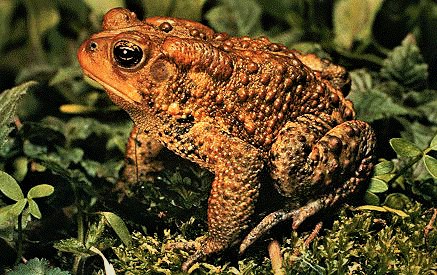
Well, as she advised me (and you readers) at one point, “You better be good to toads.”
I simply recorded what she dictated to me.
Read the book and you’ll see why.
~*~
I thought about “correcting” that to “You better be kind to toads,” but my sense is that it’s closer to what an 11- or 12-year-old may say under the circumstances.
To be honest, I don’t remember much from when I was that age. There may be good reasons I keep blotting it out.
Give me some help!
What do you remember of being age 11?
~*~
~*~
Well, in the right hands.
So many modern annoyances seem minor when you look at a more global perspective. I know, it’s become a cliché over the past few years, but it’s true.
For instance.
~*~
~*~
My, aren’t we spoiled. What would you add to the list?

