Let’s just say it grows in my estimation every time I hear or see the Metropolitan Opera’s production.
There’s so much packed into its 3¼ hours that the full story can seem unwieldy and overwhelming, but I’m thinking maybe it actually needs to be longer, have more air to allow digestion, with a dinner intermission and perhaps jazz dance/combo interludes inserted at key points in the narrative.
Porgy is not simply the best American opera to date, contrary to the Vienna dismissal of it as a “folk” opera, but, yes, I’d now place it among the top ten ever, in a global view. The grander the reach, the more likelihood of imperfections. Guess where I am on that spectrum?
Quite simply, has any other produced so many hit tunes, especially as jazz standards? Composer George Gershwin held Georges Bizet as an idol, yet has anyone else spawned so many classic offerings from a single stage work? Not even Bizet, nor anyone else I can think of. Just a single hot tune would be considered success. And his have proved incredibly flexible and addictive.
Gershwin had already had a string of Broadway stage successes, but he wasn’t resting on his laurels. No, he agonized over this work and his previously stifled artistic visions. Make that ambitions.
Has anyone else so successfully addressed the realities of drug addiction or prostitution?
Courtesan, as in La Traviata, seems downright respectable in comparison. Bess is raw.
Does anybody else agree Eric Owens and Angel Blue deserve Tonys and Oscars for their performances?
Eastport may be a city, but much of it is still forest.
Shackford Head, between Broad Cove and Deep Cove, has one of those. And it’s a state park. Mercifully, it even escaped becoming an oil refinery in the 1970s and ’80s, thanks to some dedicated citizen action.
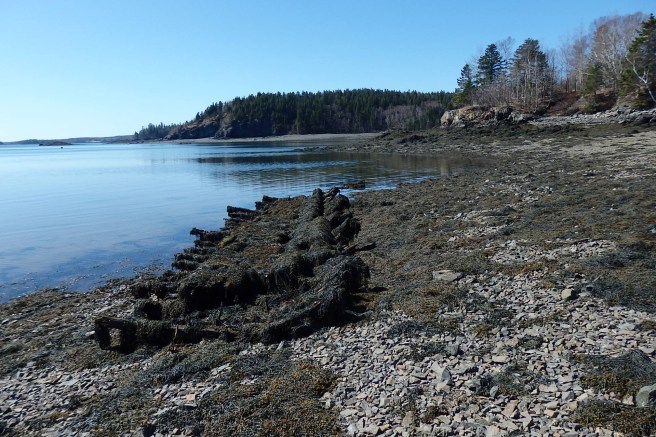
This is all that remains of five Civil War ships that were burned between 1901 and 1920 at Cony Beach at today’s Shackford Head State Park. The vessels were brought close to shore and set aflame to release metal for scavengers to collect at low tide. This is Cony Beach with Shackford Head beyond.
I should note that the Shackford family, so prominent in the settling of Eastport, had roots in Dover, New Hampshire, before spreading into Newburyport, Massachusetts, and then shooting up here. It seems that our house was built in the 1830s by one of them.
Apart from that, the 90-acre state park allows for some delightful hiking and vistas without having to drive miles from home. You know, needed a quick fix of more nature.
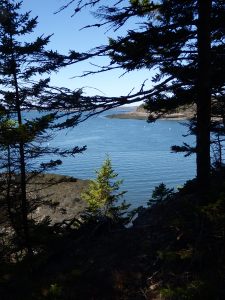
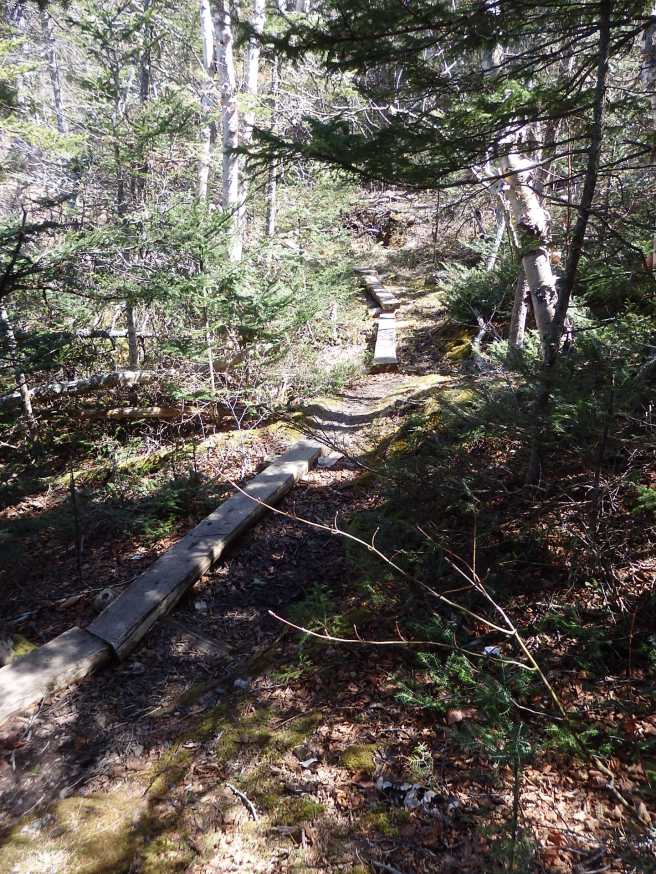
The shoreline can be quite rugged but have a pocket beach below.Deep Cove flanks one side of the park.Sometimes a trail takes to a plank walk over muddy stretches.
One of the unanswered questions in Colonial history is why the anti-Quaker acts weren’t applied uniformly. Only in bursts, apparently to curb their political influence. In small communities across New England, Friends were important parts of the economy and social life – and often related by marriage to the dominant Puritans.
Still, during the yearly years of Quaker existence, much of the activity continued more or less underground. Friends’ absence from the town church may have been condoned if for no other reason than to avoid their nuisance.
Then, in 1679, the revocation of the Massachusetts Bay colony’s charter reestablished New Hampshire’s independence and also allowed for Friends both there and in New Hampshire to finally formally establish their Meetings.
After decades of worshiping in homes, barns, outdoors, or other places, Friends could finally build their own meetinghouse.
Dover’s first meetinghouse, just south of today’s St. Thomas Aquinas High School, was one of the oldest in the New World. After the erection of the town’s third Quaker meetinghouse, in 1768, the first building was shipped across the Piscataqua to a site a mile away up Sturgeon Creek.
Dover’s first Quaker meetinghouse was to the right of the Pinkham cemetery.
Salem, Massachusetts, claims to have built the oldest, but Dover’s may have been earlier – now, if only some solid documentation existed to support that claim.
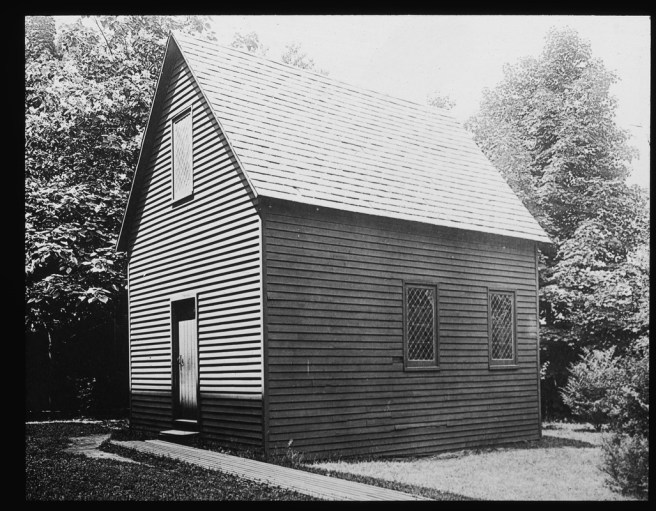
Did it resemble the one built about the same time in Salem, Massachusetts? (Photo by Kathleen Wooten)
Around 1680, with the lessening persecution, Dover Friends were able to formally organize into a Monthly Meeting, although they were already the fifth oldest worshiping body in New Hampshire. After years of gathering together wherever they could find, the Quakers erected their first meetinghouse, choosing a site on Dover Neck on a site between today’s Pinkham Cemetery (begun in 1700) and across today’s Dover Point Road from the Roberts farm and First Settlers Cemetery (1633). The structure remained there until Dover Friends erected a third meetinghouse in 1768, and the original was disassembled, ferried across the Piscataqua River, and rebuilt in Eliot – about a mile to the east, not far from the site of the Shapleigh manor where the three Quaker women had earlier found haven. By road, incidentally, the two meetinghouse sites are more than ten miles apart. Although Eliot/Kittery is sometimes honored as the first Quaker meetinghouse in the Maine colony, that designation may belong to Friends at Falmouth, who are believed to have constructed their own in the 1750s.
The Dover Neck Friends meetinghouse was among the first in the American colonies. Between 1672 and 1682, only seven had been constructed in heavily Quaker New Jersey, and perhaps only four in Pennsylvania. Third Haven, on Maryland’s Eastern Shore, was open by 1682 and remains the oldest Friends meetinghouse in continuous use. The oldest confirmed date for a Quaker meetinghouse in New England is 1688 in Salem, and a reconstruction of that building is on the grounds of the Peabody-Essex Museum.
~*~
Check out my new book, Quaking Dover, available in a Nook edition at Barnes & Noble.
all a matter of adaptability, persistence, and resources, of creating right-sized parts, a turn, the way stars turn into snowflakes even in the Home Depot parking lot when a gull rises with a cookie positioned first as a propeller and then as a platter to be released shattering on the pavement the same way they drop shells onto rocks for feasting or at Squirrel’s office, a colleague takes fortune cookies and adds the words, “in bed” and she claims they all come true then, still, if he had a fortune, he’d build the soil to raise his ground taller than the neighbors, yes, that, or to reshape its wetness into sunken gardens vining with secrets, yet either way, imagine the scene from his mattress as geese fly past or in the ceiling, where mice still sound like rainfall
I’ve been thinking of a fellow poet and prolific blogger who wrote the most erotic explosions ever, in Spanish, no less, audaciously revealing them to an appreciative public, how could we not cheer her on in her romantic conquests, surrender, and ethereal heights, no matter any awareness such ecstasy cannot linger forever.
Such boldness reflected the heat of passion, one few have truly known, even briefly, and often as a delusion, however irrelevant. Yes, I was among the many who saluted that, perhaps with the wisdom of old age.
But she’s gone and I can’t even connect to her blog site, wish her well, say muchas muchas gracias at the least, perhaps speedy recovery.
Qué lástima, I’d shed a tear for her if I were only able. Even one of gratitude.
My fond, best wishes, all the same. Life itself is an eternal mystery.
When I was revising two earlier novels into what became Pit-a-Pat High Jinks, I did wonder about a parallel volume from the point of view of his lovers. What a cad or sweetheart or lost soul or whatever they saw him as. Yeah, dump it all on.
You know, the self-centered hippie dude, Peace Love & all.
Well, there was a hot volume of erotica, Naked Came the Stranger, where each chapter was secretly written by a different person or party who then hid behind a character who got the author credit and posed for the interviews. The various writers didn’t even see the other material until the book came out, not that it ultimately mattered. She did have every color of eye you could imagine.
On this end, I’d welcome submissions for my own project, if only I had space to tackle it, but time is drizzling out, along with the original impulse.
I mean, the hippie chicks in his life weren’t the only ones screwed up, OK? Let’s be honest. Facing the music could be amusing and healing for all.