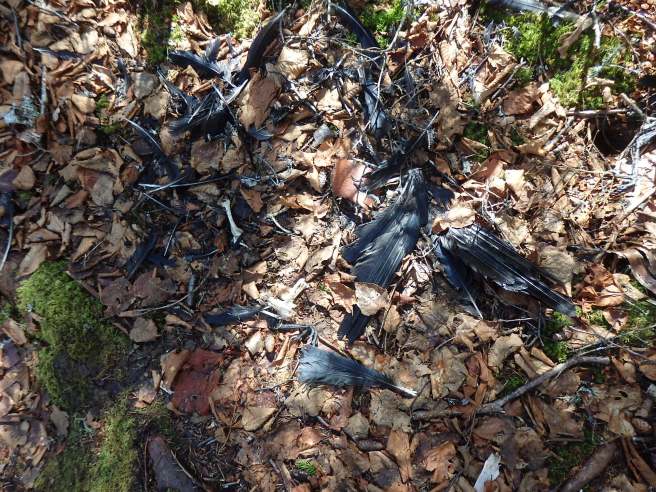
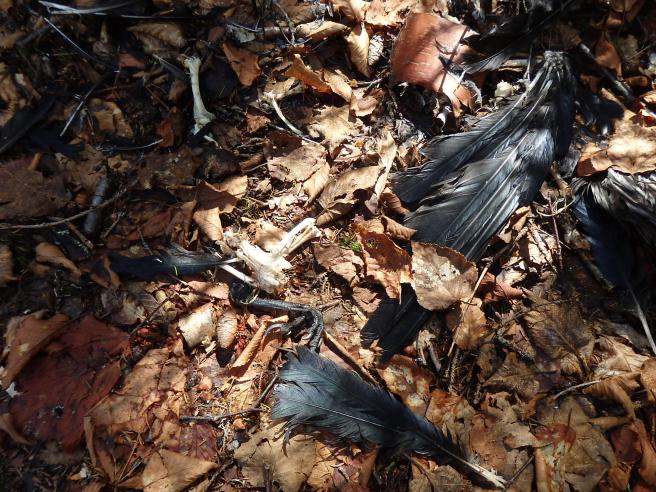
You never know what we'll churn up in cleaning a stall
Running out of baby’s first names for hurricanes and tropical storms has me wondering.
Can we turn to corporate behemoths, you know, for naming rights, like sports stadiums do?
Hurricane Amazon would be a natural. Or Geico, reminding folks of the need of home insurance. Victoria’ Secret Hurricane could be hot. You get the drift.
And let’s think about all the good uses we could put the money to, starting with relief for impoverished folks in those storms’ paths.
So how ’bout it?
What corporations would you nominate as the most amusing or fitting for the storms?
~*~
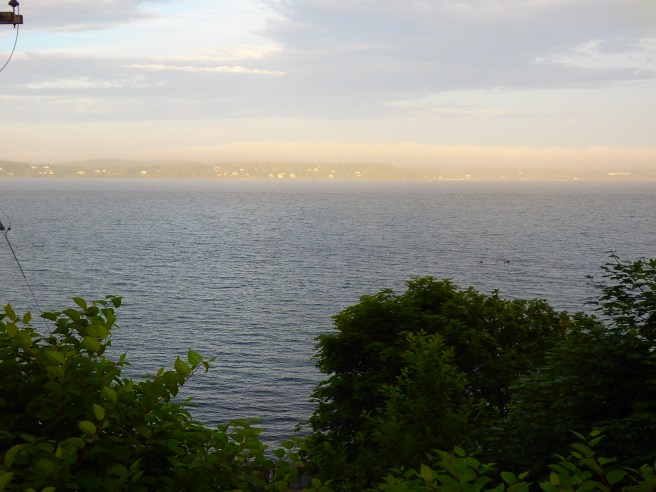
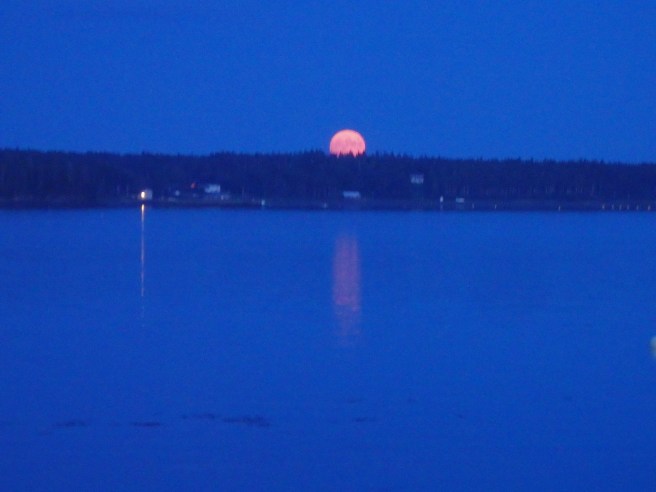
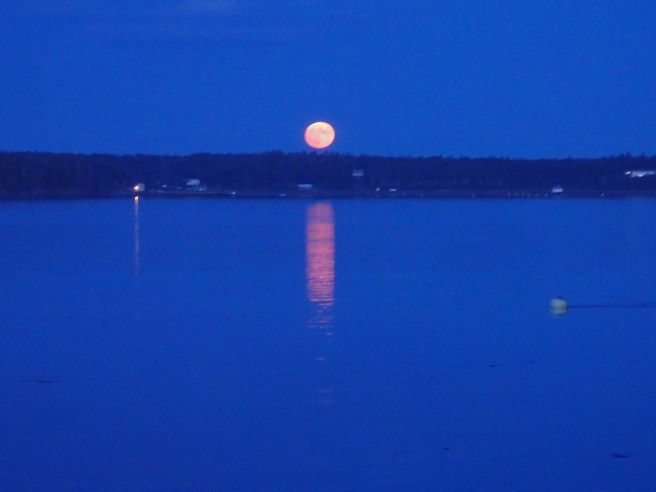
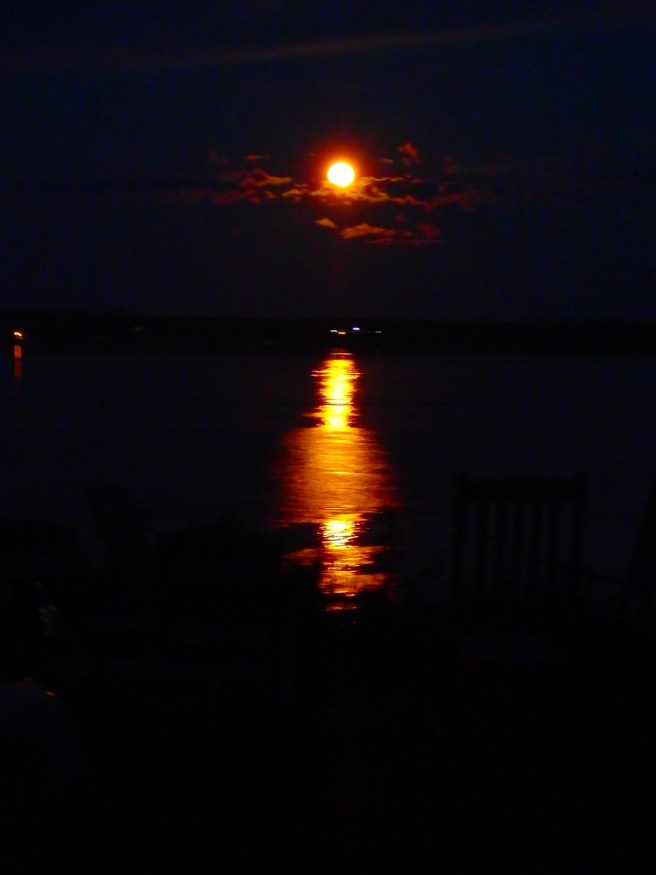
Refined Japanese, I’m told, would gather with sake to watch the full moon rise. First there’s only the crown of the head, and then the brow and cheeks and chin before the moon lifts altogether in the air. The passage is both slow and fleet, maybe five minutes, if that.
The event would be celebrated with the writing of hokku on the spot.
Here’s how it happened one summer night in Eastport, looking over Campobello Island. And this is what you get rather than a cocktail or poem.
Shifts in the nation’s economy are reflected in the 1820 Census, where Missouri and Maine are about to be admitted as states. The major population centers, however, are still seaports.
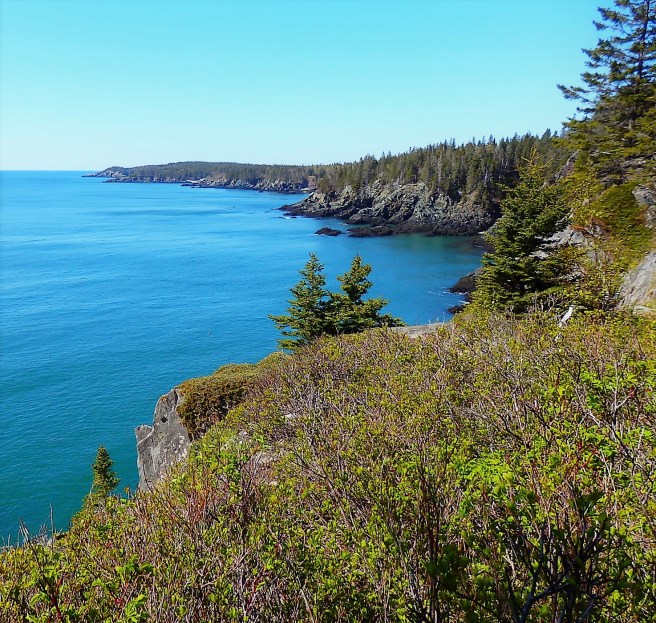
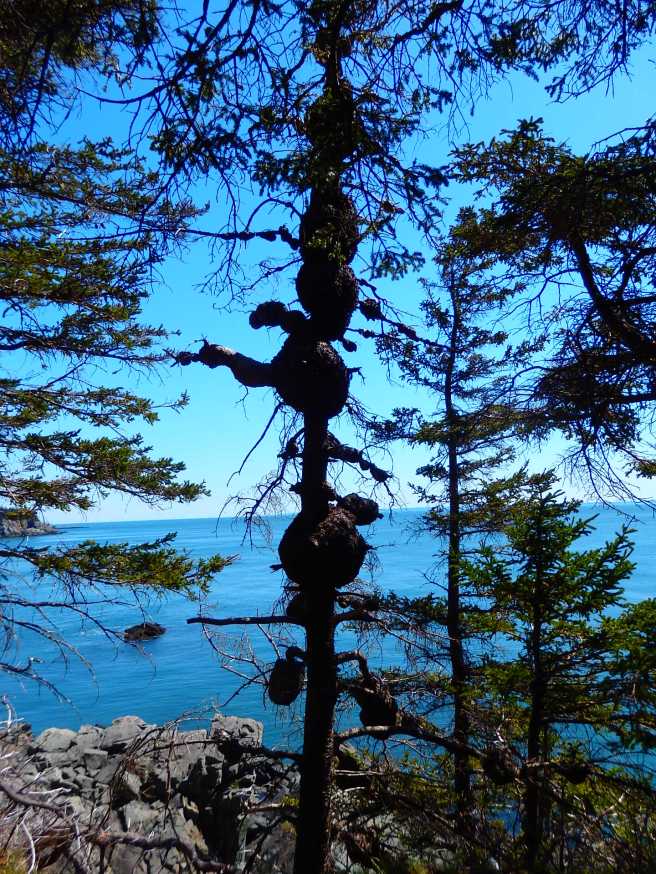
While Eastport and its neighboring towns are technically on Fundy Bay, they’re sheltered from the open ocean. Not so for much of Lubec and Cutler to our south, where the shoreline on the open Atlantic rivals anything Acadia has to offer. It helps to know where the trailheads and parking are, though. Here are some views from the trails in the Maine state public lands in Cutler.


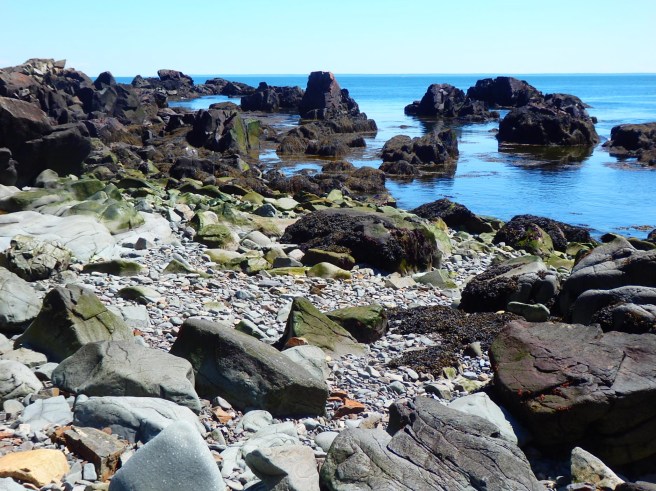
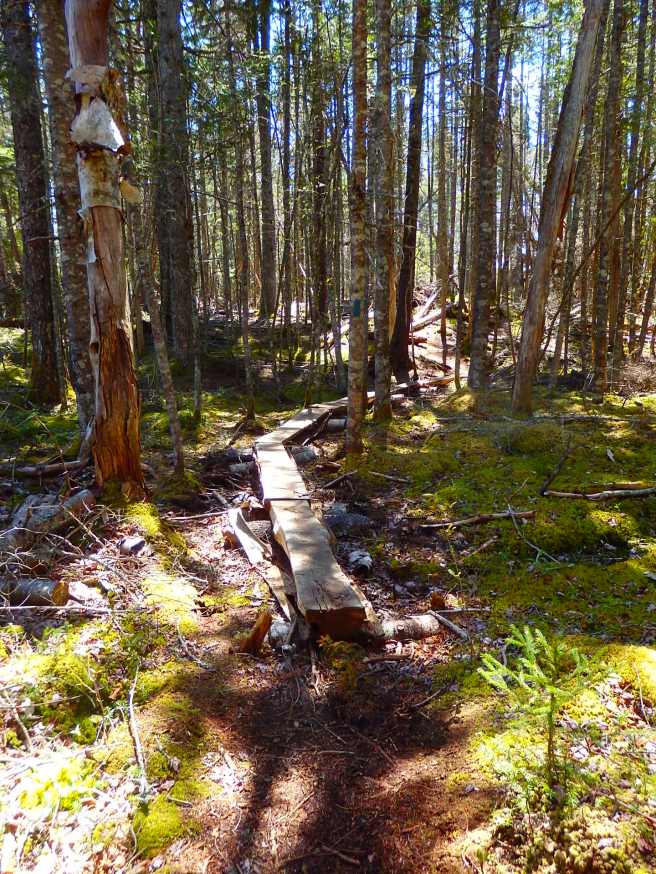
According to the map, it looked like a good road. I had just taken a lovely, very smooth one a few miles to the east, so I expected to enjoy more of the same. But when the pavement abruptly ended, I kept going. After fifteen or twenty miles of encountering no house or other vehicle, I finally came out on the state highway – one of three paved roads running east-west across the county. I did have to back up at one point and try the one intersecting logging road I encountered. Good thing my little Sonic has a compass on the dashboard array. It’s easy to get disoriented in hilly wilds.
Welcome to Washington County, Maine.
The drive had me remembering forays into the logging back country of the Pacific Northwest or even a “shortcut” in the ’50s along Devil’s Ridge in southern Indiana that was pure hillbilly, uh, perfection. I think that route’s long since been covered in asphalt. What a shame – it was timeless.
Long ago, I learned you can’t always trust maps, no matter how much you need them. A tourist site like a commercial cavern might be indicated on the wrong side of the road, or there might be a circle for a village that today is no more than a trio of houses.
Still, they’re pretty essential. As I said, there was one intersection on this trek where my car’s compass had me confounded. Checking the map, I realized I should have turned left and headed south, so I turned about and course-corrected. Good thing, too. According to the map, I would have spent the rest of the day heading into the sunset on a rocky dirt lane.
If I keep this up, I really will need to get a battered pickup or four-wheel-drive SUV.
In the organizational system of the Society of Friends, the local congregation is called a Monthly Meeting, based on its deliberative business sessions held once a month. This is the body that maintains the membership rolls, conducts marriages and memorial services, holds the property, and enforces discipline, as needed – not that we do much of the final one these days.
Neighboring Monthly Meetings are linked together in a Quarterly Meeting, so-named because they assemble four times a year.
The Quarterly Meetings themselves are arrayed within a larger region, creating a Yearly Meeting, the top of the hierarchy of Friends’ administrative structure.
Beyond that, the Yearly Meetings communicate as independent equals, somewhat like the Eastern Orthodox churches.
Remember, traditional Friends never take a vote, with a majority winning the decision. Instead, we wait until all are in unity. Time and again, our clerks prove sensitive in their discernment, though not always perfectly.
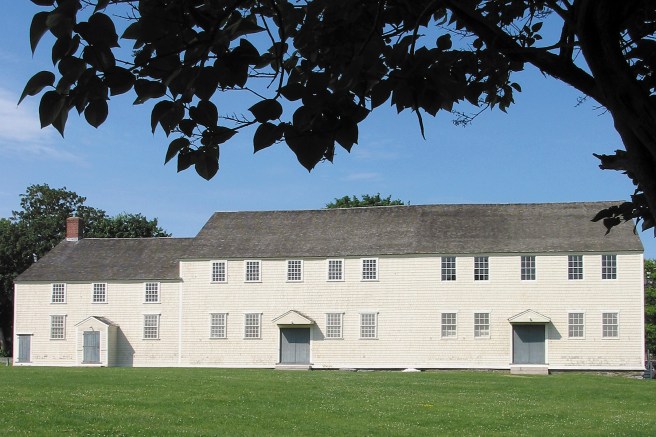
Thus, Dover Monthly Meeting is part of New England Yearly Meeting, the oldest in the world, which met for much of its existence in Newport, Rhode Island, before venturing to fresh locations in the 20th century.
Dover Friends also fit into Salem Quarterly Meeting, with its sessions rotating among Salem, in Massachusetts, and Hampton and Dover, in New Hampshire, and Berwick, Maine, until Dover was set off as a Quarter in 1815.
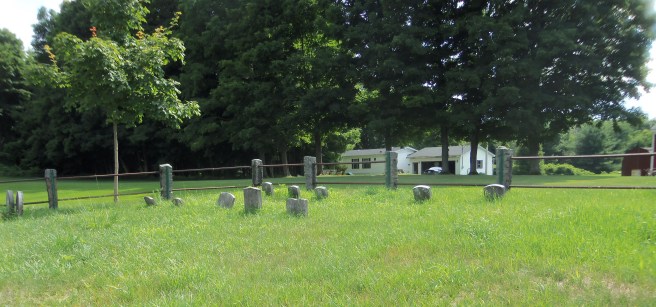
Dover’s role as a Friends’ center evolved through the establishment of “Indulged” and “Preparative Meetings” that conducted weekly worship in their own neighborhood but joined in the larger Monthly Meeting for the business decisions and community. Over time, Dover Monthly Meeting had not just the two meetinghouses in Dover – the one on Dover Neck and the other at Cochecho Village – but also groups worshiping in Gonic and Meaderboro in Rochester as well as Lee, New Durham, Gilmanton, Wolfeboro, Sandwich, and possibly Barrington, in New Hampshire, and Eliot/Kittery and Berwick, Maine.

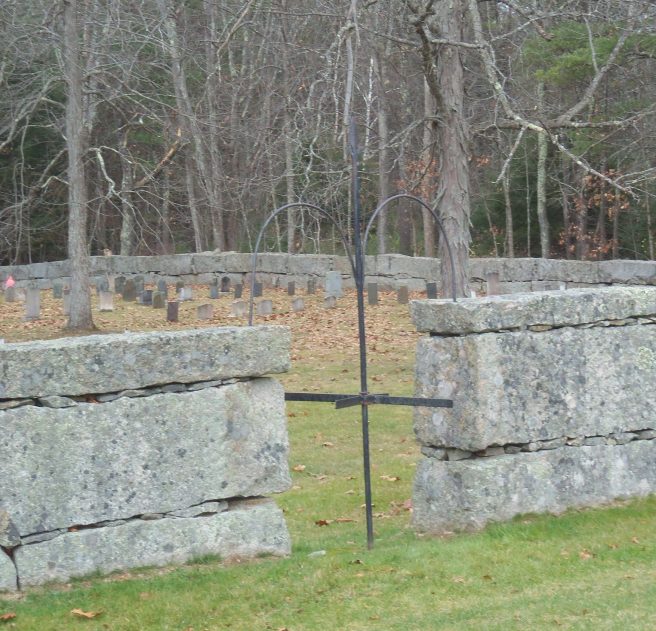

During this period, Dover Monthly Meeting’s sessions rotated across both sides of the state line, meaning the first Quaker business in Maine was done as part of Dover, Friends Meeting based in New Hampshire. Some of Dover’s earliest clerks, in fact, resided in Maine.
In time, when these smaller bodies grew sufficiently, they were set off as their own Monthly Meetings. Three large families, after all, could fill a small meetinghouse, especially if grandparents or aunts and uncles were included.
And then, once these new Monthly Meetings were functioning, Dover continued the relationship as a kind of “mother” to the newer bodies through Dover Quarterly Meeting.
Thus, while my new book is a history of Dover from a contrarian perspective, it ranges far beyond the city itself, both before and after the Quakers swirl in.
~*~
Check out my new book, Quaking Dover, available in your choice of ebook platforms at Smashwords.com.
Welcome to Dover’s upcoming 400th anniversary.
back to drive across mountains and plains how well I remember unanticipated letters in my post box before phone calls from a colleague fed up with working in a field of little growth but with no desire to return to the daily buzzard “from what I’ve seen, for what’s demanded, our managers are far under-compensated” within major cities parallel to something I’ve been preaching the last thirty years amen hope you find welcome me too wishing upon that star