What do I want my life to say?
(Even at this advanced age.)
How about you?
You never know what we'll churn up in cleaning a stall
What do I want my life to say?
(Even at this advanced age.)
How about you?
If you’re a writer, you no doubt know the dictum, “Write about what you know.” It remains sound advice. Another side, though, is equally valid — write about what you don’t know. It’s a means of exploration and discovery.
What’s Left takes that approach more than any of my earlier works. As an 11-year old, Cassia’s living in a financially secure extended family quite unlike any I’ve known intimately. She suffers a tragedy that prompts the action of the novel, again quite different from my own experience. Cassia tells most of the story in her teen years as she investigates the central questions in her life.
For me, this also required constructing a back story beginning with her great-grandparents and moving to the present. What do I know about running a restaurant, managing a family business, being Greek-American or Greek Orthodox, for that matter?
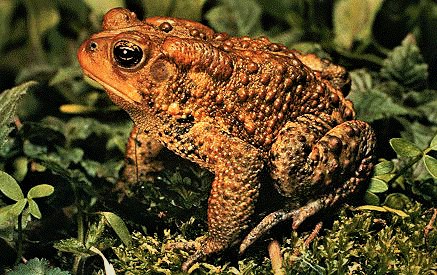
Well, as she advised me (and you readers) at one point, “You better be good to toads.”
I simply recorded what she dictated to me.
Read the book and you’ll see why.
~*~
I thought about “correcting” that to “You better be kind to toads,” but my sense is that it’s closer to what an 11- or 12-year-old may say under the circumstances.
To be honest, I don’t remember much from when I was that age. There may be good reasons I keep blotting it out.
Give me some help!
What do you remember of being age 11?
~*~
~*~
From the deep past
then/now contrasts.
Working on my novel What’s Left, had me exploring unfamiliar terrain when it comes to writing itself. Here I was, after a lifetime in newspaper journalism and a shelf of experimental novels and volumes of poetry, now drafting and revising a new work that was unlike anything I’d done before.
The details, for the most part, felt right, as did the structure. I’d eased into a voice in which Cassia could relate her progress, with the verb tenses of past events repeatedly changing back to the present, the way people do in speaking. The opening pages and final chapters actually excited me. But something bogged down along the way in-between. Not that it wasn’t good; it just wasn’t … well, something.
Much of my awareness as a writer has regarded the matter of style. How crisp, sharp, polished, muscular or sensual, even musical are the pages? In literary circles, that would ask just what in particular gives a specific writer a unique signature or sound, but my background originated in my high school years when I discovered the dictates of newspaper style — the strict rules given journalists for uniform spelling, story structure, word choices, and so on, matters that essentially create a uniformity or even anonymity in voices. Anyone want to mention Hemingway at this point?
With What’s Left, though, the word that kept popping up for me was tone. It was somehow just a little off.
Thinking of it in musical terms, I’m always surprised at what happens when our choir changes the tone of a piece by moving it up or down a half-step or so. It becomes brighter or more melancholy, for instance, as well as easier or harder for us to sing, depending on how it presses our vocal ranges. Well, this is also looked at as a matter of pitch. And it can make a world of difference.
With my novel, I slowly realized I didn’t want it to sound too much like a novel — I wanted it to be more an overheard conversation. As I also found, that can be tricky when we’re looking at a stack of old photos or family history.
~*~

~*~
Now that the novel’s finished, I’m reflecting once more on the basic of tone. One definition calls it the attitude of a writer toward a subject or audience, and I’m seeing how it’s been both in my case. Over the course of the revisions, the subject mutated from her father to his photographs and, finally, to the experiences of Cassia herself. In addition, her position shifted from her telling of looking back on her discoveries to having her tell of them as they occurred — in effect moving the center of gravity of the story well into her early teens. That, in turn, changed my attitude toward the audience.
Tone, as the definition continues, can be formal, informal, serious, comic, sarcastic, sad, and cheerful, among many other outlooks. Well, where her voice got younger, I did find her bursting into outrageous, delightfully irrational lines that have become some of my favorites.
My thinking about tone was also stimulated by things my ex-wife, a painter, had repeated about the necessity of tone in visual art — something many artists seem to lose sight of (sorry about the pun) as they work. Here it’s the contrast of lightness and darkness, in color as well as black and white — highlights and shadows. Squint your eyes and see if everything blurs into one. It’s still an important parallel to the written word.
So in my novel the tone would need to be colloquial. In the draft and early revisions, Cassia’s mostly the reader. But in the final draft, it’s largely her father. My attitude toward the subject has definitely changed, as has hers.
There’s also the attitude toward details. In fiction, to establish the contrast of lightness and darkness, it helps to keep many of these suggestive, open to the reader’s imagination — unlike the specifics demanded in journalism. Think of having shadowy areas where things can move about in the background without interrupting the action at hand.
In another shift, as she began voicing questions in place of flat-out statements, the reader just might start arguing with Cassia (not me!) — or even to say to herself, “I remember something similar” or “I’m glad that’s not how it happened with us.”
~*~
Since her family’s involved in the restaurant business, we can change our perspective slightly. Finding the right tone is something like deciding what kind of meal you’ll sit down to. A picnic, for example, is quite different from one with white linen on the table or from a quick lunch of burgers and fries.
As for something at home? It helps to know who’s coming.
What would you serve Cassia for a meal?
~*~
Still in bed, half asleep, I imagined a past love bringing me coffee.
And then, waking, I gasped.
In the final revision of my novel What’s Left, the voice and direction of the story changed greatly. For one thing, it became much more Cassia’s own.
To my surprise, some of the material about her father lost its urgency or importance. Here was one passage that would be refocused and condensed:
The crucial turning point comes, she says, just before Baba arrives here. Tara’s always defended her own space — what she perceives as her essential freedom — and as long as he could accept that, they could spend time together. At heart, though, he’d require more commitment than she would offer, but this once, knowing he’d be headed to the monastery, the situation forced him to take that out of the equation. He had to admit he had no idea what would follow his cloistered withdrawal from the world, and demanding a commitment he couldn’t return at this time would be unrealistic and unfair. That insight, in turn, gave both of them a rare freedom space to concentrate on the present rather than planning an ironclad future together. We can enjoy the next few months together, at best, and they could take everything at that. It was the healthiest — and most rewarding — relationship he’d had. Neither was clinging to the other.
~*~
When it comes to relationships, individuals can vary greatly in their needs and expectations and what they can provide for their partner.
Would you feel comfortable in a relationship like this? For how long?
~*~

~*~
One of my annual practices around now used to be crafting a seasonal itinerary for the coming year, one that included goals for each of the major components of my life – Writing/Creative, Quaker, Relationships, Household – that sort of thing. It was kind of like budgeting, but with a focus mostly on time and dreams.
Closely related was a consideration of what kind of schedule I wanted to follow once I retired or somehow otherwise achieved financial freedom. You know, maybe having a bestseller novel break out to fund it all.
The one thing I realized each time I attempted the planning was that there would never be sufficient time for everything I deemed important. And, as my wife pointed out, there were a lot of mundane tasks I wasn’t even considering.
Looking back, I’m rather embarrassed by what I’m seeing. One thing for sure is that little of my life since retiring is anything like what I had anticipated. I had no idea how much my stamina and self-discipline would be flagging. During the earlier thinking, blogging wasn’t even on the horizon nor was choir or daily swimming. (Well, the latter two are currently off, given Covid.) I’m still not meditating or doing hatha yoga daily, either.
Much of the time has been taken up with the self-publication and promotion of my novels as ebooks, and later, with the deep drafting and revisions of What’s Left, which in turn prompted drastic reworking and even renaming of my earlier fiction. Releasing those in both Kindle and paperbook at Amazon last summer came as a HUGE relief. In many ways, I felt I was done.
Or almost.
What I wanted to do was reshape my daily, weekly, and even annual routines. What are my goals and dreams now? What do I need to do, too, to maintain a suitable living situation? Some of it was even reexamining my self-identities and lifestyle. Well, before I retired I had hoped to take a retreat at a monastery or some such to ponder these bigger issues. Was this now the time?
Instead, I glanced at what I want to do here on WordPress in the coming year, and that prompted several months of heavy writing and scheduling of posts. You know, clear the deck, for the most part. Frankly, it’s been more time-consuming labor than I expected, no matter how much I enjoy doing it.
The thought even crossed my mind: What if I stopped blogging altogether? What would I do with the free time? (Would that leave me feeling retired?)
The latest unanticipated turn, though somehow fitting into this refocusing, has arisen in the joint decision to downsize and relocate. It just might lead to a time of isolation and retreat for me, too. We’ll see how things shake out.
Yes, indeed.
“Brands need an unchanging core.” (I lost the citation long ago.)
The prompt makes me wonder about mine:
How would you define me? (Help! Please!)
All along I’ve been writing to discover the universe, where I’ve encountered widely varied experiences. And it’s supposed to be reflected in a brand image? I’m really confused.
an owl balloon
hidden in the attic
resembles an angel
In my novel What’s Left, Cassia’s aunt Nita personally knew three important non-family members in Cassia’s father’s past.
Tara is one she viewed mostly from a distance, the lover who matched him best before meeting Nita’s sister.
~*~
Here’s a longer look, one I condensed in the final revision:
If anything, Tara was a lioness. It’s not just her sunburst of hair. It’s the way she moves and regards the universe. The way she even purrs, when pleased, or growls when vexed. It manifests in an insistence on social justice and rails at power-seeking machinations of any kind, public or private. No, she shares our aversion to anything underhanded or sneaky. But the whole time she and Baba are lovers, she’s far from ready to settle down. She’s searching, even probing, for the direction she wants to follow. What Baba never sees is her underlying anxiety or the ways it’s on the verge of explosion. Still, she opens his eyes and heart to so much.
~*~
There have been moments in my life when I ponder how things would have gone when someone like Tara was finally ready to settle down but I was otherwise engaged.
Personally, what do you think of Tara?
~*~

~*~

