Back to gut issues

Once Cassia gets a clearer picture of her father’s past, she can ask her aunt Nita more pointed questions.

Here’s some of what she learned before the final revisions of my novel What’s Left:

He just felt Vietnam was wrong. Said he sensed it in his bones. I think he was beginning to identify some of his bloodlines that support pacifist witness, once he started looking into genealogy just a few years before his passing. These are all part of what he called the hidden histories that Americans need to know.

~*~

In another deleted passage, she hears her uncle Dimitri’s take on the newspaper work her father was doing:

The public doesn’t want to admit there’s corruption or deceit in their neighborhood. They’ll take umbrage at anything that would satisfy your pursuit of honest revelation or artistic perfection. No, why should you prostitute yourself?

~*~

In an early consideration of what Cassia’s father might do if he settled in with her mother’s family, we had this:

Nita interjects, Don’t you know I’ve been asking around? Would you believe there really are some opportunities for a first-class freelance photographer? And not just weddings or anniversaries? Even if you’ve never been to a football or basketball game, don’t forget you can shoot them and make decent bucks? How about a crying need in the performing arts, too, for somebody who knows the ropes?

Well, that seemed a bit unrealistic. Besides, his career — thanks to her family — was enabled to flow in a more fulfilling direction.

~*~

Cassia’s father is essentially struggling to find the right places to deal with the public. In his case, his talent with a camera is part of the equation.

Have you ever been pictured in the newspaper? What was the occasion?

~*~

Cassia’s roots included inspiration like this comedic figure from the province of Myrina (circa 330 BCE), based on a play by Menander. Unlike the Old Comedy Period, Meander wrote about everyday people, much in the style of a modern sitcom. It’s possible that this statue represents the character Knemon, from Menander’s play “The Grouch” (Dyskolos/Δύσκολος), Location: Louvre Museum, Paris. (Photo by Rennett Stowe via Wikimedia Commons.)

~*~


Remembering radical politics

As Cassia examines her father’s photographs in my novel What’s Left, she sees his generation from a fresh perspective.

Here’s her impression before I greatly condensed it in the final story:

That evening, back in her apartment, we sit down with more of the photos.

What I sense now is an unfathomable well of aimless, restless energy on the verge of erupting. The tattered crowd’s seated on the ground for a rock concert. It mills about, waiting for something to happen or someone to appear. It walks en masse down a city street or country highway. It’s lovers clinging to each other in desperation and escape. It’s an angry look while puffing on a cigarette — or a pipe or roach. It’s shirtless, braless, sunburned, tangled. 

There’s the happy streak too — defiantly so. And the frenetic dance that could become a tarantella. If only it had been channeled! Directed into sustainable communities, given meaningful work, paid livable wages, engaged fully in public service.

Some powerful forces have run hard against us, Nita says grimly. They set out to destroy it before it overran them.

And?

We were scattered. Not that our causes ever ended. You know, the peace movement. Racial and sexual equality. Educational alternatives. Environment and earth-centered economics. Natural and organic foods, even glutten-free. Fitness, spirituality, music, art … it all continues. You just have to pay attention.

~*~

As the passage relates, many vital social concerns remain.

What would you like to see happen to society in the future?

~*~

In the family, Cassia may have had food like this. Fried eggplant (“small crabs”) from Τα καβουράκια restaurant in Agios, Georgios, Santorini. Photo by Klearchos Kapoutsis via Wikimedia Commons.

~*~


A few other Granite State bloggers

Coming up on my tenth year of blogging, I can say I’ve seen a lot of changes in the online practice and what’s being posted.

One of the joys, no doubt about it, is connecting with other bloggers in our shared interests.

I happen to live in a fairly small state, about a million and a half population, with the majority of them living in the Merrimack Valley in the lower middle third of the geography, or along the towns bordering Massachusetts or in the compact Seacoast region. In other words, most of the residents dwell in a connected swath that leaves the bulk of the state pretty rural.

It’s always fun to read blogs by others who post from nearby and often to weigh in with my own comments or to hear theirs.

By the way, I think every place feels special, or should. Take heart, wherever you are, and celebrate what’s worthy.

Gardening is big here, and the state has always had more than its share of poets. That could provide its own Tendrils listing.

As a sampling, here are ten other blogs from the Granite State. I have a feeling I’m missing some significant others that aren’t tagging the state – say people serializing their novel or focusing on poetry or some other topic. I’d like to hear about these in the comments.

Taa-taa:

  1. Gifts in Open Hands: Maren C. Mirabassi is a fine poet and retired United Church of Christ pastor, two labors she blends with a sensitive social conscience at this site. She writes from the Seacoast region.
  2. New Hampshire Garden Solutions: What started out as a gardening blog has morphed into an exploration of the natural world, focused in the southwestern corner of the state – the Monadnock region, mostly. The posts are typically a walk in the woods and detailed photos identifying the wildlife along the way. It’s like hiking with a truly knowledgeable naturalist.
  3. New England Garden and Thread: A Master Gardener (she’s passed the curriculum) and avid quilter, this grandmother roams far beyond the the planted beds and covered beds for her posts. Welcome to her world.
  4. New Hampshire Gardening: John Kittredge, a former environmental science teacher at Brookline High School, has been chronicling his garden work this year. This is serious.
  5. Protean Wanderer: The White Mountains fill much of the state. Here are reports on many of the great trails and mountain climbs, accompanied by photos. As you’ll discover, there are many fine choices to consider.
  6. Ink Link, Where All Things Manchester Connect: Carol Robideaux, one of my favorite reporters in the years I spent in the newsroom, has lately been covering the state’s Queen City on her own. In an era of struggling journalism, one person can make a difference.
  7. Milford Street: Photography by Christopher O’Keefe, who works from Manchester. Yes, here’s how it looks.
  8. A Life of Granite in New Hampshire: A native of Sri Lanka, Anura Garuge now posts prolifically from his adopted Granite State. I’m guessing he lives somewhere between Rochester and Laconia, meaning not too far from me, yet he captures a much different terroir.
  9. Why Pears: Ellen Garnett, a talented 24-year-old poet in Exeter, tends “this little rabbit hole” addressing “those peripheral items, ideas, emotions and stories that don’t always receive the attention they deserve.” As she says, it’s writing that tickles the mind.
  10. Ragged Good Looks: Technically not a New Hampshire blog, this one comes from across the state line in Kittery, Maine – what we sometimes think of as a Portsmouth suburb. I love the young artist-on-the-make vibe and daily realities. Besides, it’s just downstream from us.

One other I’ll mention is Isabel Povey, where a 17-year-old Pinkerton Academy beauty queen posts with all of the gushing exuberance you might expect, even in a Covid-restricted era. Yeah, her Seeds of Hope is mostly self-promotion, but I find it refreshing.

We bloggers aren’t all retirees or struggling arts and writers! Yay!

And then the state often pops up in posts by visiting bloggers. Have you ever been here?

Sustaining the teaching — and the teacher

Until the next-to-the-last chapter of my novel What’s Left, the resident Tibetan Buddhist master, Rinpoche, stays largely in the background.

He’s a stabilizing influence of Cassia’s family, all the same.

As she realizes, in earlier drafts of the novel:

I am impressed by Baba and Tito’s roles — the entire family’s role, in reality — in establishing the Buddhist institute. Our charitable foundation was established as a vehicle to support Baba’s research time as well as the institute and the new Pan Orthodox church — along with college scholarships for family children as well as those of many who’d worked for us. The foundation, then, was another enterprise from Dimitri’s socialist cognizance as it blended with our growing spirituality.

The family’s financial security was especially important in supporting her own parents through some transformative years:

For my parents, it provided enough income for them to pursue their dreams, even before we kids came along. Manoula’s share of the dividends and, I’m inclined to think, a consulting stipend from the company itself also allow Baba to focus on establishing the Tibetan institute here. For the first year, the Tibetan research operates out of their apartment, along with our publishing setup. And then, with Rinpoche in place, the institute settles into a small house more or less in the middle of Mount Olympus, where the guru can live in proximity to selected students the way Baba had.

But over the years, their individual practice wavered. With Barney, for instance, as Rinpoche explained:

More and more, we argued. Your Baba could still converse with him about these matters, but Barney kept quoting another teacher, far more permissive than me. What he allowed, we wouldn’t. But a few years ago, that guru died of complications of his wild lifestyle. It was scandalous.

As for her aunt Pia?

Rinpoche tells me she attended the weekly sessions with Theos Barney and the rest of the family, but her heart remained with the church.

And then Cassia has more pressing matters:

Pain? You say it’s an illusion, not real.

Oh, I’ve had some long discussions with your priest about that! From a Buddhist point of view, pain’s not real the way material things aren’t real. That doesn’t mean they don’t get in the way. You just have to learn to see through them. You can’t refuse to directly examine an obstacle, though, and expect to be liberated from it. You just have to remember what’s beyond it.

The mountain?

There’s no avoiding it.

~*~

In Cassia’s family her father finds much more than a circle of faith. He gives and receives support in everything he values.

How do you support others? Is there one place you feel is especially important? What causes or organizations do you help?

~*~

Tibetan Buddhist double-dorje emblem. To me, it looks almost Greek Orthodox.

~*~

Oh, my! Consider the implications

Banana Republicans

(It’s not an original phrase, but useful.)

Well, let’s see. Banana Republics were company-owned countries managed by puppet dictatorships relying on intimidation and militarized police for the benefit of a few to the detriment of the public.

The new twist sounds like a foreign policy coming home to roost like a ghost from the past.

Anyone else feeling spooked?

How Cassia herself evolved in the revisions

No matter how much my novel What’s Left is framed by the ending of my first published novel, most of its characters and action are entirely new.

Well, if you can call going a few more generations “new,” they’re fresh characters in my fiction, filled with color all their own.

Cassia herself and her brothers and cousins and aunts Pia and Yin are certainly original to this story. And yes, a lot has happened in the 50 years since her father joined in with the family.

As one now-deleted line admitted:

Your very presence alters the vibe. There’s the whole nonconformist groove.

This was a description of what her parents’ generation was doing to the restaurant immediately after the fatal car crash, but it could fit much more widely.

In each revision of the novel, Cassia took another step forward. She’s always started her quest at age 11, but most of it was told as a young adult recalling her string of discoveries. Now, however, much of it emerges when she’s 13 and moving up through her teens. For contrast, the final section comes a decade later, after she’s ranged the wider world.

Crucially, in the final revision, she’s speaking directly to her father throughout, rather speaking about him. And, as noted, much of the action has moved forward into her early teen years.

Somewhere along the way, her quest took a flip. It became more about her discovering just who she is and her role in the action. And that’s when she started dictating passages to me, the author.

When I selected her name, Acacia, I didn’t realize how prominent it is in the Bible. In the King James translation, it’s rendered as shittim — what an ugly word! — but Moses was very fond of the extremely hardy wood, and it’s mentioned more than 30 times, often as a required material for holy construction. Americans are most likely to encounter it as the fragrant black locust tree, thorns and all. (OK, officially that’s considered false acacia, but still … close enough for me.) Its flowers are quite fragrant.

~*~

Well, an author can’t include all the details.

What do you think Cassia’s favorite food would be? (Don’t you dare say the Streetcar!)

~*~

Kirkwood Avenue in Bloomington, Indiana, a town that inspired much of the novel. Cassia’s family compound and restaurant would have been off to the left.

~*~

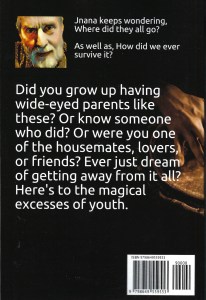
Maybe this is backwards, but the cover can change the story

This self-publishing field means an author is typically deeply involved in all parts of the project rather than just the writing itself.

In my Smashwords releases, I initially hired a book designer to do the covers, but my current releases have all been created by me. (Someday, I really would like to have an artist design the front, but for now, I’m sticking to photos or existing stock artwork. We’re on a strict budget.)

Still, finding an appropriate image can be a challenge.

Has anyone else had this experience? You come across a picture that clicks and select it – and then you go back into your manuscript to make the visual fit better with the text?

For me, that happened with the portrait I settled on for Promise – the model gave me a clearer vision of my character Jaya. (That novel’s now part of Nearly Canaan.)

More recently, with Yoga Bootcamp, the handstand dog reminded me to keep the story lighthearted and humorous in my final revision. Did my decision to nickname the swami Big Pumpkin and Elvis come after the pooch was on board? I don’t recall now, but it certainly wouldn’t surprise me.

Do tell me about your favorite book cover. Does it influence how you see the story? If you’re a writer, has the art on your book led to revisions?

~*~

By the way, I do hate it when the character on the cover is shown, say, as a blonde but is described in the story as a brunette. That sort of thing.

And don’t forget: You better be good to toads!

Missing from his photographic evidence

As Cassia discovers in my novel What’s Left, her father’s photographic record includes some serious gaps.

One involves a side of the hippie era, especially his experiences going underground in New York City.

As Cassia comments in an earlier draft of the story:

From his photos, I have little to go on regarding the hitchhiking, much less the subways. Not that there aren’t images — they just don’t reveal anything. Maybe it was largely in his mind. Maybe mostly a pipe dream. Entertaining, all the same. And one or the other landed him here.

~*~

Looking back on the era, I wonder how I’d react seeing photos of the people I was with or the experiences we shared. The nude group swimming at the remote lake in the summer? Not nearly as sensuous as I remember? Former lovers? Half of the places I lived have been torn down, as I see from satellite maps. You get the idea.

The time seemed so full of promise.

Tell me about the biggest disappointment you’ve ever had.

~*~

~*~