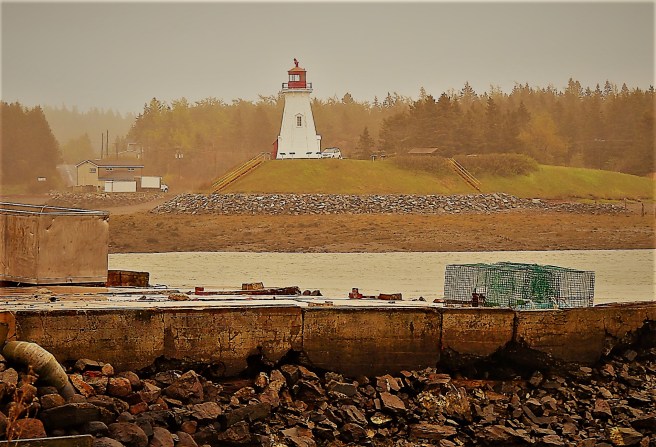
You never know what we'll churn up in cleaning a stall
When I lived in Yakima, Washington – like Joshua and Jaya in my new novel, Nearly Canaan – Mount Rainier was practically in our backyard, metaphorically, at least, and I got to explore it repeatedly, in all seasons. In addition, I camped in the Olympics and North Cascades national parks and visited Crater Lake in Oregon. I had already camped as a kid in the Great Smokies and at Mammoth Cave and have since probed the Everglades. I can attest that Acadia and the Cape Cod parks in Provincetown are prime New England. And Cuyahoga in Ohio was just to the west of a town where I lived and worked for four years after leaving the Pacific Northwest. Gateway Arch in St. Louis is another? Gee, this list of parks I’ve visited keeps growing.
Still, there’s a lot of stunning choices in the system I have yet to explore.
How many items are required for a bucket list, anyway? Ten or 20? Well, this is in my Tendrils category, so that settles it. These are all United States parks, by the way – an international list will have to wait.
Here goes.
~*~
What’s on yours?


Kittery, Maine, is a few miles downstream from where I live. It’s also across the Piscataqua River from Portsmouth, which is loaded with eateries – maybe as many per capita as Manhattan.
For much of its existence, Kittery has been pretty blue-collar. It’s home to the Portsmouth Naval Shipyard – the U.S. Navy’s oldest continuously operating yard – and now tasked with the upkeep of nuclear submarines. It’s also home to a lot of lobstermen.
When I first came to New Hampshire, the Kittery Grange Hall was the scene of a monthly contradance – both the grange and the event now ancient history.
Oh, yes, and its strip of discount outlet stores along U.S. 1 is a major tourist attraction. Seriously. As is the adjacent sprawling Kittery Trading Post.
But with Portsmouth booming and the cost of its retail space skyrocketing, Kittery has been undergoing a transformation. Nowhere is that more apparent than in Wallingford Square, which used to be a gritty cluster of bars around one of the shipyard’s two gates. Today it’s been rechristened Kittery Foreside and is the center of some enterprising fine dining and food sellers.
Here’s what you’ll find.

~*~
Nearby is the Beach Pea bakery, the best baguettes around, and Loco Coco’s Tacos, with its wonderful fine Mexican cuisine.

The Port City is hemmed in by water on three sides, and it’s running out of room to grow.
While the waterfront and beaches are part of the city’s tourism and residential appeal, the demand on downtown real estate has been going up steeply. Literally.
Not all that long ago, Portsmouth was a sleepy little New Hampshire city with a hippie edge and a lot of historic Colonial houses. Unfortunately, the city fathers had jumped on the urban renewal boom in the early ’60s, nearly demolishing one old neighborhood that was instead miraculously transformed into the Strawbery Banke living history museum. Visit it, if you can.
The side opposite the downtown wasn’t so lucky. Much of it, an Italian neighborhood of large Victorian houses with impressive interiors, was razed to make room for a small mall that never took off. It instead became a forbidding asphalt graveyard for private parking surrounding some kind of small bunker.
At least that vacuous mistake and eyesore is finally gone.
I’m not so sure about the replacement, though.
In what seems like one fell swoop, a monolithic set of five-story buildings has popped up to form a forbidding wall along the north side of the downtown.


It has none of the variety and charm of Congress and State streets that run parallel to it just a few blocks away. It’s largely not pedestrian friendly, preferring instead to maximize every square inch of rentable space, and despite its visual unity has a cookie-cutter quality that bears no kinship to the rest of the district other than brick. Where are the quirky touches that abound so close at hand in the earlier eras?
There is one exception.

Downtown Dover, ten miles to the north, is undergoing growth of its own and seems to be avoiding this kind of monolithic development, even while going to five stories. Whether we can avoid something similar on the riverfront project on the other side of the Cocheco is another question.
In both cities, these are once-in-a-lifetime opportunities for defining the larger community. What does this say about Portsmouth?
Among the talent that shows up to work at the family restaurant in my novel What’s Left is a very, very talented baker. As they conversed with him, they could smell opportunity.
Still, these two lines were more than the scene needed:
What can you do here with what we have?
Pierre rolls out a list. We’re impressed.
Oh, I’m so glad Cassia stopped talking like this! In the final version, she’s pretty snippy.
~*~
Let’s just say everyone rose to the occasion. As a result, he started making real French bread to southern Indiana – and a lot more many of us take for granted nowadays.
Of course, the world doesn’t always come to you. When it comes to food or drink, where would you like to travel? Or, for that matter, return?
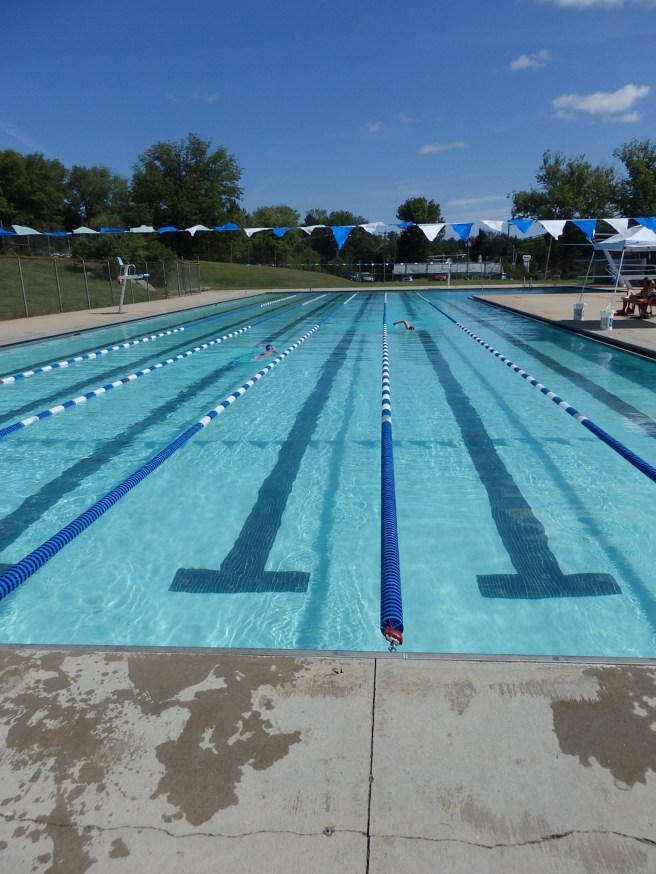
Since my indoor pool pass is good year-’round, I don’t spring for an extra pass to use the city’s outdoor pool each summer. Instead, I get to go there for free during the final two weeks of the season, when the indoor pool is closed for annual maintenance and upgrades.
The outdoor pool, though, can be a glorious experience. Here are ten points to consider.
Downtown Dover grew around the falls on the Cocheco River, where the mills could channel the current to produce world-famous calico and much more.
Below the falls and the dam atop them, tides from the Atlantic Ocean downstream rise and fall eight to ten feet every six hours or so. Boats from the ocean made their way the 14 miles upstream to pick up or deliver goods.
As pollution in the river has been cleaned up and the city itself become more of a center of the Seacoast Region, planners have been looking to develop an open stretch of unpaved parking lot and weeds across the water from downtown.
For years, the site was the public works yard – not the best use of potentially valuable real estate. That has since been relocated elsewhere. I’m guessing it was tannery and warehouses before that.
A proposal to build anew there fell through in the real estate collapse of the great recession at the end of the George W. Bush administration but now, a decade later, it’s emerging in new form.
Key to the design is the extension of Henry Law park along the river as a walkway with added attractions such as kayak and canoe landings. A hillside has already been carved back to allow moving an existing street away from the river to open the space for more pleasant picnicking or the strolling public.
Further on there will be room for new housing and small stores or offices. Done right, it should be quite welcoming and attractive.
Just as important, in my eyes, is the way this will open up access to an existing city park at the top of the hill. Rather than running into a dead end as it does now, Washington Street will rise up the slope to become the entrance to Maglaras Park. It will be an easy walk from downtown, rather than the convoluted route it’s replacing. Even for drivers, it’s a huge improvement.
Continue reading “Dover’s new riverfront appearance and hilltop park access”
My small city is the seventh oldest settlement in the continental United States, not that there’s a lot left from its first century, when the place was largely on the sometimes troubled frontier of English dominion.
As a working-class mill town, it developed more modestly than more prosperous harbor towns like Portsmouth to the south or Portland to the northeast or Newburyport to the southwest.
Our downtown is catching up, though. A small but significant building boom is under way.
 Jnana's Red Barn