We’re getting a glimpse of a most incredible cruise ship

We were anticipating the expedition cruise ship Roald Amundsen’s arrival at the Breakwater today after it had circled Alaska, crossed the Arctic Ocean, and visited Greenland and Baffin Bay on an intrepid voyage from Vancouver, British Columbia, across the Northwest Passage – albeit from the west.  But when that itinerary was halved, and the second leg shortened, we were crossed off the ports of call. At least we were then added to a shorter round of New England stopovers that followed.

So now the Amundsen is expected to show up today and you can bet that the locals will be lined up for a personal look. This is not any floating resort.

With global warming, Northwest Passage trips are being offered each year for bold, well-healed, bucket-list travelers desiring to go where few have ventured before. This opportunity requires ice-breakers, not just any cruise ship. The Norwegian-flagged Amundsen is one with style and luxury.

The visit should heighten our anticipation of its return next September as part of a remarkable 94-day Pole-to-Pole adventure that will continue to Antarctica.

Sounds like a historic journey to me.

Here are ten more facts.

  1. In 2019, the new, 530-passenger, 459-foot, stylish state-of-the-art vessel joined Hurtigruten Expeditions’ fleet.
  2. It is propelled by environmentally sustainable, innovative hybrid technology that reduces fuel consumption and CO2-emissions by 20 percent.
  3. The ship is specially constructed for voyages in polar waters, where it serves as a comfortable base camp at sea.
  4. Unlike a typical vacation cruise, an expedition is for curious minds and explorers, focusing on the geography, biology, cultures, and histories along the way. To serve that aim, the Roald Amundsen has a science center packed with banks of stereoscope microscopes and related laboratory gear, as well as touch screens, lecture spaces, a small library, and areas for workshops in photography, biology, and similar interests as guests, staff, and crew mingle and generate a heightened understanding of the landscapes being explored.
  5. It’s not your utilitarian research vessel but posh, with all cabins having outside views. Half even have private balconies. Aft suites include private outdoor hot tubs for enjoying spectacular views.
  6. Its three restaurants are inspired by Nordic and Norwegian heritage.
  7. The ship is named after the first explorer to reach both the North and South Poles.
  8. Passage through the Panama Canal takes roughly 12 hours.
  9. Arrival in Antarctica will be late spring there, when the Gentoo and Chinstrap penguins will be at the start of their courting season, while the Adélie penguins may have already laid their eggs and be nesting.
  10. Fares for this expedition started at $57,000 – or $600 a day. I doubt that any of those are left.

If you had the money, is this something you’d love to do?
The glory of the wizardry of a skilled short-order cook

Trying to get only three items to the dinner table at the same time had me thinking of this the other day.

It wasn’t like I had eight or nine tables awaiting some miracle, this was only me. The mathematical probabilities became rather staggering.

Quite humbly, it’s something every household more or less expects at least once a day, and it’s much more demanding than most of us assume.

My wife, bless her, is a wizard at this, as are our daughters.

But now, back to the rest of the universe.

This is one more case of where timing is everything.

It had me recalling my first visit to New Hampshire, where my traveling companion and I had to await breakfast on a one-order-at-a-time prepared by an amateur.

Next time you venture out to eat, please remember this.

There may be no excuse for much of the overpriced mediocrity that emerges after you ordered, but please, please, be aware of the skill when things do come together seemingly as expected. And do react appropriately, when the check comes.

Rossport is not your average retreat by the sea

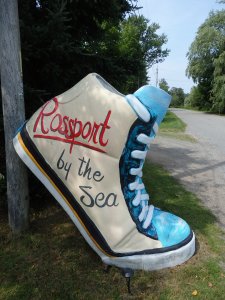
To one side of Eastport’s Quoddy Village is Rossport by the Sea, a remarkable – and reasonably priced – 80-plus acre family-friendly retreat created in 1987 by Ross Furman when he purchased the dilapidated and vacant 1790 Captain Jacob Lincoln farmhouse.

This is your greeting from the old Toll Bridge Road.

It’s definitely not your average motel, hotel, or cabins and campground, either.

The resort’s 32 bedrooms in 12 private sites have access to more than a mile and a half of shoreline and seemingly endless views. There’s also an organic farm working part of the grounds.

If you’re thinking of a visit to Eastport, I’d suggest booking there first, May through October. Not that there aren’t some other good options. Or maybe I’m just being envious.

Still, just walking around the grounds is delightful.

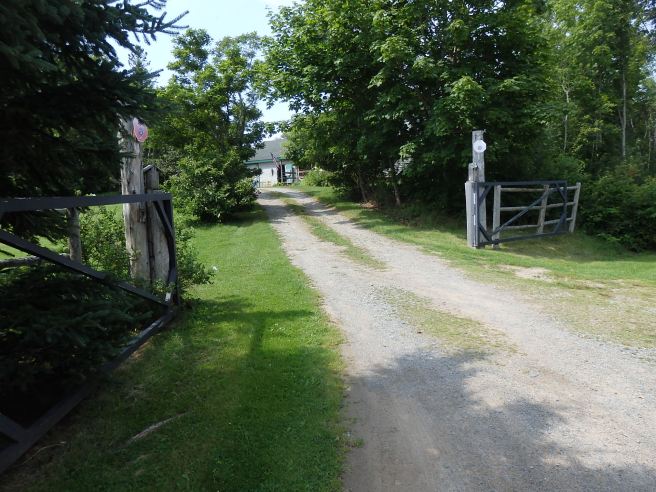
This lane leads into the grounds.
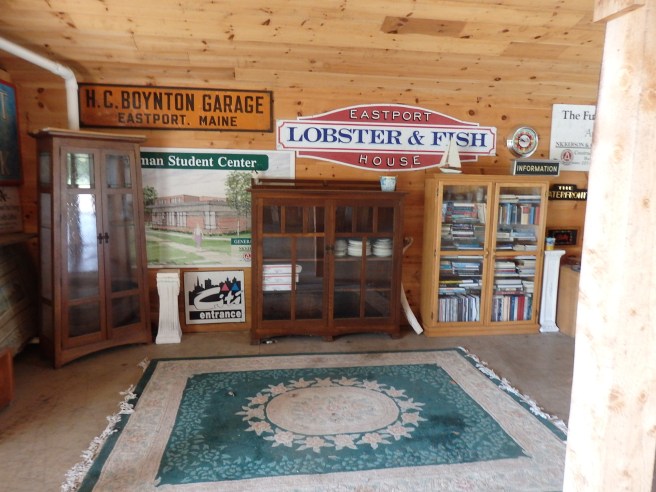
Here’s what you’ll find in one of the barns.
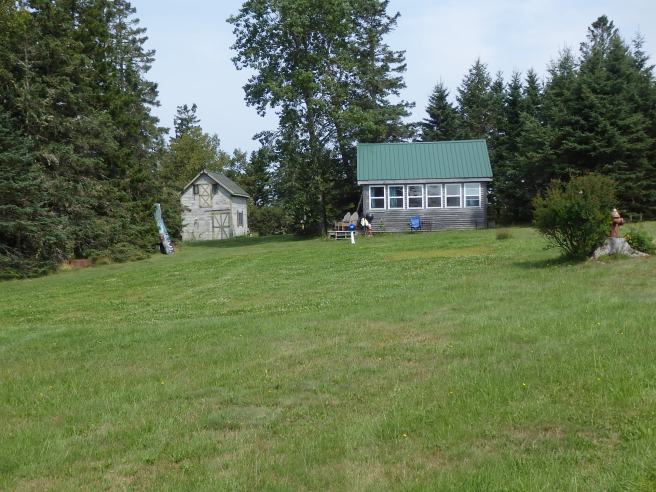
Here’s one of the cabins available for rent. The lawn leads down to the ocean.
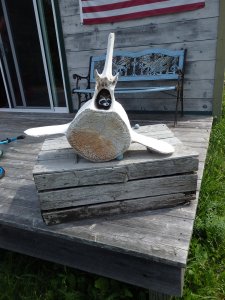
A whale vertebra sits on the deck of one of the cabins.
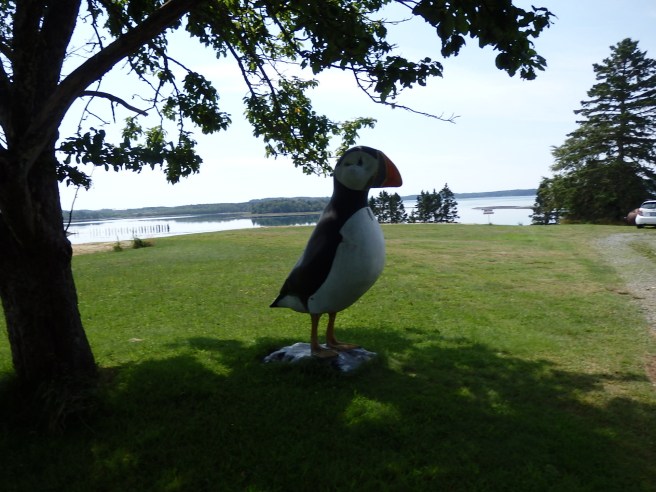
I love the quirkiness of sculpture like this puffin.
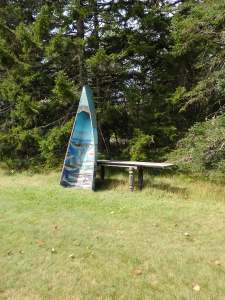
How about a decorated canoe? Go ahead, click on it for the inside view. I hope.

That said, you may want to put it on your list of vacation destinations to consider for next year and then make your reservations early, should you desire.

What distinct accommodations would you suggest for a traveler?

Honoring the earlier place names

A revival of Indigenous languages, which were long suppressed by federal policy, is gaining momentum where I live in Way Downeast Maine.

For one thing, the Passamaquoddy are now teaching it in their schools.

For another, their words are pronounced in ways that transcriptions into Latin-based letters don’t quite capture. There are simply sounds that my ears miss entirely and my tongue and lips will never manage to enunciate properly. How humbling!

“Passamaquoddy,” for instance, is pronounced more like “peskotomuhkati,” meaning “people who spear pollock,” reflecting their ocean hunting skills.

Linguistically, the Passamaquoddy language works differently than do European languages with their subject-verb-object constructions, and reflects an alternative way of comprehending the land, waters, and skies where we dwell.

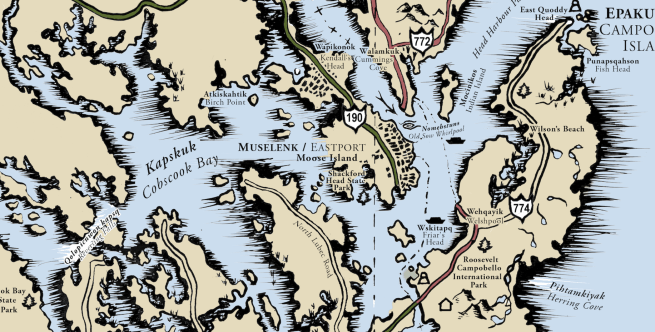
Detail of the new map, with some places denoted by dual names.

The latest edition of the Tides Institute’s Artsipelago map of communities and sites around the tidal waters of our corner of Maine and neighboring New Brunswick, Canada, now includes Passamaquoddy names in addition to the more familiar English, Anglicized, and French ones.

To my eyes, this adds another dimension to our awareness of the landscape and its legacy.

How do you see it?

On occasion, a few critical details do change the course of history

As I detail in Quaking Dover, my history of New England’s third-oldest permanent settlement, the odds against success for early European settlers were nearly overwhelming.

It wasn’t just the English, either.

The French made their first attempt just up the coast from Eastport, where Samuel de Champlain selected an island in what’s now called the St. Croix River at the western edge of the Bay of Fundy or, more specifically, its smaller Passamaquoddy Bay.

St. Croix Island, site of the ill-fated settlement, sits in the river separating the U.S. and Canada today.

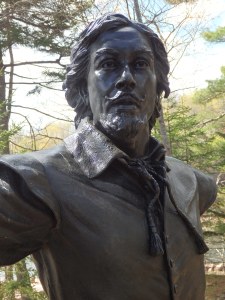
The famed explorer was working for Pierre Dugua de Mons, a noble and Protestant merchant who had been given a fur trading monopoly in New France by the king.

Pierre Duguay had some big dreams.

In 1604 the expedition set about establishing a fortified trading post on the security of St. Croix Island and its tidal currents.

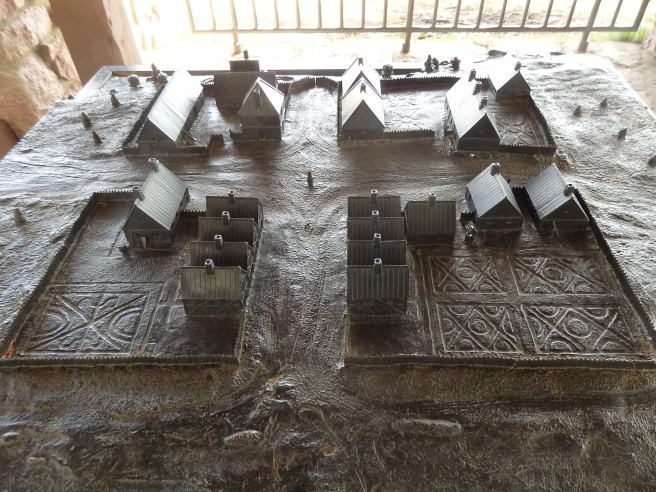
Here’s how the settlement on the island was designed. I’d say it was quite ambitious, especially compared to the small settlement that resulted in Dover, New Hampshire.
The enterprise required many skills.
Many of the workers were mere boys.

And then they settled in for the winter, ill prepared for harsh conditions that buried their compound under three feet of snow and iced in the river, cutting them off from fresh water and game.

The lack of fresh water, especially, was a fatal flaw in their plan.

By the time spring arrived, 35 of the French expedition’s 79 men and boys had died, many from scurvy. The remainder survived largely because the thawing river allowed Native Passamaquoddy to arrive and trade nutritious food in exchange for any remaining bread and other goods.

After the colonists’ health improved and ships brought new supplies and more men from France, they abandoned the island and relocated to what would become Port-Royal, Nova Scotia, soon the center of L’Acadie, or Acadia, a large and contested province of New France.

In 1607 the English then made two attempts of their own in the New World. Their Popham colony at the mouth of the Kennebec River in Maine fared no better, while the Jamestown settlement in Virginia managed to hang on.

In 1608, Samuel de Champlain successfully founded Quebec City along the St. Lawrence River. What we know of the St. Croix Island experience comes largely through his journaling.

Quite simply, we could have been speaking French here, had someone thought about drinking water earlier in the game. Or perhaps simply been listened to and respected.

~*~

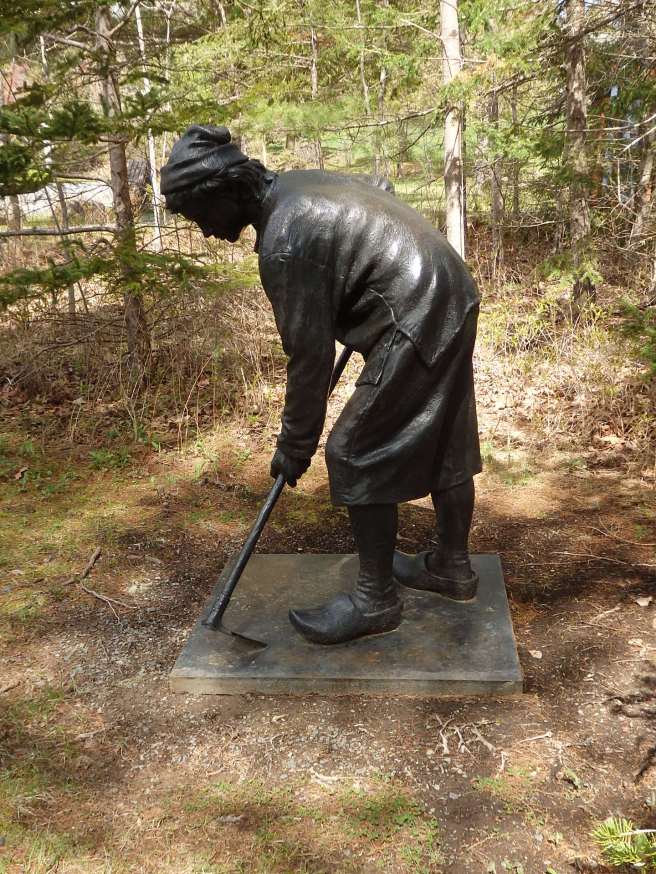
Sculptures at the St. Croix Island International Historic Site, Red Beach in Calais, Maine, are by Ivan Schwartz, Studio EIS.

This was once the sardine capital of the world

Don’t laugh. Sardines were once big business.

The first sardine canning in America happened in Eastport in 1876, and at its peak, 18 canneries were packed in against the waterfront downtown, along with the fishermen’s dories and fishing boats at the docks.

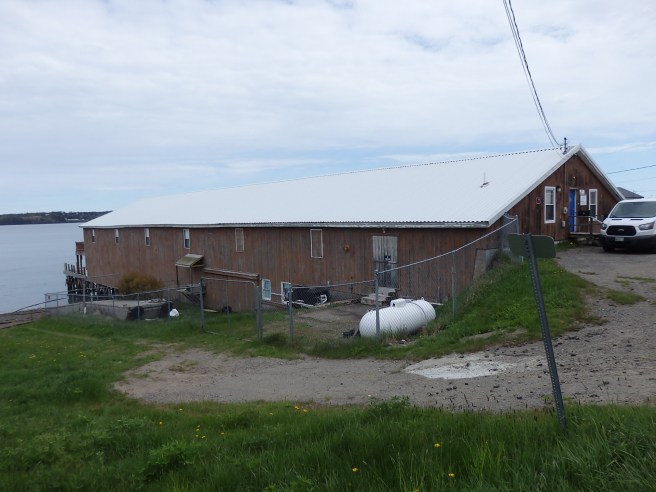
One of the few surviving cannery buildings. This one was small in comparison to others right downtown. 

The largest of them, the L.D. Clark and Son factory, extended far into the water from the north end of Shackford Cove only a block where I now live. It was the world’s largest sardine cannery, employing 500 men and women who packed 4,000 cases of 100 cans daily when the small Atlantic herring were available.

Heads and other parts were cut from the fish and dumped into the harbor, where they were devoured by bottom-feeders that then attracted whales close to shore.

Over the years, though, the fishery was depleted, though whales can still be seen in season.

And then the market and American tastes changed.

Does anyone eat sardines anymore?

Few signs remain of the city’s once flourishing industry.

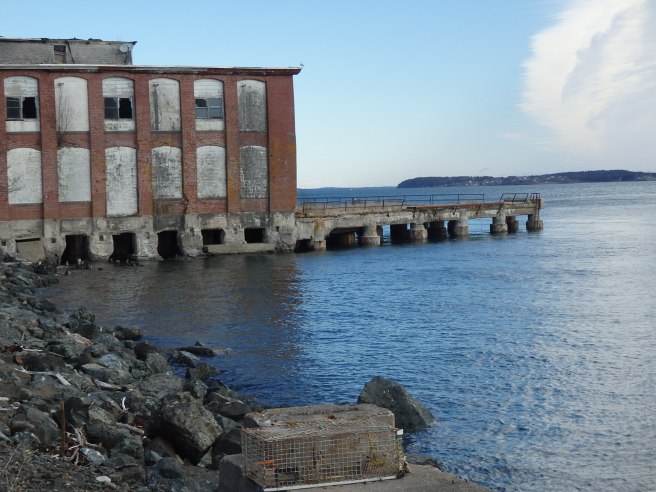
The 1908 Seacoast Canning Co. plant, which made sardine cans.


Bold Coast is an apt description

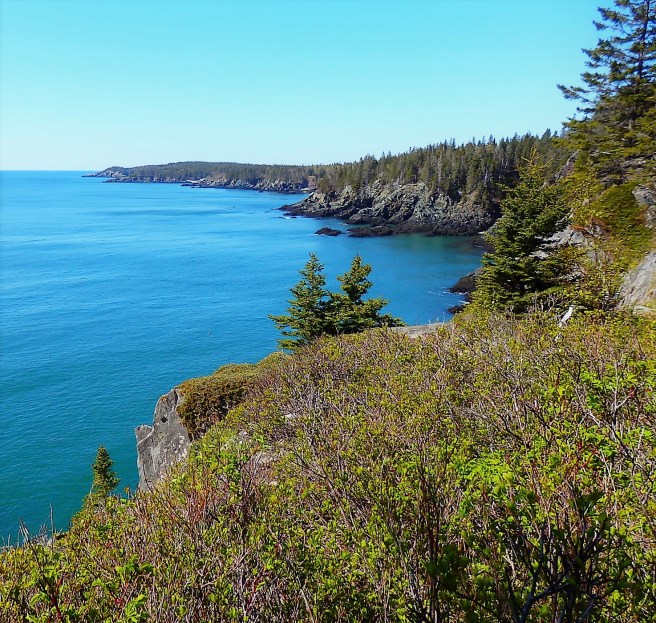
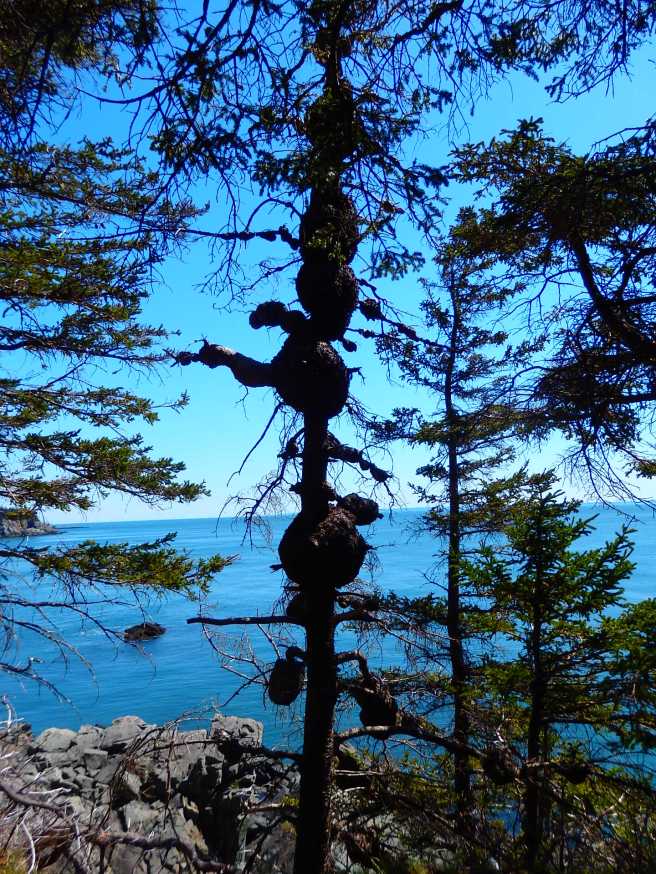
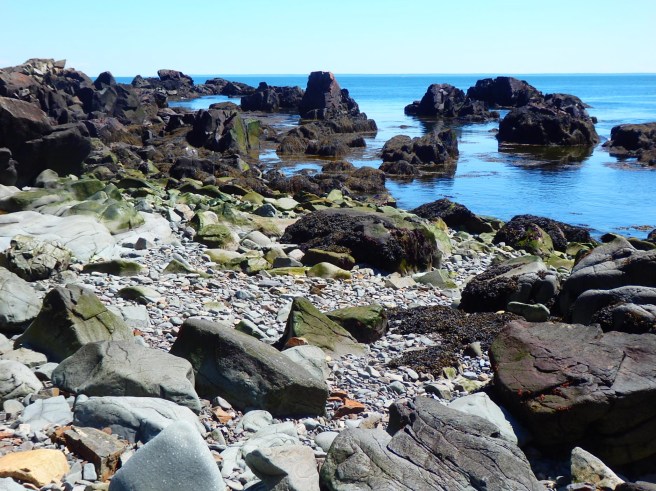
While Eastport and its neighboring towns are technically on Fundy Bay, they’re sheltered from the open ocean. Not so for much of Lubec and Cutler to our south, where the shoreline on the open Atlantic rivals anything Acadia has to offer. It helps to know where the trailheads and parking are, though. Here are some views from the trails in the Maine state public lands in Cutler.

Best of all, there was no crowd. Just me and a young couple who were planning to land one of the five primitive campsites at the far end of the coastal trail. I met only ten other folks in the next five hours, all of them delightful.
So what had been stripping the bark off these trees? My “Scats and Tracks of the Northeast” field guide points to Canada lynx, which leave “chin rubs” like these and live in “dense conifer forests interspersed with rocky ledges and downed timber.”  There are also forest edges nearby where their major prey, snowshoe hare, might be found. 
While this trunk seems to be a natural totem pole.
Look out, below!
Except that pretty soon, the trail’s crossing down there.
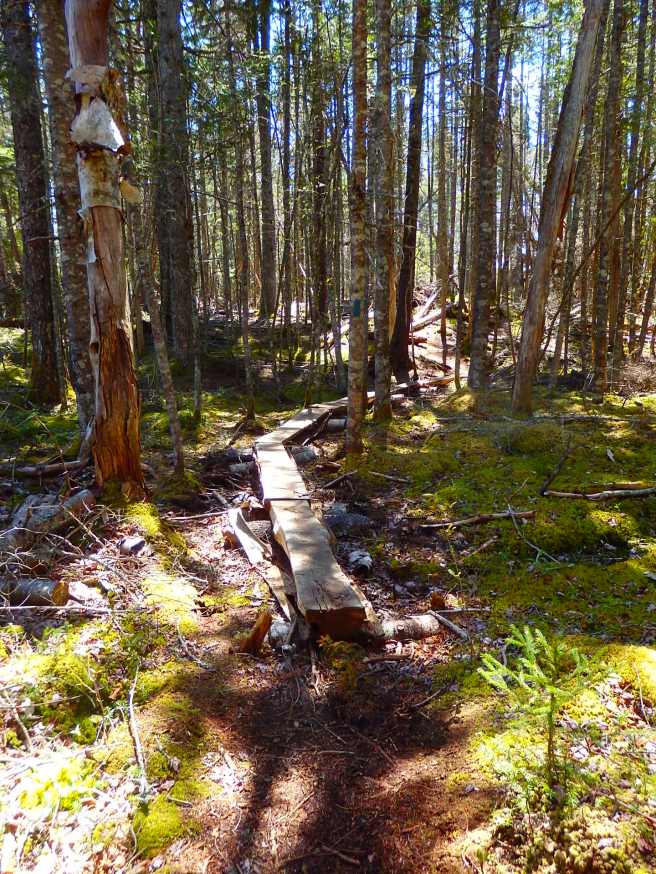
A slightly inland loop back crosses many peat moss bogs, where plank boardwalks are a necessity.