Whatever happened to apprenticeships and mentors?

The conversation turned to a current problem many face in finding the right job.

Employers seem to demand college degrees for even the most basic positions, and then expect years of experience as well for what’s lowly paid entry-level work.

How does anyone get that requisite experience in such a setup?

That’s had me thinking of bosses who see something in a candidate and hire them, regardless of the credentials, and then guide them in their development. I’ve certainly had some fine examples as well as some crucial (paid) internships.

It’s also had me reflecting on the great inventor Charles F. Kettering, who once said that if he faced a metallurgy problem and had a metallurgist and a biologist on his staff, he’d hand it to the biologist – because the biologist would be more likely to solve it.

Why? The biologist wouldn’t know all of the things that weren’t supposed to work, unlike the metallurgist.

Of course, this is not just about jobs. I’ve noticed that we need mentors in the many diverse skills of living and in the practice of our own niches within it.

These days, I’m also realizing I’m at an age where I might be expected to be fulfilling the mentoring role, not that I often feel that capable. What I am noticing, however, is the gap in the circles I travel, where individuals in their twenties and thirties are scarce. A wider look finds them scarce in general, and those I know openly admit their puzzlement about connecting in real life with their peers. Where are they, outside of the Internet?

I can name a long list of mentors in my journey to here. Some were teachers or bosses, others poets or Quakers or Mennonites, even fine arts painters or folks a generation younger than me.

Who’s filled a role of mentor in your life?
Have you ever lived in a desert?

In my novel Nearly Canaan, Joshua and Jaya settle into a place unlike anything they would have imagined. It’s desert, for one thing, where nearly everything has to be irrigated, for another. Quite simply, it’s a lot like Yakima, in the middle of Washington state.

The city’s doubled in population since I lived there, but I’m not surprised. It’s mostly sunny.

Here are ten factoids.

~*~

  1. The name applies to the city, the county, the valley, and until recently, the Indians, too.
  2. The valley gets nearly nine inches of rain in a typical year, most of it in the winter. Almost every green thing that sprouts requires irrigation. And if that supply fails, everything goes kaput.
  3. The valley produces more than 75 percent of the hops used in American beer – and a quarter of the hops used worldwide. If you’re a beer lover, be grateful. The locale also raises a lot of barley, up in the Horse Heaven Hills.
  4. The valley has more than 70 wineries. It’s become a great place to grow varietal grapes, many of which are pressed into fermentation elsewhere. On the globe, it lines up quite well with France.
  5. The trolleys have been running for more than a hundred years. Fun trip, by the way, especially the ones that run out through the orchards.
  6. The original site of the city was renamed Union Gap, made famous by the rocker Gary Puckett.
  7. Yakima County leads the nation in apple production, with 55,000 acres of active orchards. It’s the state’s highest valued agricultural product. By the way, they’re no longer mostly Red Delicious.
  8. The average income of an apple picker is $6 a day.
  9. The Native Americans have renamed their tribe and reservation as Yakama. One letter makes a huge difference.
  10. I still miss living there, especially Mount Adams every morning.

~*~

So what’s special about where you live?

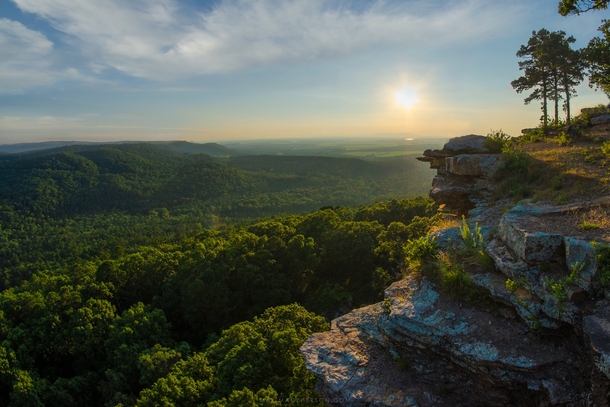
What do you know about the Ozarks?

In my novel Nearly Canaan, Joshua and Jaya leave Prairie Depot and settle into a place unlike anything they would have imagined. It’s not where they promised themselves that they’d relocate, but it would have to do. At least it was hilly and wooded.

It’s hillier and more forested than I had expected.

Here are a few of the things they discovered.

~*~

  1. The Ozark Mountains, also known as the Ozarks Plateau, stretches into five states but is situated mostly in southern Missouri and northern Arkansas. It’s the highest land between the Appalachian and Rocky mountains, having some peaks of more than two thousand feet elevation.
  2. Technically, there are two mountain ranges: the Boston Mountains of Arkansas and the St. Francoise Mountains in Missouri, the latter having some of the oldest rocks in the United States.
  3. The majority of the region is forested. Logging is a major industry.
  4. The plateau is laced with underground caverns. Found deep within some of them is the species of Ozark blind cave salamanders, which lives nowhere else in the world.
  5. The shoreline of the Lake of the Ozarks is longer than the coastline of California. The man-made lake covers 61,000 square miles and is a popular vacation site.
  6. The Ozarks has a distinctive culture, architecture, and dialect deriving from its backwoods heritage. Square dances were a popular social activity, as was storytelling.
  7. Historically, the Ozarks were predominantly Baptist or Methodist in faith. Today, the Assemblies of God and Baptist Bible Fellowship International have their world headquarters in the region.
  8. Big-name live musical entertainment has made Branson a major tourist magnet.
  9. Fayetteville, home to the University of Arkansas and with 77,000 population, is the third largest city in the state and is the principal metropolis in the Arkansas part of the Ozarks. It claims to defy many stereotypes about Southerners and could well be the model for Dolomite Center in my novel.
  10. Wal-Mart is headquartered in Bentonville, a short drive from Fayetteville.

~*~

What can you add to the list?


Don’t call me ‘Sir’

OK, we had an international student living with us and I understood that Jnana might be a difficult way to address me.

But being called “Sir” always came as a jolt.

It had me thinking of the cartoon strip – wait, you mean there’s a REAL Breathitt County in Kentucky? – where? Oh, it’s Bloom County! Who was that girl, anyway, the militant one?

Or was it Doonesbury?

Reminded me of the time at the library when I helped a high school student find the right LP of the “1812 Overture” and she called me “Sir” by way of thanking me. Made me feel old, indeed. And that must have been nearly 30 years ago.

At least she learned the piece in a performance with cannons. Hope it impressed the rest of her music appreciation class.

Well, let’s get back on focus.

Isn’t “Sir” what some men are called by their mistress? Or would want to be? Frankly, I find even that somewhat creepy.

Or the way soldiers address their officers? Still creepy.

The other day, though, someone was in the situation of trying to address me by something other than my name, and it rang right.

“Dude,” he said.

Yeah, I’ll puff up my chest at that and put a little gusto in my stride. Even at my age. Besides, it brings out the hippie in me, all these years later.

Even makes me start singing that Beatles tune. Wait, it’s not “Hey, Dude”? It’s “Hey, Jude”?

It doesn’t have cannons, does it? No siree bob!

What do you mean by ‘promise’?

One of the foundations of my novel Nearly Canaan is the varied meanings of the word “promise.” It’s central to a marriage, especially, as we see with Jaya and Joshua. It also centers on their vision of arriving in their own Promised Land.

Here are ten examples of its possibilities.

  1. Potential or vision. “I saw her potential.”
  2. Vow or oath. “I will do this, so help me God.”
  3. Agreement or contract. “My half of the bargain in exchange for your half.”
  4. “If you do that, I’ll do this.”
  5. Word of honor. “I place my reputation and character behind this.”
  6. Betrothal, engagement, marriage. Now we add romance and a life together, venturing into the unknown.
  7. Security, warranty, or insurance. As a shield against risk.
  8. “I agree to this willingly.”
  9. An emblem of the agreement, making it more fully visible. The Biblical Promised Land would fit in here, I’d say. Perhaps also the birth of Jesus.
  10. Obligation or devotion. “This is what I’m moved to uphold.”

~*~

What would you add to the list?