One of the blessings and saving graces of my youth was being a member of a rogue Boy Scout troop that included a big hike one weekend of each month and primitive camping on another. The two together introduced me to many essentials of the natural world and real life.
One consequence is that hiking has been a big delight in my life ever since, despite a 20-year gap at one point and the reality that my days of being able to hike a 25-mile stretch are long gone.
Here are a few memories I treasure.
- My first backpacking experience, from Clifton above Yellow Springs to Belmont in Dayton, Ohio. You couldn’t do that now, not with all the suburban sprawl and the ban on trekking along railroad lines post-9/11.
- The week we spent on the Appalachian Trail, ending at Roan High Knob in North Carolina/Tennessee when the rhododendron were in blossom. I had never seen them before. I was 12, with a 60-pound backpack. Funny, though, I haven’t backpacked since.
- A brace of Scouting trails we hiked in neighboring Indiana, Illinois, and Kentucky, earning a medal and sometimes a new scarf as a result. These included the Daniel Boone country around Lexington, the Lincoln country, even getting hopelessly lost in Brown County because some crucial trail markers had been shot up beyond recognition. Later, when I lived nearby, I realized the big lake now sat atop a road that had been paved with crushed geodes. Now that I’m thinking of it, in my return to the scene, I had a fine late-winter stroll through the same woods.
- Mount Washington, New Hampshire, ’74, introducing me to the amazing flowers of alpine terrain.
- Mount Rainier, Washington, multiple times from ’76-‘80. Though I never attempted the summit, I did make it up the permanent snowfields to Camp Muir twice. And the alpine terrain continued to dazzle me.
- Mount Stuart in the Enchanted Lakes wilderness area, Washington state. It was an early autumn outing. Again, I didn’t tackle the summit, though I was acquainted with the man who had been the first to make it to the top. The crisp late afternoon air abounded in cosmic rays.
- Mount Lafayette, New Hampshire, late ‘80s. Another mountain that reaches above the tree line.
- Mount Chocorua, New Hampshire, a decade ago. A more difficult climb than its altitude would suggest. But there are reasons the Indigenous people considered it sacred, even before the lovers’ leap story.
- Quoddy Head, Maine, three years ago. The day was foggy and wet, adding to the drama as we moved on the bluffs atop restless Fundy Bay water. The open peat bog and boardwalk added to the wonder. It was the first time since my initial encounter with Rainier that I’d felt so amazed by nature. It’s what convinced me to move to Eastport.
- Bold Coast, Lubec and Cutler, Maine, the past two years. Forget Acadia National Park. This is unspoiled and uncrowded. And for me, it’s now part of home.
Oh, gee, how can I not mention that crazy hike up the desert slope of the Yakima Canyon, Washington state, where I was among those to first to see the return of the bald eagle to the valley after a quarter century or more? I was looking down on an incredible wingspan and didn’t even know its species until later. It was still winter, ’77, and, because of the rattlesnakes, I wouldn’t have ventured into the landscape otherwise. It shows up in my novel Nearly Canaan.

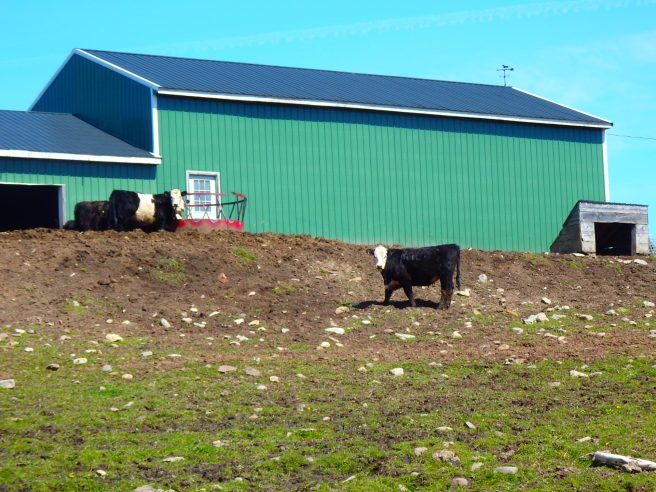
 Jnana's Red Barn