Some of my favorite food flavorings and spices

In my relocation, I’ve often been on my own. And that means fully recognizing my tastes in food, rather than relying on my wife’s memory of what delights me.

Let’s go.

  1. Real vanilla. And yes, I now know there are differences between Mexican, Madagascar, and Indonesian beans, which are really orchids. These are quite distinct from that artificial stuff, by the way. And for the record, I’m not a chocolate guy, but if you must, make it dark or white but not in-between.
  2. Butterscotch and toffee. I’m a sucker.
  3. Butter or olive oil. As my wife says, quoting others, fat carries the flavor. One, though, is better than the other in the cardio category.
  4. Garlic. Onions and I don’t get along, but this alternative is glorious, especially in the ones we’ve raised. It even saved our marriage.
  5. Leeks. Ditto.
  6. Miso. I’m fond of Japanese cuisine, OK?
  7. Rice vinegar. As I was saying?
  8. Sesame oil. Ditto.
  9. Rosemary. Maybe it’s the way it goes with lamb and other Greek dishes. Or simply the way we grow our own.
  10. Fresh, coarse, ground pepper. Anything wrong with the basics? Well, we could add parsley or basil here, if we wanted.

What would you add? Or maybe subtract?


How the Cocheco Mills reshaped Dover

My history of Dover, focused on its Quaker Meeting, begins trailing off about the time the textiles mills prosper at the Lower Falls in the Cochecho River. There’s no escaping the fact that the mills completely reshaped the direction of the emerging city, then and now.

  1. The complex began with the Dover Cotton Factory in 1812, but the surviving buildings were constructed between the 1880s and early 20th century. The downtown is built around them. The mills even span the river below the falls.
  2. A clerical error in the company’s 1827 reorganization, as the Cocheco Manufacturing Company, dropped the second h from Cochecho, leading to ongoing confusing about the proper spelling of the river’s name.
  3. In 1828, the mill was the site of one of the earliest labor strikes in the nation, the first to be conducted entirely by women. They were protesting a pay cut.
  4. The mills brought waves of immigrants to the city, especially from Ireland, Quebec, and Greece. The complex eventually employed 1,200 workers, most of them women.
  5. At its height in the 1880s, the mills shipped 65 million yards of printed calico worldwide annually, with esteemed designs from the associated printing operation on the site of today’s Henry Law Park.
  6. The buildings were subject to disastrous fires and floods. They were also noisy and cold in winter, hot in summer.
  7. The company owned lakes upstream to ensure water power through the year.
  8. The mills operated as the Cocheco Manufacturing Company and then the Cocheco Mill Company until 1908, when the operation was bought by the Pacific Mill Works of Lawrence, Massachusetts, which shuttered everything in 1937. The buildings were then bought at auction by the city.
  9. In the early 1980s, entrepreneur Joseph Sawtelle purchased the largest vacant building in the county and began a visionary restoration that uncovered the boarded windows and led to offices, entrepreneurial incubators, and retail stores in the heart of the city. After his death in 2000, Eric Chinburg acquired the properties and added trendy apartments to the mix.
  10. The mills were placed on the National Register of Historic Places in 2014.

Check out my new book, Quaking Dover, available in an iBook edition at the Apple Store.

My messenger bag

I get a lot of compliments on my gray messenger bag. It goes almost everywhere with me, containing my reading glasses, cell phone, camera, and emergency meds, as well as maps, notebook, and often reading. This is yet another of those accidental shots when I’m recharging or handling the said Olympus.

Favorite canines from a non-dog lover

Eastport is filled with dog walkers, even more than Dover was, and their perspicacity in making the rounds umpteen times a day amazes me. What else do they do with their lives?

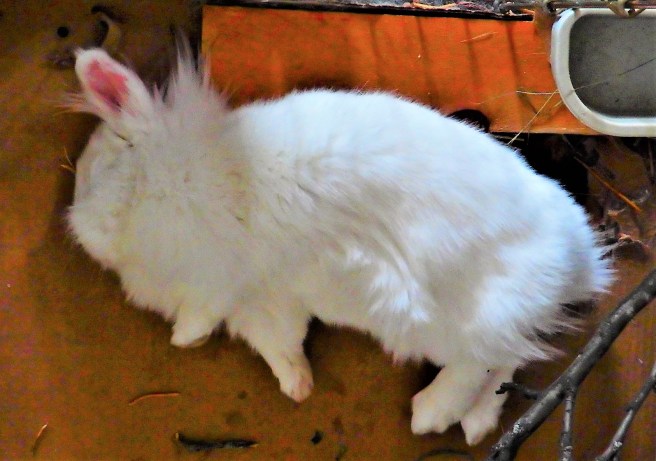
Don’t count me as a dog lover. I grew up having cats. You never step in their poo or take them for walks. And now, rabbits. Ditto.

That said, here are some dogs I’ve had to deal with, one way or another.

  1. Grimm. The one in Mike Peters’ comic strip. I had a small role in getting it rolling. Still love the caustic humor.
  2. Rin-Tin-Tin. A frontier mascot in a TV series we watched back in the black-and-white days of TV. Gee, how could I forget Rusty, orphaned in an Indian raid, much less the fact his dog was a then-exotic German shepherd or their home was a U.S. cavalry outpost? I always wanted a pair of gloves like the lieutenant’s.
  3. Lassie. Another TV star. Gee, when’s the last time you saw a collie? They used to be everywhere, in no small part because of this show.
  4. Silas. Our neighbor’s German shepherd back in Indiana. He appears in my novel, Nearly Canaan.
  5. Sal. The big pit bull my younger daughter and her roommate rescued from a shelter. An amazing animal who had one unacceptable quirk. This story ends sadly.
  6. Our neighbor’s Irish wolfhounds. They would hang over the six-foot fence separating our yards and howl mournfully. Maybe they knew their lives were doomed to be short, a problem with huge dog species.
  7. Blue. Maybe you know the song? “I had a dog and his name was Blue, bet you five dollars he’s a good dog, too.” Get me the Kleenex.
  8. Pluto. The mopey Disney cartoon character, not Roman mythological ruler of the underworld. Back to childhood, naturally.
  9. Simon and Schuster. A pair of basset hounds walked around here by an aspiring writer and her dutiful partner.
  10. Snoopy. Back to the funny pages, we have Sparky Schultz’ classic and patient observer of human folly. I didn’t appreciate him until he was nearing the end of his run. I think Mike Peters’ wife had a role in opening my eyes here.

Honorable mentions to Fang in Harry Potter or Toto in Wizard of Oz. If only I were a fan of those works.

And then there’s Argus, Odysseus’ faithful canine in antiquity, despite the fact the Greek hero hadn’t fed him for 20 years. Oh, for such loyalty anyway! Some commentators note a contrast to problems our hero will face with his wife.

Tell me about your dogs. Please!