Oriental Sauna & Health Spa
You never know what we'll churn up in cleaning a stall
Oriental Sauna & Health Spa
The governmental seat for sprawling Washington County is the town of Machias, or “bad little falls” in the river where it meets an arm of the Atlantic. Well, others have suggested the Passamaquoddy term would be more accurately rendered as “nasty” or something I suspect is much worse. From what I’ve seen, going over the cataract at the tidal line in a canoe or any other kind of boat would have been fatal. Not that I want to tempt anyone to prove me wrong, like those who have actually gone over Niagara Falls in a barrel.
That said, let’s look at some more facts about the town and its neighboring East Machias, Machiasport, and related neighborhoods.

~*~
Using the same words
meaning mean different things
dark factory towns
with moats
Oh, my, facing this can be painful.
Gee, and we haven’t even gotten to an inability to understand pop “culture” or the appearance of varicose veins.
a very green vine
growing
from a bowl of custard
It was a favorite breakfast when I was growing up in Ohio, but not an everyday offering.
First, it would be served as a hot cereal, and afterward, after hardening in bread pans, it would be fried in slices and served in melted butter and syrup.
I still remember the reaction when I was head chef (briefly) at the ashram and served it for brunch. It was vegetarian and fit into that part of our yoga practice. But half of the staff and guests were openly baffled. What is this stuff? It wasn’t anything like the buckwheat kasha they’d introduced me to. The other half, though, delighted in it.
It’s still not an everyday dish in my household, but I still relish the moments when it comes up.
My wife, of Southern roots, is more familiar with grits – a variant – and also the Italian polenta, which is much more expensive for no understandable reason.
The one place I’ve seen it on the menu is at the Bob Evans restaurants, where it’s deep fried and typically sells out early in the day.
Cornmeal does show up in my novel The Secret Side of Jaya and on many supermarket shelves, especially under the Hodgson Mill label, reflecting some distant relations of mine who went back to inserting the “g” into our surname.
So where, if at all, do you use or eat cornmeal? It was a basic foodstuff of much of early America.
Or more accurately, the bastard son of a Frenchman in Haiti.
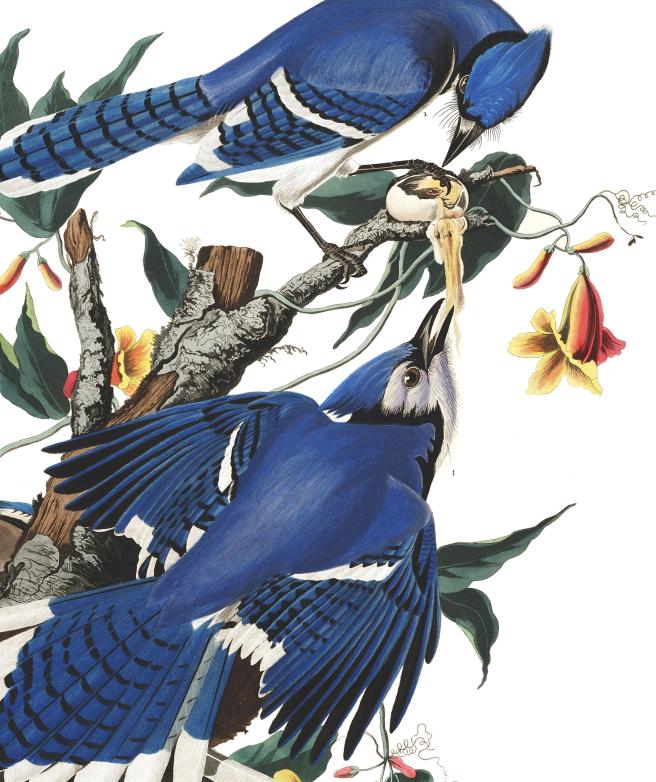
Yet, despite the iconic honor given his name, few have seen his legendary work in its full glory.
I’m speaking, of course, of John James Audubon, in the anglicized version of his name.
While I had viewed his work behind glass framing in art museums, nothing prepared me for my hands-on encounter with the four folio print volumes. That happened in Indiana University’s rare book Lilly Library when a librarian interrupted to ask if I would help her return two of the volumes to the cart so she could take them by elevator back to the stacks.
Yes, they really did need two people to move. As I’m seeing now, the books measured about 29½ inches by 39½, otherwise known as double elephant paper, the 435 prints being the same size as the original drawings.
We decided to take a peek and were both blown away. It was as if the birds had been pressed full-size onto the plate. You could actually see the veins in each feather. And that was, it turns out, a copy of the original. Oh, yes, and each species was presented full size, with some favored vegetation.
As for the color? Unbelievable. You have no idea how much is lost through any glass.
We both admitted it was too much for a single viewing.
Now, for ten more facts.
backup
beepers
(so that takes care of one foot
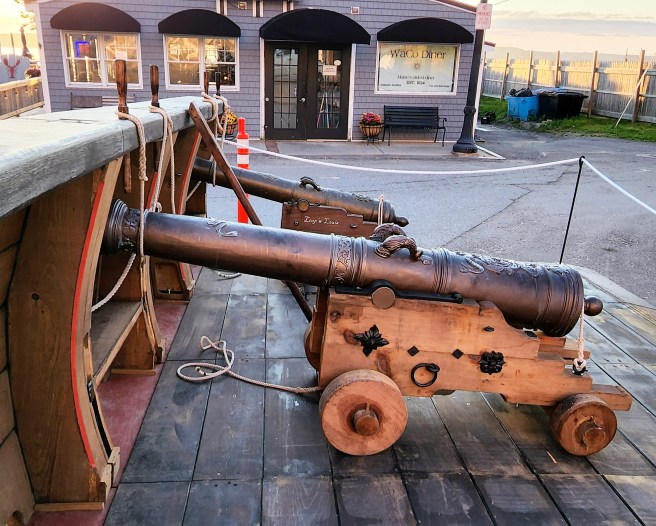
The festival is our farewell to summer.
We go out with a bang.
 Jnana's Red Barn