TEN REASONS ‘CITIZEN KANE’ IS THE GREATEST MOVIE EVER

While Orson Welles usually gets the genius kudos, much of the creative brilliance in this 1941 masterpiece arises in the seasoned experience of his collaborators Herman J. Mankiewicz and Gregg Toland.

  1. The nature of the story itself. It’s not exactly likeable. We want to befriend Kane but can’t. He starts out as charming but more and more becomes a sphinx. The newsmen themselves are nobodies. As for his wives and lovers? And yet there’s something gripping in the rise and fall of this spoiled rich boy turned tycoon and populist turned brutal cynic and failure, plus his times. (Sounds topical, considering the White House now, doesn’t it?) Pulling this off is much more difficult than it sounds, and yet we’re swept along throughout. In short, anything but a conventional screenplay.
  2. The soundtrack. Welles and Mankiewicz were grounded in radio drama, not filmmaking. And so they brought to Hollywood a revolutionary ear for not just dialogue but everyday detailing background sounds like footsteps and doors. Their radio perspective also meant they could envision a scene from the way it unfolded within a viewer’s head and not just how it might appear on a stage in front of us, the way directors and writers had framed movies before this.
  3. Cinamatographer Toland. In his work with Hollywood great John Ford, Toland had begun exploring a new technique called deep focus, which allows multiple things to be present within a single shot. In Kane, this comes to full fruition. Tons have been written about what’s happening in the background or how multiple items come together to make their own statement or put everything into a fresh comprehension. And it holds opportunities for emotional depth previously absent in cinema.
  4. Optical illusions. Again, give Toland credit. They serve as guideposts, according to film critic Roger Ebert in his lovefest to this film.
  5. Visible ceilings. You never saw these in a movie before. Sometimes it required cutting a hole in the floor. But it made for some much more dramatic visuals. Again, Ebert has much to say about this, for good reason. I think the ceilings are an emblem of many other similar breakthrough touches that advance this movie light years ahead of convention.
  6. The blending of drawings, real sets, and wipes. Welles was surprisingly economical in obtaining some of his spectacular impressions and moving the story across time.
  7. The witness. Always in a corner, observing or even commenting. A great storytelling device.
  8. Complete artistic control. RKO executives agreed to make no cuts in the footage. In addition to writing, directing, and taking the starring role, Welles had unprecedented complete artistic control. Amazing. The one compromise was forced by the film board, which nixed the brothel scene. Alas.
  9. Common misperception. Unlike the widespread tale, the story’s not even about William Randolph Hearst, whose opposition undermined of its chances for commercial success.
  10. Kane prompted Wes Anderson’s The Grand Budapest Hotel in homage. Not that I viewed them in chronological order.

Oh, yes, if you want to know about “rosebud,” you really do have to look up Ebert’s take. We do miss him.

~*~

What movie and its special effects have especially impressed you? These days we practically take them for granted.

~*~

See what’s new at THISTLE/FLINCH.


WHEN THE STORY GOES WHERE IT WANTS

Carmichael’s, the restaurant her family owns in my new novel, has me looking more closely at others.

Over recent years, I’ve been especially fascinated by the hippie outbreak and its legacy. We had a taste of what society could be and let it slip away, or so the story goes. In reality, nobody ever fit the hippie stereotype, and while the impression is that the movement died out, so many of its concerns continue – from environmental awareness and sustainable economics to racial and sexual equality to social justice activism to Asian and Native spiritual traditions to back-to-the-earth and natural living and so on. It’s a long list, actually.

Continue reading “WHEN THE STORY GOES WHERE IT WANTS”

TEN FAVORITE DESSERTS

For me, it’s:

  1. Pie, rather than cake.
  2. Really creamy vanilla ice cream.
  3. Or gelato. I’m more open to other flavors here, too. Unless it’s Tahitian vanilla, which comes close to ambrosia.
  4. My wife’s really changed my mind here.
  5. Anything creamy, actually. Tapioca float, panna cotta, custard – she knows the long list.
  6. Crème brulee. Don’t tell me it’s mostly custard, not when it’s done right. And that shattery top is like walking on ice-covered puddles when we were kids. You just love to hear it crackle.
  7. Blueberry torte, as my wife makes it. With our own blueberries, natch. Makes a great breakfast, too.
  8. A hearty red wine accompanying a chunk of dark chocolate.
  9. Or their cousins, creampuffs or eclairs.
  10. Fresh strawberries, as in shortcake. (Well, you wouldn’t call that cake now, would you?) Although actually, I tend to think of this more as starting the day.

~*~

What would you add to the list?

 ~*~

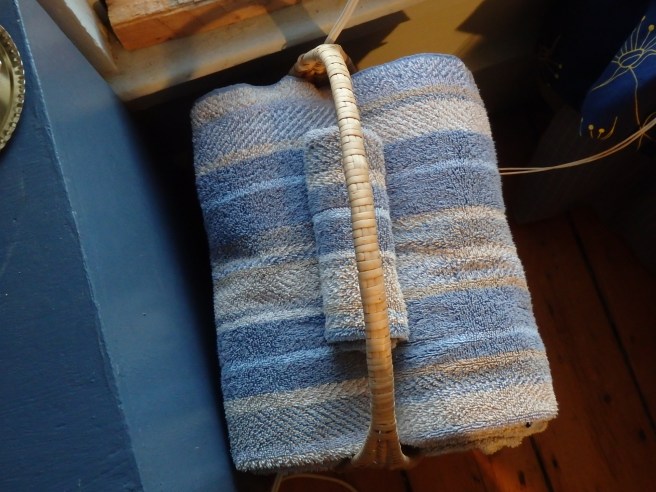
Towels and a washcloth await guests in the room across from my studio.

Of course, this is totally unrelated to the theme. Just another thing on my mind.


LET’S CAST AN IMAGINARY MOVIE

In the (imaginary) movie version of my new novel, What’s Left, who would you cast as Cassia’s great-grandmother Dida and her sister Athina?

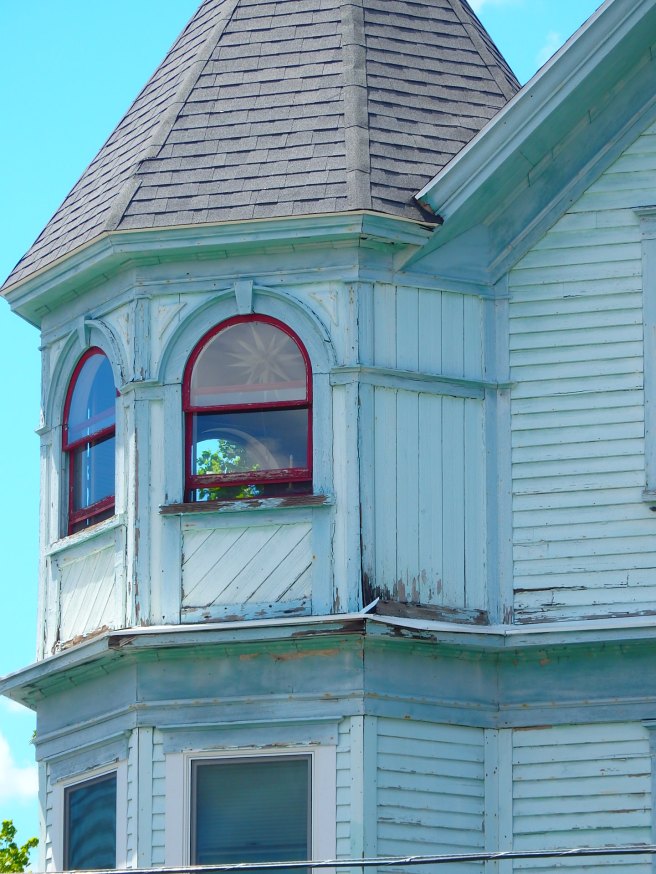
A large Queen Anne-style house with a distinctive witch’s hat tower something like this is the headquarters for Cassia’s extended family in my new novel, What’s Left. If only this one were pink, like hers.

TEN DIFFERENCES BETWEEN KIDS NOW AND BACK IN MY DAY

  1. We could ride in the open-air bed of a pickup. And stand up looking out over the top of the cab, the wind in our face.
  2. Nobody made us wear helmets when riding our bicycles. None of us had helmets, for that matter. We were lucky enough to have bikes. Helmets were for football players or soldiers.
  3. We didn’t spend half of the day on a school bus.
  4. We didn’t have armed guards at school or even a palsy-walsy policeman.
  5. Dental braces weren’t cool.
  6. Boys owned a suit or sports coat and neckties, which some of us could actually knot properly.
  7. Girls had to wear skirts that covered their knees.
  8. Older kids might have a manual typewriter. Or even electric. Forget smart phones or laptops or social media. Thumbs were for sucking during particularly tough tests.
  9. There were three television networks – plus an educational station in some cities. And network news wasn’t rightwing propaganda.
  10. We all went to Sunday School. And said our bedtime prayers faithfully.

~*~

What other differences do you see?

~*~

Open up the latest release at THISTLE/FLINCH.

TEN YUMMY SOUPS

It’s prime time for hot soup. We’re not talking about anything out of a can or a package dropped into boiling water. These are the ones made with fresh ingredients – or things you froze in season for use later. Probably with a good homemade stock, too.

  1. Tomato. Seriously, my wife’s is always a hit – and the glutten-free, lactose-intolerant, or vegans aren’t left out of the pleasure. Our secret ingredient is the tomatoes we cook down and stick in the big freezer in high summer in anticipation of this.
  2. Potato-leek. Simply comforting. Again, with our own leeks. Storing them through winter is a special challenge – so far, we find peat moss works best in buckets placed at the back of the cellar.
  3. Split pea and/or lentils. I imagine there are whole cookbooks devoted to the possibilities.
  4. Ramen. Remember, Japan created restaurants purely for this. Forget that cheap stuff in the plastic bag – though if you do, add tofu, the way we do.
  5. Pho. A hearty Vietnamese dinner in a wondrously big bowl.
  6. Seafood, meaning clam chowder or lobster bisque. (OK, that’s two. I just love both.)
  7. Hot and sour. Fresh Chinese bamboo shoots can make a world of difference.
  8. White bean. Last one I had was an Iranian version with lamb’s neck and another eight or nine ingredients. It was heavenly. Or you can stick to a hambone. Just don’t disparage good beans, OK? (Well, let’s add a footnote for turtle black beans, especially as a great Cuban bowl.)
  9. Ravioli. Yes, as a soup. Slurp ’em up!
  10. Asparagus. We put those stems we cut off to work later.

Well, India’s Mulligatawany belongs on the list, too. I doubt we’re done here yet.

~*~

What would you add to the list?

They’re a threat.