Tag: Religion
Religion turns off readers, and yet …
That’s an advice given to authors, though it’s something I cannot avoid in my own novels and even poetry. Where else can we fully address the deepest values we hold?
Politics doesn’t seem to be working that way, for sure.
Is science fiction the best we can do for now when it comes to grappling with philosophical issues?
Still, I’ve dug in, ranging from the spirituality of yoga and Buddhism in Zen and Tibetan traditions to Quaker and Mennonite Christianity to Greek Orthodoxy as well as Indigenous strands.
I tackle this most directly in Light Seed Truth, an ebook that includes four earlier booklets investigating the revolutionary impact early Quakers found in applying the metaphors of Light, Seed, and Truth. To that I add examples of the power of metaphor in modern secular society, just for balance.
My goal is to raise readers’ awareness and sensitivity rather than convert anyway to a particular faith.
With religion, I want to hear how faith is experienced by different individuals, rather than what they speculate they should be experiencing.
The best mystics I’ve known have surprisingly practical and humorous.
~*~
You can find it and more in the digital platform of your choice at Smashwords, the Apple Store, Barnes & Noble’s Nook, Scribd, Sony’s Kobo, and other fine ebook retailers. You can also ask your public library to obtain it.
Avoiding the G-word while examining faith
One of the things I’ve learned over the years is that turning any discussion of religion away from the doctrinaire formulas and instead to direct feelings and experiences can be quite refreshing, even inspiring.
Essentially, that boils down to shifting from “head” speculation and instead to personal encounters, “heart,” if you will. It moves the focus from the abstract to something more concrete.
In my book, Light Seed Truth, I try to take that a step further by avoiding the G-word altogether except in direct quotation. Part of that stems from a Jewish tradition that considers the name of the Holy One to be too sacred to be uttered, leading instead to substitutes that include the all-cap LORD in English translations, meaning The Name. And part stems from just how different our individual perceptions of the word can be, often defaulting into an old bearded male of some sort, despite other options. Even Adonai and Elohim carry different connotations, not that I go into them. Just be aware.
Besides, the G-word can too easily create a wall between those who “believe” and those who don’t.
Add to that the surveys that find atheists, overall, are more familiar with the Bible than are members of varying denominations, and I do want to include them in the discussion.
In my ebook, I do hope to encourage an appreciation for wonder itself in our lives.
Not a bad place to start, is it?
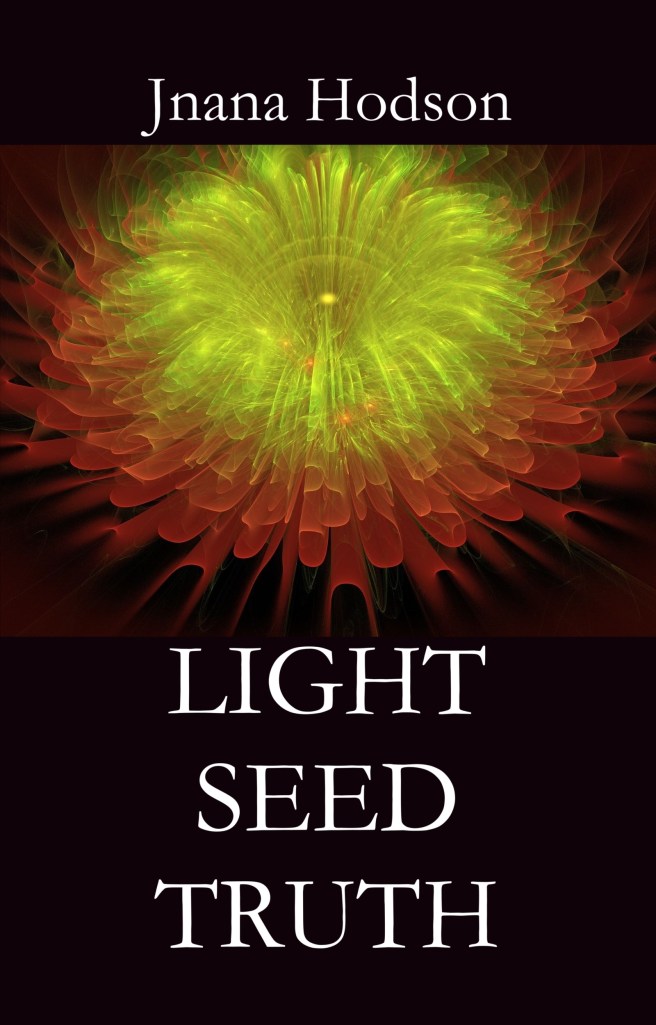
You can find the volume in the digital platform of your choice at Smashwords, the Apple Store, Barnes & Noble’s Nook, Scribd, Sony’s Kobo, and other fine ebook retailers. You can also ask your public library to obtain it.
Consider the Theotokos in the Nativity events
When it comes to the mother of Jesus, Eastern Orthodox Christianity has developed a perspective that differs in subtle ways from the Roman Catholic and Protestant streams. Much of the teaching is not found in the standard Bible but does round out a broader understanding.
Here are ten points from the Orthodox tradition without getting to some very fine hair-splitting.
- She is called the Theotokos, Greek for “God-bearer” or “God-birther.”
- In her full title, she is referenced as the “all holy, immaculate, most glorified and blessed Lady, the Theotokos and Ever-Virgin Mary.”
- Elsewhere in the liturgy, she is called the Mother of God, though the theology does but put some limits on that, as in “Mother of the Incarnate God.”
- She was the only child of an elderly couple, Saints Joachim and Anna, mentioned in the New Testament apocrypha Gospel of James. Their childlessness was a cause of shame, as the drama goes, until their big surprise. Their festival day is July 26.
- The Orthodox celebrate her nativity on September 8. Fittingly, that’s a week after the beginning of the Orthodox liturgical calendar year.
- Her presentation into the temple is celebrated on November 21. According to tradition, she was taken at age 3 and left there, consecrated to its service, where she remained until age 12 in preparation for her celestial role. The feast day comes about a week after the beginning of the 40-day Nativity fast, the Orthodox parallel to what Western-Christianity observes as Advent.
- The annunciation, where Archangel Gabriel appeared with glad tidings to inform her of her surprise pregnancy, is celebrated on March 25, nine months ahead of Christmas.
- On her death, or Dormition (Falling Asleep), she is believed to have been ascended into heaven. The event is celebrated on August 15. In support of the argument, the faithful are reminded that no bones remained behind. Thank “doubting” Thomas for that, when he arrived late for the occasion. Had there been any bones, they no doubt would have been highly regarded wonder-working relics preserved in a famous church or monastery.
- Her icon is displayed on the iconostasis that separates the sanctuary (altar) from the nave in an Orthodox house of worship. She stands holding the child Christ on one side of the Royal Door, through which only the priests may pass, while Jesus is depicted at the other.
- She is also referred to as Queen of Heaven and Mother of the Church.
Reading a history with your own hand in the game
Here we are, Thanksgiving Day, and I’m finally getting around to my reactions to Nathaniel Philbrick’s 2006 hit, Mayflower: Voyage, community, war.
Admittedly, having examined some of the period he covers, from the origin of the faithful and their sailing in 1620 through their struggles up to 1677, but from the settlements north of Boston, I come at the book from a different perspective than most readers. I appreciate his efforts to present the Separatists – the term he settles on rather than “Pilgrims” – as distinct from the Puritans who would invade New England a few years later. I also appreciate his emphasis on the non-members of the faith who participated in the Plymouth Colony settlement as well as the heavy financial burden the enterprise carried, which are details I develop more briefly in my own volume, Quaking Dover: How a counterculture took root and flourished in colonial New Hampshire.
What struck me in my reading was how little awareness Philbrick conveyed regarding the activities not just on the Piscataqua watershed, the center of my book, but north of Boston in general, including Salem, especially in the years before the Puritan influx. Sir Ferdinando Gorges, whom I see as the godfather of New England, is not even mentioned, though he and his investors were active behind the scenes in England. The Piscataqua venture was a source of food for the desperate Plymouth settlement and provided twice as much funding for anti-piracy efforts, among other things.
Philbrick, not surprisingly, takes a conventional gloss on Thomas Morton and the Merrymount settlement without noting that its roots were in Devonshire folkways, not just in personal eccentricities. Dismissing him as “a jolly down-on-his-luck lawyer from London” overlooks the argument that the settlement was thriving and apparently more successful, economically and as an attraction, than Plymouth.
Philbrick’s examination of the attempted Wessagussett settlement as a Plymouth satellite clarified some of the events for me, since it falls between Plymouth and Dover as the oldest permanent settlements in New England. I am also glad that he included the struggles and near devastation of the Jamestown settlement for perspective. The Virginia colony, like the Mayflower, tends to be romanticized in the public eye. The gritty realities need to be spotlighted, too.
He acknowledges the second ship to the Plymouth settlement, the Fortune, in the fall of 1621, which doubled the population of the colony as well as its growing pains. The next ships, the Anne and Little James, arrived in the summer of 1623, but only one is named, briefly. I follow their impact through immigrant William Hilton, the brother of the founder of Dover, New Hampshire, and a Fortune passenger. His wife and children came on the Anne. Though he’s often erroneously identified as co-founder, he didn’t arrive north until he was ejected from Plymouth after he and his wife had a child baptized by the Anglican John Lyford, an event that triggered events that Philbrick briefly notes. I am now wondering if Lyford later, in 1628, performed the first Anglican wedding in New England, the one uniting Samuel Maverick and the widow Amias Cole Thomson on an island in Boston Harbor. That, too, weaves back to my book.
Within the period covered in Mayflower, Quakers were making inroads into the Plymouth colony, though Philbrick makes only fleeting reference to the persecutions led by the Puritans.
While he goes into great detail regarding the Pequot War and the one after, known as King Philip’s, he makes no mention of the mock war games in Dover in 1676 that sent an estimated 400 or more Natives into captivity and is often credited as bringing the King Philip’s conflict to an end. Some were hanged but many, women and children, especially, were sold into slavery and exported.
Still, he develops a much more complex understanding of conflicts among the varied tribes and their leaders than is usually seen. The concept of a unified “Indian” front quickly crumbles away.
I’m also interested in the Winslow lines that left Plymouth, including those who came to the Piscataqua region about the time William Hilton did and others who joined with Dover Friends in establishing a Quaker presence in what eventually became Greater Portland, Maine.
For southern New England, the closure of King Philip’s War, where Philbrick’s book ends, essentially ended the conflicts with the First Peoples. Not so in the north, where fresh outbreaks would hammer on for decades, abetted by the forces of New France, ending only with the Treaty of Paris in 1763.
So how are you, really?
If AGE was a sign of WISDOM, a vast age might have been a sign of great wisdom, so that Biblical ages stand not as a measure of time but as a scaling of experience or insight.
Methuselah, 969 years; Noah, 950.
Also, the the closer to historic times, the more normal – i.e., smaller the number, though still bigger than today’s.
Good thing negative numbers don’t apply here.
Some Maine towns were named after Sacred Harp tunes
New Englanders sometimes joke that a town name will be found repeated in five of the six states of the region. It can be confusing. You know, people moving from one place to a new one but keeping the town name.
Maine, however, has its own twist, since much of the settlement occurred after the American Revolution, especially in the early 1800s, when “singing schools” became a popular community activity. Many of these were related to church life and the spread of four-part harmony hymn singing. So what if someone else had claimed the town name you had hoped to repeat, here was a fresh source.
Today many songs in a hymnal carry a title reflecting the words, but in earlier times the name identified the music itself – many of their lyrics can be transported from one composition to other scores within a given syllable-count system anyway.
That older tradition is continued today in a style of a four-part cappella singing called Sacred Harp, reflecting the title of the hymnal of shape notes that it used. Shape notes, should you ask, are not all of the round kind you see in most musical scores. Instead, some are little flags called fa; others are little boxes called la; or diamonds called me but spelled mi; and the round notes are called so. And there are no instruments, not even harps, much less pianos or organs, in this often rowdy tradition.
So much for that arcane sidetrack. Back to the song names.
I had assumed that the composers applied them to honor where they were written or some such. “Detroit” is one that always makes me smile.
At any rate, during a sacred-harp singing session a while back, it was mentioned that some Maine towns were actually named for the tunes, rather than the other way around.
Bangor was one. Though not in the Sacred Harp collection, the tune was written in 1734, “Oh very God of very God,” and influential. The Maine city was incorporated in 1834 from what had been known as Sunbury or Kenduskeag Plantation. The name “Bangor” is said to have been taken from a Welsh tune. Voila!
Now, for ten examples drawn from the shape-note collection. The name of each tune and town is followed by its date of composition and then the first line of the text it accompanies in the Sacred Harp collection, the date of the founding of the town, and then by something about the Maine community.
- Chester: 1770, “Let the high heav’ns your song invite”; settled in 1823, the town north of Bangor had 201 households in the most recent tally. The name, however, came from an arrival from Chester, New Hampshire. No dice for the hymn, then.
- China: 1801, “Why do we mourn departing friends”; 1774, with the name being chosen by Japheth Washburn. He wanted to call the town Bloomville, but people from a town of that name objected, saying that the similarity could cause confusion. Washburn then settled on the “China” because it was the name of one of his favorite hymns. Today, the summer youth camp of New England Yearly Meeting of Friends (Quaker) is on the town’s China Lake.
- Enfield: 1785, “Before the rosy dawn of day”; about 1820, originally called Cold Stream. A third of the town is occupied by Cold Stream Lake. A possibility.
- Liberty: 1800, “No more beneath th’ oppressive hand”; incorporated in 1827. Another possibility.
- Milford: 1760, “If angels sung as Savior’s rest”; incorporated in 1833 from what had been known as the Sunkhaze plantation. Milford is a town name found across New England.
- Newburgh: 1798, “Let ev’ry creature join to praise”; settled about 1794 and incorporated in 1819, it is spelled like the town along the Hudson River in New York, which probably influenced the naming of both the hymn and the Maine town.
- Northfield: 1800, “How long, dear Savior, o how long”; the town was settled about 1825 and incorporated in 1838. Thus, a possibility.
- Oxford: I’m not sure about the hymn’s date, “Shepherds rejoice, lift up your eyes,” though when the town incorporated in 1829, the honor went to the university town in England. Well, that left the other famed university town, which also has a hymn title in the Sacred Harp collection, “The Lord will happiness divine.” In the second case, the name came up at a town meeting when the community was preparing to be set off from Ripley. The 11-year-old daughter of the household where the discussion took place was asked to suggest a name for the new town. She proposed the name Cambridge, from the English town of the same name about which she had just been reading. It was applied in 1834.
- Poland: 1785, “God of my life, look gently down”; when the town was incorporated in 1795 from Bakerstown Plantation, early resident Moses Emery was given the privilege of naming the town. He had always been fond of an old melody called “Poland,” found in most of the collections of ancient psalmody, as the history goes. Today the place is best known for the Poland Springs bottled water brand.
- Portland: 1802, “Sweet is the day of sacred rest”; the Maine city was set off as a town in 1786, named after an isle off the coast of Dorset, England. Alas for the influence of the hymn, though it may have been the other way around. The city in Oregon, should you wonder, was named in honor of the one in Maine in an 1844 toss of a coin. Otherwise, the Pacific Northwest city would have been Boston, which somehow doesn’t seem to be a tune name.
There are arguments that some of the hymns were named after Maine towns. Just consider Mars Hill, 1959, or Mount Desert, 1985.
From Orpheus to eternity
Contrary to widespread opinion, hell is air-conditioned, though prone to frequent power outages. This is crucial, according to the dream, since hades exists largely as something akin to cyberspace – that is, its endlessly interlocked and hushed interiors are covered with wall-to-wall carpeting and bathed in recessed fluorescent lighting, each room assigned to a particular array of deceased souls. There, they may be called up on large-screen, high-definition television screens, although addressing them is an experience akin to conversing with an advanced Alzheimer’s patient. Unlike most funeral homes, these room contain is little furniture and no flowers.
The experience of hell is not fire, as commonly thought, but rather that there’s nothing to do. The result is endless boredom, with only the memories of a single lifetime to reflect on. There’s no music, neither harp nor lyre, and singing never emerges from the throat. Here, insanity is not an option. Escape is impossible from the utter silence. This is solitary confinement amplified, without even periodic meals for variation. The basis of humanity is awareness. In damnation, the awareness is amplified – awareness of nothingness.
Visitors to this realm must be careful not to be separated when a power outage strikes. Do not go to the bathroom alone or attempt to double your productivity by working multiple rooms at the same time. Should two members of a family obtain an unequal knowledge of the deceased – information gleaned separately during their quest to better know the departed, but not yet shared with each other – they may be told they cannot leave hell, but must themselves join its ranks. This is, of course, a bald lie, but getting through its sales pitch is emotionally exhausting.
The power outages occur to reinforce the awareness of eternity. That is, they retain a rhythm of time within timelessness.
Dante, we should note, wrote of inferno before electricity became part of human life. Had it been, he may have placed the worst offenders in electrical chairs, with continuous executions. It’s possible that happens in the deepest recesses, contributing to the power outages. I report only on what I’ve seen, briefly. I remember nothing of our guide, other than his dark, single-color suit and highly polished shoes leading us down a set of three steps into our last room.
~*~
My, I don’t quite know now where that originated in my mind. But there it is, from some deep past.
I knew Christ before I met Jesus
An alternative way of knowing Christ. Not just about him – or it or they.
And definitely not just by the Book.
Where else can we jointly examine our deepest values and ideals?
Allow me to restate my argument that religion is important, along with a confession that in too many ways, at too many times, its proponents have betrayed its radical promise and its progressive direction, whatever their professed faith.
At its best, religion gives us individually and collectively a place to examine our hopes, dreams, and possibilities of a healthier, more justful, and more harmonious world. In short, moral and ethical guidelines. It can also provide the necessary foundation of community for pursuing and nurturing that goal.
Some of the sharpest critics of its practice at worst are prophets found in the Bible.
To see some examples of how that worked within the Quaker movement, visit my blog, As Light Is Sown.
 Jnana's Red Barn