OF BIRKENSTOCKS AND USED VOLVOS … OR MORE RECENTLY, PRIUS

As I said at the time …

A rather telling article in Pennsylvania Mennonite Heritage was by a woman who admitted she never felt that she fit in with the others in her home congregation. Never mind she was the preacher’s daughter. I sometimes feel the same way in Quaker circles, especially when everybody else is wearing Birkenstocks or has a used Volvo parked in the lot or carries any number of postgraduate degrees behind her name. Once, addressing a group of about forty Friends in Philadelphia, I mentioned the predominance of blue eyes in our circles – and about six other people nodded vigorously. The six who had brown or hazel eyes, like mine; the rest of the group seemed thoroughly bewildered.

It’s all about this sense of not being fully embraced by the circle.

I wonder how we would react if a soldier in uniform showed up to worship with us, or a woman wearing a great deal of makeup, or a man straight off a lobster boat. Yes, we would tolerate them (I hope). But would we feel awkward – to say nothing of them? Would we be able to truly extend a welcome? How would we all feel, in the end?

Our possessions and style extend subtle signals reflecting our places in a larger society. Dover Friends Meeting is not a blue-collar community. Our vocal ministry often relies on “big words” and metaphors – something we seem to prefer, rather than pointed messages that drive home an unmistakable point. Even so, while we stand apart from the larger society in many ways, perhaps we engage ourselves in it too much. These are ultimately matters to consider when striking a balance between inclusion and identity, nurture and welcome, growth or decline.

To be accurate, Birkenstocks and Volvos aren’t the indicators anymore – they’ve been replaced by Teva and Prius or some other brand name I don’t even recognize. What I do suspect is that whatever the current “humble” status item is, I won’t have it, except by accident. Whatever that means in the context of belonging.
ON THE ROAD AGAIN

We’ve entered vacation season (not that we Friends don’t travel widely throughout the year). While it also means that our attendance is likely to be down through the summer, it also means we’re likely to have visitors from, well, just about everywhere – people I expect we’ll welcome warmly.

It also means we’ll have the opportunity in our own travels to attend other Meetings, something I strongly encourage. For the truly adventurous, worshiping with Friends in the “other” streams can be stimulating and thought-provoking. A pastor? A choir? Hymnals? I always learn something. Last time, it was silent singing. Another time, that the Evangelical Friends can have just as much of a cat-herding condition as we do. Memories of a humorous exchange with the baritone sitting next to me in the choir.

There’s also a curiosity about us, too. “Why did you choose us?” – that, in the pastoral meeting style, rather than the unprogrammed worship a dozen miles away. I could have given any of a dozen reasons, but eventually got down to the part, “Besides, I have the book” – meaning a collection of historic essays and oral histories made before the village was flooded by a Corps of Engineers dam, and the new meetinghouse built out along the highway. And then, in the give-and-take of quick conversation, receiving that priceless look and gentle reply, “It’s all fiction.” As a writer, I had to laugh, knowing all too well how difficult it is to get any story right. The quick exchange followed by some suggestions of sites to poke about afterward, if I had time.

I come home with a renewed appreciation for every visitor who ventures through our doorway. With a little more flexibility in our own open worship. With my own additional chapter to a well-used book on the shelf behind me. And with an expanded awareness of our body as a Society of Friends.

THIS OLD (MEETING) HOUSE

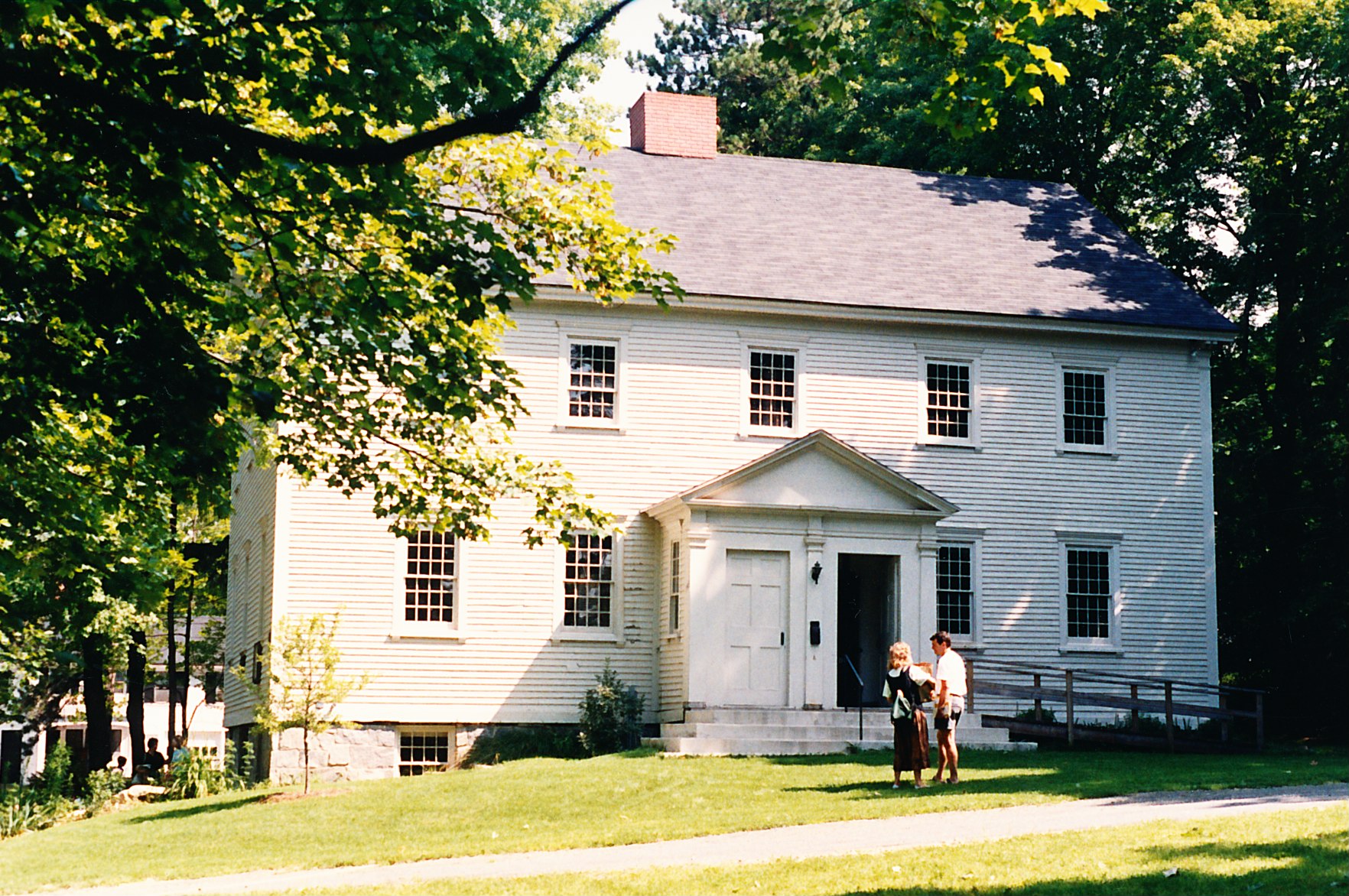
Today commemorates the 247th anniversary of the erection of our meetinghouse. And to think, this was Dover Friends’ third house of worship, coming a little more than a century after the first Quaker convincements along the Cocheco River. The structure covers a lot of history, as we would see if we created timelines of those years – the entire life of our nation, for starters. Add to that science, the arts and leisure, religion, education, economics … the overlays become mind-boggling.

It’s hard for us to envision that day, with its swarm of activity, everyone seemingly knowing the tasks to be done. Cookbook writer Marcia Adams says it takes at least 100 to 150 men to raise an Amish barn, and then recites a menu that fed 175 men in the 1800s. Oxen and strong horses or mules would have been part of the scene, with pulleys and poles lifting the posts and beams into place. Many of the skills used have likely been lost to antiquity. A similar number of women would have busily arranged the accompanying feast, and children would have been assisting everywhere. Today, Jehovah’s Witnesses do something similar when they construct a new Kingdom Hall, which like the Amish barn or our meetinghouse, goes up in a single day.

Settling into worship, I once again regard our Quaker ancestors’ application of classical proportions, pleasing to the eye. The additional touches others have added across the years. Plumbing, heating, wiring, the classrooms upstairs and down. I also realize how much my own perception of the building has changed, now that I’ve become a New England homeowner. How much responsibility we carry for the upkeep of this legacy or how difficult it would be to replace what we have.

In the background, I hear an echo of an old Friend in Iowa, viewing the beautiful curly maple shutters in a meetinghouse about to be shipped by rail car to another part of the state. “It will be a good thing if they be not too proud of it,” she said, with a curious balance of humility and admiration. The advice, of course, extends to us, as well. The fact remains that Friends do not worship in a temple but a house, with all of its Biblical sense of extended family and even their domestic animals. Welcome to our house.

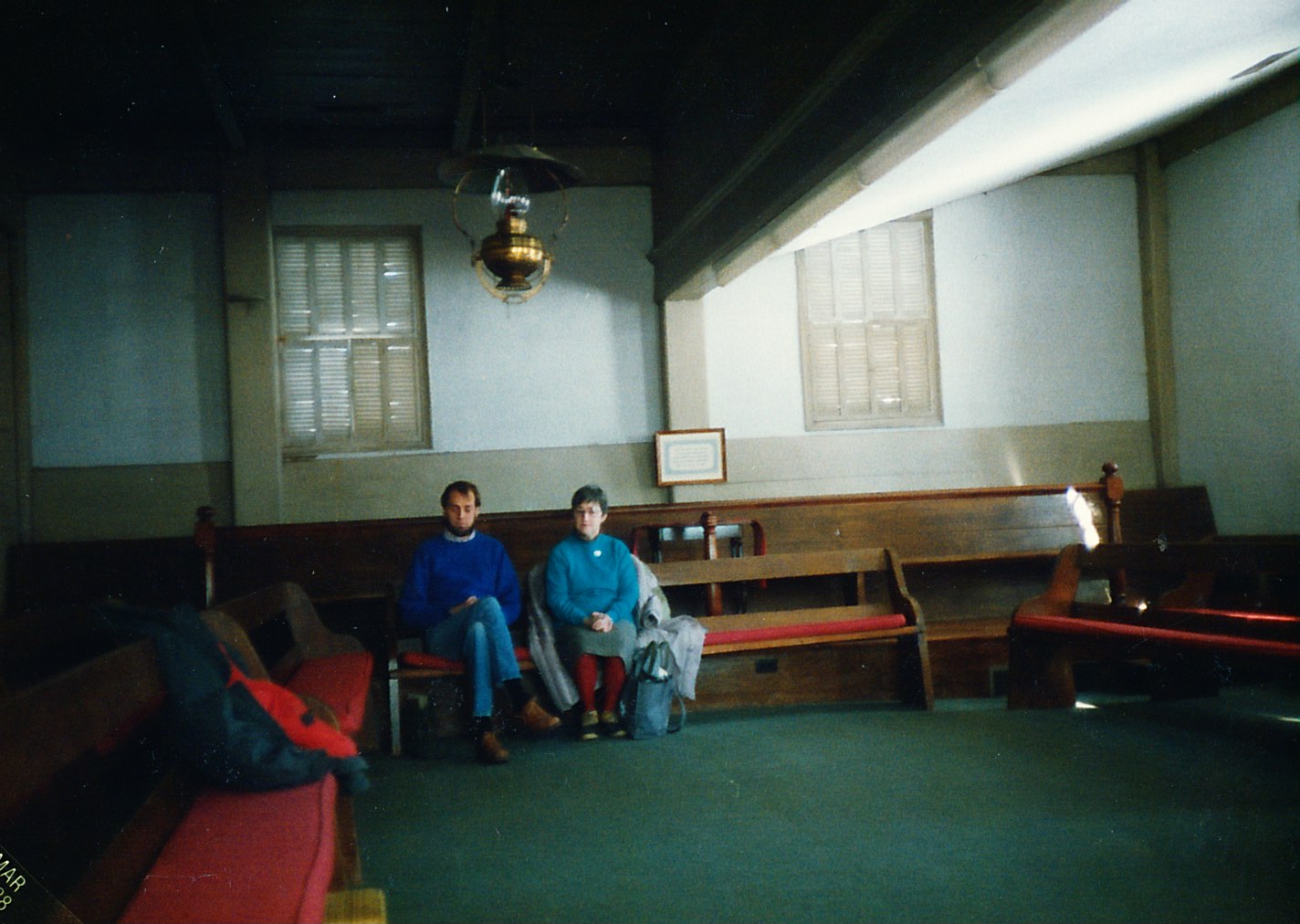
Barbara Sturrock and me on the "facing bench" inside. This is the room where we worship, seated in a "hollow square" facing each other.
Barbara Sturrock and me (years ago) on the “facing bench” inside. This is the room where we worship, seated in a “hollow square” facing each other.

SCN_0070

QUAKER STREET

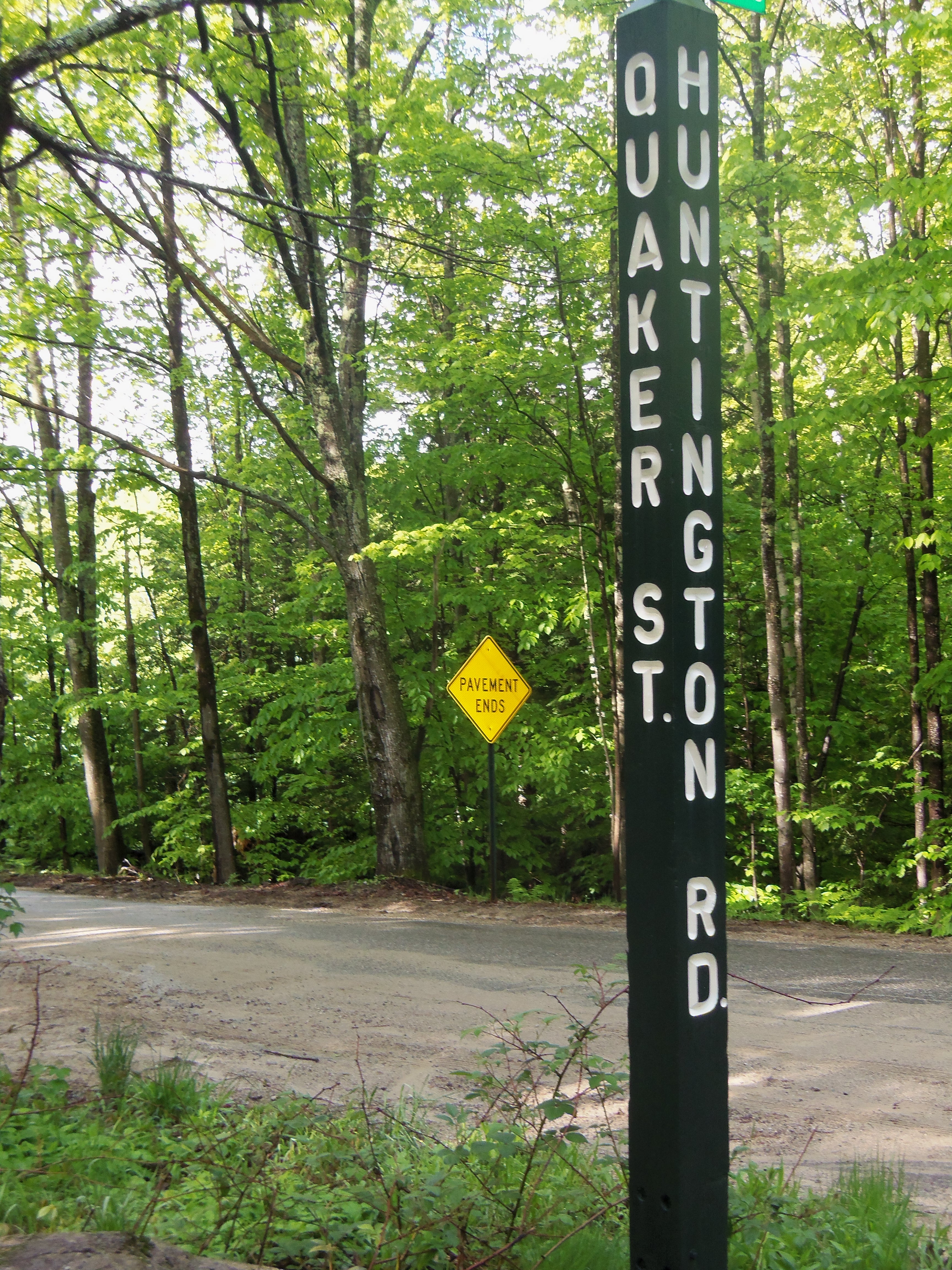
Note the yellow sign, "Pavement ends." It really does feel like a slower place.
Note the yellow sign, “Pavement ends.” It really does feel like a slower place.

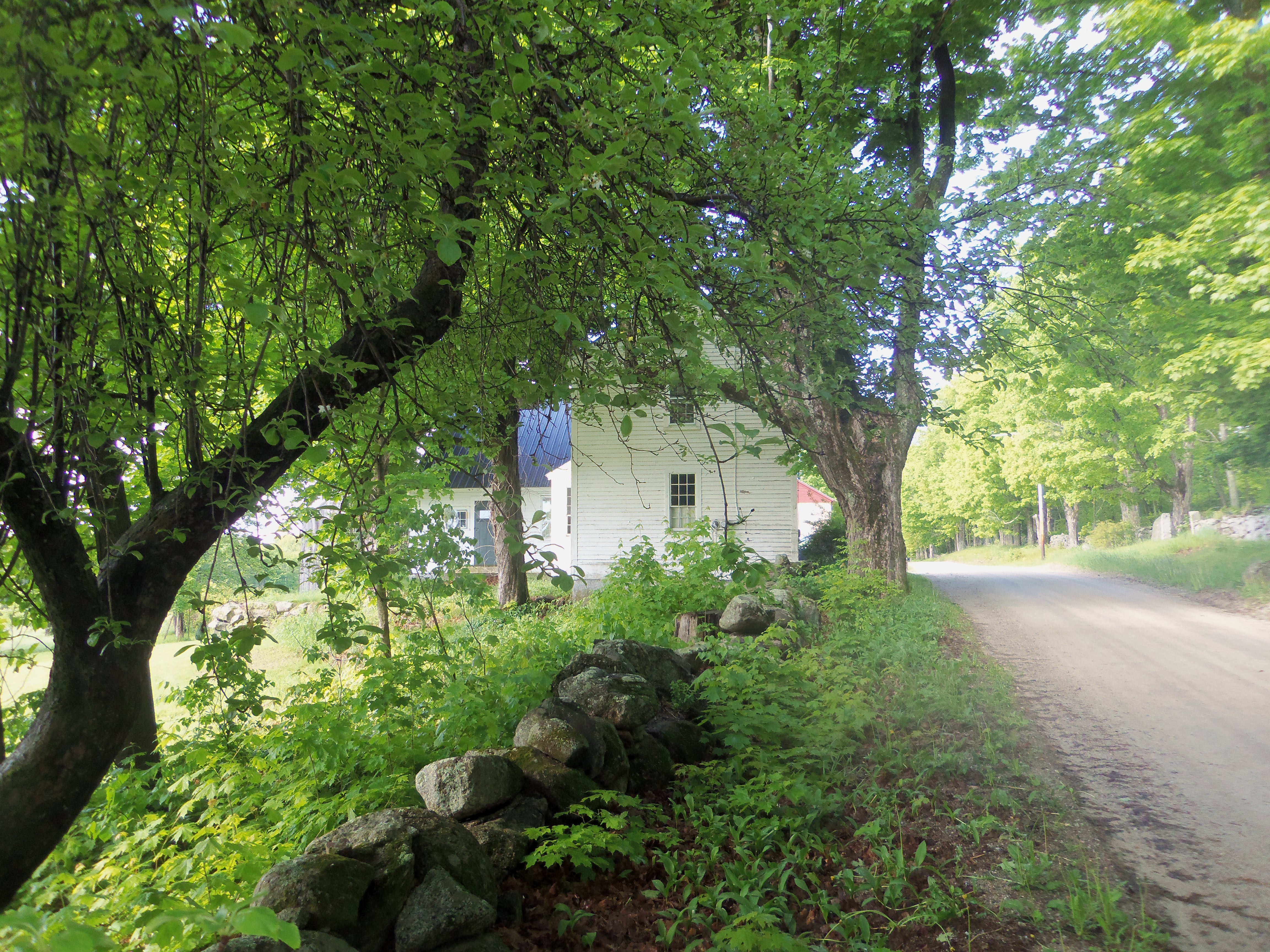
Taking its name from an old use of “street” as “neighborhood,” the stretch is also known now as the Quaker District. It’s up in the hills in a remote corner of Henniker, New Hampshire.

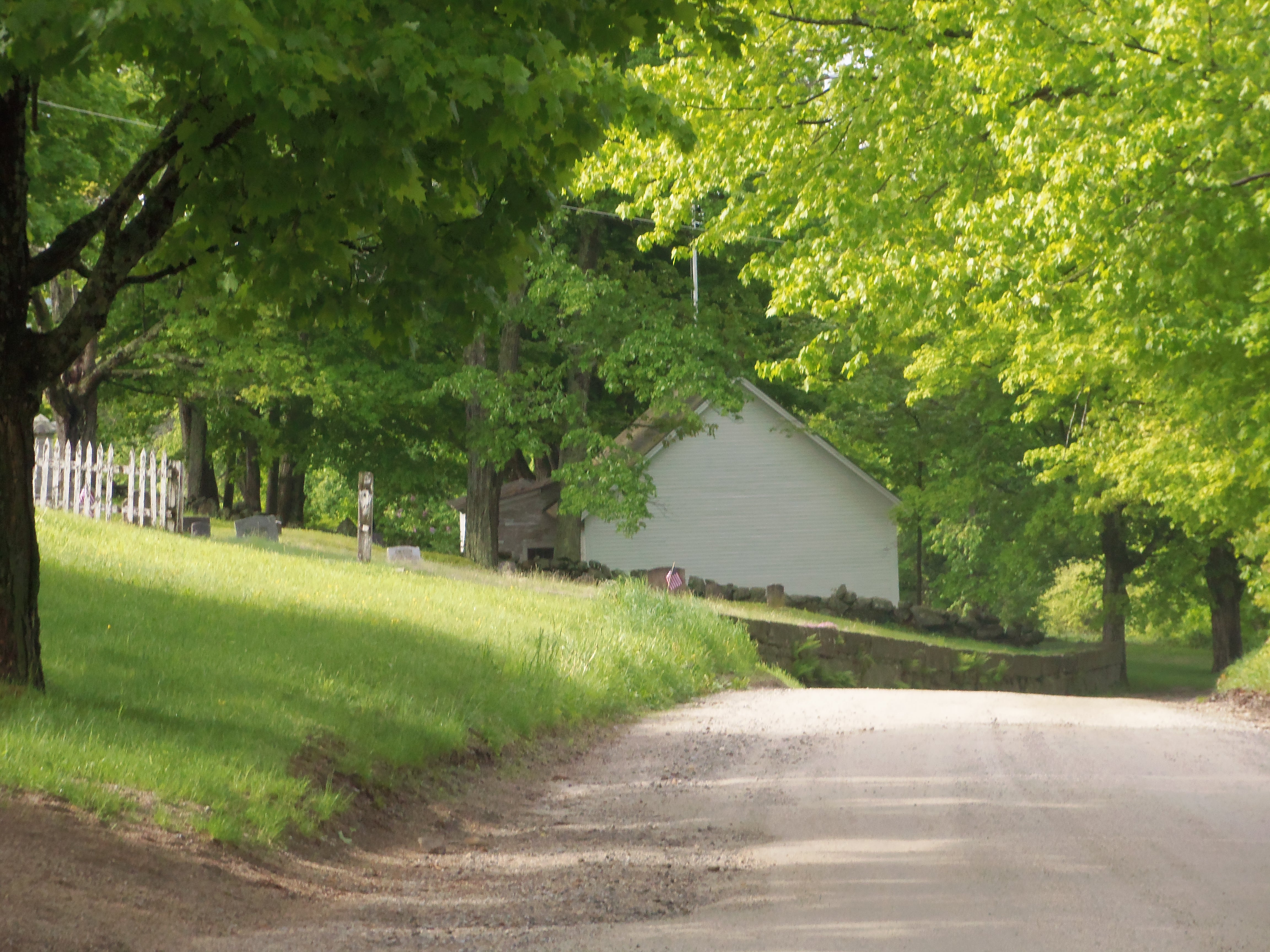
The road approaches the old schoolhouse.
The road passes a small Quaker burial ground next to the old schoolhouse.
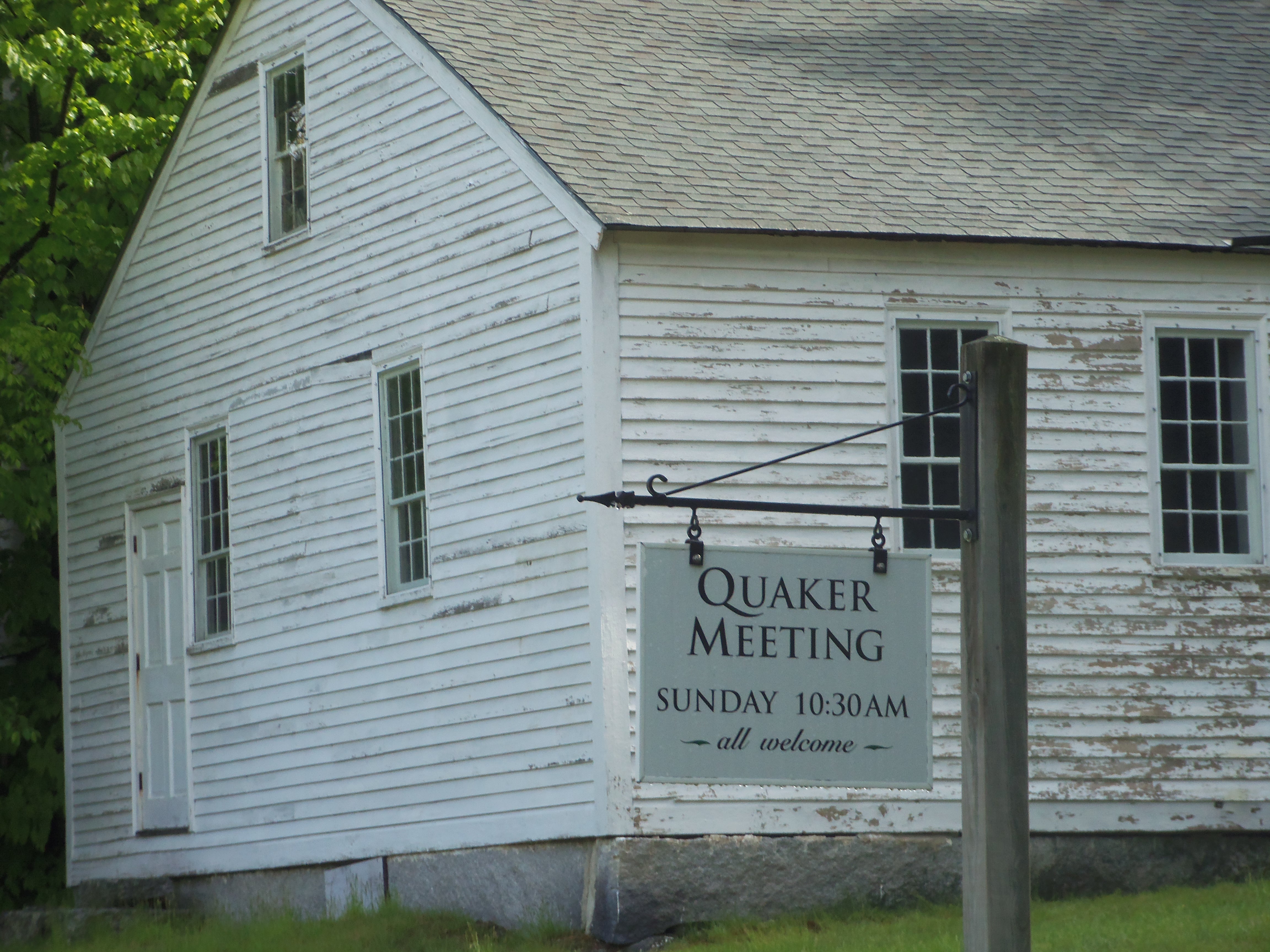
As the sign on the schoolhouse says ...
As the sign on the schoolhouse says …
The center of the village was the Friends meetinghouse, which is still in use.
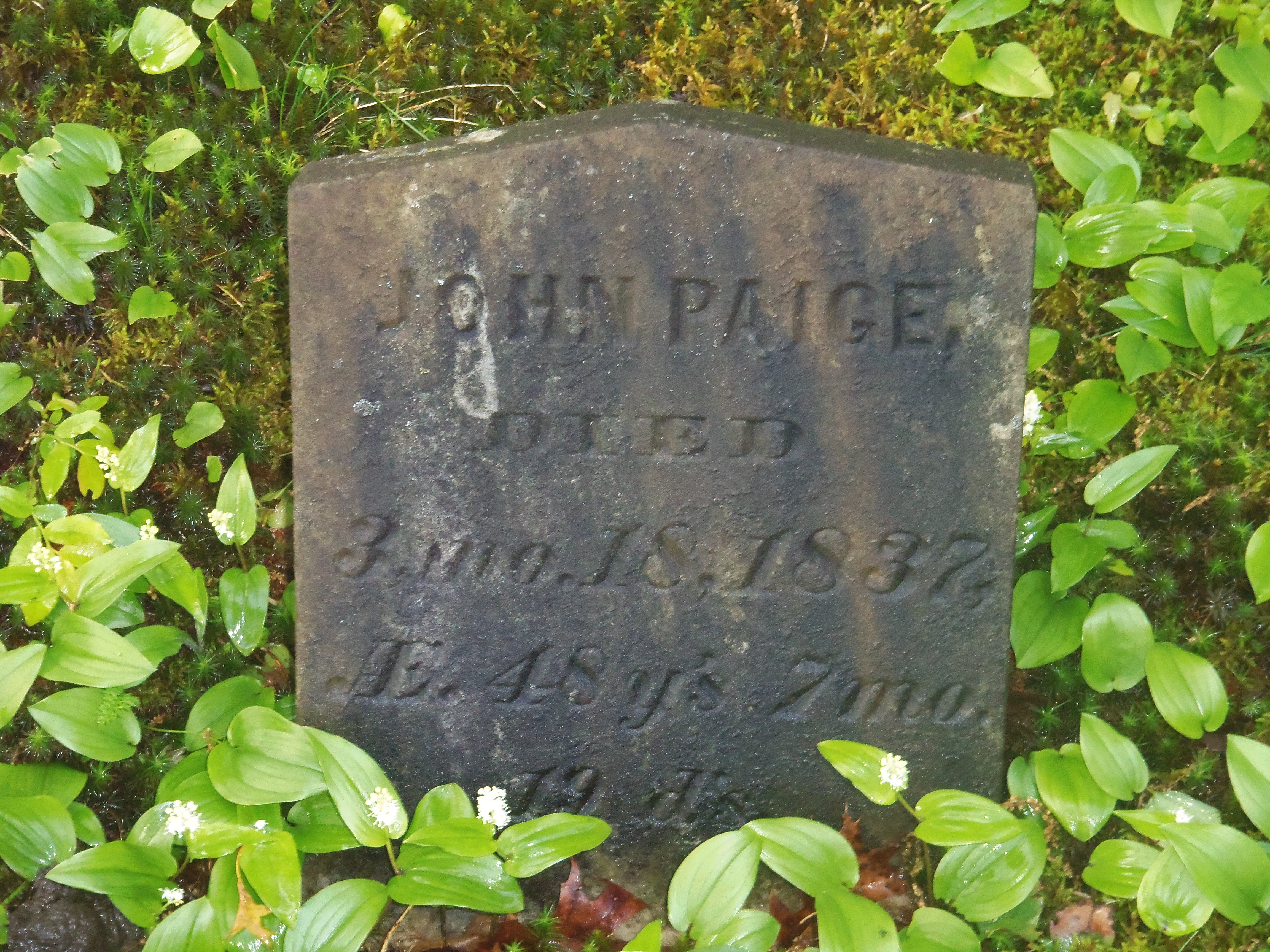
Many headstones in the burial ground use the old Plain dates.
Many headstones in the burial ground use the old Plain dates. The “3rd mo” is Third Month, or March.
Around the corner.
Around the corner.


AT THE HEART OF AN UNDERLYING TENSION

As I said at the time …

In these reflections on Quaker practice, I’ve tried to avoid overt theology. Leave that for messages in worship or for “nuts and bolts” workshops. My focus has been largely on ways our faith comes together in community and some of the quirky sides to that.

This time, though, I want to remind us that the foundation of Meeting is our experience with the Divine – by whatever name we use, or however personal or transcendent the relationship. What is often seen as a tension between peace-action Friends and contemplative ones – or universalist and Christocentric, depending on the particular discussion – can be turned on its head: in Beyond Majority Rule, Jesuit Michael J. Sheeran argued “the real cleavage among Friends is between those who experience the gathered or covered condition and those who do not.” How astute!

There’s a difference between Quaker culture and Quaker faith itself. Since most of us in Dover Meeting weren’t raised Quaker, we’re not steeped in the culture, but we’ve adopted it, to whatever degree, in our own lives all the same. (Or at least like to think we have.) It’s more subtle than it was in the days of Plain speech and dress, but it’s there all the same. The faith part, of course, is at the heart of our worship.

We can ask ourselves if we were led to Meeting more by the culture or by the faith, and then ask how one activates the other. Jim Wallis, the evangelical editor of Sojourner, sees social action arising from the faith as an imperative. In a similar vein, one might see how central the Peace Testimony is in the teachings of Jesus, and how hollow the Christian message is without it. One lights up the other when the culture and faith move together.

Using the language that’s come to represent my experience, this is what happens with Christ amongst us. How do you express it?

SAMPLING A FEW QUAKER PERIODICALS

Now for the magazines rack. The one in the meeting library, where we display our current periodicals.

First is the monthly Friends Journal: Quaker Thought and Life Today, published in Philadelphia from a Friends General Conference perspective. In its elegant format, it’s a delight to hold. Admittedly, the articles often run the range of crunchy granola-head interests and sometimes a too “politically correct” editing and can leave one wondering just where Friends stand as a body, but there’s almost always something provocative, from one side or the other. Look, too, to see how it progresses under editor Martin Kelley.

Second is Quaker Life: A Ministry of Friends United Ministry published six times a year in Richmond, Indiana. This colorful, glossy magazine underwent a lively transformation in its few years under youthful editor Katie Terrell, who attempted to give each issue a distinctive focus – integrity, transforming lives, what does a new kind of Quaker look like, humor, authority, discernment, even controversy itself. Considering its audience of primarily Midwestern and Southern pastoral Friends, I’m often impressed by the number of writers from unprogrammed meetings, many of them in New England – as well as those from Third World nations. If you want to get a quick overview of how our spiritual roots influence us today, turn to historian Tom Hamm’s one-page question-and-answer column in each issue.

Also of note are the quarterlies. Quaker History can be anything but quaint when it’s examining the difficulties of integrating Sidwell Friends School in Washington, as well as its not-so-orderly roots, or the psychedelic influences of ergot-infected oats on the early Quaker movement. (The real Quaker oats?)

And Quaker Religious Thought, often focusing on a single topic such as Speaking Truth to Power or the strand of Holiness movement in Friends tradition, typically counterpoises the primary article with considered reactions. Sometimes a thorny theological issue can be too arcane for general discussion, but that’s offset by the others that prove unexpectedly stimulating.

*   *   *

Oh, yes – the extra magazine and newsletters piling up in your home? Consider dropping them off at the public library magazine swap pile, a local coffee house, or the Laundromat. You never know who might learn of us that way.

PENDLE HILL PAMPLETS

Some of the most helpful or inspiring writing I’ve encountered has come in short volumes. In poetry these are typically called chapbooks, while in prose they’re often pamphlets or booklets.

Among them, the rack of Pendle Hill pamphlets in our meeting library presents an astonishing array of Quaker wisdom. Published by subscription (currently five volumes a year) at the retreat center in Wallingford, Pennsylvania, the series now numbers more than 400 titles. Admittedly, there are some duds among the jewels, but somewhere in the collection is likely to be a reasoned answer to your nagging question about Quaker faith and practice.

Some, like Margery Mears Larrabee’s Spirit-Led Eldering and Sondra L. Cronk’s Gospel Order: A Quaker Understanding of Faithful Church Community, focus on vital aspects of Friends’ community. Others, like William Taber’s The Prophetic Stream and Four Doors to Meeting for Worship, serve as guides for the experience of our hour of open worship. John Punsheon’s Alternative Christianity finds in Quaker practice itself a different expression of Christian faith than is found elsewhere (that is, he looks at the results, while I’ve been looking at foundations). Peter Bien’s The Mystery of Quaker Light parallels some of what I’ve been uncovering in the revolutionary aspects of this central metaphor of our faith. Brian Drayton’s Getting Rooted: Living in the Cross, a Path to Joy and Liberation, spring from personal practice.

The series has also included a wide range of social action issues, like Pat Schenck’s Answering the Call to Heal the World or labor lawyer Richard B. Gregg’s A Discipline for Non-Violence, as well as volumes on art and theater, prison work, nurturing children, and Quakers’ experiences in yoga and Zen.

There’s even a Quaker Pamphlets Online project to provide free downloads of classic early issues.

For now, I’d like to take a more extended look at four volumes that came in around the same time:

  • Benjamin Lloyd’s Turnaround: Growing a Twenty-First Century Religious Society of Friends is an exciting and challenging argument of extending Quaker faith to younger generations. Funky interracial ads on the sides of city buses, anyone? With his theater background, Lloyd’s right in contending we need to reach out, vigorously, and shake off unnecessary baggage. He’s right in sensing we need celebration and true community. And he’s refreshingly candid about our weaknesses.
  • John Lampen’s Answering Violence: Encounters With Perpetrators is a hard-nosed blueprint of the author’s work as a peacemaker who moved into a land of engrained conflict. The incidents he relates are difficult, dangerous, courageous, sometimes leading to tragedy, sometimes bridging opponents trapped against their own heart’s desires. Yet he also marks important turning points in the time-consuming drive to pacify Northern Ireland.
  • Framed by an enigmatic old English folksong, Richard Kelley’s Three Ravens and Two Widows ponders the modern Society of Friends through the quite different legacies of his mother, with her urbane Philadelphia outlook, and his paternal grandmother, with a Holiness-based pastoral Quakerism in Ohio. Somehow, they had to find ways to live together after the deaths of their husbands. By implication, so do we, as a diverse community of faith.
  • Brian Drayton’s James Nayler Speaking considers the brief, prolific outpouring of early Quakerism’s most important minister. More articulate, mystical, and systematic than George Fox, Nayler was at the forefront of bringing the Quaker message from the north into London and all the upheaval that followed. No one else has written more powerfully of the Light or embedded its metaphor into Quaker thought so thoroughly.


THE CUSTOM OF QUAKER JOURNALS

The custom of publishing the journals of influential Friends was no doubt intended to encourage others to strive for exemplary service. The journals themselves form a curious genre – part diary, part autobiography, part memoir viewed from the vantage of advanced age, part travelogue (often tediously so, unless you’re looking for individuals and places being visited), part glimmers of spiritual brilliance – often published after the specific Friend’s death and at the direction of a yearly meeting. Closely related is our custom of memorial minutes.

Best known are the journals of George Fox, spanning the initial decades of the Quaker movement, and John Woolman, whose lifelong mission essentially ended the ownership of slaves among Friends before the Revolutionary War. Both works are in our meeting library and highly recommended.

But there’s a host of others, as you’ll find digging around.

Like the journals themselves, collections of writings or of journal excepts serve as similar prophetic inspiration. For instance, Terry S. Wallace’s A Sincere and Constant Love: an Introduction to the Work of Margaret Fell allows us to look into the remarkable thinking of the woman who became George Fox’s wife and confidant and did much to shape the emerging Friends organization. (How I wish we had a similar cache of material for Elizabeth Hooten, who mothered Quakerism from its very beginning! No such records, unfortunately, are known to have survived.)

For now, let me name one other volume in our collection: Wilt Thou Go on My Errand? Three 18th Century Journals of Quaker Women Ministers edited by Margaret Hope Bacon.

There’s also a host of books and pamphlets that put the lives of Fox, Fell, and Woolman in context or add to their outpouring – too many, in fact, to detail here.

SAVORING THE OPENNESS

When we view our mostly quiet worship in contrast to pastoral meetings, we make silence the measure while conveniently overlooking the focus of our practice. William Penn may have been critical of both styles of worship when he wrote:

“When you come to your meetings … Do you gather bodily only, and kindle a fire, compassing yourselves about the sparks of your own kindling, and so please yourselves, and walk in the light of your own fire, and in the sparks which you have kindled? … Or rather, do you sit down in True Silence, resting from your own Will and Workings, and waiting upon the Lord fixed with your minds in the Light wherewith Christ has enlightened you, refreshes you, and prepares you and your spirits and souls to make you fit for his service, that you may offer unto him a pure and spiritual sacrifice.”

An awareness of this focus also places in context this passage from Penn’s Advice to His Children (chapter II, section 27):

“Love silence even in the mind; for thoughts are to that, as words to the body, troublesome; much speaking, as much thinking, spends, and in many thoughts, as well as words, there is sin. True silence is the rest of the mind, and is to the spirit what sleep is to the body, nourishment and refreshment. It is a great virtue; it covers folly, keeps secrets, avoids disputes, and prevents sin.”

“Rest,” I might add, can also be recast as “centering.” In Biblical use, the word often also indicates freedom from oppression by the enemy, as well as peace of spirit. There is even a sense of gathering of strength. That is, I see nothing simpleminded in Penn’s concept of True Silence. Indeed, as I’ve noted, entering it can prove surprising elusive until its refreshment pours over us.

TURNING TO THE WORD

Historically, Quakers understood the Word of God to be Christ, rather than the Bible. This insight, drawn largely from the opening of the Gospel of John, is one of the central differences between Friends and most Protestants, especially those of the Calvinist strands. Sometimes people will use “the Living Word” to distinguish between Jesus and Scripture, though I usually sense their usage soon becomes blurred.

I raise this not so much for theological argument as for an understanding of how we Friends individually interpret our experiences of the Divine. In the Gospel of John, the concept of Christ is also identified with the image of Light, which we often repeat in our Quaker circles. What interests me is the spectrum of experiences that can happen within that comprehension. At one end we have the ancient problem of a divinity so remarkable and expansive its name cannot be spoken (sometimes represented as YHWH, or pronounced in translation “the word of God” or simply “the Holy One”); at the other end is one so personal it knows “every feather” and “every hair” and is often felt as the person of Jesus. That is, something abstract and universal, on one hand, and something intimately present, on the other. Both can be overpowering and awesome.

In either case, Friends have reported this as Christ present amongst us, “coming and come.” In either case, Friends have discovered no need for an interpreter (trained preacher or priest) between us and the text, other than the Spirit or Light by which it was written. In either case, Friends have known a living and growing, continuing revelation. In Friends’ experience, the book is not closed but miraculously unfolding. This Word is quite different from approaching Scripture as a series of laws to be arrayed and obeyed. It’s what calls us to be a Society of Friends, rather than lawyers – a world of difference, indeed.

Light 1For a detailed overview of the metaphor of Light in its early Quaker manifestations, go to my chapbook here.