SAMPLING A FEW QUAKER PERIODICALS

Now for the magazines rack. The one in the meeting library, where we display our current periodicals.

First is the monthly Friends Journal: Quaker Thought and Life Today, published in Philadelphia from a Friends General Conference perspective. In its elegant format, it’s a delight to hold. Admittedly, the articles often run the range of crunchy granola-head interests and sometimes a too “politically correct” editing and can leave one wondering just where Friends stand as a body, but there’s almost always something provocative, from one side or the other. Look, too, to see how it progresses under editor Martin Kelley.

Second is Quaker Life: A Ministry of Friends United Ministry published six times a year in Richmond, Indiana. This colorful, glossy magazine underwent a lively transformation in its few years under youthful editor Katie Terrell, who attempted to give each issue a distinctive focus – integrity, transforming lives, what does a new kind of Quaker look like, humor, authority, discernment, even controversy itself. Considering its audience of primarily Midwestern and Southern pastoral Friends, I’m often impressed by the number of writers from unprogrammed meetings, many of them in New England – as well as those from Third World nations. If you want to get a quick overview of how our spiritual roots influence us today, turn to historian Tom Hamm’s one-page question-and-answer column in each issue.

Also of note are the quarterlies. Quaker History can be anything but quaint when it’s examining the difficulties of integrating Sidwell Friends School in Washington, as well as its not-so-orderly roots, or the psychedelic influences of ergot-infected oats on the early Quaker movement. (The real Quaker oats?)

And Quaker Religious Thought, often focusing on a single topic such as Speaking Truth to Power or the strand of Holiness movement in Friends tradition, typically counterpoises the primary article with considered reactions. Sometimes a thorny theological issue can be too arcane for general discussion, but that’s offset by the others that prove unexpectedly stimulating.

*   *   *

Oh, yes – the extra magazine and newsletters piling up in your home? Consider dropping them off at the public library magazine swap pile, a local coffee house, or the Laundromat. You never know who might learn of us that way.

PENDLE HILL PAMPLETS

Some of the most helpful or inspiring writing I’ve encountered has come in short volumes. In poetry these are typically called chapbooks, while in prose they’re often pamphlets or booklets.

Among them, the rack of Pendle Hill pamphlets in our meeting library presents an astonishing array of Quaker wisdom. Published by subscription (currently five volumes a year) at the retreat center in Wallingford, Pennsylvania, the series now numbers more than 400 titles. Admittedly, there are some duds among the jewels, but somewhere in the collection is likely to be a reasoned answer to your nagging question about Quaker faith and practice.

Some, like Margery Mears Larrabee’s Spirit-Led Eldering and Sondra L. Cronk’s Gospel Order: A Quaker Understanding of Faithful Church Community, focus on vital aspects of Friends’ community. Others, like William Taber’s The Prophetic Stream and Four Doors to Meeting for Worship, serve as guides for the experience of our hour of open worship. John Punsheon’s Alternative Christianity finds in Quaker practice itself a different expression of Christian faith than is found elsewhere (that is, he looks at the results, while I’ve been looking at foundations). Peter Bien’s The Mystery of Quaker Light parallels some of what I’ve been uncovering in the revolutionary aspects of this central metaphor of our faith. Brian Drayton’s Getting Rooted: Living in the Cross, a Path to Joy and Liberation, spring from personal practice.

The series has also included a wide range of social action issues, like Pat Schenck’s Answering the Call to Heal the World or labor lawyer Richard B. Gregg’s A Discipline for Non-Violence, as well as volumes on art and theater, prison work, nurturing children, and Quakers’ experiences in yoga and Zen.

There’s even a Quaker Pamphlets Online project to provide free downloads of classic early issues.

For now, I’d like to take a more extended look at four volumes that came in around the same time:

  • Benjamin Lloyd’s Turnaround: Growing a Twenty-First Century Religious Society of Friends is an exciting and challenging argument of extending Quaker faith to younger generations. Funky interracial ads on the sides of city buses, anyone? With his theater background, Lloyd’s right in contending we need to reach out, vigorously, and shake off unnecessary baggage. He’s right in sensing we need celebration and true community. And he’s refreshingly candid about our weaknesses.
  • John Lampen’s Answering Violence: Encounters With Perpetrators is a hard-nosed blueprint of the author’s work as a peacemaker who moved into a land of engrained conflict. The incidents he relates are difficult, dangerous, courageous, sometimes leading to tragedy, sometimes bridging opponents trapped against their own heart’s desires. Yet he also marks important turning points in the time-consuming drive to pacify Northern Ireland.
  • Framed by an enigmatic old English folksong, Richard Kelley’s Three Ravens and Two Widows ponders the modern Society of Friends through the quite different legacies of his mother, with her urbane Philadelphia outlook, and his paternal grandmother, with a Holiness-based pastoral Quakerism in Ohio. Somehow, they had to find ways to live together after the deaths of their husbands. By implication, so do we, as a diverse community of faith.
  • Brian Drayton’s James Nayler Speaking considers the brief, prolific outpouring of early Quakerism’s most important minister. More articulate, mystical, and systematic than George Fox, Nayler was at the forefront of bringing the Quaker message from the north into London and all the upheaval that followed. No one else has written more powerfully of the Light or embedded its metaphor into Quaker thought so thoroughly.


THE CUSTOM OF QUAKER JOURNALS

The custom of publishing the journals of influential Friends was no doubt intended to encourage others to strive for exemplary service. The journals themselves form a curious genre – part diary, part autobiography, part memoir viewed from the vantage of advanced age, part travelogue (often tediously so, unless you’re looking for individuals and places being visited), part glimmers of spiritual brilliance – often published after the specific Friend’s death and at the direction of a yearly meeting. Closely related is our custom of memorial minutes.

Best known are the journals of George Fox, spanning the initial decades of the Quaker movement, and John Woolman, whose lifelong mission essentially ended the ownership of slaves among Friends before the Revolutionary War. Both works are in our meeting library and highly recommended.

But there’s a host of others, as you’ll find digging around.

Like the journals themselves, collections of writings or of journal excepts serve as similar prophetic inspiration. For instance, Terry S. Wallace’s A Sincere and Constant Love: an Introduction to the Work of Margaret Fell allows us to look into the remarkable thinking of the woman who became George Fox’s wife and confidant and did much to shape the emerging Friends organization. (How I wish we had a similar cache of material for Elizabeth Hooten, who mothered Quakerism from its very beginning! No such records, unfortunately, are known to have survived.)

For now, let me name one other volume in our collection: Wilt Thou Go on My Errand? Three 18th Century Journals of Quaker Women Ministers edited by Margaret Hope Bacon.

There’s also a host of books and pamphlets that put the lives of Fox, Fell, and Woolman in context or add to their outpouring – too many, in fact, to detail here.

SAVORING THE OPENNESS

When we view our mostly quiet worship in contrast to pastoral meetings, we make silence the measure while conveniently overlooking the focus of our practice. William Penn may have been critical of both styles of worship when he wrote:

“When you come to your meetings … Do you gather bodily only, and kindle a fire, compassing yourselves about the sparks of your own kindling, and so please yourselves, and walk in the light of your own fire, and in the sparks which you have kindled? … Or rather, do you sit down in True Silence, resting from your own Will and Workings, and waiting upon the Lord fixed with your minds in the Light wherewith Christ has enlightened you, refreshes you, and prepares you and your spirits and souls to make you fit for his service, that you may offer unto him a pure and spiritual sacrifice.”

An awareness of this focus also places in context this passage from Penn’s Advice to His Children (chapter II, section 27):

“Love silence even in the mind; for thoughts are to that, as words to the body, troublesome; much speaking, as much thinking, spends, and in many thoughts, as well as words, there is sin. True silence is the rest of the mind, and is to the spirit what sleep is to the body, nourishment and refreshment. It is a great virtue; it covers folly, keeps secrets, avoids disputes, and prevents sin.”

“Rest,” I might add, can also be recast as “centering.” In Biblical use, the word often also indicates freedom from oppression by the enemy, as well as peace of spirit. There is even a sense of gathering of strength. That is, I see nothing simpleminded in Penn’s concept of True Silence. Indeed, as I’ve noted, entering it can prove surprising elusive until its refreshment pours over us.

TURNING TO THE WORD

Historically, Quakers understood the Word of God to be Christ, rather than the Bible. This insight, drawn largely from the opening of the Gospel of John, is one of the central differences between Friends and most Protestants, especially those of the Calvinist strands. Sometimes people will use “the Living Word” to distinguish between Jesus and Scripture, though I usually sense their usage soon becomes blurred.

I raise this not so much for theological argument as for an understanding of how we Friends individually interpret our experiences of the Divine. In the Gospel of John, the concept of Christ is also identified with the image of Light, which we often repeat in our Quaker circles. What interests me is the spectrum of experiences that can happen within that comprehension. At one end we have the ancient problem of a divinity so remarkable and expansive its name cannot be spoken (sometimes represented as YHWH, or pronounced in translation “the word of God” or simply “the Holy One”); at the other end is one so personal it knows “every feather” and “every hair” and is often felt as the person of Jesus. That is, something abstract and universal, on one hand, and something intimately present, on the other. Both can be overpowering and awesome.

In either case, Friends have reported this as Christ present amongst us, “coming and come.” In either case, Friends have discovered no need for an interpreter (trained preacher or priest) between us and the text, other than the Spirit or Light by which it was written. In either case, Friends have known a living and growing, continuing revelation. In Friends’ experience, the book is not closed but miraculously unfolding. This Word is quite different from approaching Scripture as a series of laws to be arrayed and obeyed. It’s what calls us to be a Society of Friends, rather than lawyers – a world of difference, indeed.

Light 1For a detailed overview of the metaphor of Light in its early Quaker manifestations, go to my chapbook here.


MOSES CARTLAND

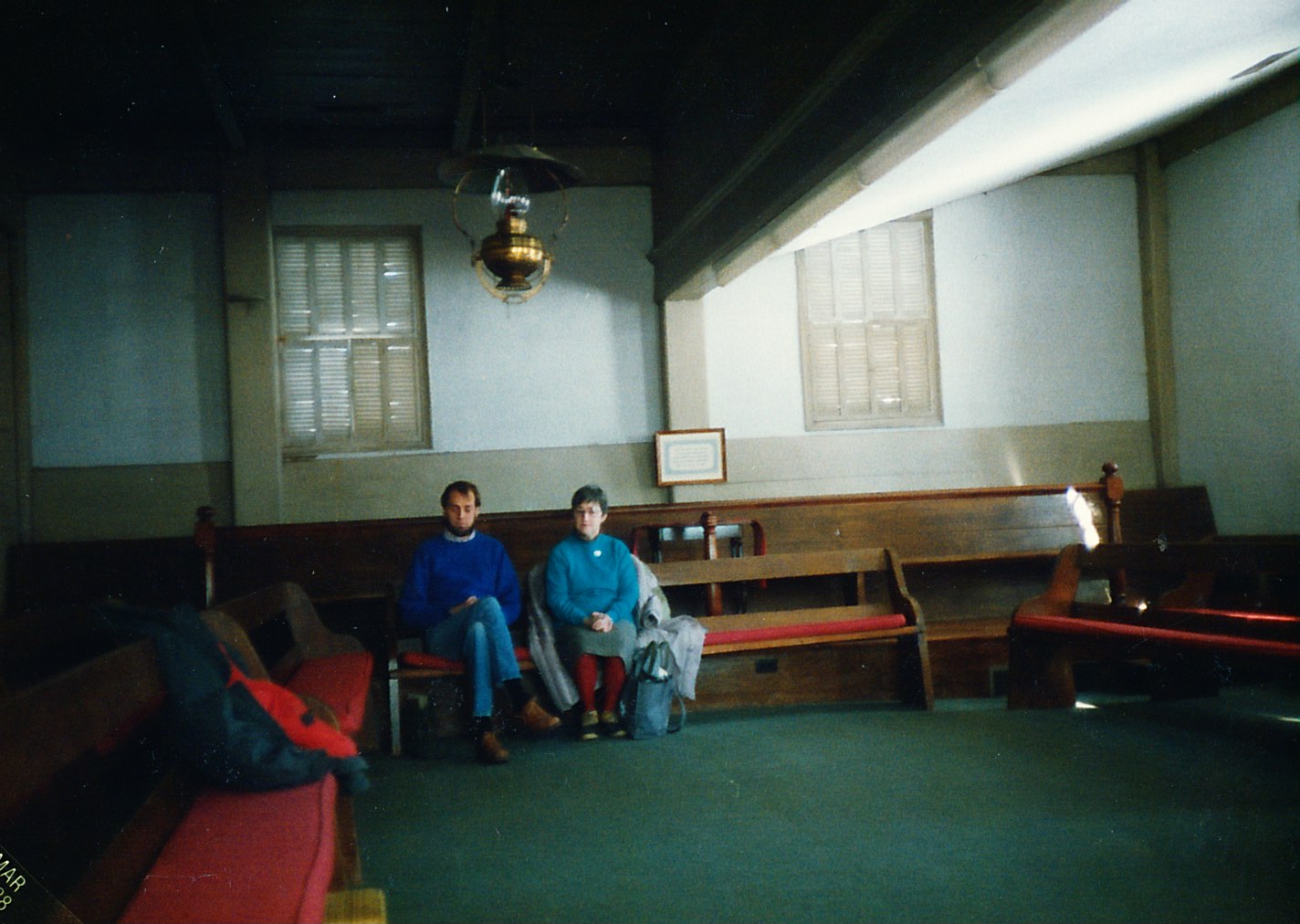
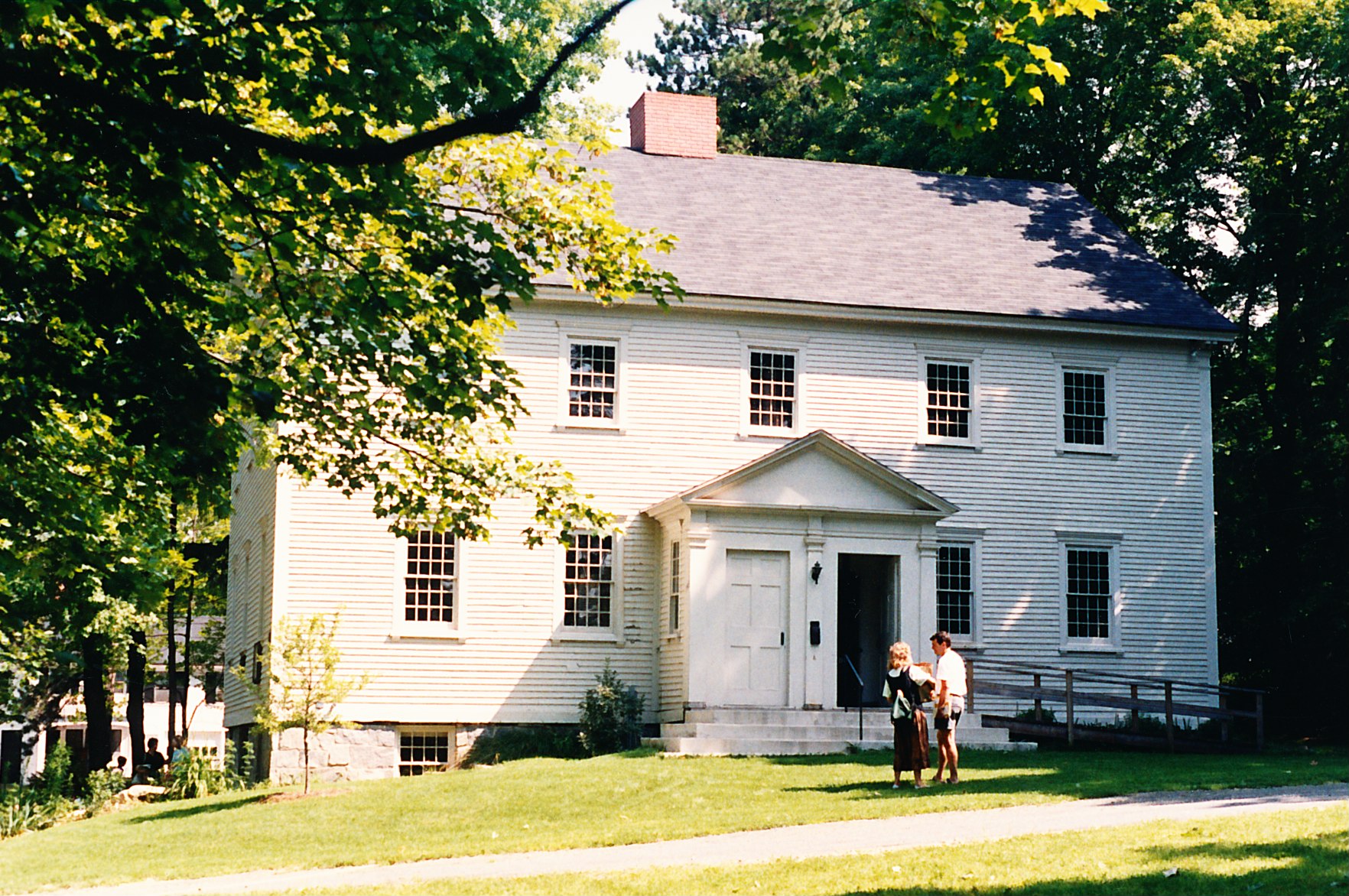
The Quaker meetinghouse doubled as a school

A pioneering educator, Moses Cartland taught in this combination school and Quaker meetinghouse at his family’s farm in Lee, New Hampshire, after previously establishing the Clinton Grove Friends school in Weare. A staunch abolitionist, he was also a founder of the Republican Party in New Hampshire and a candidate for the U.S. Senate.

Moses and his cousin John Greenleaf Whittier were closest friends and lifelong bachelors, at least until Moses married one of his students – who was also a cousin. Although considerably younger than Moses, she predeceased him.

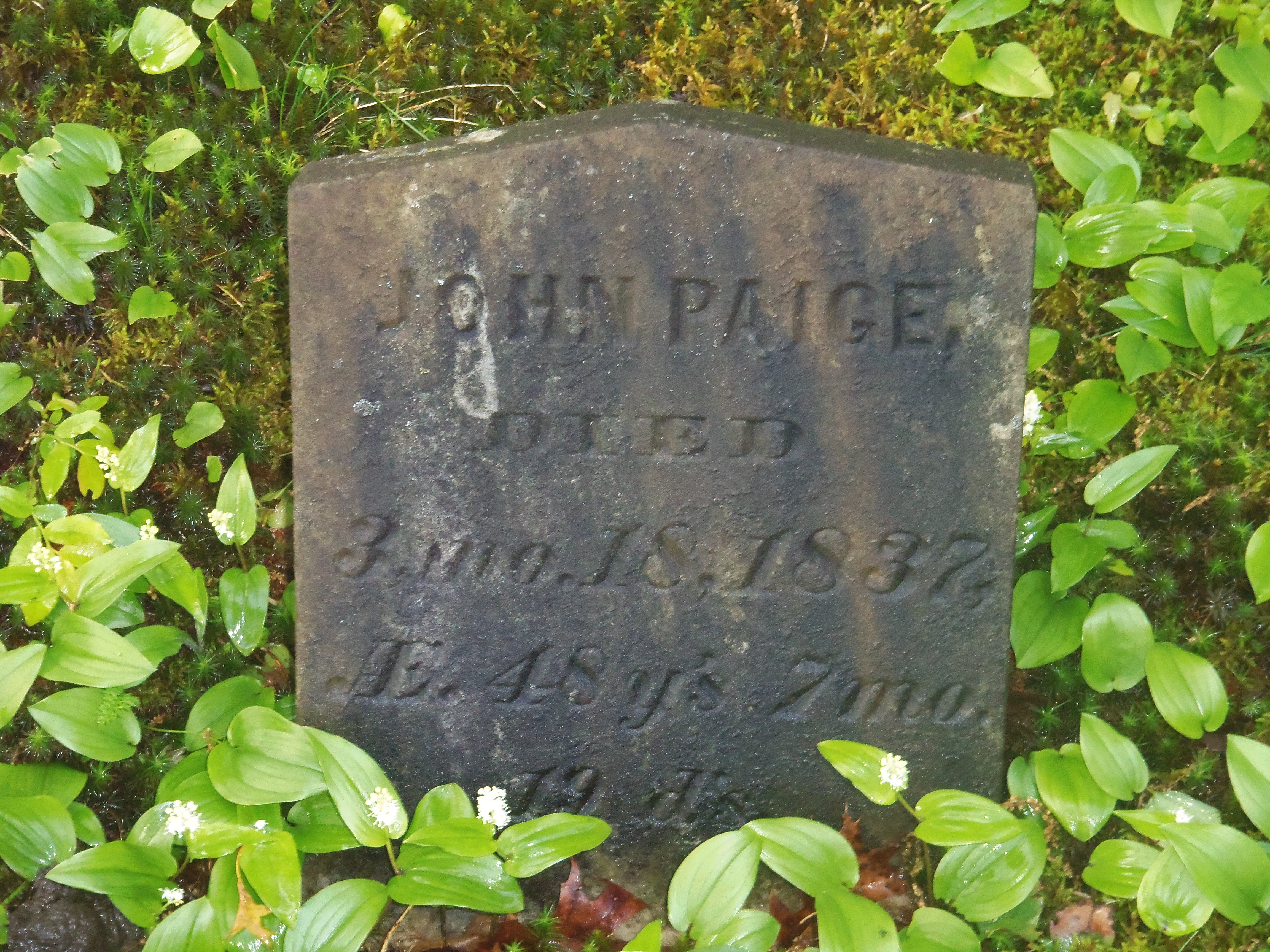
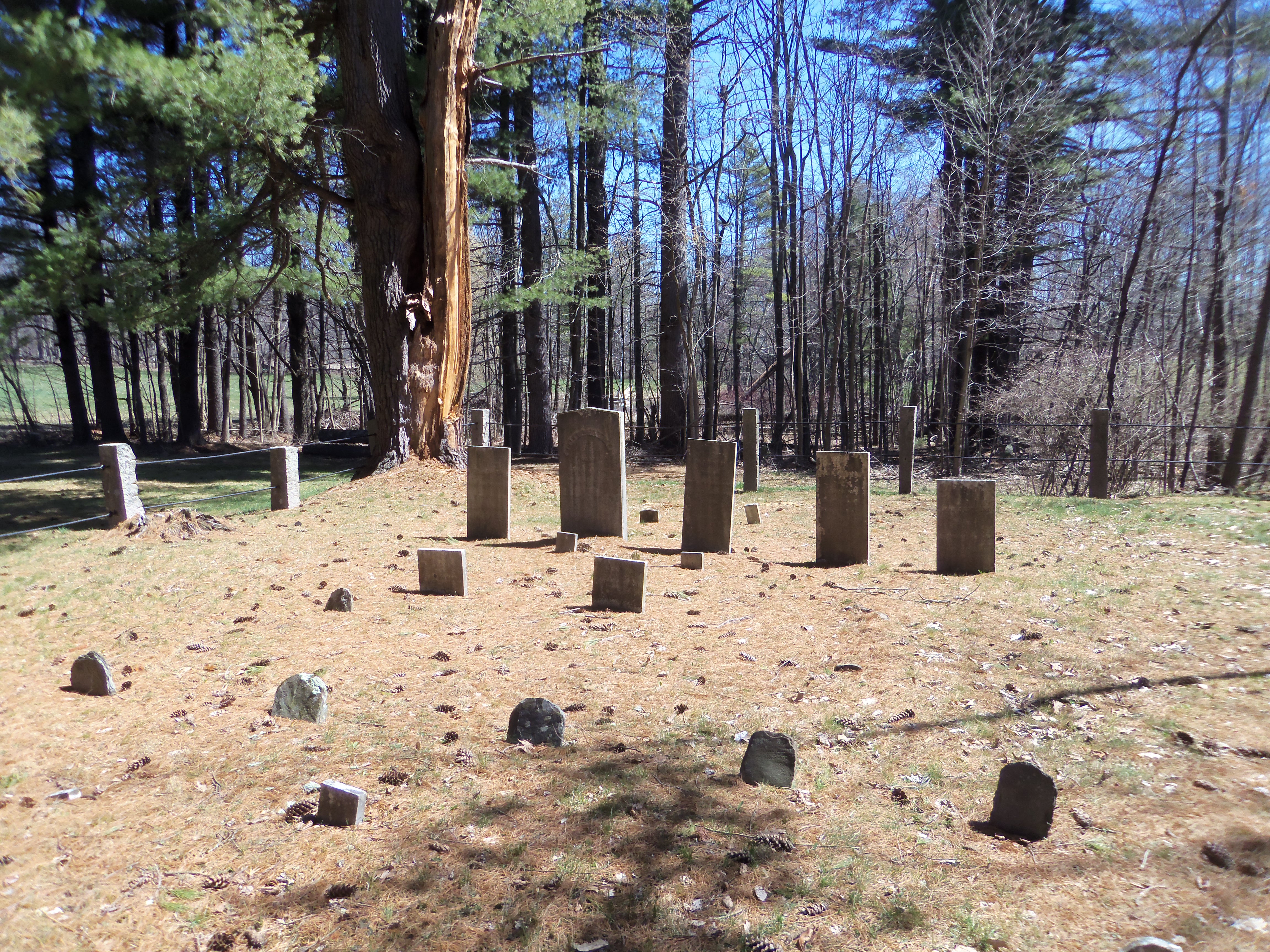
The family burial ground.
The resting spot is in the right side of the view.

WALNUT GROVE

Still imposing.
Still imposing.

The Quaker Cartland family built a prosperous farm in Lee, New Hampshire. Their house was a stop on the Underground Railroad, carting escaped slaves to freedom.

All in good order.
All in good order.
We approve of red barns.
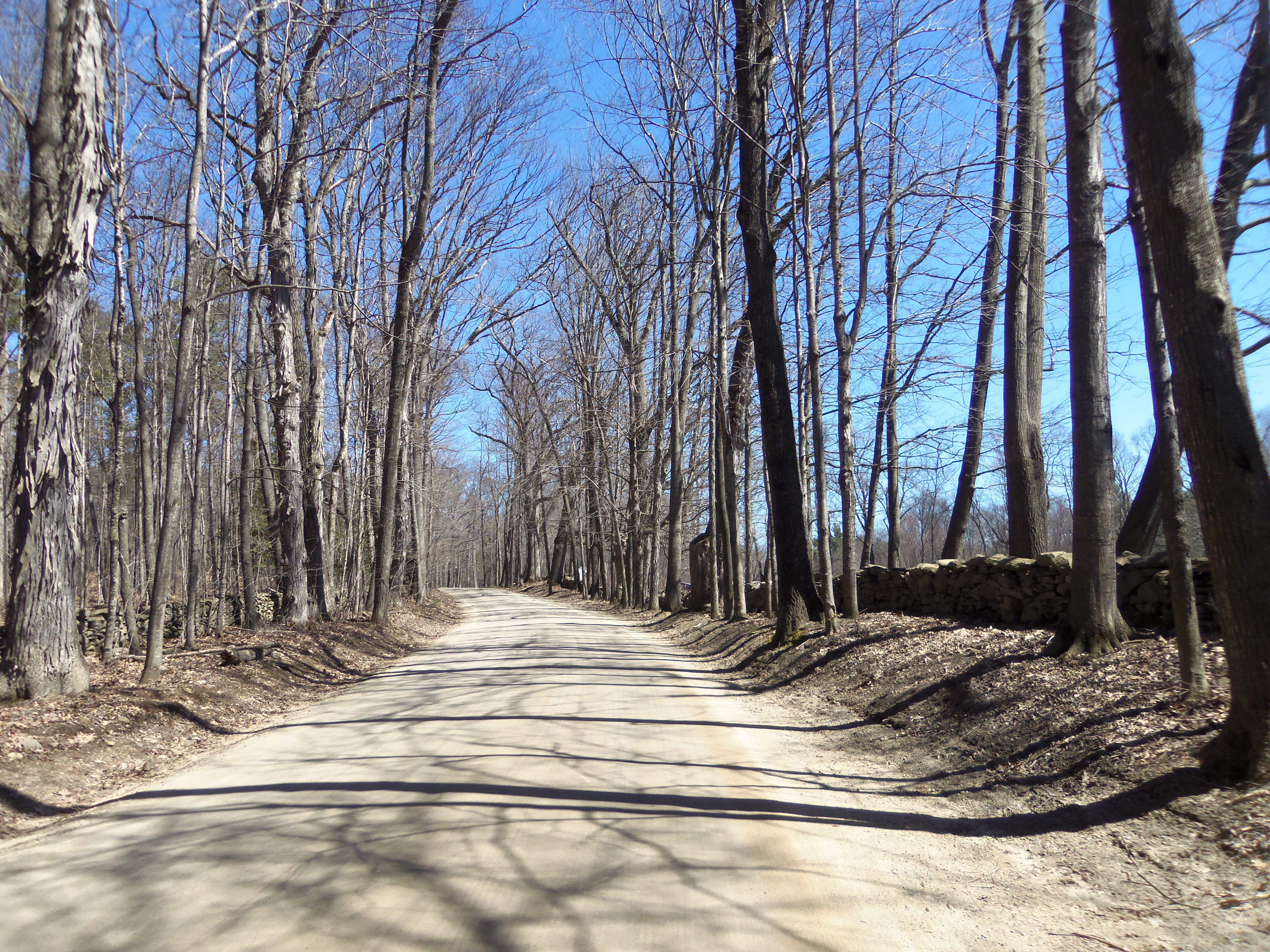
A country road runs through the property.


TRAINING IN FAITH

During the historic separations, the Friends who wound up in the evangelical, pastoral stream criticized their quietist brethren for our failure to teach the faith. Silent worship, they admitted, could be profitable for those who had already been trained in the practice and its religious meaning. But, they charged, what about newcomers and, especially, children?

Fair enough. Looking at the evidence, I’d have to say the weight of the argument is on the evangelicals’ side – and I’m not sure a few more seminars or workshops would fill in the gaps, even if everyone attended. Yes, we read books and periodicals, but even that can be pretty hit or miss – or deliberately selective and essentially private. At least our Meeting has a comprehensive and well maintained library, thanks to its dedicated committee.

Coming from someone who delves heavily into theological inquiry, these are difficult confessions. As much as I’d like to side with some of the early Friends who insisted that the Holy Spirit would reveal to us all that we need, without any special instruction, I part with them on their objection to higher education, for instance, or when I rely on a licensed physician or plumber or a certified auto mechanic when I face problems they can address.

With Friends’ practice, then, I suspect that our strength occurs when we turn to a hands-on approach, guided by those Friends “seasoned” or “gifted” in a particular aspect. The traditional Protestant service, with a lecture at its core, appears to be losing its effectiveness in today’s multimedia environment. Maybe our “worship-sharing” format (where everyone in the circle has an opportunity to speak personally about a given subject) holds more promise than we suppose. Maybe we also could be a little more conscious of the times and places the hands-on, and often one-on-one, transmission also occurs. From what I’ve seen, much more of this happens in both wings of the Society of Friends than we usually consider.

ANABAPTIST ETC.

As I said at the time …

You ask about “Anabaptist.” I’ll try for a short answer and hope it works. In the early Protestant Reformation, three major streams emerged. The Anabaptists accused the Lutherans and Calvinists (Reformed, Presbyterian, and English Puritan churches, among others) of not carrying the faith far enough and, as a consequence, were severely persecuted by them and the Roman Catholics. As the first to argue for a strict separation of church and state, they became pacifists who warned that any official state church seriously compromises the Gospel. The movement exists today as Mennonites, Amish, Church of the Brethren (or, in its older forms, Dunker), River Brethren, Bruderhoff, Amanas, Hutterites, and – by extension – the Society of Friends, or Quakers. It traces its roots to the Waldensians, the communalistic radical Christian movement against whom the Inquisition was launched. Its traditions include non-violence, simplicity, discipleship, community. You can see the absurdity in having one of them as a military chaplain! (In Catch-22.)

The term itself means “rebaptized,” an argument that infant baptisms (which that first generation had undergone, before the Reformation emerged) were invalid: the only authentic acceptance of faith could be made as an adult.

Because the Mennonites took literally Amos 5:23, “I will hear thy viols no more,” they banned instrumental music from their lives. Somehow, though, they practice four-part unaccompanied singing that seems to be part of their genetic endowment. Their hymnals cover the range of church music, from all denominations and eras, as long as it sings well. Whether gathered as six or eight people standing in a circle in someone’s living room, or as six hundred adults singing a Bach chorale at a wedding, the effect is quite moving: you have to be loud enough to contribute to the worship, but soft enough to be aware of everyone else. As an old-style Quaker once told me, “Jnana, thee has to remember that in their singing, the Mennonites are experiencing something very much like what we feel in our silence.”

Kenneth Rexroth, whose ancestry was in the Dunker/Brethren tradition, details much of this history in one of his collections of essays. (Don’t have the title at hand, but it’s the one about communalism.) Another poet who was Brethren is William Stafford.

You mention Thomas Merton. He inherited some of this tradition through one of his parents who was Quaker. But he felt the liberal Meeting (as Friends’ congregations are known) he attended as a child was well-intentioned but superficial, and yearned instead for the depth of its earlier generations. The rest, as they say …

Have you seen Kathleen Norris’ The Cloister Walk? As a Protestant who draws strength from her retreats and friendships in the monasteries of the Great Plains, she has some wonderful insights into abbey life.

OK, I promised to keep this short!

And I do hope your parking problems with J have found an appropriately adult resolution, other than your turning the other cheek – which, to continue all this theology, was originally an act of defiance, causing the abusive person to lose face. (By the way, 7th and Race, I take it, is Zinzinnati?)

Blessings …

A NEARLY PERFECT NOVEL

Way back in my senior year of high school, I remember a moment when our English teacher invoked the dictum that all fiction requires conflict – and my immediate contrarian reaction blurted out, “No, it doesn’t!” My objections were gut-level rather than coolly reasoned and certainly wouldn’t have held up to the novels that were capturing my attention at the time – Brave New World, 1984, and Animal Farm. Yet seeded somewhere in my aesthetic, the low-key, nonviolent approach to a story lingers. Few of us, after all, are parties to a murder, which is a key component of so much fiction. And Kurt Vonnegut’s advice to take a nice character and inflict the worst possible calamities on the poor soul still offends my spiritual proclivities, never mind so many passages in the Bible. Yes, I’ll now admit that true character can be shaped and revealed in intense confrontations and struggles. That is, conflict.

Still, my own entries to date have focused on day-to-day realities drawn from my own observations – attempts to comprehend contemporary social interactions, even if they appear to be history by the time the words finally appear in public.

~*~

In retrospect, my admiration of so much of Richard Brautigan’s output probably arises in the laid-back meandering of his hippie-era characters and their encounters. Think of Trout Fishing in America for starters.

~*~

More recently, Nicholson Baker has emerged as my favorite embodiment of the nonviolent sensibility. You could argue that nothing happens in the first 50 pages of The Incredible Story of Nory, and yet the tension is already mounting. To construct a successful novel on a father’s bottle-feeding session of an infant (Room Temperature) or a short escalator ride (The Mezzanine) is artistically courageous. Book of Matches, meanwhile, takes off on the simple premise of sitting by a fire in the predawn hours of deep winter – it could almost be blogging.

His latest volume, Traveling Sprinkler, pretty much slipped under the radar, yet impresses me as a nearly perfect example of the no-major-conflict novel. His main character, the minor-league poet and anthologist Paul Chowder, faces nothing more challenging than the question of whether his ex-girlfriend will return to him as he muddles through middle age. Yet along the way, Baker weaves in ruminations about the American health system and public education, the advantages of rhyming in song lyrics in contrast to poems, aspects of recording technology, basics of bassoon performance, collectors’ perspectives on lawn sprinklers and related outdoors gear, experiences of Quaker worship, and some travel pointers for Portsmouth, New Hampshire. Billed as a sequel to The Anthologist, it stands well on its own as a rich and deeply personal tapestry. What could be better? Even without a slew of dead bodies?