I had sweet dreams of remodeling the loft of the barn into a year-’round studio. Something like critic/professor Jack Barnes’ cozy literary digs on his farm in Hiram, Maine. Alas, it never quite happened.
Family life pushed us in other directions, and then the publishing scene also changed. I didn’t need quite so much room to spread papers or stack submissions, for one thing. More and more was on the computer, and in time, I no longer needed computer discs for storage. Remember them?
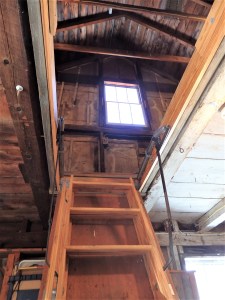
When we redid the loft, it was more as a three-season space, a retreat, and it did give me the room to spread poems about when I considered the sequence for one of my chapbooks. It also allowed us to decompress a lot of the stuff we’d packed into the house. But it was, as you’ve seen, pretty funky – not the polished compartment I once desired.
At least I painted the exterior traditional New England barn red and not that loud crimson used elsewhere. Not that I could tackle that project again. I’m not sure I could even manage the ladders these days, and I definitely wouldn’t be up on the roof repairing the weather vane.
What the barn did give us was space, even though much of that soon became crowded. Garden tools and pots, shelves of canning jars, chairs that just might be re-caned or repainted, bins of Halloween, Christmas, or Easter decorations. Carpentry tools, an array of wood, and painting supplies. Picnic coolers and charcoal. Two big freezers, well stuffed, at one point, on the ground floor.
The barn did become an emblem for me, as a repository for many souvenirs from my zig-zag journey out from Ohio, and maybe even for us as “city farmers.”
And now I’m waving farewell to all that as I head off on new adventures.
So here goes. Just be warned you’ll still be reading about it and its surroundings in upcoming posts. The Red Barn is definitely continuing.
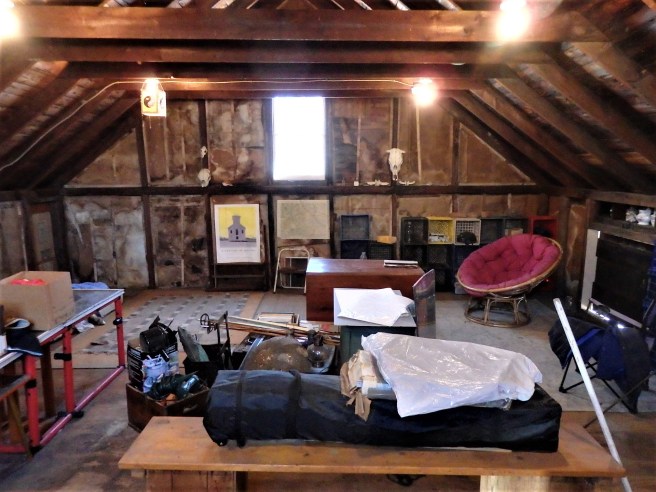
We had already moved out a lot of stuff, and the loft still looked like this.



 Jnana's Red Barn