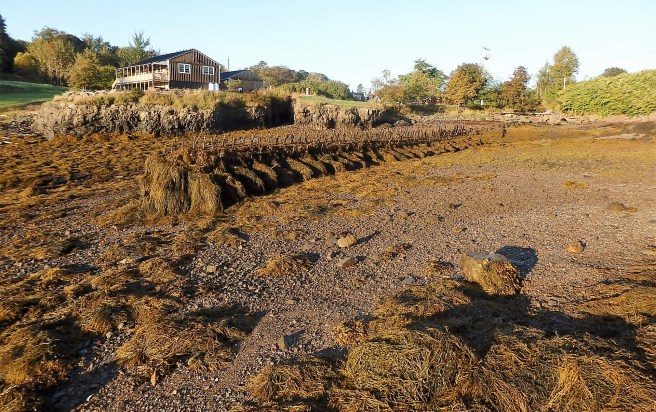
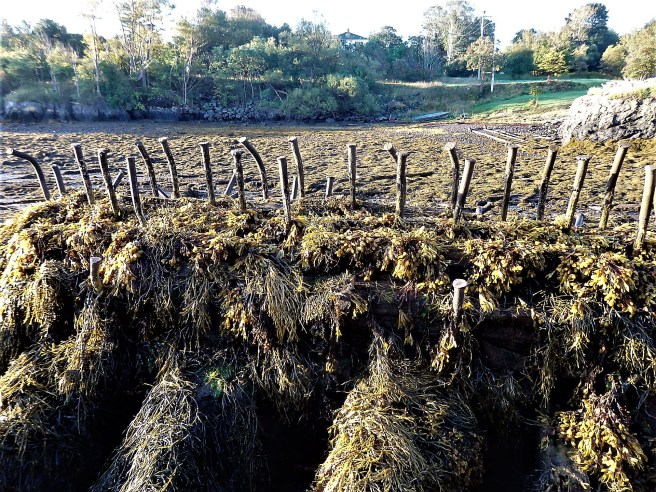
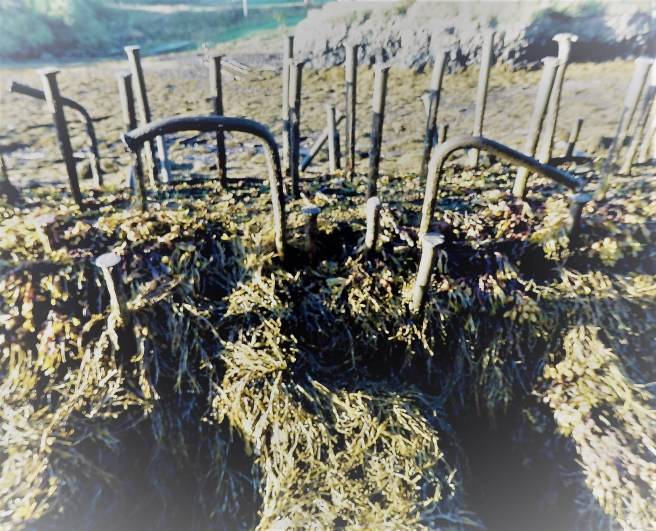
The keel is all that’s left of the four-masted schooner “Dorothy.” It makes a puzzling figure in the waters of Shackford Cove, regardless of the tide. I had supposed it might have been a section of a rail track used at one of the four shipyards that once lined the shore. On a really low tide, this is how it looks up-close.
I’m guessing the keel flipped over, yet all of the iron rods are still impressive. The work of blacksmiths, no doubt.
Been in the same position at least as long as the old-timers around here can remember.
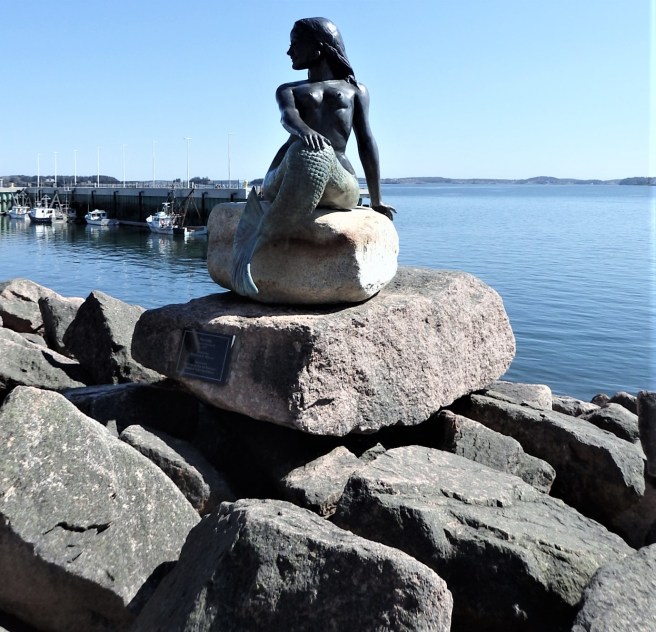
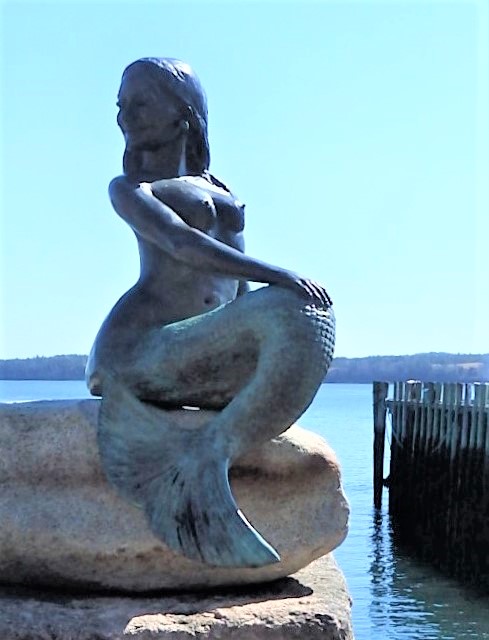
Since 2015, Richard B. Klyver’s statue has resided near the fish pier downtown. What is it about mermaids, anyway, with their mythical ability to move between worlds? Their liminal nature conveys much more than mere sexuality.She seems rather carefree.
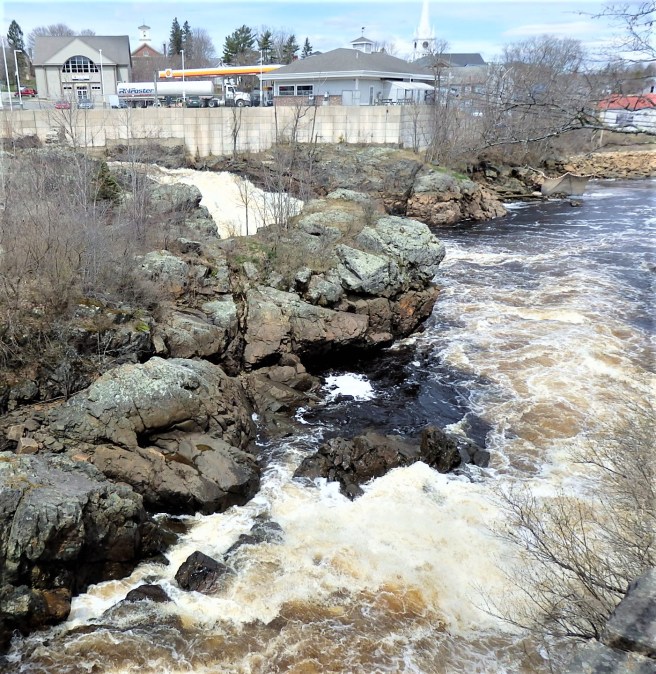
The bridge carries busy U.S. 1 traffic that’s oblivious to the landmark below.The water charges down in two parallel sets of falls that reunite in the tide below.You wouldn’t want to go over these in a canoe.
The tranquil city of Machias at the falls is the Washington County seat.
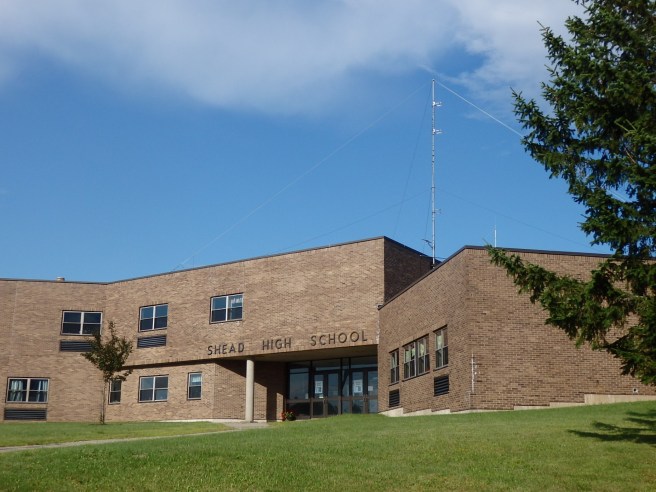
Our local radio station is licensed to the high school. Seriously. And it’s as quirky as KHBR-AM 570 in the legendary TV series “Northern Exposure,” even without Chris Stevens as the DJ. Or I’d contend, even more.
The television show never got into young people, for one thing, but there aren’t many in Sunrise County, where the seven public high schools together have about 200 graduates a year, half of them from just two schools. A private academy adds another 100. It’s a long stretch, by the way.
Pointedly, Eastport’s Shead Memorial High has only about a hundred students, down from 300 a few decades earlier, and a faculty of 11, some of whom also teach at the junior high or elementary. The principal serves all three. The school proudly proclaims its emphasis on personalized education, which I applaud. What’s obvious is the incredible student-faculty ratio.
One big challenge is in trying to find ways to lure more of the younger generation into staying put here. Maybe the economic tide is changing in that direction.
In the meantime, the radio station gives them an opportunity to learn production skills. In fact, the station started out as a school club in 1983 and took off from there. Throughout the day, the station’s IDs feature the different kids, however bashfully, and it’s charming.
Much of the programming is a stream of music, a mix of blues, jazz, rock, country, bluegrass, and more, I’m assuming streamed from somewhere. Yes, and there are public service announcements as well as the honor rolls and other local touches. Truly. And then the DJs kick in, including some of the kids, with surprisingly sophisticated tastes.
They’re not the only ones.
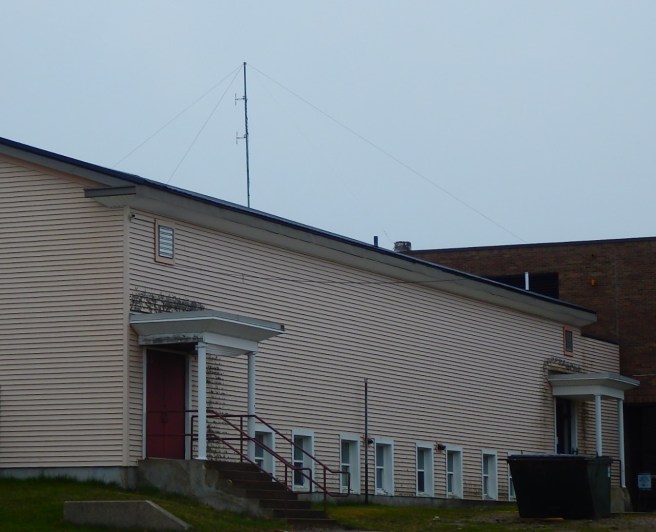
The station’s modest tower sprawls over the high school. Here it’s seen from the front.And from the back, by the gym.
The local demographics skewer sharply upward, and volunteers at the station are welcome. In fact, they create much of its most distinctive programming. As I was saying about do-it-yourself participation?
There’s Cracklin’ Jane, with only 78 rpms, a weekly theme, and radio dramas from a golden age, including commercials for brands that no longer exist. And others like Sam’s Caffeine Café, yes, it’s redundant, but mostly acoustic Americana two mornings a week; the Bass Lady’s informed insights into anything with a bass line, Chloe’s folksy Friday afternoon transition; Firedog’s Electric Doghouse, Boldcoasting; and the like.
Well, this is a town filled with eccentrics and geezers. Its low-power radio station reflects that. And to think, it all started as a school club in the ’80s!
I think of it as Radio Free Eastport, broadcasting to the free spirits on and around our islands.
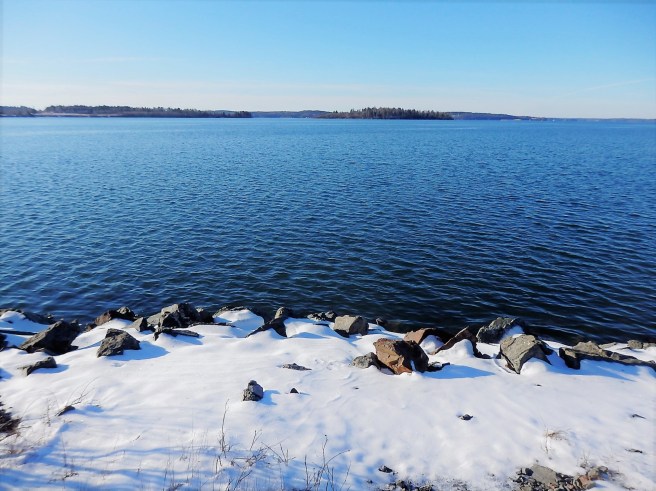
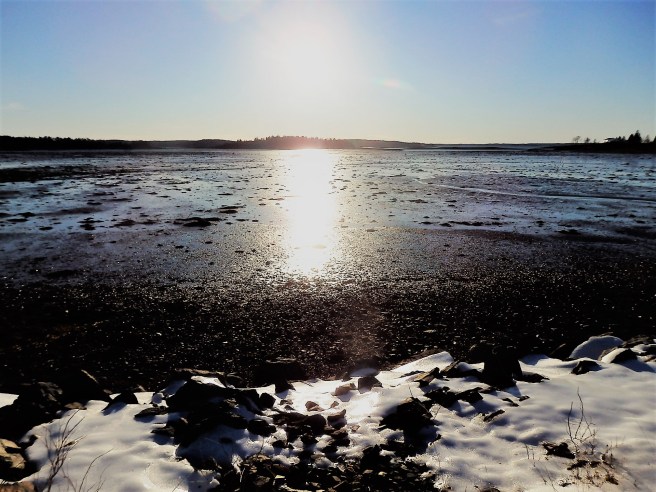
Our tides vary between 15 and 25 feet, depending on the moon cycle, and half of that change occurs in just two hours, halfway between high and low. It still amazes me.
This is what you expect to see at the ocean, right? Just stick around another six hours to see what happens to our high tide.At Carrying Place Cove, if often looks like somebody pulled the plug on the tub and let all the water out.
Fishing is dangerous, hard work, done in all seasons and kinds of weather. It’s also an inescapable source of livelihood for many families along the Maine coast.
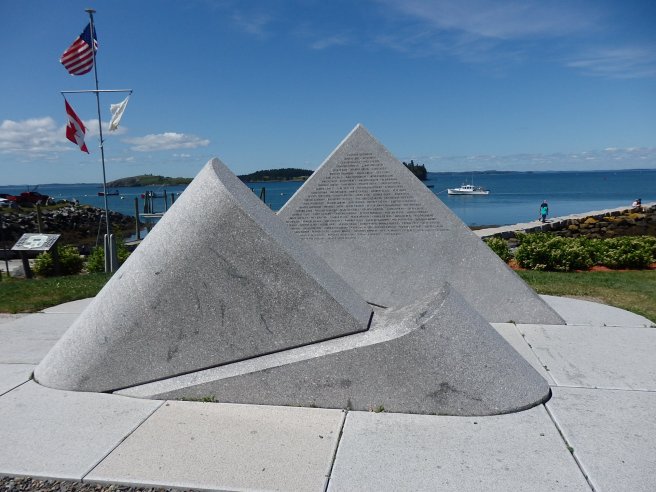
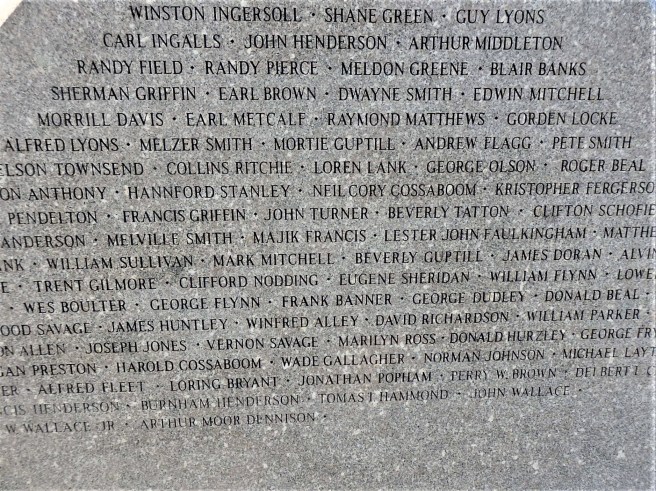
The two stones in the Lost Fishermen’s Memorial in Lubec rise like waves beside each other, one representing fishermen from the Canadian side of the channel and the other, from the American side. Three flags fly over the site – Old Glory, the Maple Leaf, and the Passamaquoddy Nation’s.The inscribed names of those lost since the year 1900 are mesmerizing – women and men, some of the surnames repeated. As people say respectfully, so-and-so has the sea in his blood, and it seems to run in families.Maine granite sculptor Jesse Salisbury created the monument in 2016, and names have been added since.




 Jnana's Red Barn