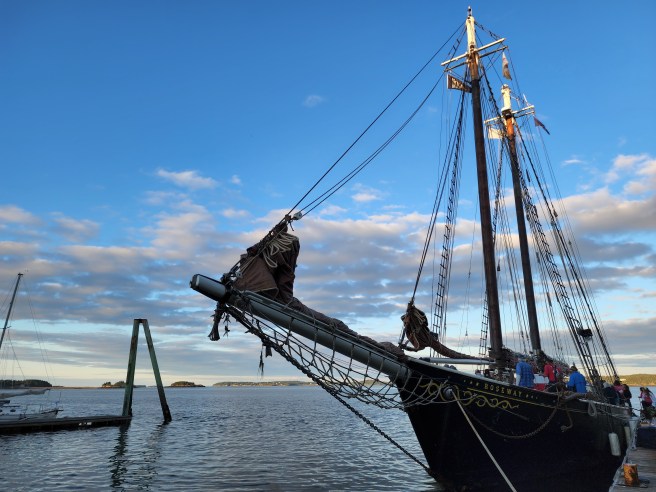
A recent visitor
You never know what we'll churn up in cleaning a stall
Some distances from Eastport to wherever:
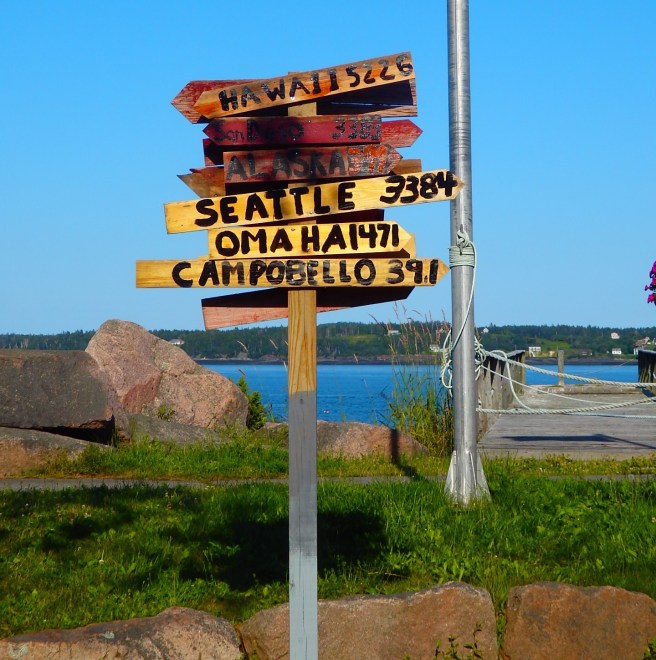
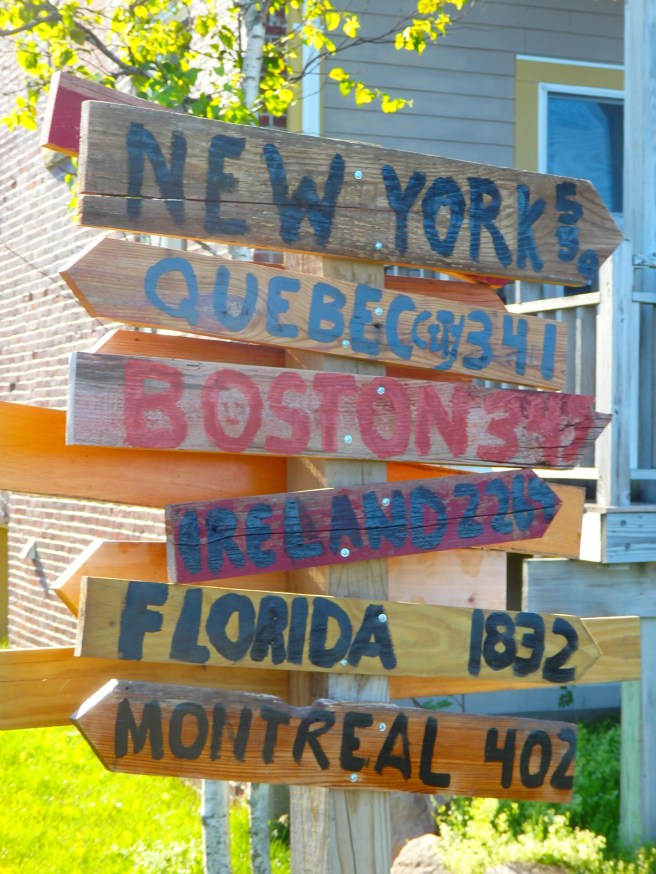
While driving from Eastport to Lubec, kind of in the neighborhood, as it were, I got to thinking about how far you could get from one point to another in the same hour elsewhere. Sometimes, it led to a lot more options.
Where could you drive in an hour from your home?
On one hand, they’re proud of having voted for the candidate and want you to know they did, but on the other hand, they want to distance themselves from any culpability for his actions.

Will somebody tell them, “You can’t have it both ways,” as a citizen?
Grow up and take responsibility for your choice, which includes the possibility of repenting in the light of reflection or otherwise being party to the vulgarity, insults, lies, and the general mess he’s left the nation and world to endure. (Reflection? We’ve never heard him admit he’s ever done anything wrong, which means he’s never even said he’s sorry for anything he’s done. Mistakes are always someone else’s fault. That would put him a bit higher than Jesus.)
There’s no denying the loser’s the king of blame, casting censure on everyone but the one-and-only he faces admiring himself alone in a mirror. I, for one, am exhausted by the gush of blame that’s been poured on what we’ve treasured and join.
So, yes, be prepared to be blamed or praised.
Voting is a serious responsibility, folks. Embracing what your candidate has done, in and out of office, ultimately reflects on your own values and character – and we’ve all had to face the ugly consequences.
Before blaming Biden for things like higher fuel prices, see instead how they stem from the Donald’s encouragement of his Russian pal, Putin. As for inflation, how about those fat checks the fed government handed out with Donald J. Trump as the signature?
Running deeper in this is the denial that the American political system is based on a multi-party dynamic, with the minority serving as a loyal opposition. There’s been nothing loyal about this GOP, not since it turned obstructionist back before Obama. Instead, it’s been trying to wreck the machinery of a just republic. That identity is anything but conservative.
If you’re proud of his true record, stand up. But face it all, not just the cherry-picked Fox version.
And don’t think you’re above blame or shame.
A good dose of humility is a virtue.
Shame on you, if you’re trying to shirk off the consequences of your vote.
As I detail in Quaking Dover, my history of New England’s third-oldest permanent settlement, the odds against success for early European settlers were nearly overwhelming.
It wasn’t just the English, either.
The French made their first attempt just up the coast from Eastport, where Samuel de Champlain selected an island in what’s now called the St. Croix River at the western edge of the Bay of Fundy or, more specifically, its smaller Passamaquoddy Bay.

The famed explorer was working for Pierre Dugua de Mons, a noble and Protestant merchant who had been given a fur trading monopoly in New France by the king.
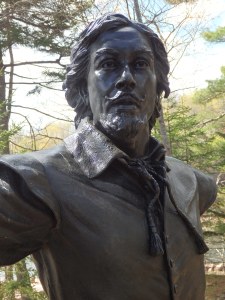
In 1604 the expedition set about establishing a fortified trading post on the security of St. Croix Island and its tidal currents.
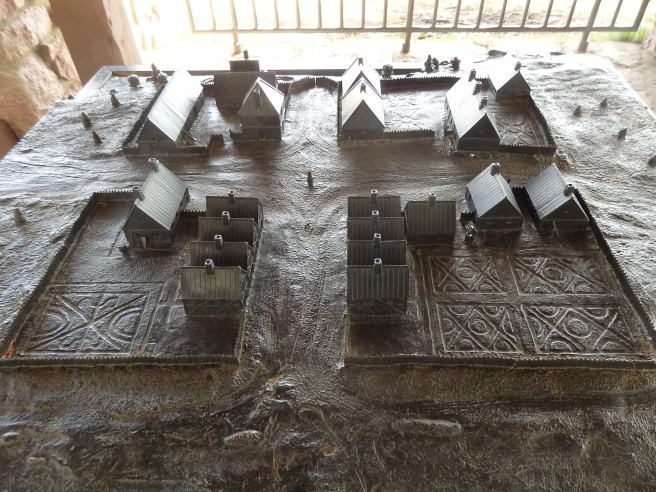

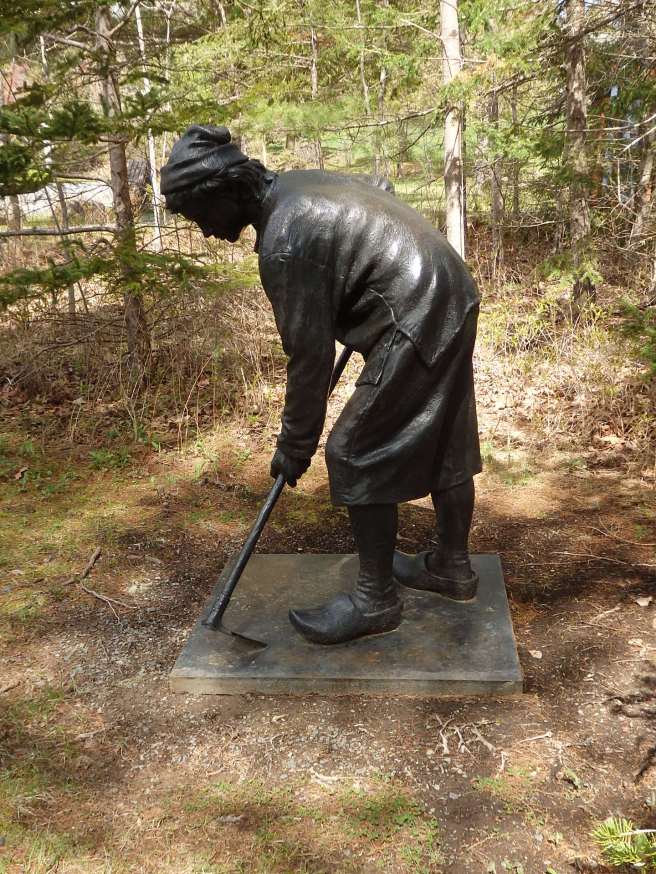
And then they settled in for the winter, ill prepared for harsh conditions that buried their compound under three feet of snow and iced in the river, cutting them off from fresh water and game.
The lack of fresh water, especially, was a fatal flaw in their plan.
By the time spring arrived, 35 of the French expedition’s 79 men and boys had died, many from scurvy. The remainder survived largely because the thawing river allowed Native Passamaquoddy to arrive and trade nutritious food in exchange for any remaining bread and other goods.
After the colonists’ health improved and ships brought new supplies and more men from France, they abandoned the island and relocated to what would become Port-Royal, Nova Scotia, soon the center of L’Acadie, or Acadia, a large and contested province of New France.
In 1607 the English then made two attempts of their own in the New World. Their Popham colony at the mouth of the Kennebec River in Maine fared no better, while the Jamestown settlement in Virginia managed to hang on.
In 1608, Samuel de Champlain successfully founded Quebec City along the St. Lawrence River. What we know of the St. Croix Island experience comes largely through his journaling.
Quite simply, we could have been speaking French here, had someone thought about drinking water earlier in the game. Or perhaps simply been listened to and respected.
~*~
Sculptures at the St. Croix Island International Historic Site, Red Beach in Calais, Maine, are by Ivan Schwartz, Studio EIS.

The petals had fallen from a vase and got me thinking.
While most of Eastport’s sardines were packed in cottonseed oil, some brands boasted of mustard, too, or of even smoking them first.
Even those that weren’t still might be smothered in a mustard sauce.
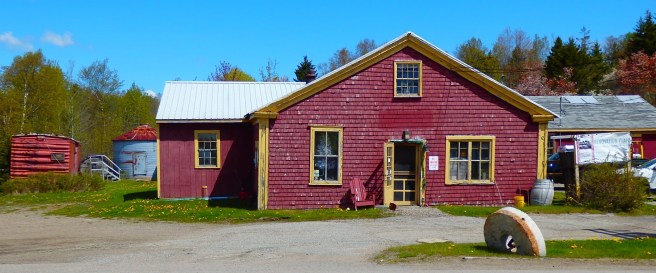
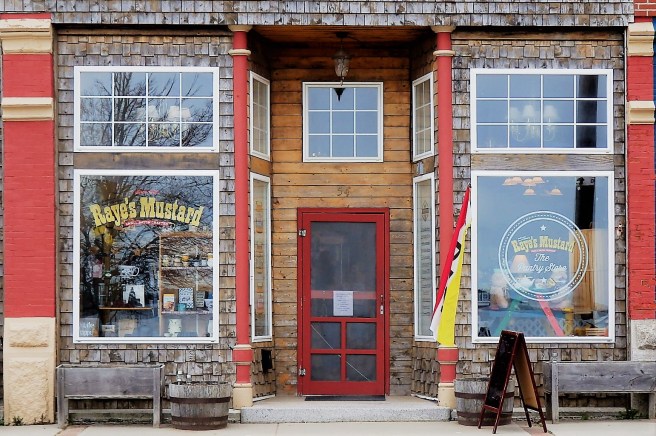
In 1900, J. Wesley Raye, the 20-year-old son of an Eastport sea captain, founded his mustard business in the family smokehouse in 1900 and moved it to its current site in 1903 to meet demand from the canneries.
Not just Eastport’s, either. Much of the family’s mustard, as the Raye’s website touts, was shipped by both rail and steamship, two means of transport long gone from the city. But, as they boast, their mill remains the last one in America to make mustard the old way. Theirs is made in small batches from mustard seed they’ve ground slowly on millstones made in France.
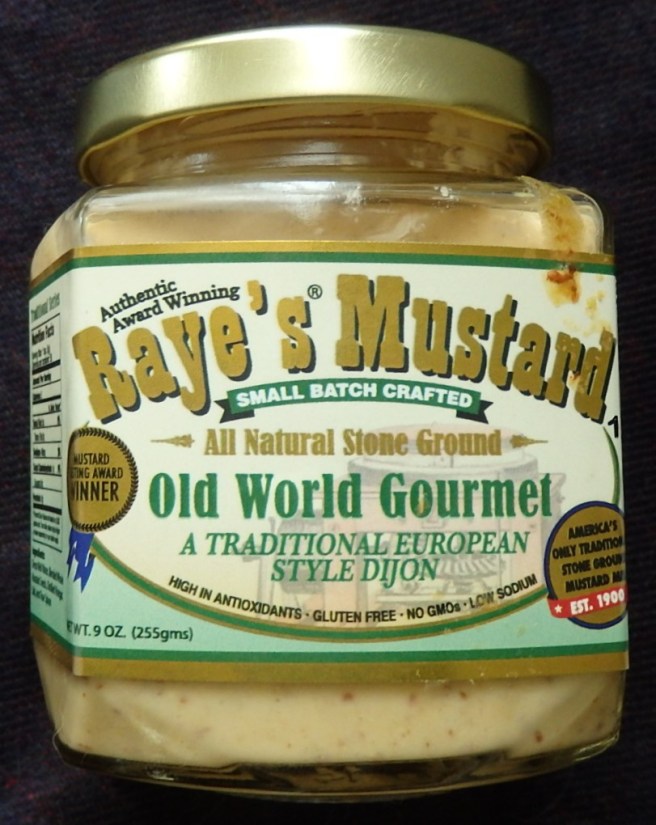
If you don’t recognize the name, you might know the taste. It’s rebranded by some high-end labels.

You think it’s all about the sun, but I’ve found that without clouds in the right positions, it’s just lights on, lights off.
It’s best when the sunlight can angle up under the cloud.
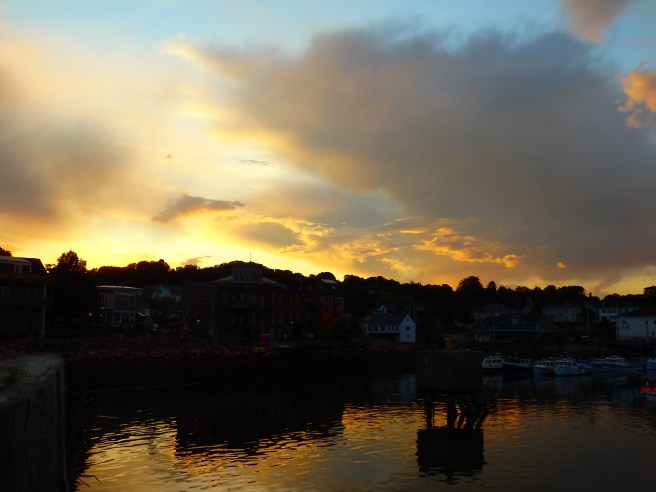
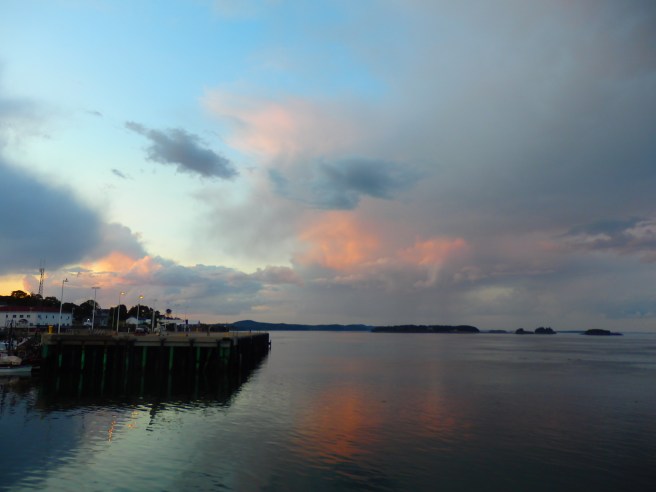
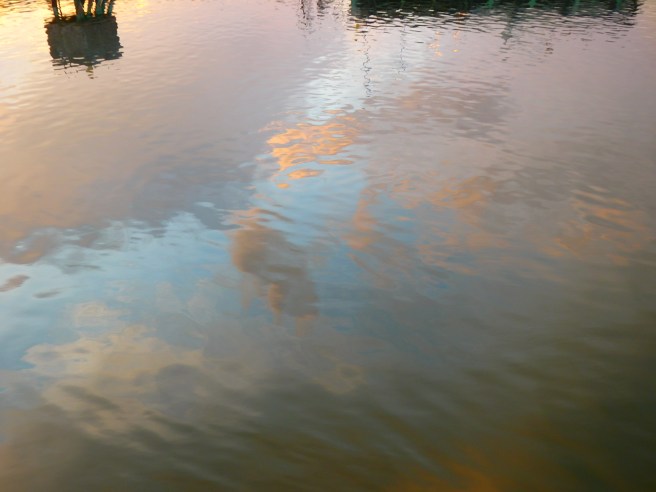
And that’s before you see it mirrored in the water.
Don’t laugh. Sardines were once big business.
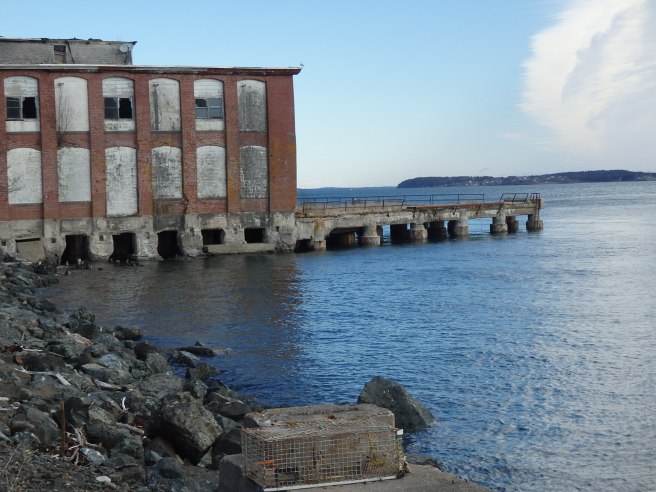
The first sardine canning in America happened in Eastport in 1876, and at its peak, 18 canneries were packed in against the waterfront downtown, along with the fishermen’s dories and fishing boats at the docks.
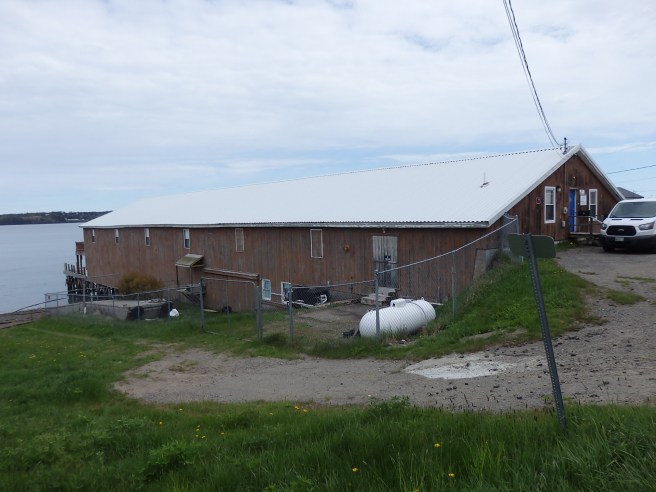
The largest of them, the L.D. Clark and Son factory, extended far into the water from the north end of Shackford Cove only a block where I now live. It was the world’s largest sardine cannery, employing 500 men and women who packed 4,000 cases of 100 cans daily when the small Atlantic herring were available.
Heads and other parts were cut from the fish and dumped into the harbor, where they were devoured by bottom-feeders that then attracted whales close to shore.
Over the years, though, the fishery was depleted, though whales can still be seen in season.
And then the market and American tastes changed.
Does anyone eat sardines anymore?
Few signs remain of the city’s once flourishing industry.
 Jnana's Red Barn