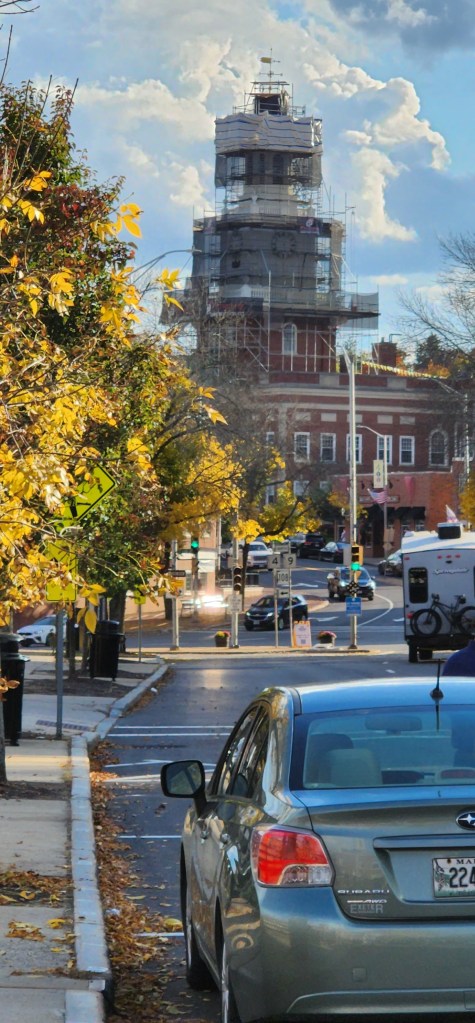
When I was last in Dover, 18 months ago, the downtown was booming with construction. But on my return a few weeks ago, when I first glimpsed this rising over Central Avenue, I thought a skyscraper was going up and I’d somehow missed the news.
I am impressed by the cloud as a backdrop.
A second look, though, had me realizing it was the clock tower on city hall, getting spiffed up for the city’s big 400th anniversary next year.
Well, it kind of look likes a space rocket about to take off, too.
Banners proclaiming that event are already along the major streets.
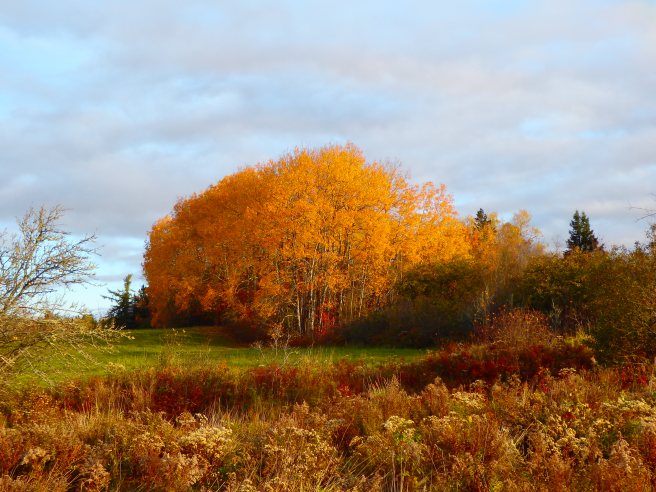
As you likely know, trying to record the changing colors is a challenge. Does your camera ever get the hues and shades to match what you’re seeing? Or is it usually either too cool or too garish? How about those of you who are instead using watercolors, oils, pastels, or acrylic?
One spoiler for a photo, as I’ve found the hard way, is utility lines along most roadways. They’re the prime culprit among a host of other distractions your eyes don’t catch but the lenses do. This year, I was on guard and enjoyed the color in those stretches without stopping to take a shot.
Since most of Maine’s forests is evergreen, I scoped out stretches of deciduous trees free of those intrusions before the color change and kept checking in weekly, at minimum. In my case, the core of the route was an unpaved lane in the Baring district of the Moosehorn National Wildlife Refuge, as well as the country roads getting there.
There’s no way of predicting how things will develop. Drought, blight, storms can take a toll.
But we know what will follow. Boy, do we.
Here’s a look at how it all unfolds here.
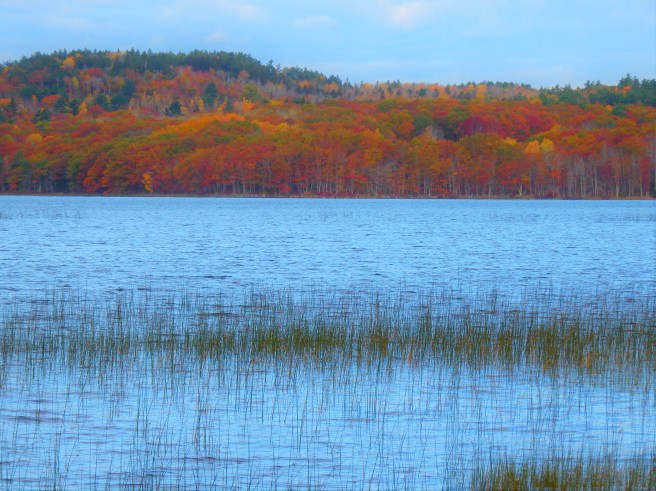
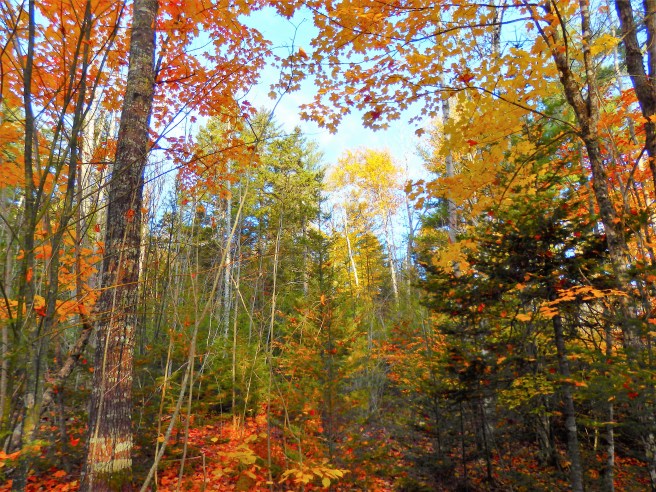
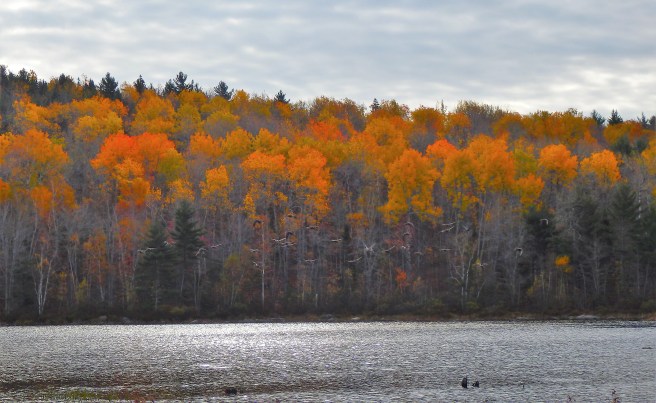
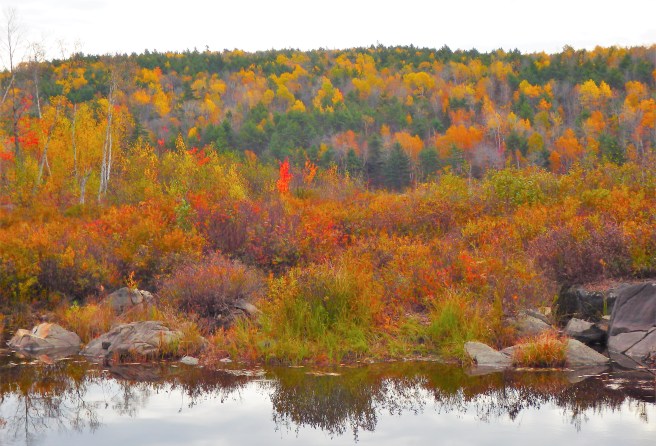
It is an invitation to kayak.Round Pond.How swiftly it passes.Even when half of the leaves have already fallen, there’s more to come.Loud geese take flight. Quaking aspen and birches give the forest a dominant range of yellows.By midmonth, the palette is turning somber.
And if you want to see what I experienced in New Hampshire, go to my Chicken Farmer blog, where I’ve also posted in-depth reflections on the soul of New England itself. The posts and slideshows appear in the New England Spirit category from August through October 2013.
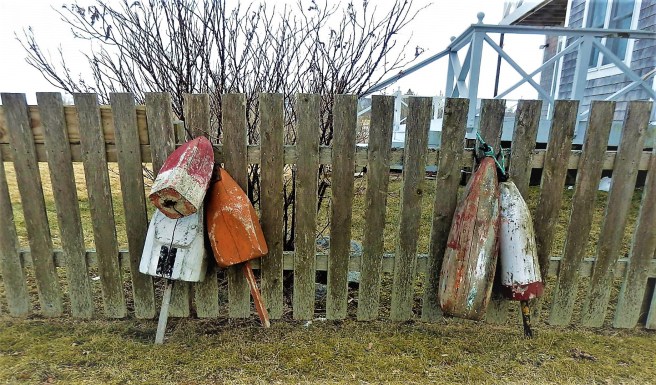
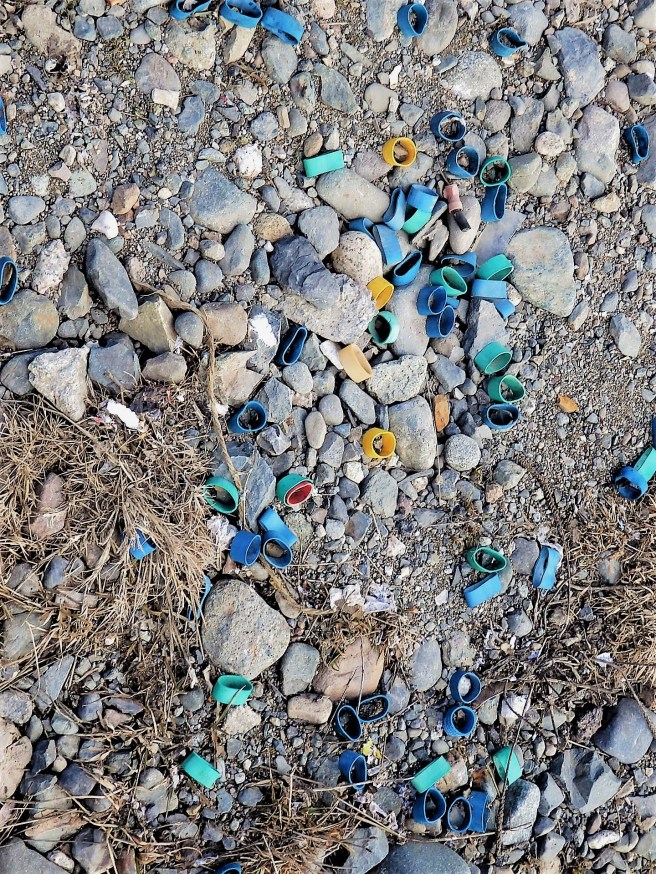
They’re ubiquitous in these parts and not really hung out to dry.And speaking of lobsters, these rubber bands in the gravel at the outdoor stand a block away serve as a reminder of some happy dinners. The bands are used to keep the claws shut while the crustaceans are in captivity.
Yup, home prices went through the roof in most of the country – but not here.
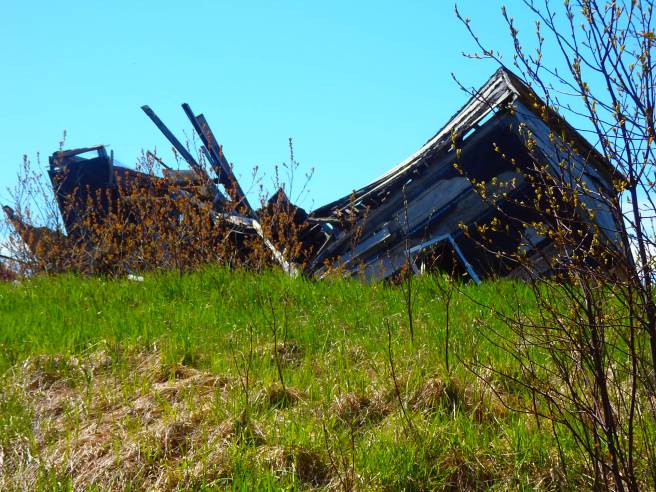
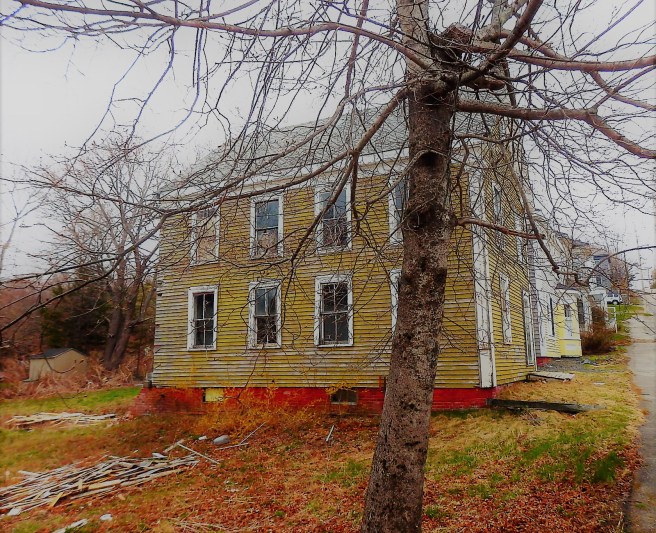
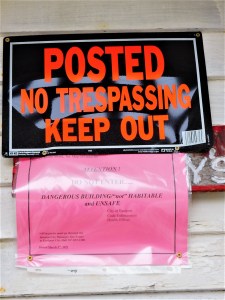
A common sight throughout Downeast Maine is abandoned housing in varying stages of decay. Seeing an old dwelling like that, your initial impulse is that somebody, somewhere, ought to save it. You know, live out in the woods, free from hassles, and all that. It’s gotta have a charming history, right? (Rusting trailers and mobile homes somehow get less sympathy, if any.)
Abandoned housing comes in varying stages of collapse.
Then reality kicks in. Most of these would cost a ton to renovate – and many are tiny. Insulation, plumbing, and wiring are only the beginning. It’s cheaper to start fresh, if you can. Jobs are scarce, often towns away, if you can find work, so unless you’re retired, that’s another strike. And if you are retired, you might check out far to the nearest doc or clinic. I have to wonder, too, why anyone would want to live that close to the highway and its noisy traffic, other than maybe getting priority plowing after a snowfall. As for the mosquitos and black flies?
Others might tell you it gets boring. No malls or big-box stores, much less neighbors or a real supermarket.
Even as a summer home, then, there are drawbacks. Wouldn’t you rather be on a lake or the ocean?
It’s not all out in the wilds, either. Eastport has three in a row here.Each with this notice attached, declaring a building dangerous, unsafe, and not habitable.
I get a lot of compliments on my gray messenger bag. It goes almost everywhere with me, containing my reading glasses, cell phone, camera, and emergency meds, as well as maps, notebook, and often reading. This is yet another of those accidental shots when I’m recharging or handling the said Olympus.
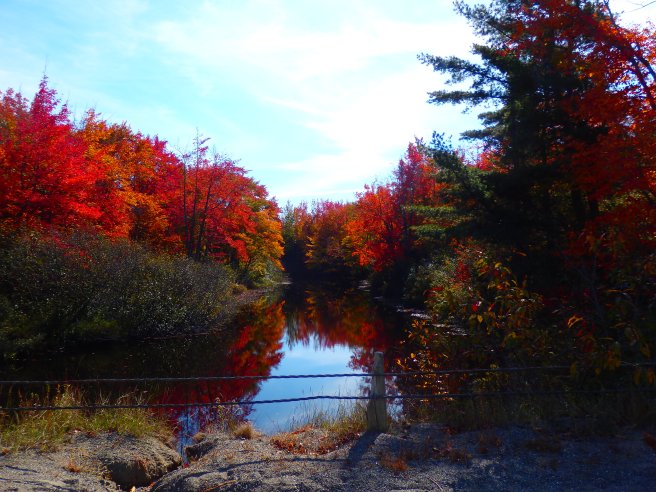
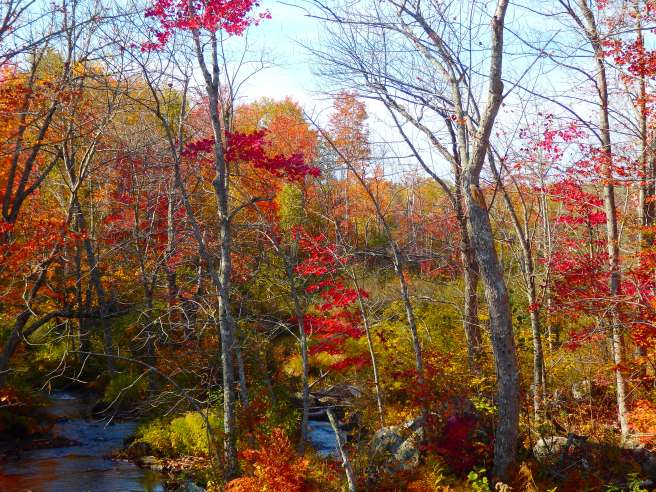
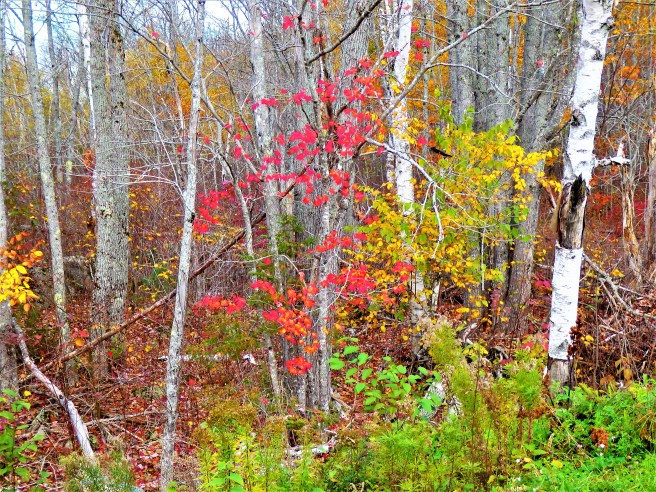
A fringe of intense red in swampy ground is often a vanguard of the changing foliage.
Let me be honest and admit that the most amazing fall foliage I’ve seen was in 1970 in the Susquehanna Valley of New York and neighboring Pennsylvania. I’m not sure how it would stack up today, if I had a way of reviving the actual color, but the experience was unlike any before or since.
I was fresh out of college – free of being cooped up on campus and indoors. I had my own wheels and a job that had me free by midafternoon, when the angular sunlight was kicking in. And the local forests blended the species of New England with those of the middle Appalachians. What I had known before was Ohio and Indiana, without the big foothills that propped the forests up before my eyes like giant canvases or, from the crests, arrayed them below me like vast quilts punctuated with villages and farm fields and meadows.
I suspect another major factor was a killing frost by late September, which would intensify the color and make, officially, Indian summer. With global warming, that frost has been delaying until all of the leaves have fallen.
All the same, living in New England for nearly half of my life now, I recognize how profoundly the autumn change strikes the region. My in-depth reflections and accompanying photos from New Hampshire are found in the archives of my Chicken Farmer blog. Do go there, if you can. The posts and slideshows appear in the New England Spirit category from August through October 2013.
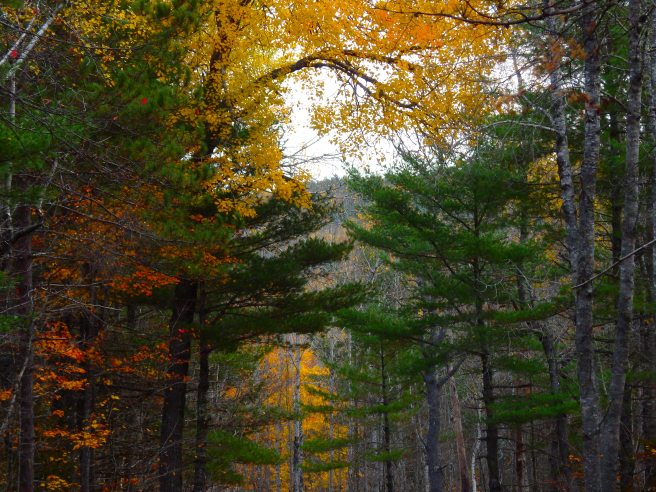
What I’m now encountering is Coastal Downeast Maine, with its own variations. The forest is largely evergreen, which of course stays green. But it does provide a solid background for the deciduous trees as they change.
Having written that, I encounter an early morning drive across stretches where everything is perfect. The foliage is prime, a full range of the palette, nothing holding back. The temperature’s still chill, so maybe they’ve already had that hard frost up here. Better yet, the sunlight’s brilliant buttery and straight-on, rather than overhead, illuminating the leaves from the side facing me.
It reminds me of other “oh, wow!” epiphanies in northern New England that no doubt would equal or even surpass the year further south that set the standard.
So here’s a taste of how it happens around here.
The trees don’t all change color at the same time.Evergreens do provide a strong background.A few dramatic splashes.It’s not always the panoramic view that counts.On the other hand, when you’re faced with this at a bend in the road, how can you not be awed?
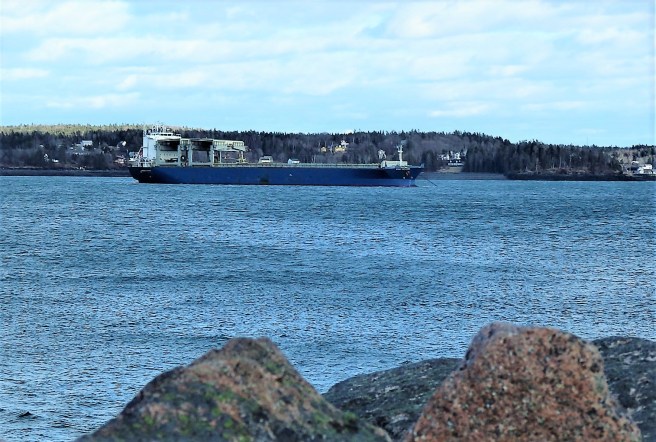
While washing dishes one night shortly after moving to Eastport, I noticed strange lights between a neighbor’s house. So I went upstairs with my binoculars and still couldn’t make out much, other than it appeared to be a ship. Or maybe two. It definitely wasn’t one of our fishing boats. Here’s how one of the big freighters looks in daylight.
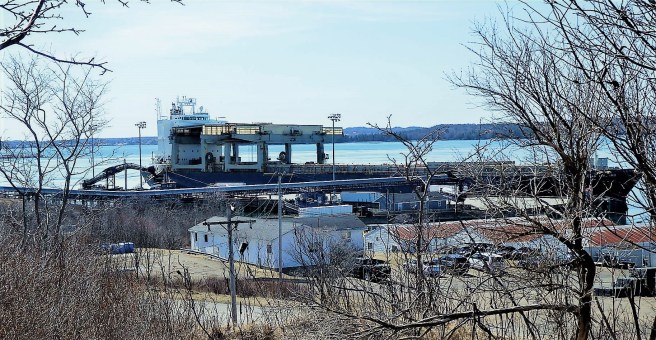
This ship sits at anchor while awaiting the harbor pilot to board and direct the critical final moves to the Eastport’s commercial terminal. I do have to wonder how the skipper can see anything ahead from the bridge so close to the stern.
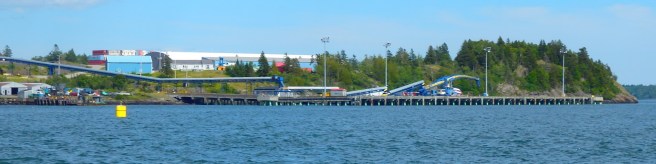
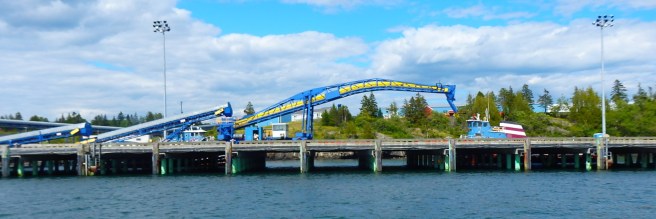
The Breakwater downtown isn’t the only important pier in town. The Eastport Port Authority also operates the Estes Head Cargo Terminal around the curve to the south. The 55-acre, high-security site includes warehouses, an aerial conveyor, and two berths. It’s where the big barges and oceanic freighters pull in.
The cargo terminal from the water.There are even tugboats.
It’s also the deepest natural harbor in the continental U.S., with the Breakwater close behind.
The name of the ship, its cargo, and its destination will be reported in the shipping activities log on page 3 of the next edition of the Quoddy Tides.
Most of the shipping these days is exports of wood pulp for paper production, though recent cargo has included delivery of giant blades for the wind farm electrical generators in Hancock County. .
Seems a shame they can’t drum up more business, try as they might.
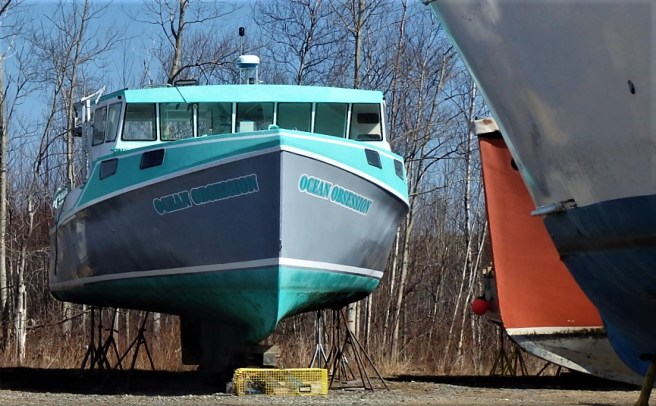
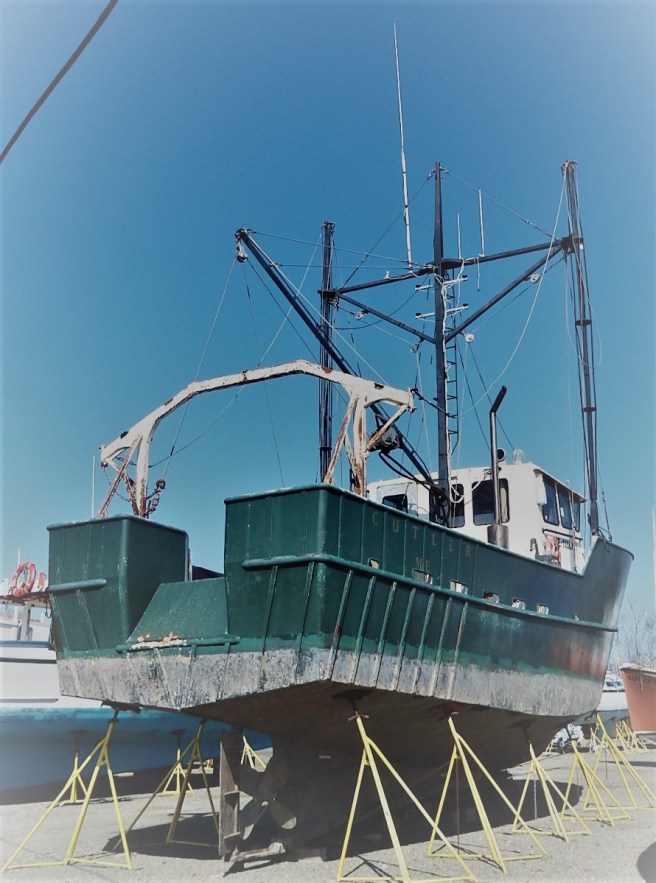
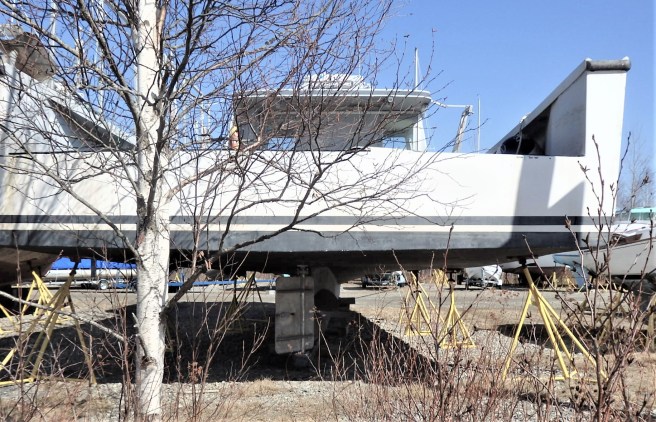
As I was saying?I wonder about all the different shapes and their reasons. This one’s obviously meant as a workhorse.And in profile.Can’t help thinking of a ’66 Chevy every time I see this.
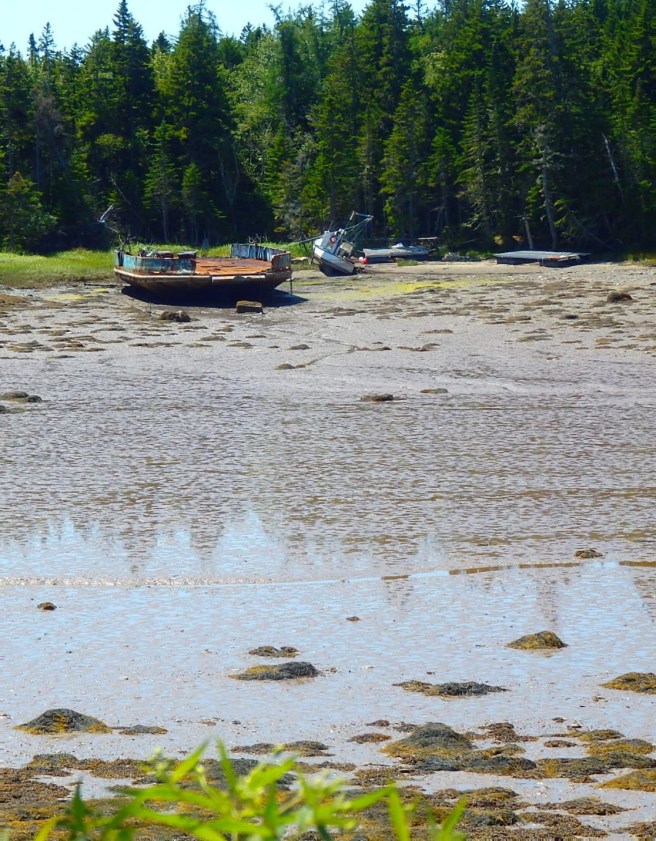
I do wonder about this scuttled auto ferry seen from a trail at Roque Beach State Park. It’s far from any center of population, and there’s no remaining top structure.
As seen at low tide.
Was it scavenged before being abandoned? Or even after? Did it fall victim to fire? Or a storm? Somehow it was run aground along what’s now thick forest.




 Jnana's Red Barn