A FEW THOUGHTS WHILE SIFTING COMPOST

Come springtime every year, there’d be a predicable domestic spat. I’d say the compost was ready. She’d look at it and retort, “No, it’s not: you can still see bits and tell what it’s made of.” (Actually, two shes – mother and daughter.) “Then you’ll have to wait another year for it to finish to your specifications,” I’d shoot back, only to be told we couldn’t wait that long. And so on.

Part of this seemed to question my very manhood. I was, after all, the one doing all the work, from collecting the bags of leaves around the neighborhood and dumping the kitchen garbage in the covered bins to changing the rabbit cages, in large part for their precious, nitrogen-intense pellets.

Well, most of the work. The red wigglers would also do a large share.

Still, I suspected that if we waited as long as they wanted, all of our organic matter would evaporate.

At last, I had a flash of genius. I’d slowly sift the pile, trowel by trowel, and whatever came through the screen turned out beautiful. They approved and used buckets of it on the square-foot garden beds as fast as I could provide them. The part that didn’t fit through the screen was also beautiful, along the lines of woodland detritus with flecks of brown eggs.  I put that aside to decay further, perhaps to be spread as mulch in July or August.

100_8405

The motion of sifting itself can become a kind of Zen practice as you admire the material before you and the thoughts flitting through your awareness.

This movement’s like panning for gold, as I found washing my dishes in the glacier-fed river below Mount Shuksan. Back and forth, back and forth, with all that matter getting smaller and sparkling more in each round of swirling.

All the peach stones are tokens from our cheap peach bonanza after Hurricane Irene ruffled nearby orchards.

The squirrels plant a lot of our wild black walnuts.

Listen to all the cardinals and mourning doves.

Plastic, in flecks, is inescapable.

How loud, those geese overhead! Me, I’d be more stealthy.

We eat a lot of eggs.
FLOWERING MEMORIES

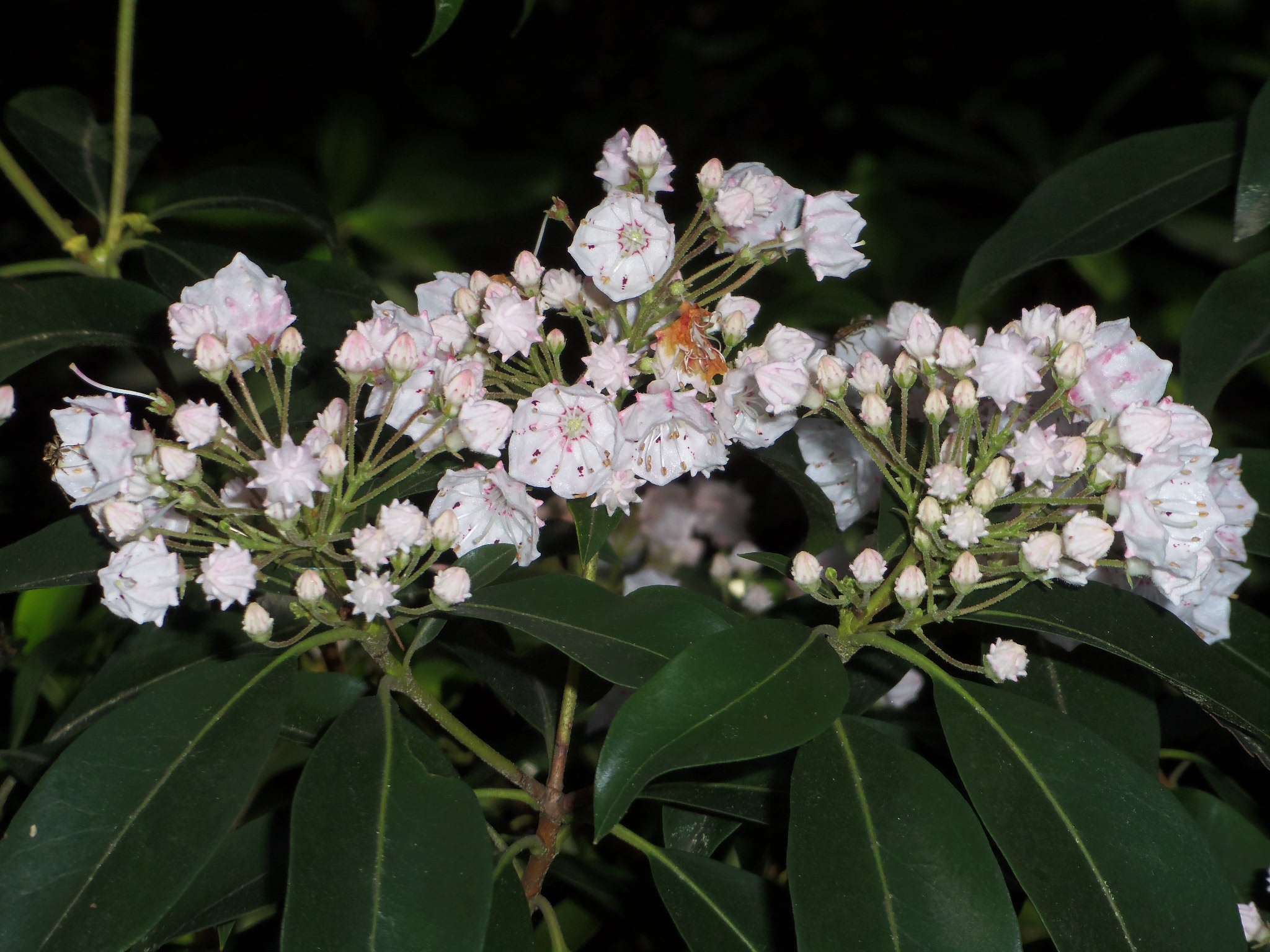
Mountain laurel have taken hold in our Quaker burial ground. Now, if I could only get them to do likewise in our yard.

My fondness for mountain laurel springs from my days in the ashram in the Poconos. Those tiny white clusters like origami that open into tiny teacups are, I was told, the state flower of Pennsylvania, and protected by state law.

My fondness for rhododendron goes back even further, to backpacking a section of the Appalachian Trail as an 11-year-old Boy Scout and coming upon Roan High Knob in full bloom in North Carolina.

Joe Pye weed is something I’ve learned to appreciate here, after we bought our annuals at the Conservation District sale.

Add that, as it thrives, to our azaleas.

Rhododendron and mountain laurel line the lane under tall pine in our undisturbed Friends burial ground.

COMPOSTING AS PRAYER

One of my annual rituals involves emptying the large compost bin as we prepare to enrich the garden for our new plantings, and then refilling it with layers of collected leaves (bagged by our neighbors, especially, each October), a winter’s worth of kitchen garbage, and bunny-cage hay and its prized pellet-manure. The production of “organic matter” to counter our clay soil is also part of our battle against what my wife calls Dead Dirt Syndrome, and it’s been a wonder to observe progress over the years we’ve been at it.

The Apostle Paul has exhorted Christians to pray without ceasing – an impossibility, as we know – yet as I lift forkfuls from the big bin, reline its sides, load and unload the wheelbarrow, I often find myself entering a prayerful zone of reflection. First, there’s the reminder that humus – the stuff of compost – and humility are words sharing a common root, and that both are nurturing elements for life. Then there’s an awareness of our essential abundance – all the meals we’ve enjoyed; the reality that children in America are familiar with tastes that kings in earlier times would have never imagined. We haven’t gone hungry. In fact, there’s so much waste to lament, a resolution to be more frugal or attentive, and then a sense of contrition knowing that we’re still putting this to work rather than tossing it out to the local landfill. Soon I’m appreciating the stages of transformation as I observe how matter breaks down into something resembling potting soil – rich, dark, soft. But I also know this always requires patience and will go at its own pace, no matter how I might try to rush it.

I’ve learned to watch the stages of change, too. That period when the pile begins steaming and its interior reaches 140 degrees or so. Followed by that period when the red wigglers (or is it wrigglers?) appear and proliferate. My buddies, reducing the leaves and hay and newspaper and cardboard and garbage into finished compost. You could view them as angels, arriving from wherever to bless the home and garden. At least I do. Yes, gratefully.

Already, as the compost pile thaws, the Cadillac of worms is digging into work. A happy sight, indeed.

SPRING MILL

kodak1 022

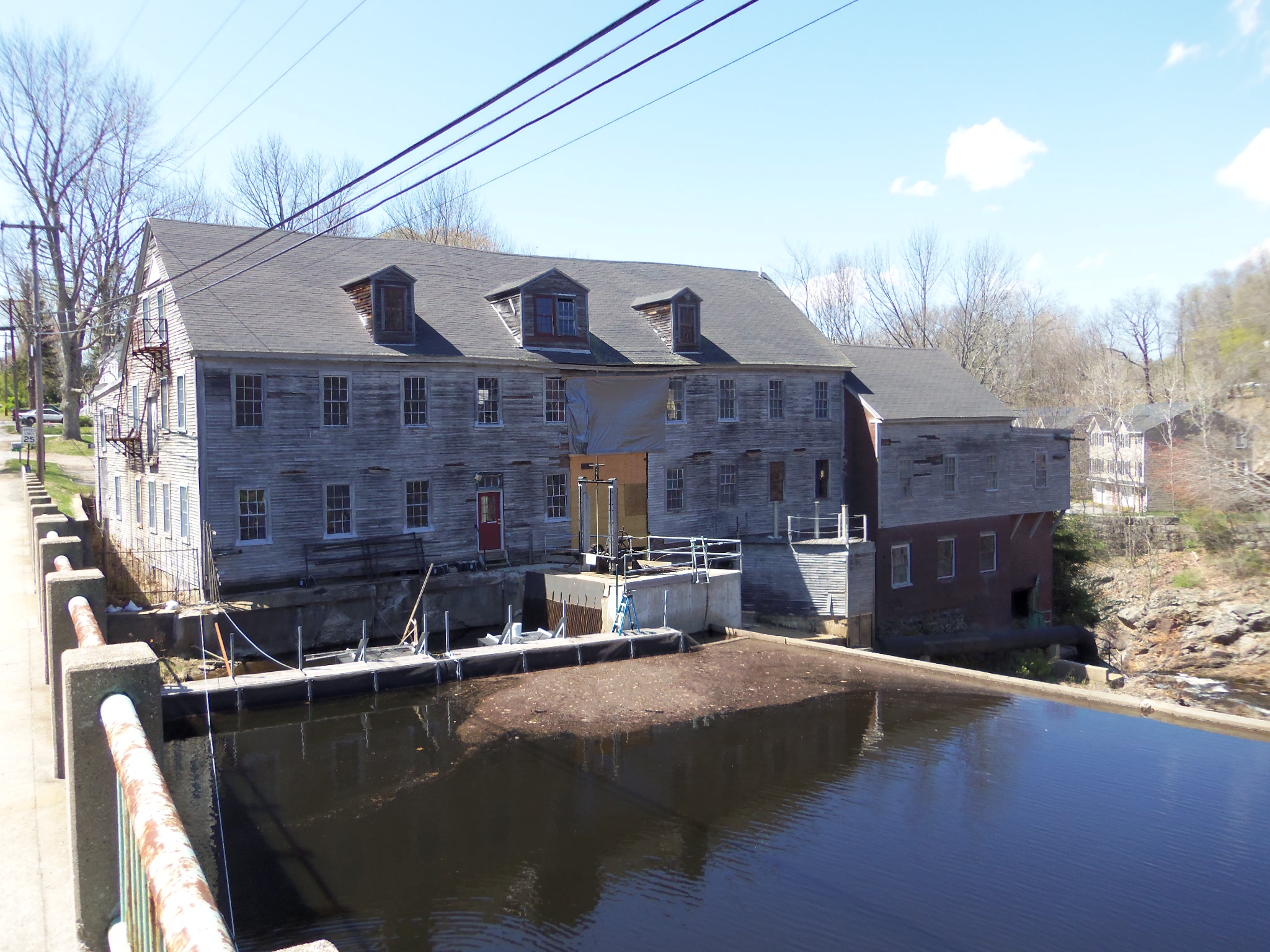
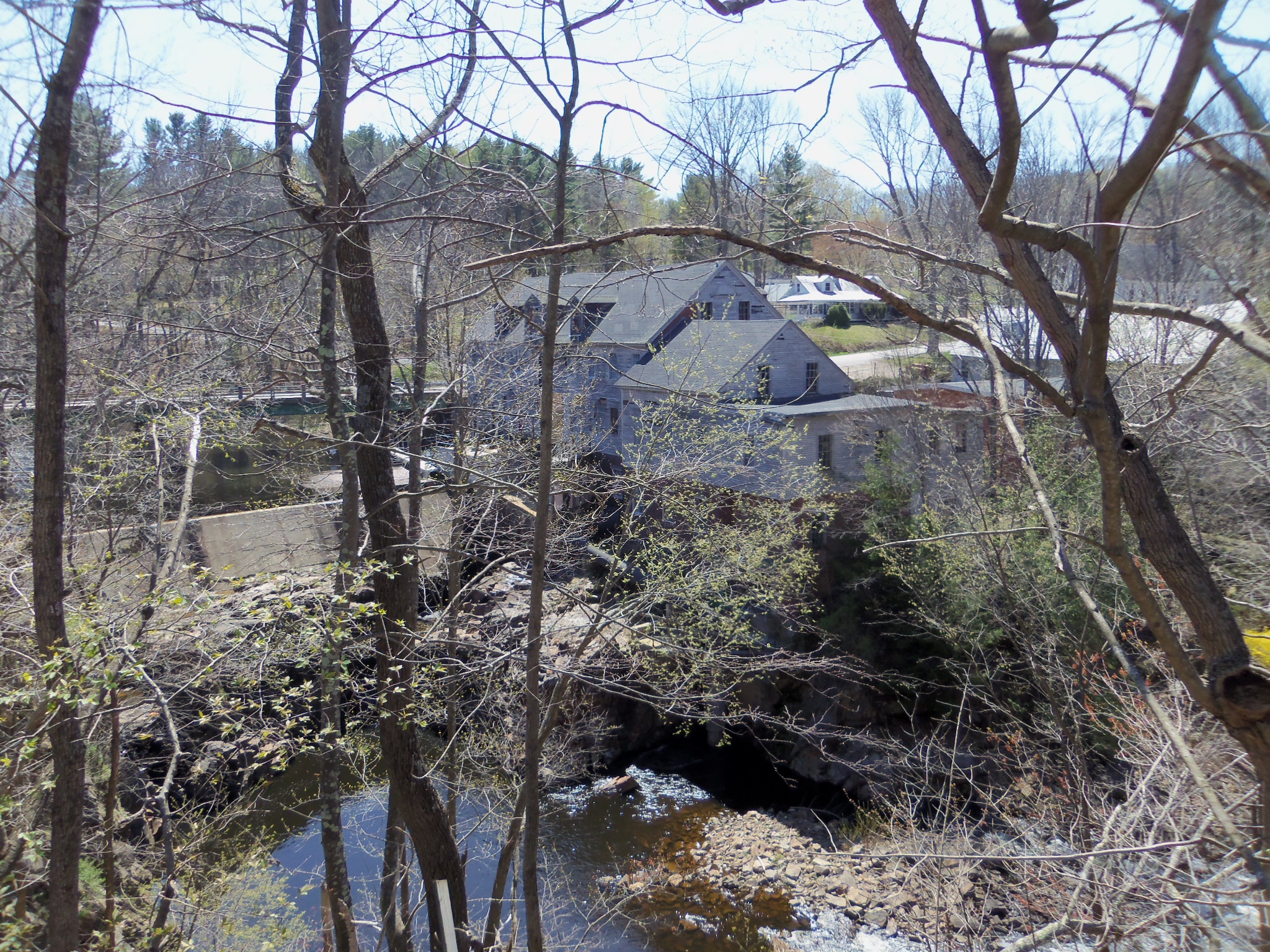
Streams that could be harnessed for water power were prized in earlier periods of American history, perhaps nowhere more than in New England. Here are views of a mill on the Great Works River (fittingly named by Quakers) in South Berwick, Maine.

The leafing trees will soon obstruct this view of the mill perched on the edge of the falling water.
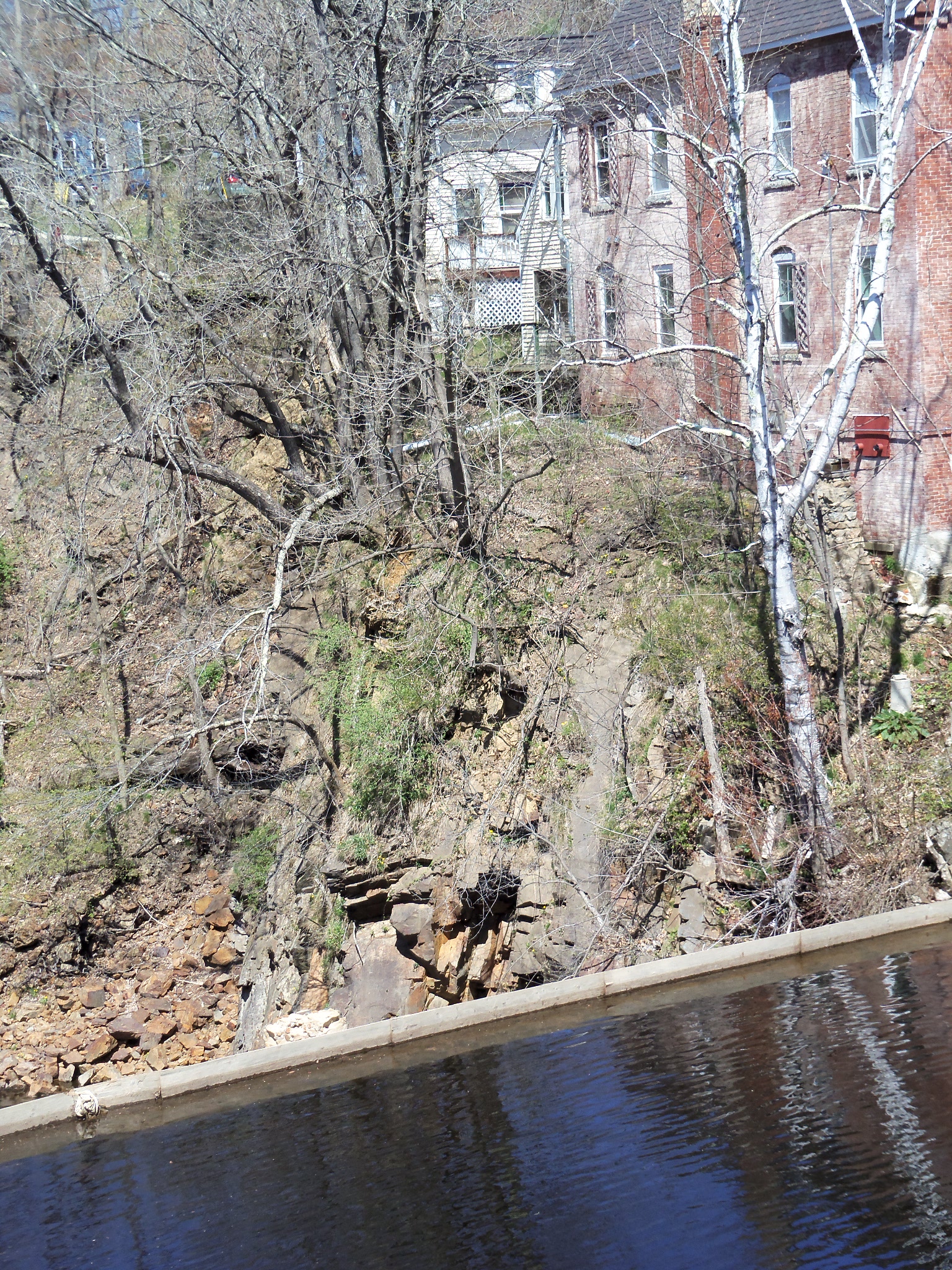
Houses, too, perch at the edge of the drop-off.

FORSYTHIAS

Spring yellow, for Easter. I cut branches of forsythia, bring them indoors, find an appropriate vase with water, if Easter’s falling early. And then they open, with a profusion of yellow. Sunshine.

Some, soon adorned with suspended eggs.

Happy Easter!
Happy Easter!

CHEATING WITH TOMATOES

Where we live, getting a homegrown ripe tomato before the beginning of August is an annual challenge. And once they start arriving, we face a big battle against blight. In fact, we’ve given up on heritage varieties like Brandywine and Beefsteak and turned to more resistant hybrids.

So when the agricultural school at our nearby state university had its greenhouse open house last year, the opportunity to come home with a healthy tomato plant was an irresistible temptation. We kept it in a sunny window and under grow lights, taking it outdoors on days when the temperature edged above 50F. And just look at what happened into May!

Will we repeat the experience? It’s awfully tempting.

Is this cheating?
Is this cheating?

GARRISON HOUSE

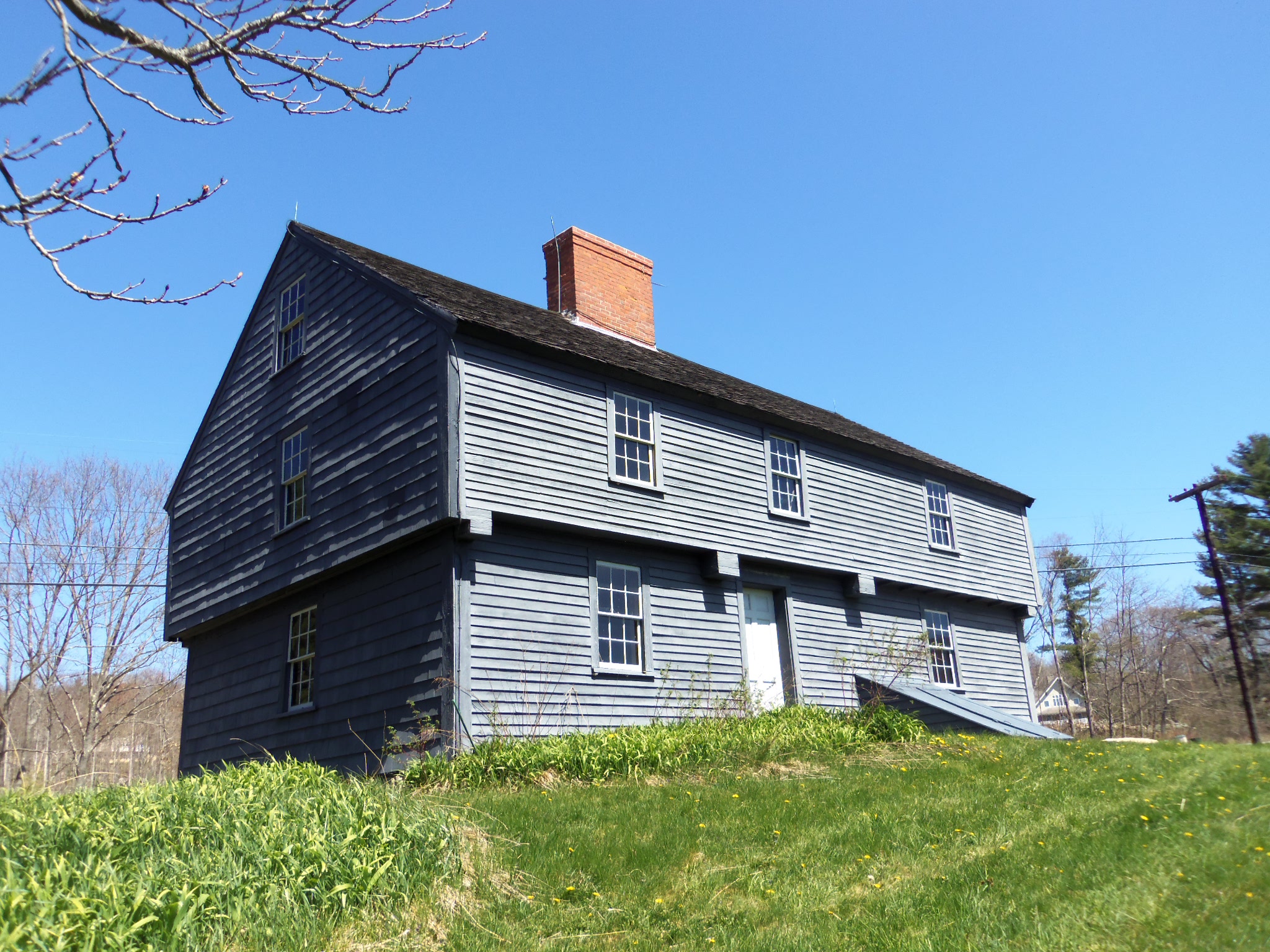
The distinctive overhang design allowed for self-defense from within.

From the outbreak of King Philip’s War in 1675 until the conclusion of the French and Indian War in 1763, much of northern New England was under an ongoing threat of violence along its frontier. Nearly all of the English settlement in Maine was pushed back to a few towns nearest New Hampshire, and many villages, including Dover, suffered devastation and massacre.

Indeed, officials ordered many residents to construct fortified garrison houses, like this reproduction along Cider Hill Road in York, Maine, where families could retreat for armed protection when an alarm was sounded.

The site overlooks the inland tidal salt marshes that give rise to the York River. The hay from such spots was prized, even though feeding it to cows would produce a distinctively salty milk.
Also on the site is a more traditional New England style of construction -- shingle siding that weathers to gray.
Also on the site is a more traditional New England style of construction — shingle siding that weathers to gray.

ALONG THE ISINGLASS

Quaker4 085

As I said at the time …

After dropping the kid off at school for a rare Saturday session (costume design class), noon, I stop off at Mount Isinglass for a short hike, in part to eat up a bit of time before our customary Saturday afternoon wine tasting and opera broadcast.

While most of our snow has melted, the woods are still covered, even in Gonic. The trail’s quite icy, with a few bare spots for relief.

Amazing how many people rely on their dogs as an excuse to take a walk – as the droppings in the snow attest.

Still, a good exercise, this trek before the snowpack is completely gone, at least if I don’t slip, fall, and injure myself.

Coming down near the river and former bridge, I view a black pool of stilled water brimming slightly over the usual banks, a complete contrast to the two snowy forest hillsides it cleaves. The utter beauty is timeless, and yet totally of the moment. While the water is quiescent, the air resounds with the ferocious chords of the cataract just out of sight.

I approach the top of the falls, the water gaining inevitable velocity and muscle, some of it careening into rockface and then pushing across the current. The narrow, sloping trail down to the base of the cascade, however, remains ice covered, and the places I would normally cross to the river are now mid-stream anyway. I back off, and head back, rather than attempting to scale the cliff to a possible overlook from above.

The temptation becomes too much, and I venture off the return trail, my feet crashing through snowpack that still comes to my knees, until I come to a place where the falls are in view off to the side below me. Rather than the miniature Niagara I’d expected, however, the water’s not rounding off to drop vertically, as I’d seen it in high water here the previous autumn. Rather, it shoots straight out – sometimes into a sheer wall of rock.

All of this wild power – untamed, exuberant, destructive or even cleansing, hissing like strong wind with drumming somewhere deep within. Anyone pulled into the current would be broken by the weight, crushed on the rock, torn by the crossfire. The mill that once channeled this energy has long been swept away by such outbursts, with only a few foundation stones remaining. Downstream, this water will be used at least twice to generate electrical power, but here it explodes for its own glory.

What is it that attracts us to cataracts? The description that comes to mind is “awe,” an acknowledgment of natural, inexplicable power far greater than our own mortal existence. Or maybe the seemingly inexhaustible stream of profusion that outlasts our own span of concentration and observation.

Even so, as the Psalmist noted, “He leads me beside the still waters,” not down to the base of the torrent. I think of two Plain meetinghouses in Ohio, both named Stillwater – one Quaker, the other Old Order German Baptist Brethren. The still water as a place of clarification, the sediment dropping away, a clear drink or safe place to water livestock and wildlife. Waterfowl, too, take refuge. Here the energy is latent and gathering, ready for release. In the meetinghouses, the worshipers gather, still themselves, become clear, preparing for the channel of the week ahead.

The contrast within one stream couldn’t be sharper, one as the other face of its complement.

On the walk back to the car, an icy beech leaf turns translucent on the snowy trail.

a beech leaf
translucent with ice

floating on snow

January 094

GLIMPSED FROM THE FREEWAY

When I grew up in the heavily farmed Midwest, a beaver dam or lodge was a rarity, an awe-inspiring emblem of wilderness.

But if you pay attention while driving the freeways around here – including those near Boston – you’ll catch a glimpse of a beaver lodge and then recognize the surrounding pond, frequently soon followed by another.

The sight reminds me of a wonderful documentary I once watched on public television. The program followed the life of a beaver colony through an entire year, and then, at the very end of the hour, the camera pulled back from the dam and lodge to reveal a busy limited access highway at the edge of the pond.

It’s enough to make me appreciate both kinds of engineering.

This beaver lodge appears to sit securely in remote wilderness ...
This beaver lodge appears to sit securely in remote wilderness …
... until you turn around to see it's built right at the side of a busy freeway.
… until you turn around to see it’s built right at the side of a busy freeway.
Further back in the pond is the large lodge that first invited me to pull over to the side of the road.


OUR LADY OF THE ICE

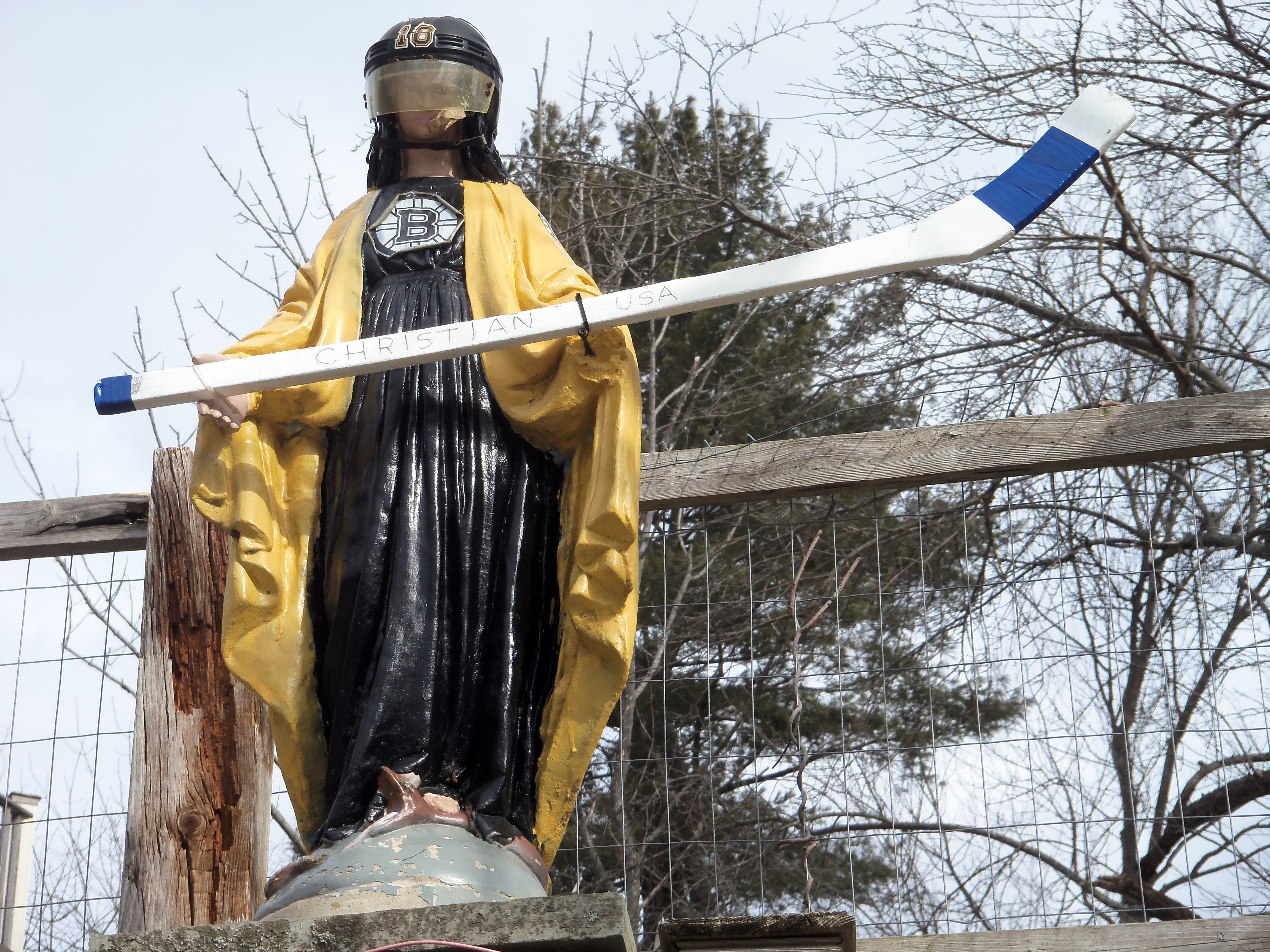
Always ready for a miracle.

Or is it Our Lady of the Puck?

New England is hockey country, and Boston Bruins fans are legion. Rest assured, Bobby Orr would no doubt lead their pantheon of saints.

While statues of Mary are common across the country, I know of no others like this. Behind the mask, the face looks feminine. This repurposed icon icon overlooks Chauncey Creek Road in Kittery, Maine.