
Tag: Outdoors
AFTER THE FROST
As everyone’s been saying, New England had a strange summer. It felt shorter than normal, and despite some uncommonly hot spikes, was overall on the cool side. June was drier than usual, while July was wetter. And we swimmers were finding the ocean already growing uncomfortable toward the end of August, rather than leading into the glorious days of September we often anticipate. (The Gulf of Maine takes time to warm, after all.) I barely got my value’s worth out of my season pass to Fort Foster beach, unlike last year, even though I’m officially fully retired now.
As the buzz went, the fall foliage was better than we’d had in years, although it seemed to run about a week ahead of schedule and then essentially drifted off. And, after a few near misses in September, we were finally hit with killing frosts before the last week of October.
Not that many years ago, I would have said that was the end of the garden season, but that’s no longer the case. The cold gives the Brussels sprouts and kale a sweet edge, the parsley hangs in well for a few more weeks, and root crops like carrots, parsnips, turnips, and leeks can stay in the ground until it’s too frozen to spade.
Maybe part of my sense of a shortened summer can be laid to my revived activity as a novelist, thanks to the Smashwords publishing. With Hippie Drum released at the end of May, I found myself busy getting the word out through June and then spent much of August and September revising and formatting more works. Unexpectedly, but with a renewed sense of direction, I even drafted large sections of new material. What all this meant, of course, was time at the keyboard instead of outdoors.
Now that Ashram is in circulation again, I’m once more reflecting on attempting to establish a right balance in my life – time for exercise and home projects, for instance, renewed cooking and expanded social activity. Who knows, maybe I’ll finally reach that sweet spot.
For now, that includes cleaning up the garden, removing the dead zinnia stalks, eggplants, peppers, tomatoes. Pruning the raspberries. Turning compost. And then there’s moving the fig tree to the cellar, putting the hoses and Smoking Garden lights away, dismantling the hammock, stacking the tomato cages.
Already I’m looking at the dandelion leaves and calculating how soon they’ll be emerging from winter and heading to our plates.
Just don’t tell me it’s going to be a hard winter or there will be tons of snow to shovel.
Balance means savoring just one day at a time, right? Or can it mean all of them?
ALL THE NEIGHBORS’ CATS

Our yard is claimed by the neighborhood cats. We have no idea where most of them live. The gray one prowls everything. “You’d think after five years here, they’d finally come up to me,” Rachel once said, and nothing’s changed.
The white-bibbed black cat often snoozes in our berm (the bank of shrubs and ivy between the sidewalk and Swamp), while the solid black one beside the catnip watches the bird feeder, and then there are Heifer Cat, Smoky, and Nimrod, who once caught a squirrel in our viewing. Who knows what their owners call them.
My favorite incident was watching a peregrine falcon raid the thistle feeder as I was showering. All the other birds fled in the commotion, but the fearless cat I named Spooky came marching forward, as a hawk. Everything happened so fast, what are you, kitty, really nuts? But the scene cleared without further incident. Hip-hip, for Spooky.

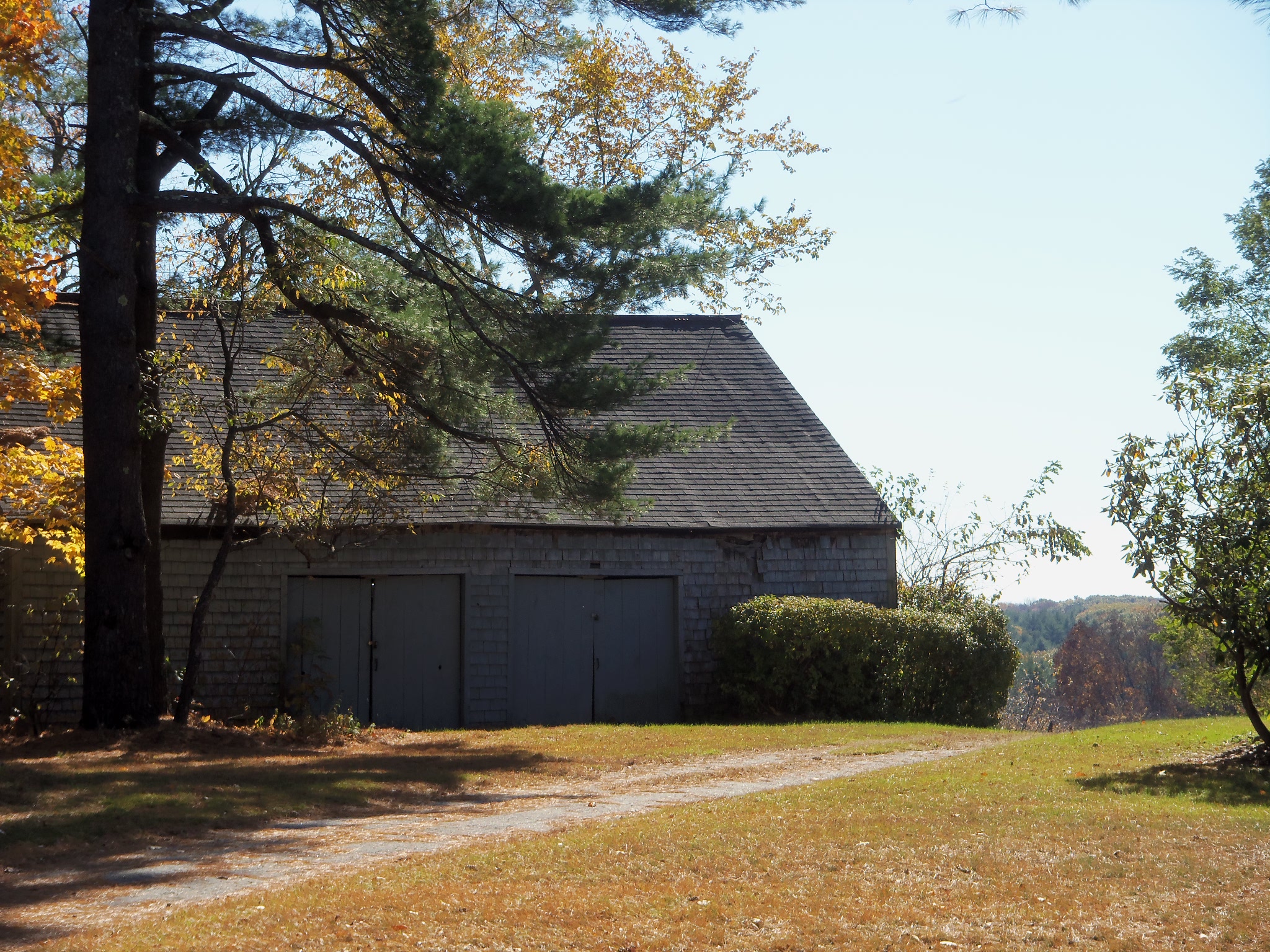
A PROPER GRAY
LAST ACT


FIREWORKS, ANYONE?

WASHINGTON, THE STATE
I know, as I said at the time, it was all done with the best of intentions, naming such a pristine state after our first president. And then they went and picked out all the Indian names that would resonate with it … like Seattle, Tacoma, Yakima, Wenatchee, Wapato, Spokane, and so on.
The problem is, outside of the Far West, everybody thinks of the smaller Washington, the nation’s capital, rather than that sprawling and varied land of whales and volcanoes. It makes for a real identity problem.
Of course, some of the natives (not to be confused with Natives) prefer it that way. After all, if nobody can remember it’s there, maybe they’ll all stay away and keep the place, well, just as natural as ever. I mean, the only reason for living so far away from the rest of the nation … living way up there in that isolated corner of the country … is to live away from everybody else.
But there are some holes in that argument of a fortress empire. For one thing, the migrant workers have certainly discovered the orchards, and they’ve discovered the state is clean pickings when it comes to job opportunity. If those mighty native-born and all the newcomers who consider themselves native, which is almost the same thing, don’t wake up soon and let the rest of the United States know they exist, why they’ll soon be required to take Spanish lessons. Quien sabe?
Worse yet, Californians know about the Evergreen State and, realizing what they’ve already done to the Golden State, they’re now anxious to do the same to the north. Before folks say, why, yes, I know, but there’s a barrier between us and them … the whole state of Oregon … let me reply, Just wake up and smell the coffee, buster. Why, everybody says Seattle’s just like San Francisco was before it became too big. And we know southern California wants to get its tubes into the Columbia River to pump real water all the way down the continent. I mean, that’s like Boston having to go to Minneapolis for its water, just about the same distance. And the mountains between Minneapolis and Boston would be far less of an obstacle, believe me.
No, sir. That Columbia River water ought to be generating electricity for the Pacific Northwest and nurturing the endangered salmon stock and watering orchards in the deserts of Oregon and Washington State before it goes on some movie star’s lawn in Brentwood. Sooner or later, southern California is going to have to learn to do without water. I say, the sooner, the better. They can buy icebergs from Alaska, for all I care.
So, if Washington State is going to save itself and keep everyone but the California congressional delegation from thinking it was giving away Potomac River water to its water greedy constituents, it’s going to have to come up with a new name.
I know, I know it will be an inconvenience. But it’s that or something far more dire.
So what do we have? Ecotopia has been suggested. I see you feel about the same way on that one as I do. Although, to be candid, “Seattle, Ecotopia,” doesn’t sound all that bad. Except that it raises a specter of starving Africans.
We could try renaming the state for another United States president. But Adams, Jefferson, Madison, Jackson, Lincoln, Roosevelt, Wilson, and Eisenhower for starters fall flat on their face. I mean, Seattle Roosevelt sounds like a forward for the Lakers, now that the Sonics are gone. Let’s face the facts.
My favorite is Tahoma, which is the Indian name for the tallest mountain in the state. But Seattle, Tahoma; Tacoma, Tahoma; Yakima, Tahoma; Wapato, Tahoma; Walla Walla, Tahoma; Wenatchee, Tahoma; and even Spokane, Tahoma, will never fall easily on the American tongue.
So what’s to be done? Let us consider the obvious choice: Apple. I mean, two of every five apples sold in the United States come from this state. (Remember, we’re talking about fruit, rather than computers, Microsoft notwithstanding.) This would be advertising at its best. Not only that, but the apples come from a generally neglected part of the state, its central desert. Listen to this, now: Seattle, Apple; Tacoma, Apple; Yakima, Apple; Wapato, Apple; Wenatchee, Apple; Walla Walla, Apple; Spokane, Apple . . . and so on. Even Olympia, Apple, rings right.
What? You say it sounds too much like the nickname for a decrepit Eastern port?
Well, then. How about . . . Evergreen? As in Seattle, Evergreen; Tacoma, Evergreen; Yakima, Evergreen . . .
~*~
Now I’m wondering how long ago I wrote this bit found in my files. Many tell me Seattle long ago fell over that tipping point of small-town innocence. There are the tales of terror regarding immigration enforcement. I’m told even the orchards look different, thanks to trellis-based apple trees. Still, I’d opt for a new name, as long as it’s not based on the high-tech upsurge.
RAT-TAT OSCAR
The title of a chapter in Bill Adler Jr.’s Outwitting Squirrels says everything: “Know the Enemy.” (My copy was a Christmas present, one of many squirrel-related items the family wraps and presents me, in their own vein of humor.) While Adler’s focus is on the difficulties squirrels cause bird feeders, including me, the bush-tailed mammals can be a homeowner’ nemesis – “tree-climbing rats,” as one friend insists – causing a number of fires as they gnaw through wiring and insulation. Ditto for the electrical utility.
In combat, however, one side can begin to resemble the other: their actions and thoughts parallel and overlap. A canny devil may even earn respect.
Many of the poems in a series I call Rat-Tat Oscar poems originate in my encounters with squirrels as part of my second marriage – evicting them from the walls of the house, from their raids on the bird feeders and garden, and eventually from the haunts in the barn – and are spurred by my wife’s quip, watching me transport them away in a Have-a-Heart trap, that I was operating a squirrel taxi. They can drive a man to madness or violence.
The poems also draw on annual Christmas letters to friends and family over two-and-a-half decades, turning the encounters to a would-be squirrel’s perspective. Of course, my wife and children will also insist I’m often more than a tad squirrelly.
Surprisingly, there’s not a lot about squirrels in mythology. Maybe the most prominent one is the Norse Ratatoskr, along with a handful of Native American stories. Maybe they had as much trouble making sense of squirrels in the universe as I do.
JOE-PYE WEED

OCCASION OF CELEBRATION
As I posted in a poem back in April, spotting a hummingbird is an occasion of celebration. They’re so tiny and so fast you’re likely to dismiss one as a dragonfly or as some other large, speedy insect if you’re not paying attention. Sometimes you notice more the irregular angles of their zig-zag flight, the motions no other flyer can manage, rather than the bird itself, and then you start observing closely. And sometimes you just happen to look out when one’s hovering nearby, say at the blooming azalea in front of the bay window.
I hadn’t seen any this year until a few weeks ago, when I glimpsed out from our kitchen and noticed one working its way through our stand of burgundy-color bee balm. I called for my wife to come look, but by the time she came over, it had vanished behind the asparagus, and that was it. You have to be quick. And now those blossoms are gone by.
I’d also remarked that we hadn’t seen all that many goldfinches this summer. Sometimes we seem to have thousands, but these things can go in cycles, so I just figured it was an off year.
And then, late yesterday afternoon, I sat down in the far corner of our yard simply to enjoy a cold beer and regard our garden and house from that perspective. Since this is also the glorious time of year I consider high summer, what I viewed was a culmination of so much that had been building up. Everything was quite green and lush, of course, and the garden was punctuated by the red of tomatoes, the yellows of squashes and peppers, and the incredible purples of eggplants, even before I got to the flowers. As I settled in, after admitting to myself the grass needs to be mowed again, I realized this was dinner rush hour for the birds. Who knows why, but they do seem to eat in spurts, at least when it comes to populating our feeders. And here they were, far more than I could count (after all, they’re constantly flitting from one place to another). Not only that, but many of them were goldfinches, perhaps attracted by our sunflowers that have finally started blooming. Mourning doves landed in the grapevine and wild-rose covered branches of the black walnut tree before looping down to the ground under the main feeder, littered with birdseed as it is. Along the tree I could see just the gray flickers of squirrel tails as they raided the ripe nuts from the branches. In short, it was lovely. And the grass seemed to be just the right depth for many of the smaller birds to go grubbing.
That’s when I caught the distinctive flight of the hummingbird, which then did something I’d never before seen: it actually landed on one of those branches, where it quickly became a camouflaged bump on the distant limb. Soon there were two, and I don’t ever remember seeing two at once. (Well, maybe once in Maine, at a friends’ feeder outside their kitchen slider door?) Still, a first, as far as our yard and garden go.
Minutes later, I spotted one working its way through the zinnias about a dozen feet from me. How meticulously it hovering above a single flower and vacuumed each petal. Next thing I knew, it was gone and then one followed by a second came shooting inches past my head, even as I ducked instinctively. Well, that was the second … and third … time in my life I’ve had to dodge that bullet! They certainly seemed to having fun, as birds and bees are said to do.
It’s been said that meditation may have originated in the art of hunting. That is, in learning to sit very still for extended periods of time and just let the wildlife come to you, if you’re worthy. So I sat very still, the way I would in Quaker meeting for worship or in a half-lotus position on my meditation cushion. Over time, I saw at least four hummingbirds working their way around the yard, swooping from the trees to the Joe Pye weeds, the sunflowers, the zinnias and cosmos, and somewhere behind me, before landing repeatedly in the trees.
All of what was happening could be considered as an epiphany, those special moments when the Holy One appears or becomes manifest in an individual’s life. No, I’m not suggesting that the hummingbirds are divine or even angelic, but this was clearly a reminder of the times and ways we are blessed. You can’t just go looking for it and expect it to happen. You can only be receptive and grateful when it does. You also have to know what you’re seeing and be able to name it, knowing how rare and wonderful it is. Along with the simple pleasures of having everything momentarily perfect. Isn’t that a definition of miracle?
Soon, of course, the hummingbird sightings became fewer and fewer. The ones in the yard were probably already migrating from further north and bulking up for their long flight in a few weeks across the Gulf of Mexico. Their season here is nearly over. The finches, meanwhile, will be around longer before donning their gray traveling cloaks, as one friend says, and then heading south.
On our part, all this was soon followed by our own time for dinner with its fresh sweetcorn, tomatoes, and basil eaten al fresco in the golden rays of the setting sun.
What was I saying about an occasion of celebration? Indeed.
 Jnana's Red Barn