NEW ENGLAND CITIES AND TOWNS

In New England, you live in either a town or a city. There are no townships or being “out in the county,” as I’d known elsewhere. And the counties are relatively insignificant, at least politically; they’re largely for a court system, jails, and record-keeping.

Part of my confusion when I first moved to this corner of the country was an assumption that “city” and “town” both meant “urban,” with some population density and a central retail and commercial district. But that’s not always the case. In fact, some seem to be entirely rural.

Additional confusion can be caused by looking at maps and seeing dots representing settlement and then assuming they’re towns. Gilmanton and Gilmanton Iron Works appear, for instance, but they’re both in the town of Gilmanton and are separated by miles of forest. The community of Groveton is in the town of Northumberland. The city of Laconia includes the enclaves of Weirs Beach and Lakeport. A city or town may have a number of distinct neighborhoods or villages, sometimes with separate post offices or Zip codes. And so on.

Our cities and towns are geographical spaces differentiated by their form of government. Cities are managed by a mayor and board of aldermen, while a town relies on a three-person board of selectmen. Population? Some of New Hampshire’s 13 cities are quite small, while a handful of its 221 towns rank among the largest localities. The form of government is a local choice.

Except for the towns that have opted for a ballot-based alternative known as SB 2, the residents of New Hampshire’s towns gather on the second Tuesday in March for Town Meeting Day, a celebrated exercise in democracy where everyone gets a say, at least if the moderator’s on top of his or her game. They’ll tackle the warrant articles – the agenda published in advance, including town and school budgets and bonding – and also elect new officials.

In a few towns, the entire event’s wrapped up in a half-hour, while others stretch on for hours or even demand additional sessions. The ones that get quite heated may explain why Town Meeting Day’s held in winter.

~*~

Winged Death 1To see more of the region’s unique character and calendar, click here.

YOU CAN’T LOSE IF YOU DON’T PLAY

One of the ways Quakers have stood apart from the larger society is in our opposition to gambling. Across America, though, the tension has grown in recent years, as governments (led by New Hampshire’s example) and Native American tribes have engaged in lotteries and casinos. Even causes we support commonly turn to raffles as fundraisers.

Still, we can witness to the fact that a lottery is an inefficient way to raise money for education or other socially valued causes. If you want something, you should be willing to pay for it directly, rather than expect someone else to foot the bill. As for gaming, the odds are vastly against winning, and I long found myself working far too hard to enjoy throwing hundreds of dollars down the drain. Even a weekly Megabucks ticket adds up. As one of my coworkers insisted, “Lotteries are a tax on stupidity.” He might have added, “a tax on despair,” as well, especially for lower- and middle-class families whose purchasing power keeps shrinking in the current economic climate. If anything, the glamour of gaming masks this reality. Maybe, just maybe, the hope goes, I’ll escape my condition. Friends have warned against the inclination to expect something for nothing or at someone else’s expense. I’m just as concerned about the quest for “fun” replacing a work ethic, or the way the entertainment media are shaping the everyday theology of the masses. Look closer, then, at the Foxwoods or Tri-State Lottery Commission commercials. Fantasy and reality diverge sharply.

Yes, it’s tempting. As in “temptation.” Even so, we believe in speaking Truth to Power. Need I say more?

SNOW MUCH SNOW

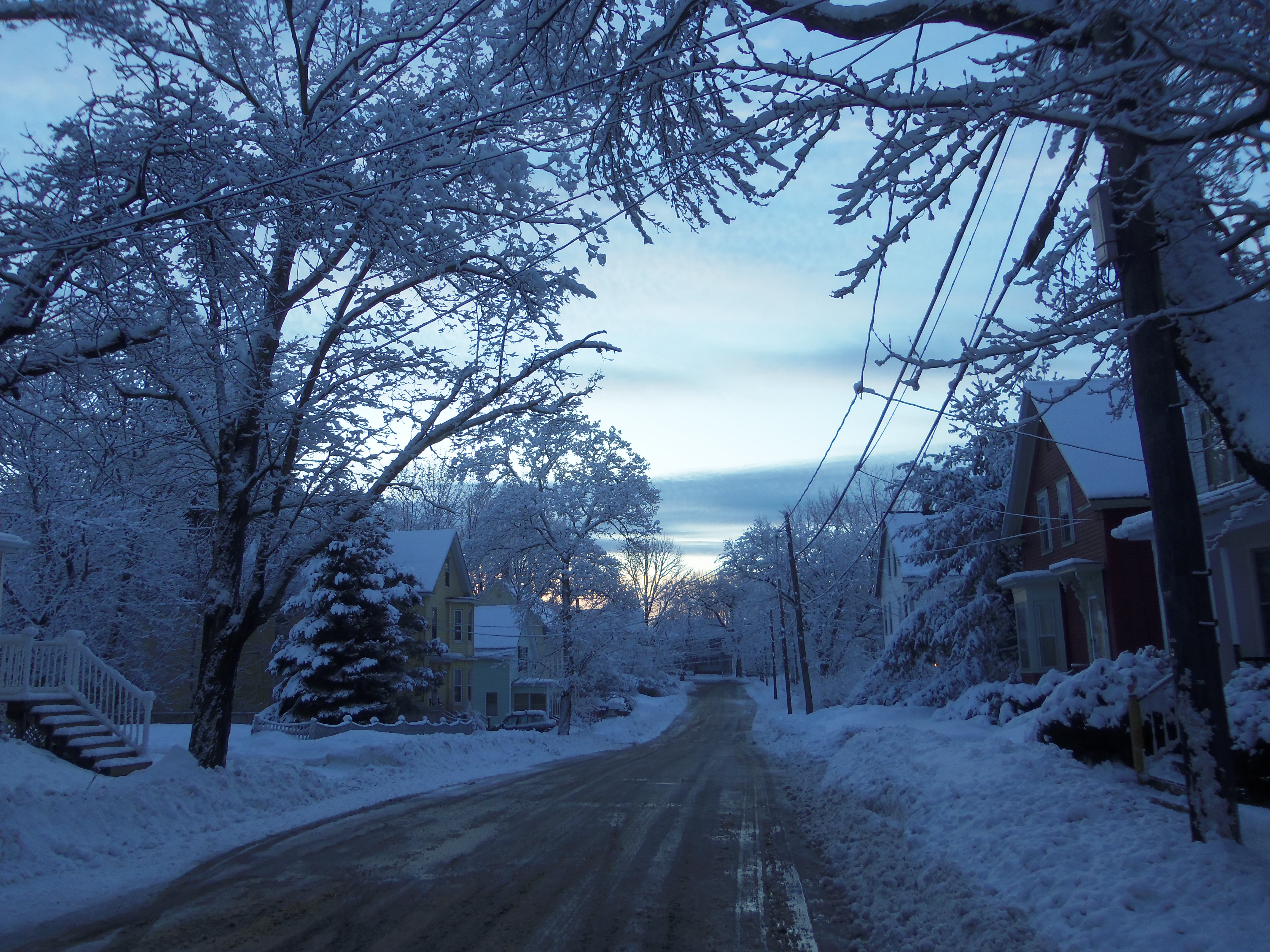
It’s snowing again, a nor’easter that’s expected to drop up to 15 inches on us before dawn. That’s on top of 5 or so a little over a week ago, plus last Tuesday’s 30-inch blizzard blast and Friday’s 7.5. That’s close to 5 feet of snowfall in a week-and-a-half and we still have two more winter months left – the two that traditionally can get the biggest totals, especially if we settle into a twice-a-week storm pattern as we seem to be.

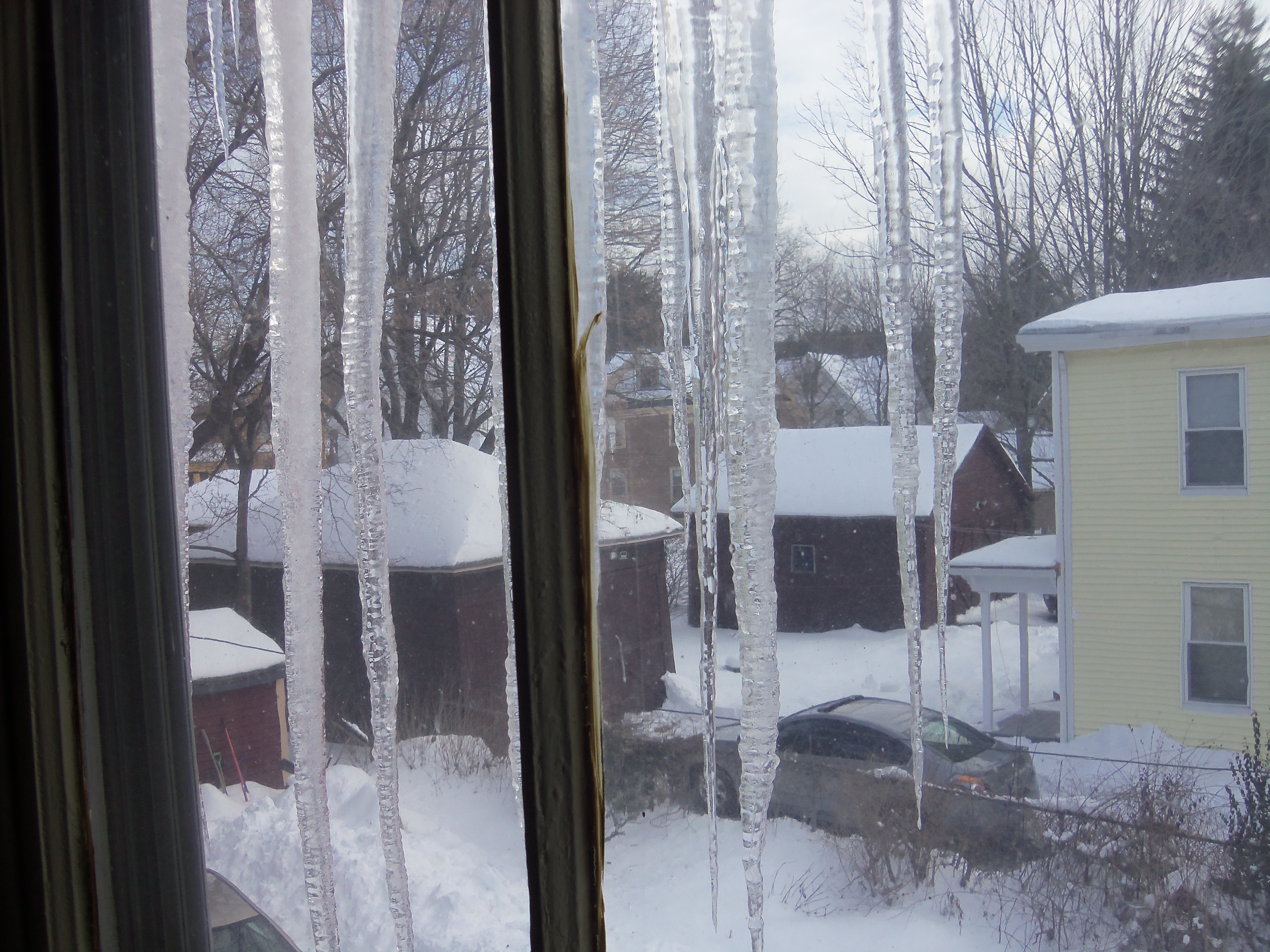
Admittedly, even with subzero and single-digit lows, some has melted between rounds, but much of that’s also refrozen into compacted snow and ice below the surface. The landscape’s getting wild, even before the next foot or so expected later in the week. Add to that the monster icicles clinging to the eaves – cold claws growing at our windows.

I keep looking out at the falling, windblown flakes and at the driveway and pathways that are already obliterated again. With an overcast sky, half of the landscape appears to be erased from existence.

This is hardly the quaint Currier and Ives stereotype of New England winter. It’s the reason barns and outbuildings were connected to the farmhouse itself. In earlier times, it could prompt madness and a feeling of being buried alive, with or without others.

Nowadays, we usually have recourse to mobility and entertainment throughout all but the worst outbursts – or the increasingly common power outages.

Still, it’s such a relief to not be commuting to and from the newsroom these days, but that’s no cause for smugness as I consider so many workers who must venture forth in public service.

And here comes a city snowplow, making one more pass down our street – and adding to the blockage at the end of our driveway.

Back to the digging, then. Round by round.