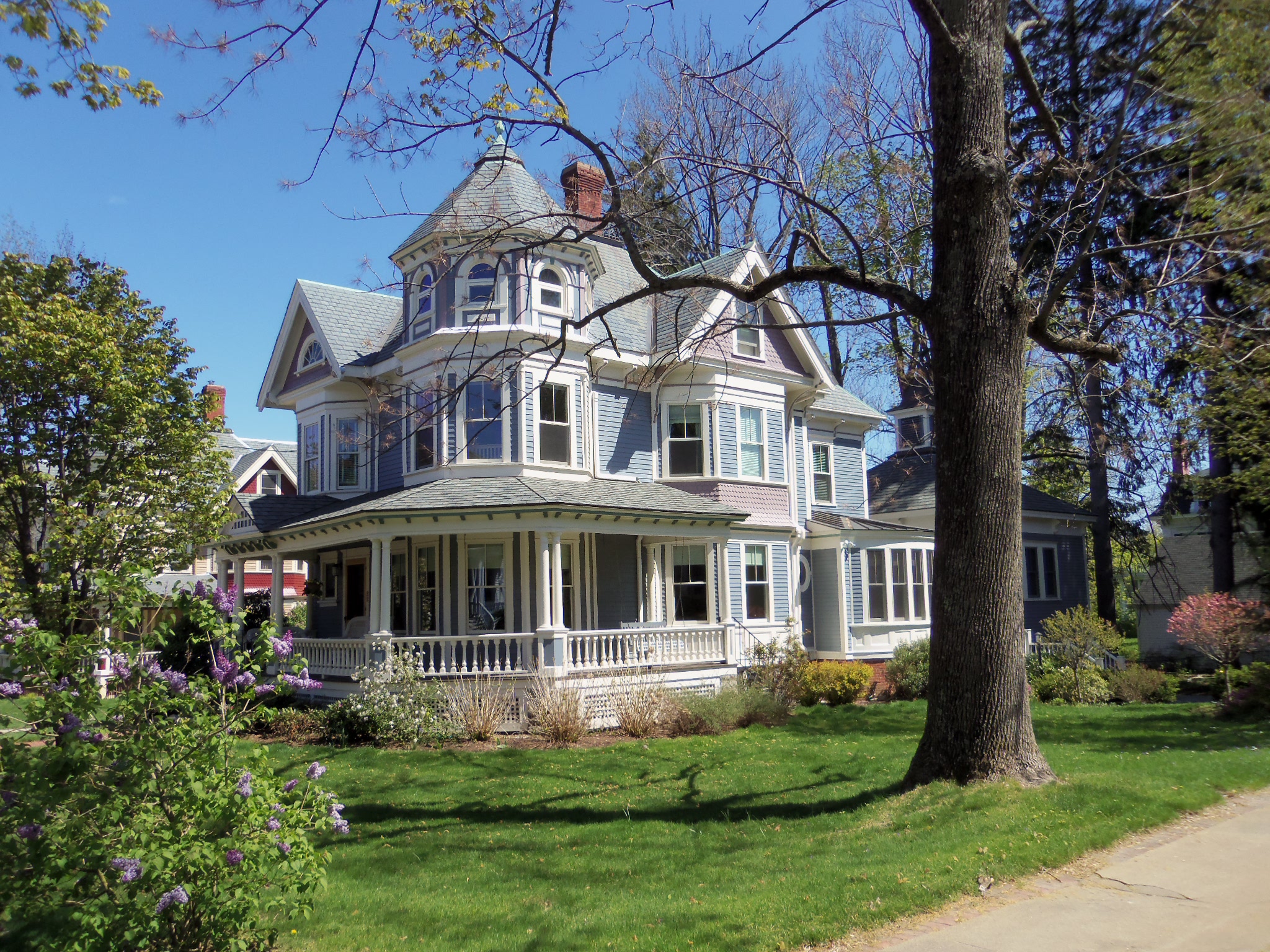
A WARNING FROM COLONIAL DOVER

As I’ve mentioned previously, Dover is the seventh oldest settlement in the U.S. – as well as the oldest in New Hampshire. After residing in the state nearly three decades now – half of that in Dover itself – I’ve come to recognize how tangled the early history of New England is, and how little of it was exposed to me in the traditional versions of the American experience taught in public schools elsewhere in the nation. I’m not even sure a clear accounting is possible, even through the Colonial years.

For one thing, the surviving records leave gaps. As an example, consider how much was lost each time city hall burned down. And then, what did so and so mean in a passage about such and such? How do we interpret them?

For another, trying to follow a particular thread can become frustrating. Which perspective do we pick – Puritan or Pilgrim? They had distinct differences from the get-go, despite their underlying embrace of Calvinist theology. What about the dissidents, notably the Quakers and Baptists, who were major influences yet seldom are mentioned in the mainstream accounts? And then which colony or settlement, often at odds with others?

Even trying to follow a particular family in a thoroughly researched genealogy through this period can become overwhelming. Five, six, or seven generations from the time of the first Mayflower landing till the American Revolution can produce a lot of offspring.

Inhabited since 1623, Dover was often outside of the purview and control of Puritan Massachusetts. In contrast to the Bay colonies to the south, New Hampshire was chartered as a money-making scheme, not as a New Zion. So it rarely appears in the overview histories, especially the ones that focus on Boston.

One central character in Dover’s early years is Richard Waldron (1615-1689), who arrived around 1635 and soon turned what’s now downtown – then known as Cochecho Village or Cochecho Falls – into a personal fiefdom.

He was a powerful figure, not just as major of the militia but also in colonial politics both in New Hampshire and Massachusetts as well as in his control of trade with the local Native populations.

My awareness of him comes in his ordering the persecution of three Quaker women in 1662, missionaries he sentenced to be pulled by an oxcart to Cape Cod and stripped to the waist and flogged in each town en route – a death sentence, if not for the courage of those who turned the itinerary instead to sanctuary in Maine. (These were the women who founded the congregation I now serve. A poem by John Greenleaf Whittier relates their ordeal and witness.)

Major Waldron is also notorious for an event in staged September 7, 1676, when he invited Natives to join in a “mock battle” or day of games and contests a few blocks away from where I live. Of the 400 braves who accepted the invitation and showed up, half were captured and taken to Massachusetts, where they were either sold into slavery or hanged.

This was in the midst of an Indian uprising known as King Philip’s War (June 20, 1675, to April 12, 1678) that arose in Rhode Island. Many New England settlements were raided and burned, including Providence, Rhode Island, and Springfield, Massachusetts, and almost all of the English settlements in Maine were eradicated in that outbreak, not to return until the end of the French and Indian War.

In northern New England, however, hostilities continued for decades after the King Philip’s outbreak, often orchestrated by Jesuit French priests. (The last fatal attack by Indians in Dover was in 1725.) Remember, too, bounties were paid for scalps.

In Dover, like many of the surrounding towns, garrison houses and fortifications were ordered built as refuges during periodic raids. Sometimes they worked. Sometimes they didn’t.

On June 28, 1689, during what’s recorded as King William’s War, the Natives launched a devastating attack on Dover in which 52 colonists – a quarter of the population of what’s now downtown Dover – were killed or taken captive.

Among those murdered was Major Waldron, mutilated with his own sword. Look up the details, if you wish. It was sweet revenge.

Raids over the years left many of the surrounding towns with similar destruction, death, and captivity. (Even tracing the tribal connections involved can become challenging, since these were shifting alliances.)

Essentially, much of northern New England was on alert until the end of what we know as the French and Indian War in 1760. That’s a long time of simmering violence.

As for following a particular thread through all of this, the minutes of our Quaker meeting’s sufferings and service through this period are lost to a later fire at the home where the books were in storage. As I was saying about the surviving records? I’ve heard bits and pieces. An anvil that sits in our meetinghouse was, by oral tradition, pulled from the ruins of one of the houses in 1689, although it more like was made later and used by one of the descendants who turned Civil War cannons into plowshares.

~*~

I have no doubt where Major Waldron would be standing in today’s political scene.

He ordered the deportation – and in effect execution – of three women for their religious convictions.

Sound familiar? They were, we should note, pacifists.

And then he foolishly inflamed a neighboring nation – in this case, the earlier owners of the land (oh, my, does that sound familiar when thinking of Texas, New Mexico, Arizona, or California?) and then look at the havoc and destruction that followed. To wit: brash talk, cruel action, misogyny, words that promise one thing but mean something else altogether.

History does provide warning signs. Let us pay heed.
DO I NEED TO BRING THE BIRD FEEDER IN?

Maybe I’ve been too involved watching the surreal political scene that’s unfolding in America, but that hasn’t precluded us from enjoying the usual sequence of developments in the garden — things I’ve blogged about in previous years. We’ve enjoyed waves of (wild) dandelions followed by crops of asparagus, lettuce, and spinach, and now the sugar snap peas and raspberries. Maybe I’ve been too busy trying to stay ahead of the weeds, repairing some of our raised beds, even tackling a small patio space between the kitchen and driveway to report on any of it, but in general things are looking good and tasting even better.

One thing that always amazes us is the popularity of the bird feeder in summer. You’d think with all of the natural, wild food sources, the birds would ignore the feeder. Instead, they become voracious, going through as much of my grain and seed in a couple of days as they do in nearly a month of deep cold and snow. Yes, there are those babies to feed, but this still has us shaking our heads in wonderment. OK, we do live in a city, and anything we can do to enhance the avian population has its pluses. Still, we’d like them to remain independent and turn to our supply when things are tough rather than bountiful.

Feeders, I should note, fuel their own band of human supporters — along with topics of conversations. Squirrels are only one of the menaces.

Each spring, when I was editing the newspaper, I’d have to chuckle when the state Fish and Game Department issued its annual bring-your-feeders-in alert. We had enough friends who lived in the country to tell us — and sometimes show us the damage — of what could happen when the bears come out of hibernation and start roaming. The bruins will rip a feeder to shreds, sometimes a half-mile from the scene of the crime. (Well, our dentist had photos of the hairy ones at work — five days in a row of bears visiting the feeders on his deck right outside the kitchen overlooking the lake.) Living in town, though, I’ve never considered us at risk.

But now? A neighbor saw a bear yesterday just four or five blocks from us as it crossed a busy street just north of downtown. I know it’s a rare though not unknown phenomenon, but it’s still news. For now, I’m shaking my head and hoping the neighborhood dogs are on guard. Their barking should do the trick, if need be. So I’m told.

WELL, IT REALLY WAS NEWS TO ME

This morning’s newspaper had a headline that sent an “Oh, gee, I haven’t seen that before” running through my head. As I mentioned the other day (Why Woodpecker Can’t Keep Up, June 14), so much of the news can be same-old, same-old variations on a theme. But this one really was new:

Motorcyclist Hits Bear.

As I also mentioned (Harley Heaven on Lake Winnipesaukee, June 16), we just had the nine-day Laconia Motorcycle Week, which attracts swarms of bikers to the Granite State, and racing along mountainous roads is one of their joys. Every year the event is accompanied by accidents and usually a few fatalities, but I don’t ever remember seeing one involving a bear. This one happened in the afternoon. Broad daylight on a perfect day.

Unlike moose, which are slow and dumb, convinced they can continue ignoring oncoming traffic, bears can be fast-moving, when necessary, and alert. Moose-car accidents are, in fact, commonplace throughout northern New England, while bear-car encounters are also a standard news item, though less frequent. I suppose I’ve seen a few moose-motorcyclist crash stories over the years, or at least should have.

This time I found myself recalling a report I’d edited and written the headline for back on my first news desk position right after college. We were Upstate New York, which has its own mountainous terrain. That time, a motorcyclist ran into a porcupine on a dark highway, and the results were fatal. As a city-boy, porcupines were still a curiosity, rather than a critter I often acknowledge in my journeys.

In this morning’s dispatch, the driver was airlifted to a hospital and reported to be in critical condition.

~*~

Another item making the rounds also seems to slip over from one of the routine categories — in this case, political survey results — into the I’ve-never-seen-that-before status. In the race for the White House, a Democrat, and a woman at that, is polling evenly with Donald Trump in the overwhelming Republican state of Utah.

~*~

This reminds me of another reaction I often have as a novelist: “This wouldn’t work in fiction.” Accompanied by “You couldn’t invent this if you tried.” Life really does take some bizarre turns if you look.

Really.

HARLEY HEAVEN ON LAKE WINNIPESAUKEE

Laconia Bike Week – more formally, the 93rd Laconia Motorcycle Week – comes to a climax this weekend, and in New Hampshire the annual event opens the summer tourism season. Even where we live, more than an hour away, you can hear it in the air, especially if your windows are open at night. Let’s call it a buzz. Everybody who can wants to be out on the road with the wind in their hair – New Hampshire is, after all, one state that does not require helmets be worn by either the driver or the passenger. Some wags do, however, suggest the state motto should be changed slightly, to Live Free and Die. A bit of risk does have its attraction.

Always scheduled to end on Father’s Day each year, the legendary name Laconia lands somewhere between Daytona, Florida, and Sturgis, South Dakota, both on the map and on the calendar of avid motorcyclists. The Weirs Beach landing in the small city of Laconia is the centerpiece of the gathering, promptly teaming with black-clad riders and vendors of all sorts. Since local schools are usually making up for days that were closed for snowy weather, families don’t arrive for vacation any earlier than the Fourth of July anyway, and any earlier than mid-June, the weather can be a tad too cold or wet for other folks. So the thousands of bikers who show up are a welcome boost to the hospitality industry, not just in the mountainous Lakes Region but across the state as they seek meals, entertainment, and lodging in the midst of roaming the wooded landscape.

It wasn’t always so. Before motorcycles became respectable, fights and even riots could break out. I’ve heard plenty of stories.

Now, however, things have mellowed out to the point many of the activities are labeled family-friendly. A majority of the iron horses seem to carry two, one clutching the one proudly clutching the handlebars. That, in itself, may have a calming influence. And then there are others who simply want to show off their impeccably polished machines. We were passed on the highway this morning by a small trailer carrying two such Harleys from New Jersey. The owners obviously weren’t going to subject them to the long road itself.

Unlike many of the names in the region, Laconia is not one given by the Native peoples. Rather, it’s originally a city in Greece. That might not be the only reason for the New Hampshire city’s name, though. In 1629, a partnership called the Laconia Company organized to prepare much of colonial New Hampshire for development; while I’m finding much of that history hard to follow, it does appear that one of the partners soon became a pirate. Really. I’m sure you can find many pirate flags and images at Weirs Beach this week, so maybe there’s an underlying connection. Who knows?

For those who do ride into the Granite State, a reminder: when you’re on your way home, be sure to pull over and put your helmets on before you cross the state line. It’s a safe bet the Massachusetts troopers will be waiting for those who don’t.

Let summer begin.

SPARED, FOR NOW

In a same-day announcement, Donald Trump cancelled a rally planned for late this afternoon or early this evening about dozen miles from us. (These things never start on time.) Said he had to work on a speech. Something more than a tweet?

We’re relieved, for several reasons.

First, it’s good to know he won’t be stirring additional pollution into our local air. There’s enough toxic bigotry, self-delusion, horse hockey, cruelty, and hatred gushing out from his mouth as it is. Reasoned criticism is one thing, but that’s not what we get with this candidate. Won’t ever be, either.

Even if it weren’t Trump, we already know how these campaign appearances snarl already congested rush-hour driving. What was he thinking when he picked rush hour, anyway? Real people — the kind who have to work jobs for a living — know about this, unlike Trump and his supporter Chris Christie. Living in the Granite State, you soon discover how the enhanced security force can muck up traffic at any hour, clustering around intersections, especially, even before halting a freeway for the comic-opera parade of motorcycle cops, candidate in his limo, staff in theirs, Secret Service, and trucks of news media in tow. We’d already changed our plans to avoid all that. I even visited a clinic down that way to pick up a prescription first thing this morning, thank you.

Now, thankfully, it looks like we’ll have our highway connection running normally after all.

Another conflict, though, is more existential. Did I want to join in a short-notice truth-witness vigil near the event site? Conscience said yes, but a look at my to-do list (including the garden) said not really. To venture forth to the protest line would mean entering all that traffic I’d resolved to dodge, while the to-do would mean staying home, maybe grilling dinner to soothe my aching muscles while failing to respond to the call of Liberty. Looked like I’d feel a pang of misery either way.

Well, we’re off the hook for now – all of us. As for the next question, will I be more in gear for the next opportunity?

WE’RE HAVING A SHARE IN THE CATCH

This summer we’re participating in a program that’s introducing us to varieties of fish caught off the New Hampshire coast. Once a week we trot down to the natural foods store in town to pick up our delivery – our location gives us a three-hour window – and we return with a pound of very fresh seafood. Every week it’s a different variety (11 are likely over the season), and we get an email earlier in the week notifying us what will be on the way, allowing the cook in the household to begin considering menu options. Or we can go to their website for links to suggested recipes.

It’s not cheap – you pay when you sign up, in our case for the 15-week program – about twice what we’d normally shell out for what’s featured at Market Basket, but there are other factors to weigh in. For one thing, living in the Seacoast Region of the state, we’re very aware of the plight of the once vital fishing industry across New England and the struggles to sustain both a way of life for families and communities and the fishing grounds themselves. While we’re not militant local-harvest activists (it just isn’t economically viable for our part of the world, not with its long winter), we are inclined toward small-scale economics wherever possible (just consider the banks, for starters). So we feel good about our token support for our neighbors. In a way, it’s like a farmers market, except that we’re committed to taking the week’s delivery, the way you are in a community-supported agriculture (CSA) setup.

That leads us to another consideration, the fact that the program itself arises in an attempt by the commercial fishermen sailing from Seabrook, Hampton, Rye Harbor, and Portsmouth Harbor to counter the negative impacts of a practice begun in 1976 that directly sold the local harvest in international auction. Rather than having their fishing practices driven by global market pressures, they wanted a more sustainable alternative,  a strategy to better manage marine resources and fish more selectively. In response, four years ago the harvest coop they organized was given an ownership right to collectively manage the federal groundfish fishery. In other words, there’s a strong environmental component here, including a more efficient use of high-cost fuel along the way. As they say, their fish catch hasn’t been sitting on the boat for a week – it comes to port the same day it was caught. Good for them!

Of course, all of that still needs to come together at the dinner table. This isn’t charity, after all, but a win-win deal we’re looking for. We can start with a sense of adventure as we explore previously unknown types of fish. (Acadian redfish, anyone? Or dabs? Or dayboat dogfish shark?) Let me rave about the monkfish on that front – as I ate, I kept thinking this could be lobster tail. So what else is swimming in the same water with me each summer? My curiosity is heightened. What they’re delivering isn’t everything in the local catch, but it is a way of supplementing their income and providing more balance in their cash flow.

We’ll admit this is our splurge, the way our weekly wine tastings were, back when I was duly employed, or the half-pig we ordered from a farm in Maine, two other examples that allowed us to learn more of the range in taste and satisfaction in our world. Admittedly, we couldn’t do the fishery program when the kids were still living in the house – they can be picky that way, with one easily upset by the mere whiff of fish cooking. Oh, my.

Initially, too, I thought a pound would be on the skimpy side when it comes to our dinner, but we’re finding the enhanced freshness in flavor satisfies in smaller portions – we can serve three and still have a bit left over. Actually, it’s about what we’d get in a restaurant while spending much more.

Reading the profiles of the participating fishermen on the website has me wondering how long I’ll go before making a list of their boats, just so I can identify them when they pass by in the water or tie up at dock. They seem like nice guys, too. Maybe we’ll wave. It does change my perspective, doesn’t it.

Now I’m wondering about similar alternatives being developed around the world. Pipe up, if you wish, along with your own growing awareness.

~*~

New Hampshire Community Seafood is a cooperative of fishermen and consumers that has 18 pickup locations with deliveries spaced from Tuesday through Saturday.