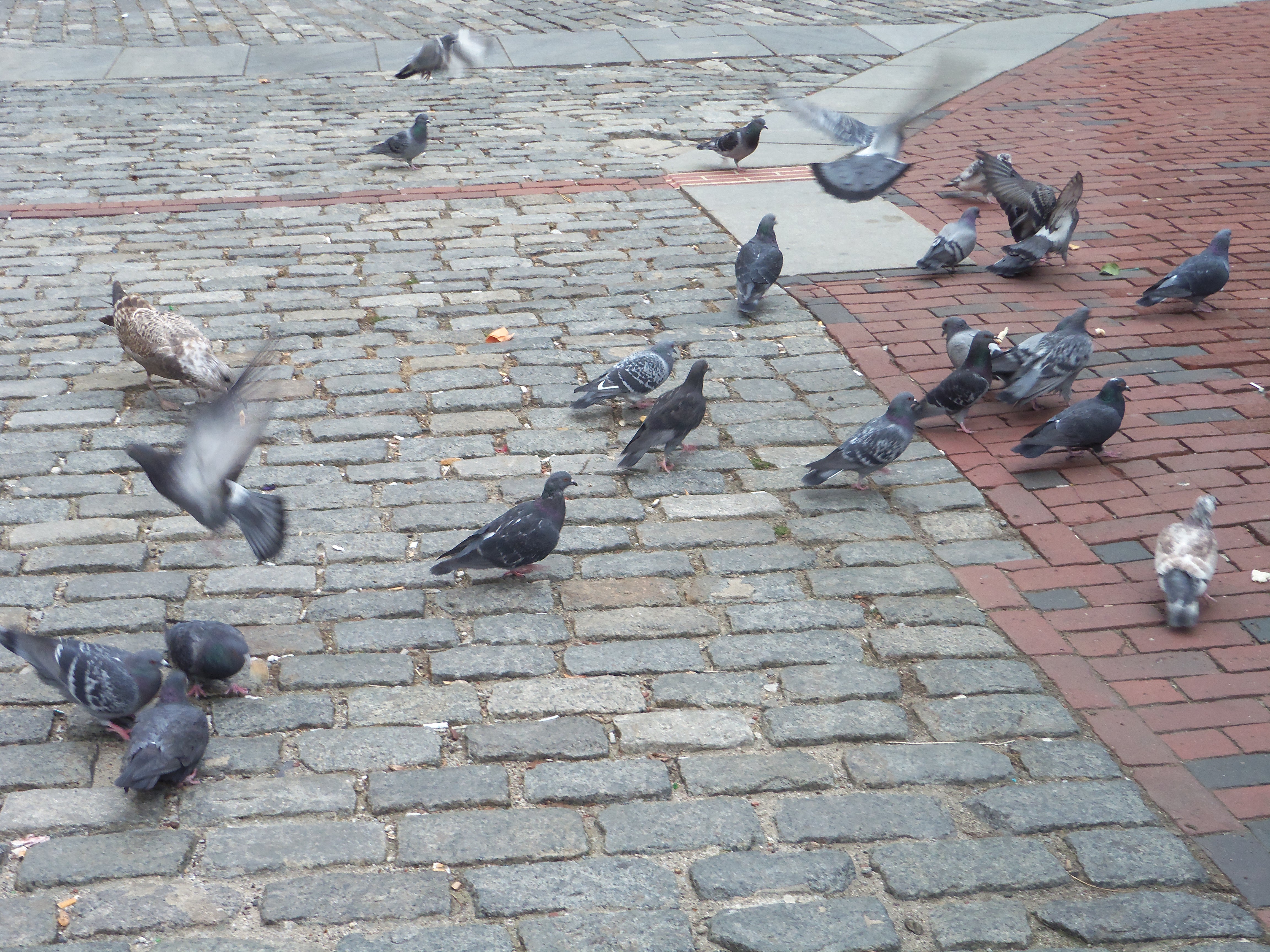
It’s a common urban street scene, abetted by sympathetic, feed-bearing humans. This one was outside historic Faneuil Hall in Boston.
You never know what we'll churn up in cleaning a stall
It’s a common urban street scene, abetted by sympathetic, feed-bearing humans. This one was outside historic Faneuil Hall in Boston.
In New England, you live in either a town or a city. There are no townships or being “out in the county,” as I’d known elsewhere. And the counties are relatively insignificant, at least politically; they’re largely for a court system, jails, and record-keeping.
Part of my confusion when I first moved to this corner of the country was an assumption that “city” and “town” both meant “urban,” with some population density and a central retail and commercial district. But that’s not always the case. In fact, some seem to be entirely rural.
Additional confusion can be caused by looking at maps and seeing dots representing settlement and then assuming they’re towns. Gilmanton and Gilmanton Iron Works appear, for instance, but they’re both in the town of Gilmanton and are separated by miles of forest. The community of Groveton is in the town of Northumberland. The city of Laconia includes the enclaves of Weirs Beach and Lakeport. A city or town may have a number of distinct neighborhoods or villages, sometimes with separate post offices or Zip codes. And so on.
Our cities and towns are geographical spaces differentiated by their form of government. Cities are managed by a mayor and board of aldermen, while a town relies on a three-person board of selectmen. Population? Some of New Hampshire’s 13 cities are quite small, while a handful of its 221 towns rank among the largest localities. The form of government is a local choice.
Except for the towns that have opted for a ballot-based alternative known as SB 2, the residents of New Hampshire’s towns gather on the second Tuesday in March for Town Meeting Day, a celebrated exercise in democracy where everyone gets a say, at least if the moderator’s on top of his or her game. They’ll tackle the warrant articles – the agenda published in advance, including town and school budgets and bonding – and also elect new officials.
In a few towns, the entire event’s wrapped up in a half-hour, while others stretch on for hours or even demand additional sessions. The ones that get quite heated may explain why Town Meeting Day’s held in winter.
~*~
 To see more of the region’s unique character and calendar, click here.


Especially when you live in a climate like northern New England, you can find winter dragging on. Really dragging on. Never mind that by this time of year, we’re getting as much sunlight as we do in late October. The snow often remains deep, and the frost heaves on the country roads are just beginning.
Sometimes you can cheat, though. That’s where I try forcing bulbs to bloom indoors early. Daffodil, iris, hyacinth, especially, or paperwite, in a room where my elder daughter won’t be offended by its aroma. A personal thing, you know.
My wife, meanwhile, goes for the amaryllis, hopefully in time for Easter.
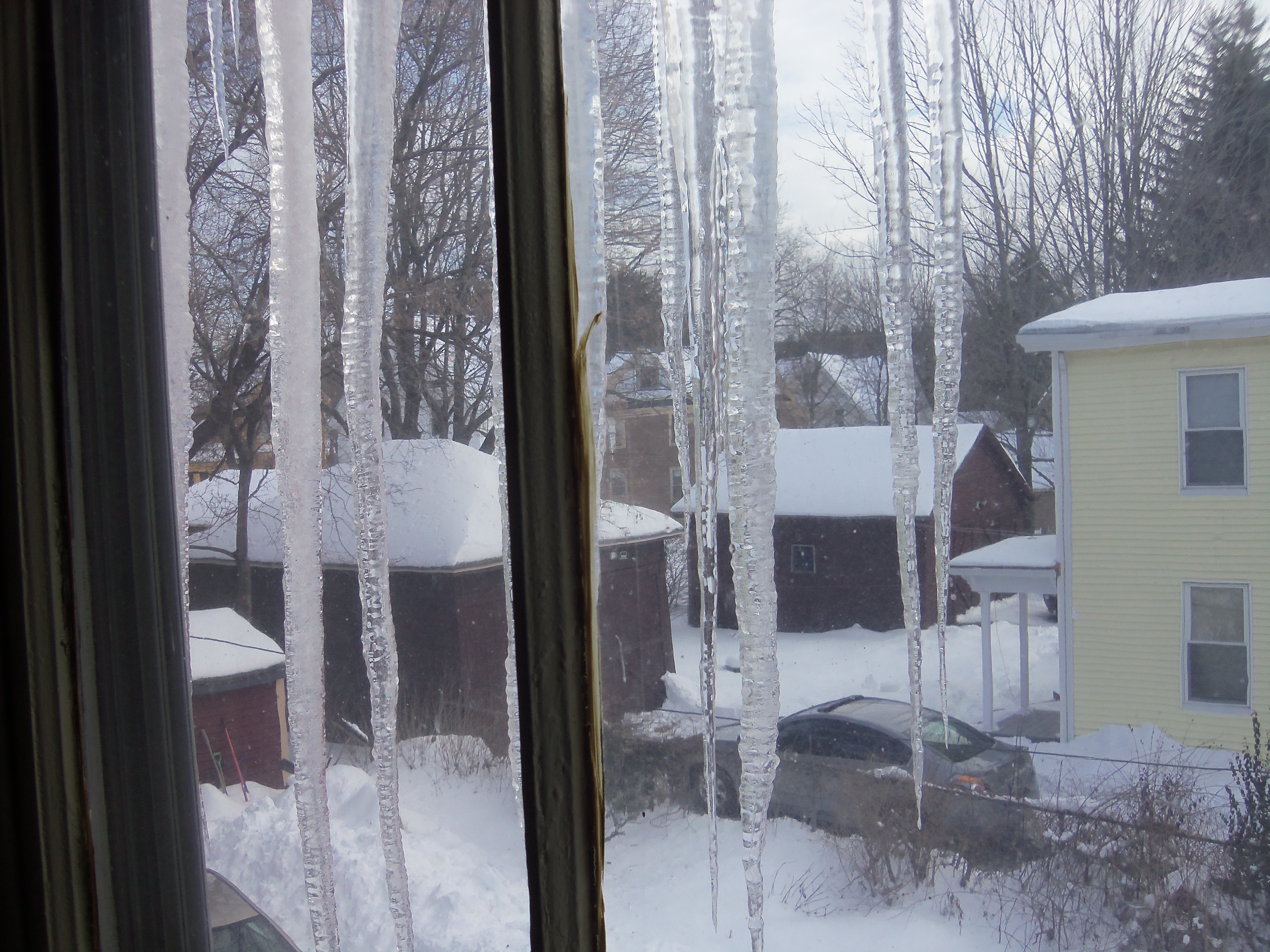
More snow. How much?
More deep cold. How far?
It’s scary, the winter weather we’re getting.
And none of the online forecast sites we’re looking at seem to quite agree. It keeps changing, seemingly by the hour.
 Jnana's Red Barn