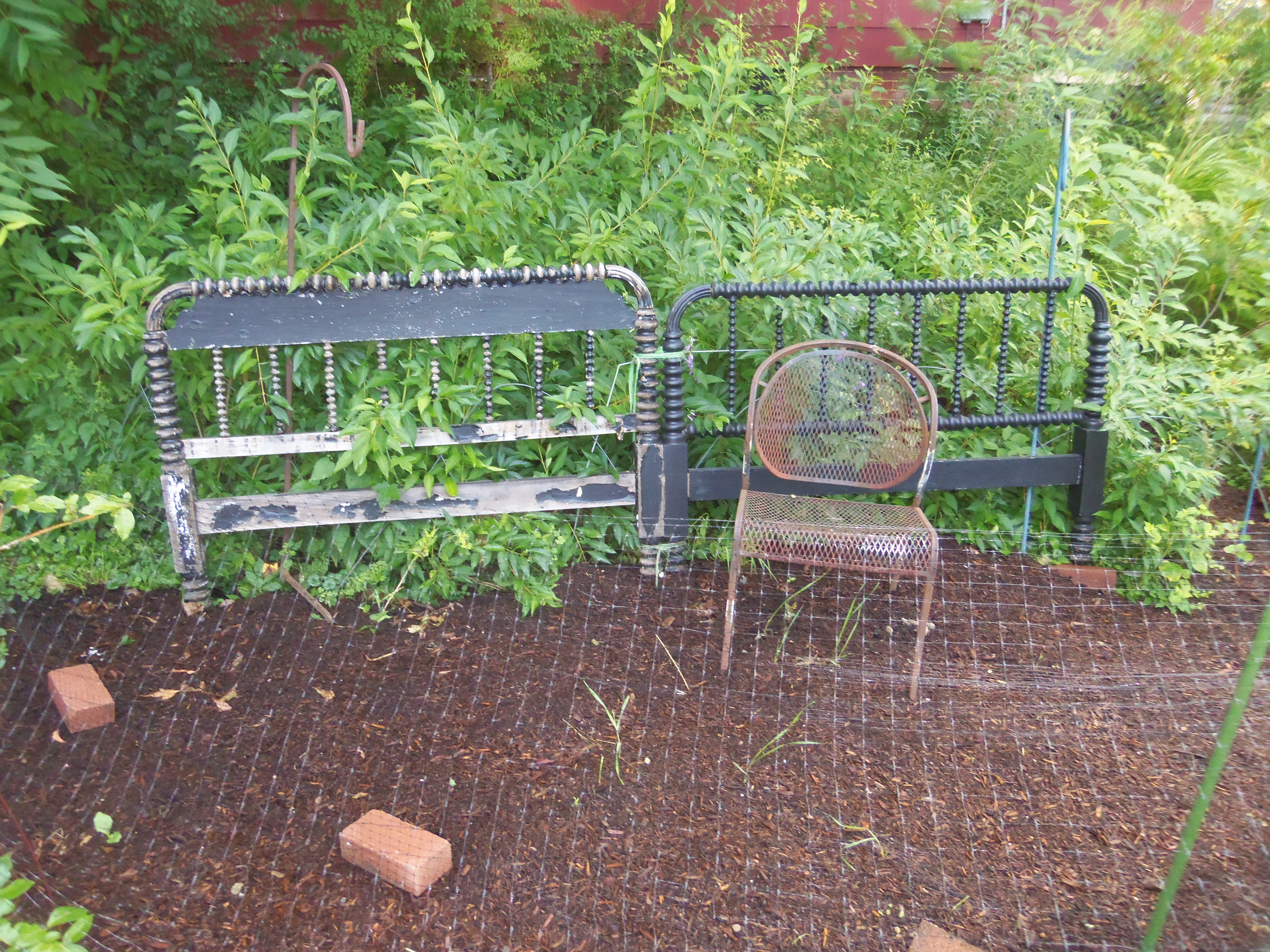
GARDEN BED

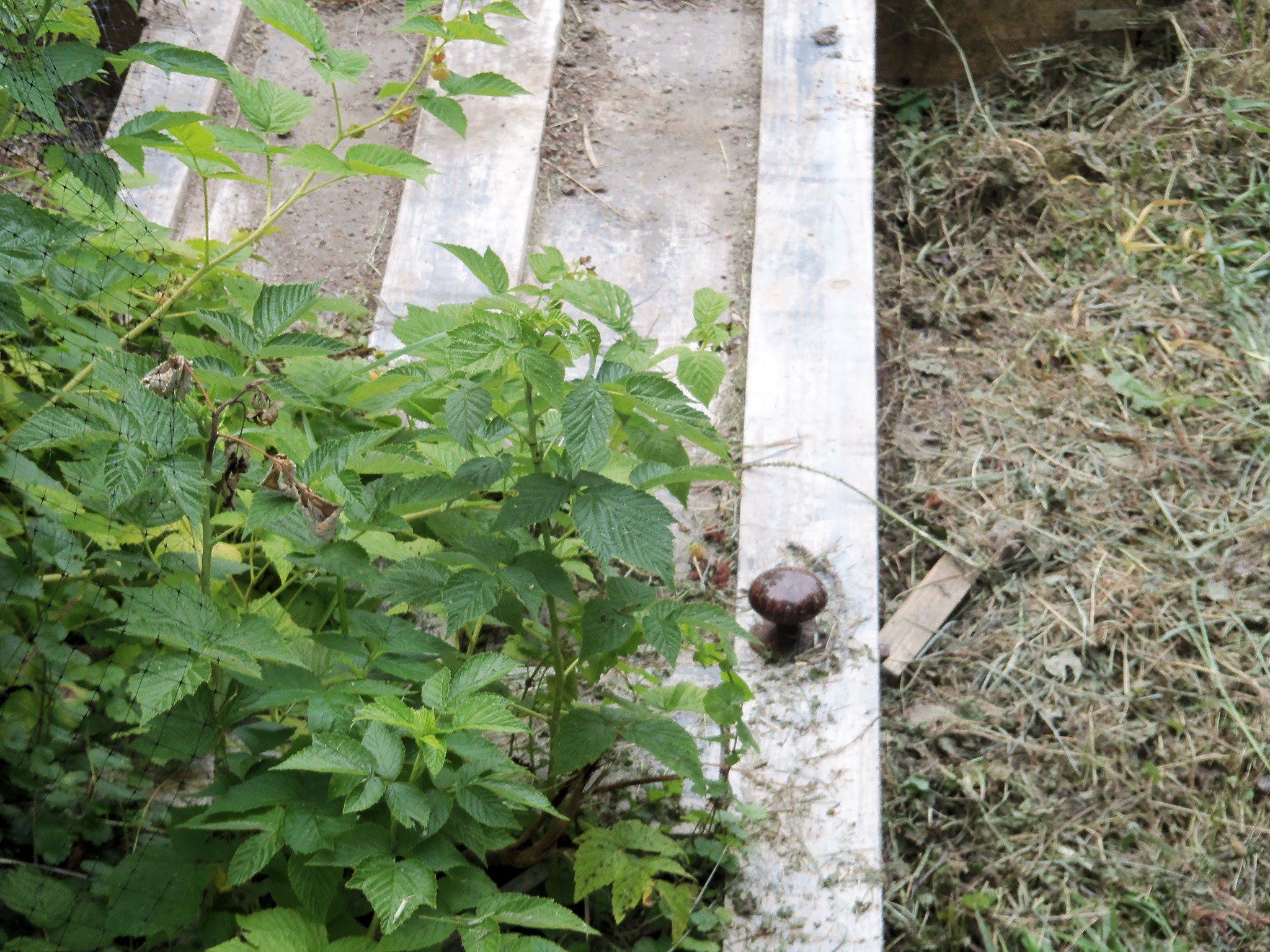
100_8850The bed stand, salvaged from a roadside, holds forsythia back so the blueberry bushes may thrive. The netting in the foreground is actually on the blueberry bushes, to keep birds and squirrels from picking all the berries, rather than on the ground, where the bricks anchor the netting.


OUT OF THE FLATLANDS AND ONTO THE SEA

Another blast from my past:

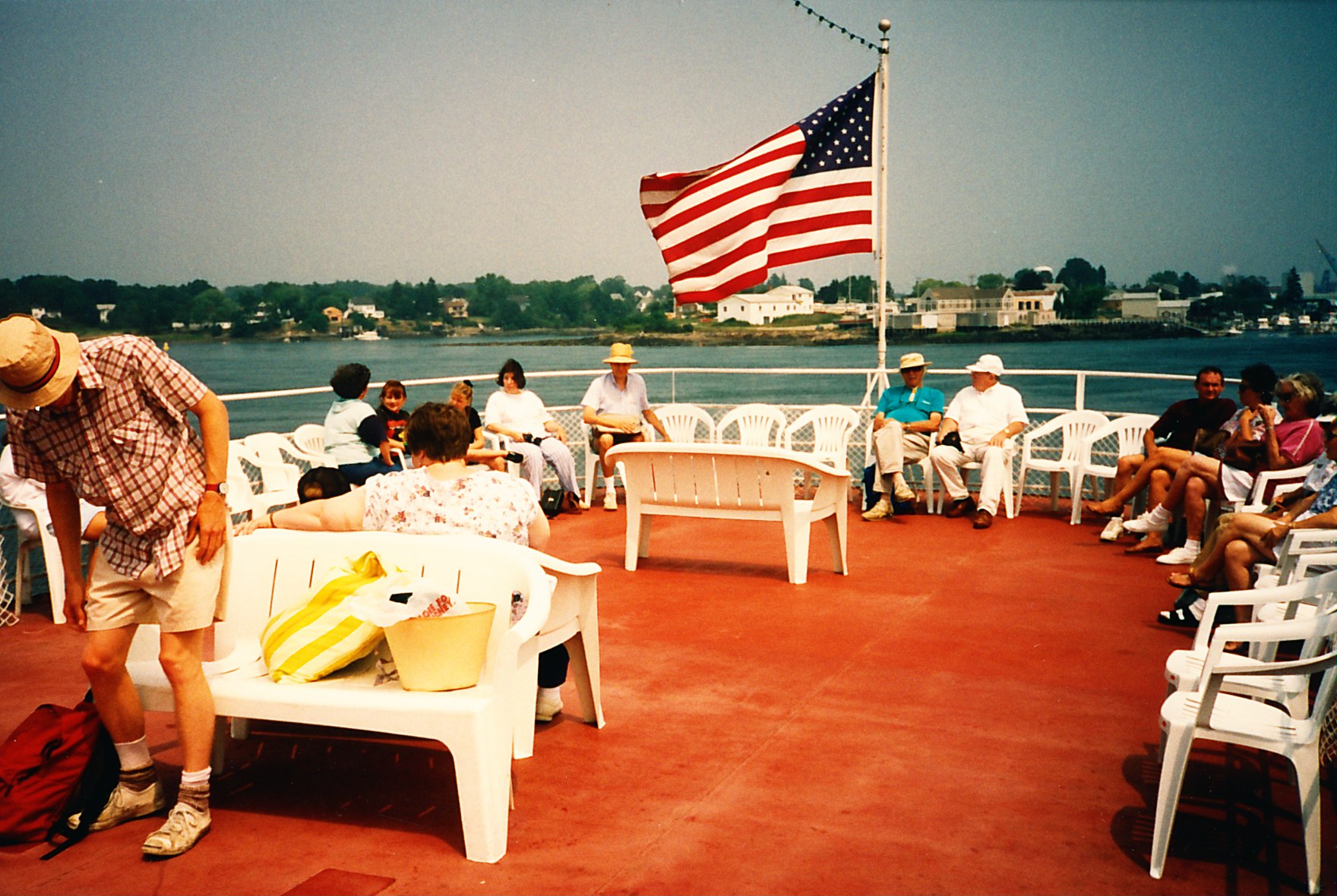
I spoke in Meeting about being a flatlander from a landlocked place and my ongoing fascination with the tides and moods of the ocean, leading into my first experience on a sailboat which was also my first experience out on the Atlantic and my first time of seeing a whale, which popped up in front of us.

I then mentioned another trip when my boss asked me to take the till and my surprise at feeling the wind pull the sailboat in one direction while the current tried to turn it in the opposite and how I was trying to steer to a compass point in-between – me, who would rather avoid conflict. On top of it all, it was a day when we could not see our destination, the Isle of Shoals, but had to trust our maps and calculations. Then, too, Peter’s girlfriend laughed, realizing my fear of having the boat be blown over. “Don’t worry,” she said. “If the boat tips that far, the sails will deflate and we’ll right again.” She paused before adding, “Besides, if there’s really a big gust, there’s nothing you can do about it. That’s how I lost my boat.”

As I spoke, I admitted the associations of wind to spirit (inspiration) and, as I’d now add, intellect, and of water to emotions and the unseen, while we are here in our own little vessels steering in the hope of an unseen destination.

Afterward, one Friend told me of the importance of finding that point of critical tension in our lives, where things can be accomplished. I now see this in contrast to the Tao, path of least resistance or way of falling water.

A second round of memories involves an ability to choose the right sail or combination of sails to fit the wind, as well as the lulls. The emerging harmony, too, between the winds and the waves, the lift and fall along the way.
AVOIDING THE CROWDS IN SEASON

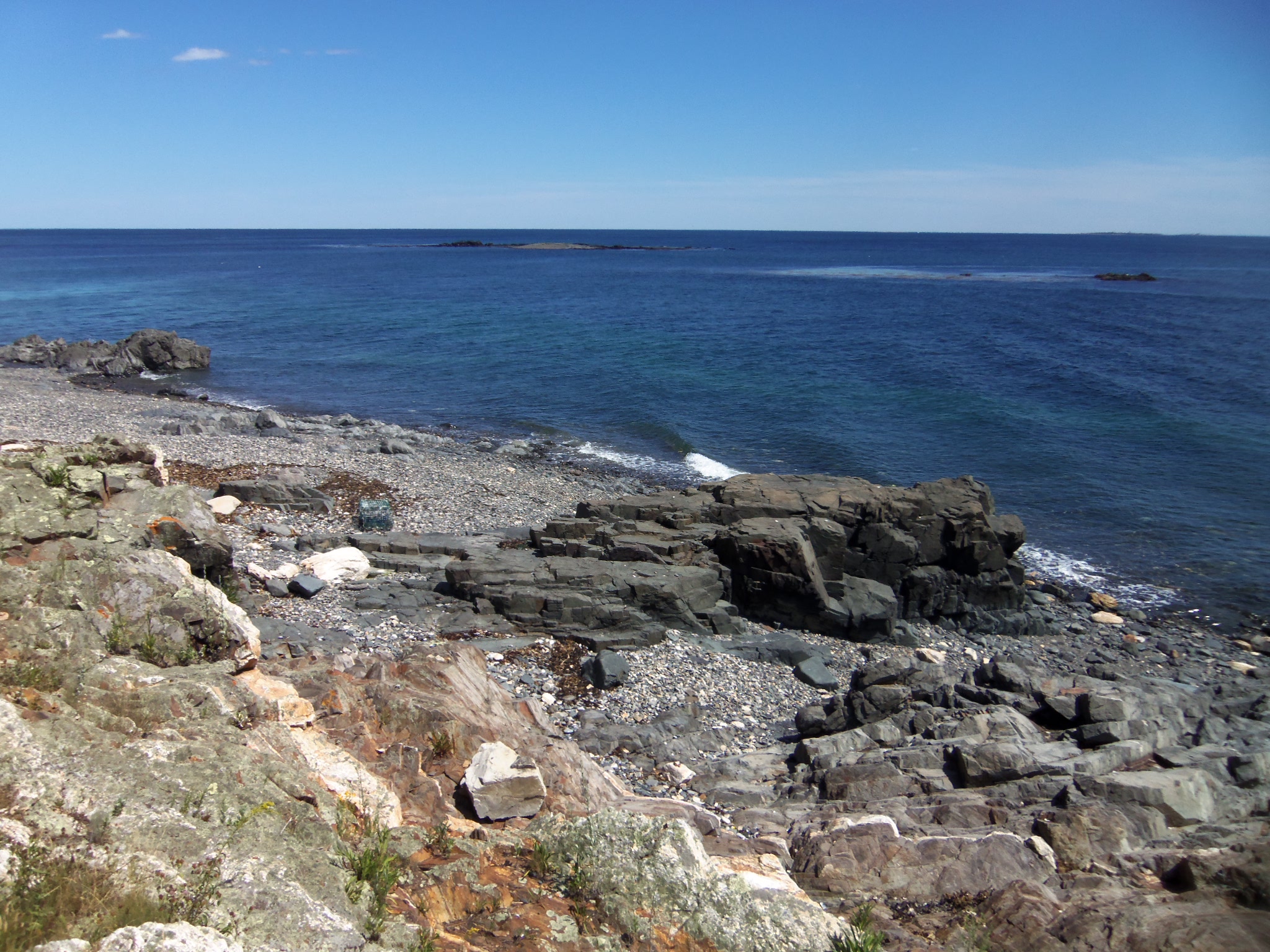
At the mouth of the Piscataqua River downstream from where I live, Fort Foster has long guarded the entrance to Portsmouth Harbor. It’s now a town park.

By purchasing a season pass each year, I’ve come to consider it my private patch on the ocean — one shared with some folks who’ve become sunny friends as we swim and then warm in the rays.

The rocky shoreline allows a fine introduction to tide pool life, while the pebble beaches have their own experience. There are also some sandy pocket beaches and a trail to meander while looking out over the cobalt Atlantic.

About as unspoiled as it gets.
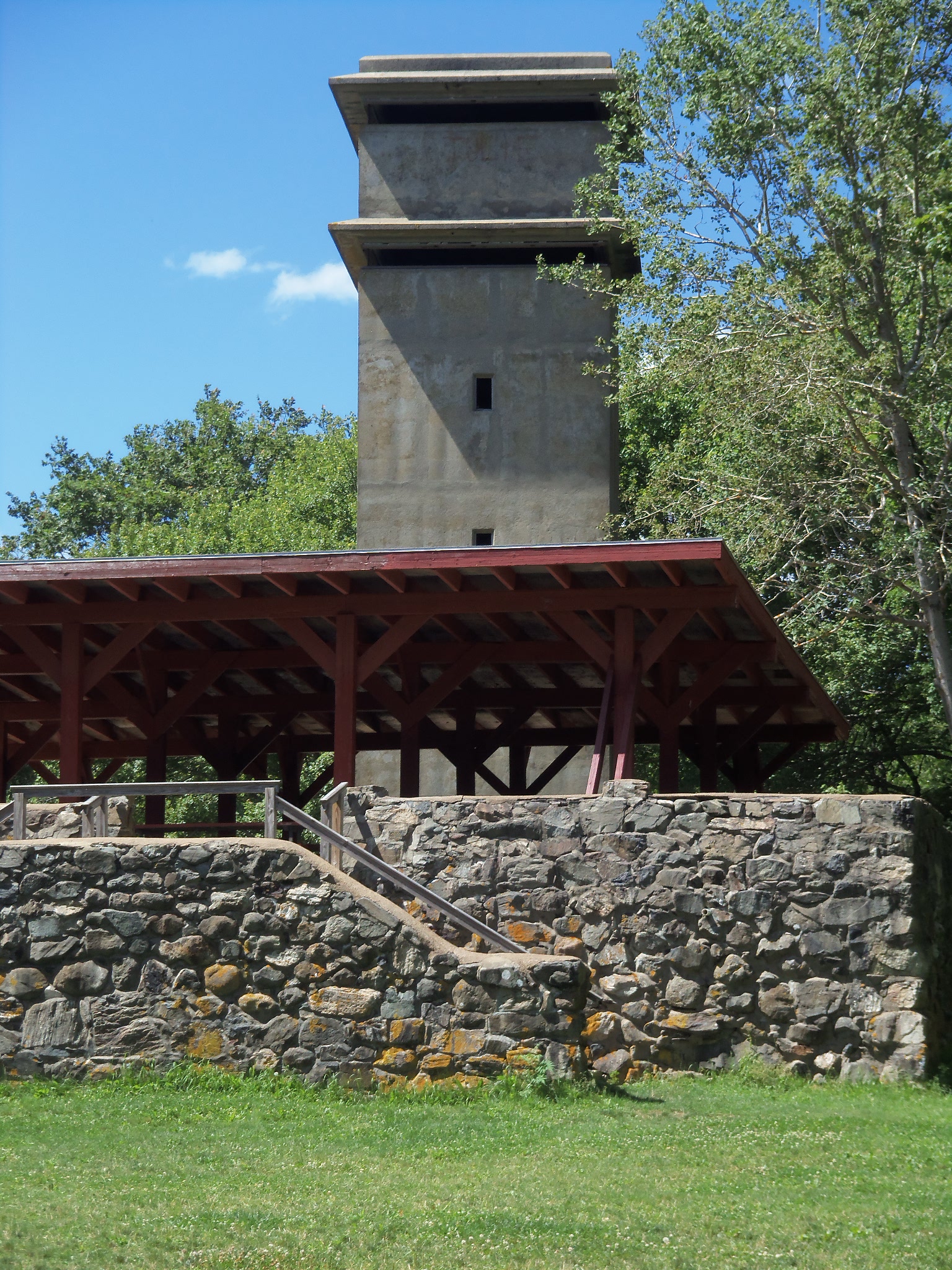
An observation bunker, from World War II, now has a picnic pavilion added for groups to use by reservation.

THERE WENT THE WEEK

A call to my cell phone the other Monday threw me for a loop. I was on the way back from my daily swim when I got the news that the first round of three cords of stove wood was on the way.

What it meant was that one end of our driveway would soon be buried in cut and split wood and my plans for the rest of the week would drastically change. Except for one day of thunderstorms and rain, I’d be stacking – always a lesson in the process of writing and revising, actually, including its exercises in structure and observation. Do it right, and it’s solid for seasoning into several winters. Sloppy, and it all falls apart.

Among my other thoughts was the question of how many more years I might be doing this. The wood felt heavier than I remembered. Even with my new routine of daily exercise, achy muscles and joints started appearing. At least I had the perspective of knowing how long you just have to keep plugging away before you notice any progress – and then, somewhere in a sensation of futility, you might experience that flash of realizing you’re making progress. The second half usually seems to go faster than the first half, too, unless you get overly anxious.

Now I sit back and admire that wall of stacked fuel – the one I’ll take down, piece by piece, all too quickly some winter.

NEWMARKET

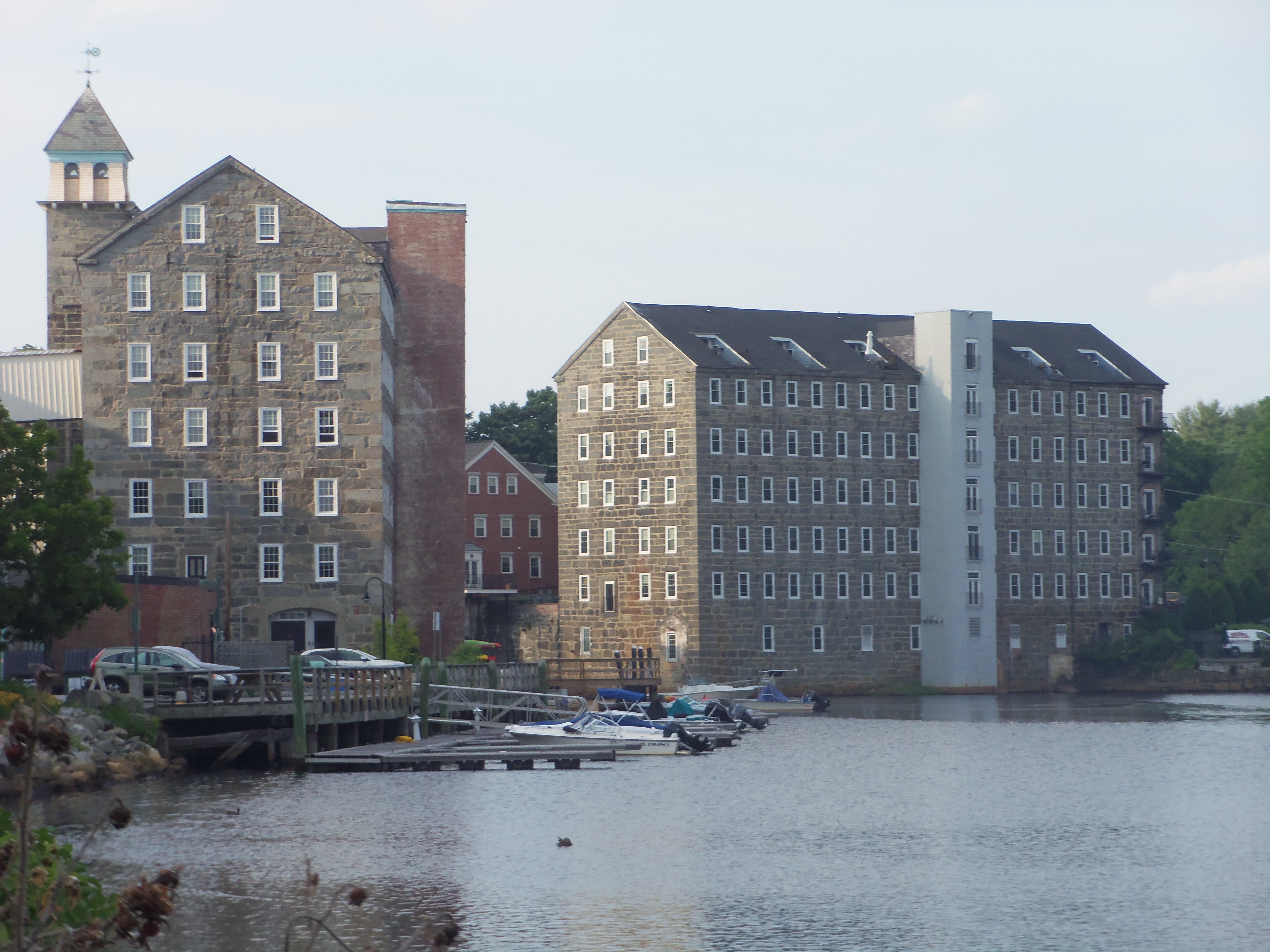
Like Dover, the town of Newmarket flanks Durham and its state university campus, and as a former textiles mill town, it, too, is home to a number of University of New Hampshire students and the kinds of businesses one would expect as a consequence – small restaurants, bars, pizza parlors, bookstores, yoga studios, nightspots, and so on. The Stone Church Meeting House has long been a venue for emerging musical acts.

The Stone Church Meeting House sits atop a steep street downtown.
The vibe says it all.

The town of approximately 9,000 also has a strong blue-collar side, which also feeds into a distinctly funky feel.

But to me there’s always been a sensation that the place isn’t fully New England. It somehow reminds me more of small cities in central Pennsylvania or even Galena, Illinois, near the Mississippi. I think that has to do with the way the central street twists through downtown and the prevalence of stonework rather than the traditional brick in the mills and a few prominent houses. It’s picturesque, all the same.

Key to its industrial development was a large inland saltwater estuary that allowed extensive shipping. In generic usage, Great Bay also encompasses Little Bay and a host of small-town waterfronts where humble rivers fall to sea level. These include Durham and its Oyster River; Exeter and the Exeter/Squamscott; and Newmarket, with the Lamprey River, before passing Dover Point and emptying into the Piscataqua River on its way to the Atlantic. It’s a major breeding ground for fish populations all along the East Coast, and the current at Dover Point is always intense.

Hope you enjoy this quick tour.

100_1331

100_1342

100_1284