I heard it twice, miles apart: “I have retailing in my blood.”
Both headed family businesses – one, a supermarket chain, the other a small-town restaurant.
The grocer worked with three of his brothers and a brother-in-law, though another brother instead became a respected physician.
The restaurateur worked alongside his only brother and their wives.
Both enterprises were founded by their fathers.
It’s a lot like the family enterprise in my novel, founded a few generations earlier.
Do you know anyone like that?
~*~
My novel is available at the Apple Store, Barnes & Noble’s Nook, Scribd, Smashwords, Sony’s Kobo, and other fine ebook distributors and at Amazon in both Kindle and paperback.
I had already made this point elsewhere in my novel What’s Left, so this sentence was trimmed out of the final version:
Theos Graham joins Theos Barney and Thea Pia in feeding the homeless at Carmichael’s back door or the soup kitchen at the Lutheran church or even letting them sleep in our bus, once we have one.
I do miss the mention of the Lutheran church or the bus, by the way, but they just didn’t fit what was left.
~*~
Yes, we all have found ourselves proclaiming, “I’m starving!” Not that many of us have suffered so much as starvation itself.
Have you ever gone truly hungry? Have you ever wound up accepting handouts from strangers? Have you ever fasted? What’s the longest you’ve gone without food?
~*~
In the family, Cassia would have had food like this.
In early drafts of my novel What’s Left, I considered going into detail on her uncle Dimitri’s practice of micro-lending and startup investing. Here at home we discussed including a whole list of failures and successes — or reasons applications were approved or rejected. Just think of all the once bright options that soon failed, as well as the ones that have since gone mainstream.
One proposal that didn’t survive my second-thoughts was this:
Thus, when friends decide to launch a local winery, we support them.
At the time I first noted this, 45 or so years ago, a local winery would have been cutting edge. Now there seem to be wineries everywhere, and their output can be widely uneven and often overpriced.
~*~
My experience as a home brewer, making more than 2,500 bottles of beer, was fascinating. We relied on kits from a local aficionado and never had a bum batch. But we still haven’t tried making our own wine.
Gardening, of course, is another matter. As is composting.
Do you raise any of your own food? Make your own bread or yogurt? How about jams or jellies or artisanal vinegars? Any other hands-on touches?
~*~
Cassia’s family transforms an off-campus neighborhood into something like this, one they call Mount Olympus.
Think of the names of bands and singers having a food tag. (Will Red Hot Chili Peppers or Smashing Pumpkins get your thoughts bubbling?)
Throughout my novel What’s Left, her uncle Barney has rock playing prominently in the restaurant kitchen. Does this provide a good counterpoint to his thoughts and actions? Do you find it amusing? Annoying? Confusing?
Who would you like to add to the food-themed playlist?
~*~
The old church Cassia’s family buys in my novel might have looked like this … before the wild rock concerts begin.
Growing up in a financially secure family like the one in my novel What’s Left could open your educational and career options, I suppose. For Cassia’s mother, I saw events unfolding along these lines — which I then cut from later revisions of the story:
Manoula, on the other hand, possessed some of her sister’s ability to ask those questions, however gently. And she had some of her brother Dimitri’s practical streak. But she also had an underlying spiritual awareness and a sharp intelligence to match. It’s a potent combination — even intimidating to many potential suitors.
Crucially, both Manoula and Baba knew the vitality of artistic practice and expression. Remember, he was more than a photographer — he may have worked on a daily newspaper, but he profoundly appreciated all the fine arts. On top of that, he had a natural ability in writing that had yet to be encouraged and released.
On her part, Manoula loved literature, in particular, and practiced hours a day on her violin. Realizing early on how difficult it is to earn a living in either endeavor, she followed Dimitri’s advice to pursue a double major — English and music — with a minor in business to fall back on. As she told people, she was open to a career in arts management, and in a way, with the publishing, she’s held to it. She spent five years on her bachelor’s degree — including summer courses — but she was in no race to get out into the world, not once my Baba crossed her path. They were both taking a long-range view ahead.
In a way, you could say she was a Yiayia Dida while Nita was a Yiayia Athina in new guise. Oh, I don’t know — maybe it was the other way around. They were all strong, emancipated women with a bohemian streak. Not all bohemians, I should add, are strong — not by a long shot.
~*~
In early versions of the novel, when Cassia was piecing together her family history from the perch of a teen or 20-something, she might have seen events something along these lines. But in the later revisions, told as she’s seeing them as a teen, this passage was just too much. Way too much. Besides, through much of high school time, she was a lackadaisical student more interested in managing a live music scene.
Looking at her ancestors, though, I doubt that her great-grandmothers had more than a rudimentary education. Her grandmother, Bella, came to town for a college degree but was thwarted in her plans. Cassia’s mother, her Manoula, raised the educational bar.
Fortunately, Cassia’s aunt Nita provides crucial encouragement that leads to college in time.
So what is essential in releasing talent or dreams you have? What kind of advice have you received regarding continuing education and career? How have your plans taken shape? What’s been especially helpful?
~*~
They know how to work together. In my novel, a family like this takes their skills far beyond the kitchen. The most important thing that’s happening has nothing to do with the dishes.
One of the dilemmas in shaping my novel What’s Left, involves the naming of children. I felt a repetition of first names in successive generations, such a common Greek custom, would have simply become too confusing for readers to follow. Am I right?
~*~
In a passage I cut from the final edition, the unifying influence of tradition or spiritual practice is considered:
Let’s face it, our worst disagreements are insignificant compared to the conflicts that could be erupting within our circle.
~*~
Not all families get along, after all. Even Cassia’s will face some difficult trials.
For the moment, let’s look at names. Cassia, in the novel, is short for Acacia, a tough wood mentioned in the Bible. (In the King James version, though, it’s called shittam. Ugh.)
Do you know what your name means? Were you named in honor of anyone? Do you like them? Would you prefer something else?
When it comes to her cohort of close cousins in my novel What’s Left, I don’t want to give away too much. Let’s just say there are a lot of them, and they come to prominence in the last half of the story. You just might have reason to be envious.
As an author, this presents a challenge. How can I narrow the focus for the reader yet maintain an awareness of the scope involved by the time we get to a fourth generation of this family in the New World?
In this case, I chose to concentrate on a handful of Cassia’s cousins, at most, and deal with the rest of them in quick glances, often as part of the pack, sometimes simply a cluster of names in a single brushstroke. I hope it’s sufficient.
Perhaps it also helps that apart from Cassia’s best friend forever, Sandra, the cousins don’t step into the spotlight until we’re well into the story and some of the other earlier characters have already stepped offstage.
~*~
As a passage I deleted from the final version suggests, her upbringing was quite different from her father’s.
He must have been very lonely, always on best behavior, without any of the competitive mischief that runs through my family.
~*~
One of the things that amazed me about my college girlfriend’s family was the number of cousins she had and how often they visited each other — second- and third-cousins included. They seemed to know where everyone lived and what they were up to. Mine was nothing like that.
Do you have any close cousins? Do you find any of them to be special? Annoying?
Or if you’re from a big family, how close are you to your brothers and sisters? Which ones more than others?
Who would you turn to if you were in trouble?
~*~
Coming across a family photo like this one online fills me with admiration. They seem so close and happy together. The one I found is captioned Three Greek Sisters. I’m assuming they’re Greek-American, but who cares? By the way, those look like some lucky guys, too.
Unless you’re a hermit or a successful recluse, you’re bound to come across a host of humanity in your daily life. Just think of the spaces you inhabit — home, neighborhood, buses or subway cars, classroom, workplace and markets, church, a gym or swimming pool, dances, sports teams or choirs, coffee stop, and on and on — all filled with other people who cross your path.
Just mapping all the places you touch in a week can be a big challenge.
If it were only pink, like the one in my novel What’s Left!
So faithfully following a character in a story presents an impossible task: how many of these intersecting individuals can an author include? Think, too, of the level of importance — whether you’re presenting a central figure whose influence runs through many of the pages; a major character who may be important at some point, even a single chapter; someone who provides peripheral color; an episodic figure, who flits in and out. And how many of these require names versus those who can be quickly sketched by a simple title or description?
I’d still love to do a tale having only two characters. Even holding it to six would be fun. But obviously, that wouldn’t do when the story touches up to five generations, as my novel What’s Left, does. Now you can share my perspective.
Consider, too, that we typically know others in one circle of activity or another. Sometimes they fit in several, but encountering a person out of context can be confusing. There are people I know at the indoor swimming pool, for instance, but we’re always startled when we run into each other on the street or at the supermarket, where our joke usually goes, “I didn’t recognize you with your clothes on!” (Yes, we do wear swimsuits — and often swim caps.)
How many people do you know by name? What’s your most important social space when it comes to being with your cohorts?
If you’re a writer, you no doubt know the dictum, “Write about what you know.” It remains sound advice. Another side, though, is equally valid — write about what you don’t know. It’s a means of exploration and discovery.
What’s Left takes that approach more than any of my earlier works. As an 11-year old, Cassia’s living in a financially secure extended family quite unlike any I’ve known intimately. She suffers a tragedy that prompts the action of the novel, again quite different from my own experience. Cassia tells most of the story in her teen years as she investigates the central questions in her life.
For me, this also required constructing a back story beginning with her great-grandparents and moving to the present. What do I know about running a restaurant, managing a family business, being Greek-American or Greek Orthodox, for that matter?
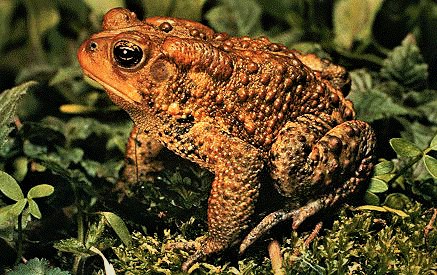
Well, as she advised me (and you readers) at one point, “You better be good to toads.”
I simply recorded what she dictated to me.
Read the book and you’ll see why.
~*~
I thought about “correcting” that to “You better be kind to toads,” but my sense is that it’s closer to what an 11- or 12-year-old may say under the circumstances.
To be honest, I don’t remember much from when I was that age. There may be good reasons I keep blotting it out.
Working on my novel What’s Left, had me exploring unfamiliar terrain when it comes to writing itself. Here I was, after a lifetime in newspaper journalism and a shelf of experimental novels and volumes of poetry, now drafting and revising a new work that was unlike anything I’d done before.
The details, for the most part, felt right, as did the structure. I’d eased into a voice in which Cassia could relate her progress, with the verb tenses of past events repeatedly changing back to the present, the way people do in speaking. The opening pages and final chapters actually excited me. But something bogged down along the way in-between. Not that it wasn’t good; it just wasn’t … well, something.
Much of my awareness as a writer has regarded the matter of style. How crisp, sharp, polished, muscular or sensual, even musical are the pages? In literary circles, that would ask just what in particular gives a specific writer a unique signature or sound, but my background originated in my high school years when I discovered the dictates of newspaper style — the strict rules given journalists for uniform spelling, story structure, word choices, and so on, matters that essentially create a uniformity or even anonymity in voices. Anyone want to mention Hemingway at this point?
With What’s Left, though, the word that kept popping up for me was tone. It was somehow just a little off.
Thinking of it in musical terms, I’m always surprised at what happens when our choir changes the tone of a piece by moving it up or down a half-step or so. It becomes brighter or more melancholy, for instance, as well as easier or harder for us to sing, depending on how it presses our vocal ranges. Well, this is also looked at as a matter of pitch. And it can make a world of difference.
With my novel, I slowly realized I didn’t want it to sound too much like a novel — I wanted it to be more an overheard conversation. As I also found, that can be tricky when we’re looking at a stack of old photos or family history.
~*~
In the family, Cassia’s great-grandfather Ilias would have known food like this. A plate of cooked snails with tomato in Crete, Greece. Served in the town Agia Galini. Photo by Helentr via Wikimedia Commons.
~*~
Now that the novel’s finished, I’m reflecting once more on the basic of tone. One definition calls it the attitude of a writer toward a subject or audience, and I’m seeing how it’s been both in my case. Over the course of the revisions, the subject mutated from her father to his photographs and, finally, to the experiences of Cassia herself. In addition, her position shifted from her telling of looking back on her discoveries to having her tell of them as they occurred — in effect moving the center of gravity of the story well into her early teens. That, in turn, changed my attitude toward the audience.
Tone, as the definition continues, can be formal, informal, serious, comic, sarcastic, sad, and cheerful, among many other outlooks. Well, where her voice got younger, I did find her bursting into outrageous, delightfully irrational lines that have become some of my favorites.
My thinking about tone was also stimulated by things my ex-wife, a painter, had repeated about the necessity of tone in visual art — something many artists seem to lose sight of (sorry about the pun) as they work. Here it’s the contrast of lightness and darkness, in color as well as black and white — highlights and shadows. Squint your eyes and see if everything blurs into one. It’s still an important parallel to the written word.
So in my novel the tone would need to be colloquial. In the draft and early revisions, Cassia’s mostly the reader. But in the final draft, it’s largely her father. My attitude toward the subject has definitely changed, as has hers.
There’s also the attitude toward details. In fiction, to establish the contrast of lightness and darkness, it helps to keep many of these suggestive, open to the reader’s imagination — unlike the specifics demanded in journalism. Think of having shadowy areas where things can move about in the background without interrupting the action at hand.
In another shift, as she began voicing questions in place of flat-out statements, the reader just might start arguing with Cassia (not me!) — or even to say to herself, “I remember something similar” or “I’m glad that’s not how it happened with us.”
~*~
Since her family’s involved in the restaurant business, we can change our perspective slightly. Finding the right tone is something like deciding what kind of meal you’ll sit down to. A picnic, for example, is quite different from one with white linen on the table or from a quick lunch of burgers and fries.
As for something at home? It helps to know who’s coming.









 Jnana's Red Barn