I’ve been meditating for more than 50 years now

Well, I haven’t been living as a monk in a Himalayan-mountain cave any of that time, but it does sound more impressive that being a “meditator” or someone who practices in a contemplative religious tradition that long even when it’s only once or twice a week.

The thought came to me in Quaker worship the other Sunday morning, the center of what has remained my spiritual discipline and community after the yoga-based version faded away over the years – even my rising before dawn to sit cross-legged in front of a small altar and its candle before I tackled poetry and then took off for the paying job for the rest of the day.

~*~

While I can no longer park myself on a cushion on the floor in the Asian style but rather settle in much more loosely on an old meetinghouse bench – do not call it a pew – the bigger change has been in the focus of my sitting.

The goal of the yoga exercise was to transcend, leaving behind mundane awareness altogether. Somewhere you might encounter your past lives, even. If not that, then a natural high, as an advanced version of a drug trip. At least an awareness of an altered state of consciousness that might even address authentic ethereal reality.

Instead, in the Quaker vein, what I’ve found is a time of being mentally and emotionally renewed and even gaining clarity into my daily engagements.

Or, as one quip goes, some of the best barns in New England were designed during Quaker Meeting. In this case, meaning the hour of shared and mostly silent worship.

~*~

The half-century mark also takes me back to my first Summer of Love, detailed my novel Pit-a-Pat High Jinks, a book that has scenes triggering the erotica filter, should you try to order a copy.

While I was preparing to live in the yoga ashram to our south back then, I experienced my first summer with a daily exposure to the outdoors, including swimming in mountain lakes, often naked, Upstate New York. It was a time of great struggle, discovery, growth, and redirection for me.

And at the end of all this, at the closure of our hour of silent worship here in Maine, one Friend (aka Quaker) voiced an insight from a Native perspective that when it comes to time, the focus is on the past – it’s the only one we can know. The future is the one behind us, rather than ahead. Not that there’s that much ahead for me in this lifetime.

~*~

Still, it’s was a kind of day that had me wondering, can life be any better than this? (Even with those aches et cetera of aging.)
Much of what our commercial fishermen catch isn’t ‘fish’

Eastport’s fleet doesn’t use nets to fish. Rather, they use dragging gear or baited traps, mostly.

Technically, the bulk of what they catch isn’t fish, which are vertebrates, have gills, and lack limbs with digits. Fish fall into the scientific superclass of Osteichthyes, as noted in a previous Tendrils.

Shellfish, meanwhile, are invertebrates, have external skeletons, and are classified as molluscs, crustaceans, and echinoderms. See a more recent Tendrils.

So today, let’s look at what the local commercial fishermen catch. Or, in some cases, used to.

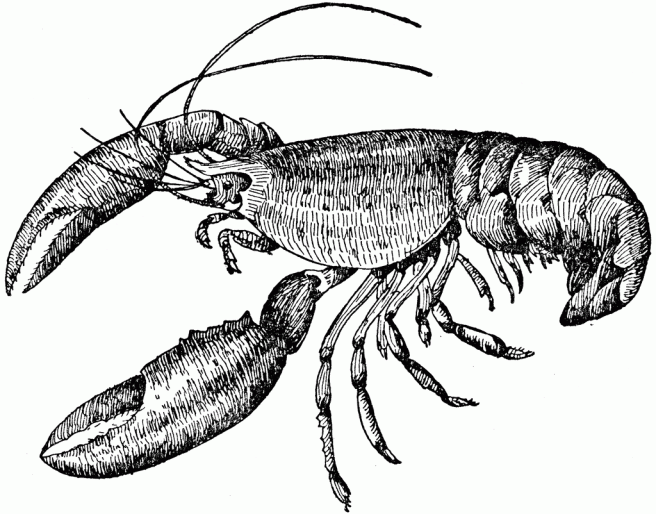
  1. Lobsters. The mainstay.
  2. Scallops. Some of the world’s best, in our humble opinion. The haul, though, is tightly regulated.
  3. Clams. While many of these are raked on sand or mud flats at low tide, others are dredged by boats at sea. They add up to the state’s third most valuable fishery.
  4. Urchins. A specialty niche making a comeback. Japanese foodies love them, but the market’s tricky.
  5. Crabs. See a previous Tendrils.
  6. Alewives, herring, and mackerel. Often caught for use as lobster bait.
  7. Shrimp. Well, not anymore, but we can keep hoping the stock will rebound.
  8. Mussels. There are some interesting attempts to establish farmed beds around here. Now that would be lovely.
  9. Cold. I’m talking about the crusty fishermen. They do bundle up in the depth of winter, though, and rarely complain.
  10. The sunrise. They head out early, all seasons of the year. Some of the views they catch are unbelievable.

Let’s not overlook salmon, a major product here, which are farmed in pens and harvested directly by special boats using tubes that work something like a giant vacuum hose. Not kidding.

You’d think those birds would be far more ravenous in the depths of winter

We continue to keep our bird feeders out through the summer (something we wouldn’t do if we had bears in town), but I am surprised by how much more they eat in summertime, when there’s plenty of other food available, than they do in deep cold and snowy conditions when they need more to keep their metabolism up.

Yeah, we know there are more of them now and that they’re also feeding their babies. But on some days they eat as much as they would otherwise consume in two weeks – or more.

On the other hand, we do enjoy watching the variety and drama as they dine right outside the window at our kitchen table throughout the year.

This is a clue to what really occupies my mind some days

Ten random notes in no particular order:

  1. I’m still learning to spell Katahdin.
  2. Was it a mama moose I hit that cold night on my commute back from the office, rather than a deer? Now that I’m getting to know deer, I think the collision involved something bigger.
  3. Red states? They’re where nobody really wants to live. Or at least the paying jobs.
  4. How dark the house is at night in an electrical power outage! There’s no ambient light from the street lamps or apparatus power-on buttons.
  5. Glyphs = little typographic devices.
  6. I dreamed I was playing violin again. In an orchestra, no less.
  7. How deeply backpacking as a youth shaped my values (forget efficient as a factor). It’s that travel light thing.
  8. After living in New Hampshire, I’m still not used to a sales tax.
  9. English country dance lyric, “If love were an ocean / and water was gin / I’d walk a long plank / and throw myself in.” It’s not from “Robin, Mad Robin,” is it?
  10. A voicemail message for today: “Let me a message or text me. I’ll get back.”


The passing of my last aunt marks a generational change

News of the death of my dad’s youngest sister was not unexpected but a jolt all the same.

For years, she had been something of a cypher in my awareness, originally when she came home from college or later in her visits from California, far from our Ohio.

Mom’s family, apart from her stepmother, was largely non-existent, except for a few encounters in Indianapolis, central Illinois, and Missouri. And she had her differences when it came to Dad’s clan, which did filter my perceptions.

I really didn’t understand the array of uncles, aunts, and cousins until I got heavily into genealogy. Before that, I was rather amazed at (and baffled by) the connectedness of one girlfriend’s Jewish family, which seemed to have cousins everywhere. Just what was a second cousin, anyway, much less removed a degree or two?

When Dad died, though, after a decline to Alzheimer’s, his last remaining sister insisted on flying out to the funeral, along with her husband.

And that’s when I finally got to know them – personally rather than abstractly. Thankfully.

The revelation began when she and her spouse, my Uncle John, came down the gateway at the airport and he swept our youngest up in a big bear hug while proclaiming, “It’s so good to have another Democrat in the family!”

The kid had no time to be appalled. He was instantly high on her list of rare approvals.

It was an effusive side of him I’d never seen. He was, after all, a retired University of Southern California dean and an ordained Presbyterian minister. And he was a warm, fun-loving guy. Who’d a thought?

It was the beginning of many other revelations over the next several days.

Slowly, I realized that his wife, that baby sister my dad called T.J. rather than Thelma, stood halfway in age between my dad and me – much more in my direction, that is, than I had thought. And it also dawned on me that she was the last person who might be able to answer many of the questions I had accumulated regarding my grandparents. Except, that is, she was equally in the dark on many of the answers.

In the months after the funeral, that questioning led to a fascinating round of correspondence between her and me and, at her insistence, our cousin Wilma, six months Dad’s junior.

It was an extraordinary research project, actually, one you can read as the Dayton’s Leading Republican Plumber sequence on my Orphan George blog.

At last, I came to know my grandparents for who they were rather than what they were supposed to be or weren’t. But I also came to know and appreciate T.J. and John and Wilma, too, and so much of what I had been missing.

As I learned, only Dad called his sister T.J., so I felt a responsibility for keeping the moniker alive, especially for some of the reasons she expressed.

~*~

Leap ahead, then, to a letter I had from her a few months ago relating that Uncle John had died of cancer – and that she, too, now faced a terminal prognosis. She agreed to chemo only to buy time, as she said.

That led to a long, difficult letter from my end and then, to my surprise, two phone calls – we had never talked on the phone, for whatever reasons. These two, of course, were strong exceptions.

On the second call, I shared the news that Wilma had passed over after Christmas, having reached the 100-year-old milestone. T.J. was glad I had included her.

And then, a few weeks later, a first cousin reached me by email using an address he was uncertain still worked – I’m not sure we had ever communicated that way. Usually, it was the annual Christmas card and letter exchange.

He had the sad news, as he said, that T.J. had died after a week in hospice, her body weakened but her mind still alert.

~*~

Thus, within a few months, the last three of the generation before me in our family have died, and that places me next to the top in the senior generation that emerges. Or the oldest male, if that matters. Not that I’ve heard from most of the others in years.

What strikes me, though, is a sense of exposure or vulnerability, like having a roof or an umbrella blown away overhead. Like it or not, I’ve moved into that elders edge that they filled. No longer do I have those more experienced to turn to, and I’ve been feeling how inadequate I am in comparison to the best of them.

Not just in the family, either, but within my religious circles, too. I’m now the oldest surviving former clerk of Dover Meeting, for instance, with all of the institutional memory that’s supposed to embody, even as I now reside 300 miles away.

What I have to also observe, with gratitude, is that through them, I’ve also known blessings and perhaps even wisdom. May I pass those along, too.

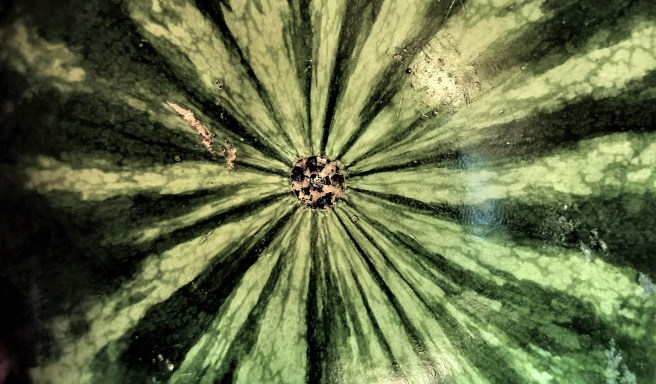
Does anything celebrate summer more than a watermelon?

And here I was about to investigate all kinds of melons, starting with cantaloupe.

That said, just consider:

  1. A watermelon is one of the few foods to be classified as both a fruit and a vegetable. Wish I could count it twice on my daily dietary requirements but guess that would be cheating.
  2. It’s a relative of both pumpkins and cucumbers.
  3. It’s far and away the most popular melon in America.
  4. There are more than 1,200 varieties, but the seedless hybrids are the only ones you’ll likely find nowadays at the market, at least in the USA.
  5. Those seedless versions aren’t genetically modified. Technically, they’re simply sterile with white seeds that are perfectly safe to eat.
  6. Watermelons originate in Africa and have been cultivated in Egypt for 5,000 years. That’s why they really do need a long stretch of summer.
  7. Based on weight, watermelon is the most consumed fruit in America.
  8. It’s 92 percent water yet rich in vitamins and contains only six percent sugar. By the way, there’s no bad fat or cholesterol.
  9. Its flesh isn’t always red – orange, green, yellow, or white are other options.
  10. In Japan they’re grown in glass boxes to maintain the unnatural cubed shape.


Where to from here, as a writer or a person?

Creatively, I’m feeling a lull or perhaps more accurately adrift.

After my Cape Cod presentation via Zoom earlier this month, I have no other Quaking Dover events on the horizon. Nor do I feel compelled to undertake another big writing venture.

Authors these days are often saddled with the promotional end of any publication, and I’m coming up on a year of launching the marketing push on my latest book. Admittedly, I am proud of my public appearances on its behalf – each one unique, reflecting what another writer declared a “rich feast of a book” – but it’s also exhausting, especially, as I hate to confess, at my age.

Do I cut the ties and say it’s time for the book to sink or swim on its own, or do I find new ways to try to generate a buzz? It is the one book that seems to speak to a wider audience, especially, say, than poetry or my hippie novels.

The blogging hits have slowed down, perhaps as many viewers have shifted to other platforms. Social media and mass media both appear to be hemorrhaging there, so I can’t say I’m alone.

I’m certainly out of touch with youth and often can’t understand their conversations. That really hurts. I believe there’s so much knowledge that needs to be handed down but don’t know where to begin. Besides, I’ve often found them a source of great energy in my own outlook.

In short, I don’t have a big project calling for my attention and devotion. That part feels really weird.

I do have a big backlog of periodicals and books to finally tackle as well as a shelf of personal journals that deserve visiting, so that points to an overdue reading orgy.

There’s plenty of outdoors around here to indulge in, too.

I may even have to look at my remaining possessions and reorganize and cull them.

As I’m saying, I’m feeling a bit strange.

I’m sold on Maine’s crab

Ours are smaller than the glorious Dungeness of the Pacific Northwest or Chesapeake Bay’s popular Blue delicacy, named for the color of their tips.

But that’s not to say Maine doesn’t have crabmeat that’s as sweet. Ours comes from two species.

Here’s some perspective.

  1. Jonah crabs are the slightly larger and more celebrated of the two. They’re reddish with large, black-tipped claws, and found primarily in deep waters offshore.
  2. The meat comes from the claws. When Jonahs show up in a lobster trap, a fisherman typically removes one claw and throws the rest of the crab back. The crab, we’re told, can survive on one claw while the other grows back.
  3. Jonahs are regulated by an interstate commission that places a 4.75-inch minimum size on keepers and prohibits the retention of egg-bearing females.
  4. Atlantic rock crab, or “peekytoes,” live in bays and tidal rivers closer to shore. These measure just five inches across and are the most commercially caught crab in the state.
  5. Peekytoes cannot be shipped live, presumably because they’re too delicate. Instead, they’re cooked and hand-picked before shipment.
  6. Both commercial and recreational crabbers require a license from the state and must observe strict limits on their take. At least, those specifically going after them. See the lobstermen, above, for a clue to exemptions.
  7. Locals in the know say that picking the meat from a crab is a nearly lost art. They admit they can’t avoid getting hard bits of shell in the tender flesh, no matter how carefully they try. Instead, as they advise, go to Betty’s in Pembroke or Earle’s down in Machias for your supply.
  8. Favorite dishes around here are crab rolls, crab salad, and crabcakes. Our house also celebrates a heavenly crab imperial. Others make them into a dip or spread. And, in some circles, Jonah crab claws make an appetizer served like a shrimp cocktail.
  9. They can be harvested year-‘round, though fall, when crabs are most packed with meat, is the peak season.
  10. Smaller, invasive, nasty green crabs have been proliferating as Maine waters warm, decimating other marine species and their breeding grounds. Some enterprising chefs, though, see tasty opportunity in some dishes to counter that.

Me? I haven’t yet had to complain of having too much. Now, please pass the Old Bay.

Now, for our big whirlpool

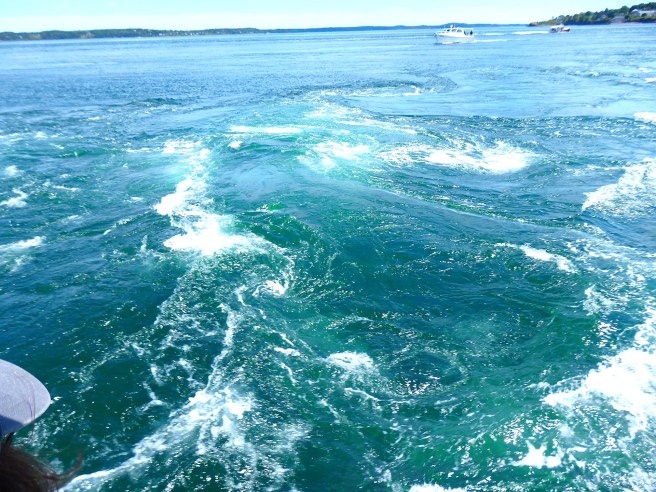
One of Eastport’s travel attractions is the “Old Sow,” the world’s second biggest whirlpool or the biggest one in the Western Hemisphere.

~*~

Before you make reservations to come see it, let me point out a few things.

  1. Its intensity varies greatly, depending on the gravitational tides cycle. It’s best about three hours before high tide, especially around the new and full moons when 40 billion cubic feet of water flood through the half-mile-wide passage to Passamaquoddy Bay.
  2. Its swirling diameter can reach 250 feet or drop 12 feet into its vortex, but it’s also likely to appear as a series of boiling countercurrent piglets and eddies.
  3. Most of the time, it’s not particularly visible from land. It is, however, a regular feature on Butch Harris’ whale watch runs. And even then, it will likely be a disappointment if you’re expecting to see a big hole in the water.
  4. It remains, nonetheless, a hazard to small boaters and has claimed lives, most notably in 1835 when a mother watched from shore as a two-masted schooner was sucked down with her two sons. The young men were never seen again.
  5. Another account, from the late 1800s, tells of two men with a barge loaded with logs, that went under and the bodies never found.
  6. It’s closer to Deer Island, New Brunswick, than Eastport, Maine, in part a consequence of public works construction of a causeway to the north during the Great Depression that pushed the current eastward.
  7. The name likely derives from the mispronunciation of “sough” as “sow” rather than “suff,” reflecting a “sucking noise” or “drain.” Or even “grunting.”
  8. The phenomenon arises from a unique funneling of powerful currents over a sharp trench on the seafloor, with water rising abruptly from 400 feet to 119 feet. It then intersects other trenches to thicken the action.
  9. The upswell brings nutrients and small sea creatures from the depths to the surface.
  10. The channel’s ferocious currents can run six to seven knots, a special hazard for divers as well as small boats.


This is the big day for pyrotechnic displays

Unabashedly, I am a snob when it comes to putting big fireworks together in an aesthetic whole, rather than something that resembles an action movie big car smashup.

A smart design team can use the entire sky as a canvas of evolving colors, combined with the timing of a sharp comedian.

That said, here’s some perspective.

  1. A show like Boston’s on the Charles River Esplanade fires off 5,000 pounds of explosives in its half-hour glory. That performance requires a computerized launch system for five barges floating on the water.
  2. Macy’s, the nation’s biggest, goes for an average 1,600 shells a minute – more than three times as many as a typical town display uses for the entire night. That show has more than 40,000 shells fired from six barges in the Hudson River.
  3. China produces 85 percent of the world’s fireworks.
  4. Many of the styles are named for flowers such as peony, chrysanthemum, or dahlia. Others, after trees, as in willow and palm tree.
  5. Prices vary wildly, especially when you’re looking for some serious color intensity and blending rather than honky-tonk garish.
  6. Shells are sold by tube diameter, commonly six-, eight-, and ten-inches, with each additional inch typically adding another 100 feet of elevation to the shot. Are some of those bursts really a thousand feet overhead?
  7. An aerial shell contains six parts. Or more, depending on what bells and whistles are added on.
  8. Larger shells cost average around $336 apiece and may require an 840-foot display radius.
  9. Even a small-town show will run between $7,500 to $15,000 to produce, just for the fireworks. Add to that set-up and clean-up labor, sanitation, musicians, and public safety expenses. The average municipal show costs $25,000. In contrast, a wedding show is tabbed for $1,500 to $3,000. But don’t hold me to those figures. Other estimates I’ve seen simply soar.
  10. Injuries send about 10,000 Americans to the emergency room every year, two-thirds of them males, and many of the injuries are to children. That’s in addition to 7.9 fatalities. As another safety consideration, more fires are reported on July 4 than any other day of the year – some 19,000.