NOW FOR SOME HEAT?

Each fall, we play a little game in our household. The goal is to see how long we can hold off before we begin using the furnace to heat the house. Yes, October and even September can be pretty chilly where we live, but since we have steam radiators, getting a right equilibrium for the furnace in the basement can be difficult – the boiler’s just getting going when it has to back off. Seems to waste a lot of fuel, from what we see, and that, in turn, wastes money.

So what we do is use the wood-fired stove in the kitchen to take the chill out of the house. The kitchen gets toasty warm, but enough heat percolates through the rest of the house to be tolerable. Someone, usually me, needs to get up in the middle of the night to reload the Jotul, but similar stories have been told throughout history. (When I worked the second shift, I could refill the stove when I got home from work and then sleep peacefully, knowing it would still be burning when my wife rose for the day.) We do use a couple of electric radiators, as needed, in rooms where we’re seated and working, but other than that, the goal is to get us to at least the first of November.

We’ve made it! But what’s this unseasonable heat wave? Highs near 70? In November?

Now, to see how much longer we can extend this. December? January? We’ve done it, at times. Did I mention it helps to dress warm?

A LOGICAL CONCLUSION

As far back as three decades, when I was selling editorial-page columnists and cartoonists to newspapers, even openly liberal editors had become shy of picking up anything except conservative voices.

As a consequence, we’ve had no new voices to speak from the left, especially not in general syndication. Think about it.

Meanwhile, newspaper circulation has been plummeting.

Could it be those conservative voices are deadly dull? (At least, when they’re not shrill?)

Think about it.

A bird with only a right wing won’t fly far.

Yes, think about it.

THAT FRESH PERSPECTIVE

When it comes to food, this time of summer is always a revelation, at least here in northern New England. The sheer abundance and variety of fresh produce is such a contrast to the rest of the year. One bite from any of the kinds of tomatoes we harvest is enough to make you ask just what those imitations in the grocery really are. You can go down the list.

Yes, this has been building up, beginning with the asparagus and lettuce in the spring and continuing through the strawberries and blueberries and a number of other crops along the way. Should we even mention peaches and apples, now coming on strong?

Let me argue that there’s nothing more marvelous than a sandwich loaded with real mayonnaise and sliced fresh tomato and nothing else. Forget the bacon. Lettuce is nice, if it hasn’t all bolted. Or a sprig of fresh basil. But that’s it. Pure and simple.

You can put all those cookbooks aside.

Another of those nothing-can-be-better experiences is one that sometimes follows a day at the beach. On my way home, I pull off the highway at a nondescript seafood wholesaler and boatyard where I purchase three one-pound soft-shell “chix” culls – the lobsters that may be missing a claw or simply not be visually perfect enough for the restaurant crowd. If it seems extravagant, I remind myself I’m saving 50 cents a pound, which makes each lobster cheaper than a McDonald’s fish sandwich this time of year, even before you get to New Hampshire’s added eight percent Meals and Rooms Tax aimed at tourists. And the lobsters are from local waters, rather than shipped in from Chile or wherever.

A bit up the road I stop at a farm market, if it’s not Wednesday, when I’d have already hit one of two farmers markets. This time, it’s fresh corn-on-the-cob – ears picked that morning.

As soon as I arrive home, I put a big pot on the stove, go outdoors and shuck the corn, which then goes into the pot once it reaches a full boil. Five minutes later, the corn comes out and the lobsters go in. The water’s already flavored.

Butter goes immediately on the corn, to melt thoroughly before I add fresh-ground pepper.

Ten minutes later, two of the lobsters join the corn on the plate – and that’s it, plus a squirt of lemon in the melted butter. Forget the little dish of butter you get in a restaurant; just use what’s come off the corn. Yummers, as we sometimes say.

So I retreat to the Smoking Garden, where making a mess is no problem, and delight in my classic twin lobster repast as the dialogue in my head asserts the king of France never ate better. Gold flatware and rare porcelain would add nothing to this meal. Julia Child, for all of her insistence on fine culinary technique, would have to admit that all of those skills existed only to try to emulate the wonder of this simple afternoon glory. Tamar Adler, with her advocacy of one-pot meals, would no doubt be on my side here.

The third lobster, you ask? It goes into the refrigerator for lunch or even breakfast the next day. I’ll add a dollop of mayo on the side, for dipping, and find myself re-creating lobster salad, minus the bread.

If we’re really being ambitious, we save all of the shells for chowder stock or lobster ravioli, the latter dish sometimes getting an extra lobster all its own for the meat. Either way, that step really lowers the per-serving cost.

This hardly makes me a foodie or even give me any creds in the kitchen. So? The fact is that we’ll never be able to subsist on the food we raise on our little city-garden. But it, and the local farmers and fishermen we visit, give us many reminders of the inescapable wonder of freshness on the plate. You can’t beat quality ingredients after all, and this is where it all starts.

As Julia would say, Bon Appetit! With or without the king of France in the background.
SPLITTING THE RENT

Yes, splitting the rent, as I remember it, way back when leaving home and living not with a spouse or a lover, but instead sharing a dorm room or an apartment as a matter of economic necessity. You would wish otherwise, of course, for a space all your own, with privacy. In all of this transition, all the same, the unanticipated connections. As if you would ever go back.

PUBLISHING DECISION

He admitted it was an academic book that deserved to be published, but their research indicated they’d be lucky to sell 400 copies. Without a hefty subsidy, there was no way his university press could afford to move forward on the project.

Welcome to the club.

MANAGEMENT STYLES

Within an organization, you may see a manager who chooses to surround himself or herself with talented individuals and then allows them the freedom to perform at their best. This is the leader who’s not afraid of being placed in their shadow but rather supports their efforts and builds a team of responsible players. This leader hands out kudos, rather than blame, and corrects errors as a matter of avoiding them in the future. Credit is shared rather than hoarded.

There’s another kind of manager who wants to stand taller than his or her subordinates. Talent is viewed with suspicion, and workers are held on a short leash and often micromanaged. Scant praise is handed out – and when it is, there’s little reason to trust it. Fear and blame, especially, are the root of motivation, and maintaining a low profile and even doing as little as possible (to reduce one’s exposure) are inevitable consequences. These managers don’t want to hear your ideas, though they expect you to follow their orders.

One type leads to excellence; the other, to mediocrity.

I’ve worked for both – sometimes briefly in the same enterprise. But I know which one gets the most for the money. Not that money’s the top item when you’re working for them.

EVEN FOR A BUCK OR LESS

Going through our bookshelves the other day, I was struck by how many of my first paperbacks were picked up for under a buck, new. How many, in fact, came in at under a half-buck. These were serious literature, mind you.

Yes, gasoline cost about a quarter a gallon, too, but just compare the impact of inflation over that period. While regular gas now runs up to $4, those fifty-cent paperback titles are now listing around $16, plus – more than twice as much inflation, relatively speaking.

Newspaper and magazine prices have also spiked, for a variety of reasons beginning with the cost of paper itself and distribution.

My concern as both a reader and a writer is that the figures for traditional publishing have simply become too prohibitive to take risks on unknown talent. For instance, I’m very unlikely to shell out $25 for a hardback novel, yet if that title doesn’t sell sufficiently, we’re unlikely to see the trade paperback, which can still be borderline prohibitive for modest incomes.

Public library budgets, meanwhile, keep getting shaved, forcing reductions in both new acquisitions and the staffing and open hours.

All of this means you’re less likely to find a new voice you find personally exciting. It’s all about blockbuster sales for one title rather than a wide offering catering to quirky interests and pleasures. And it’s not just commercial publishing.

Not long ago an official of an academic press related the painful decision they’d made regarding an important history manuscript that would not sell more than 400 copies, according to their marketing research. And so, in the absence of a major subsidy (such as an underwriting grant), the volume would not appear.

Since much of my own fiction falls in the category of “experimental” literature, the response I’ve received from some literary agents and presses has been that the work deserves publication but that it’s not “economically viable.”

The threshold for economically viable, I should point out, has been rising steadily through the four decades I’m reviewing.

I remember hearing the novelist Wright Morris in a televised interview where he said how lucky he was to have a niche following where a press run of eight-thousand copies was sufficient to support him. That’s hardly the case today, especially when the field has been consolidated into two publishing houses handling the bulk of American fiction.

*   *   *

Even so, hundreds of new novels appear every week, many of them from small presses run as a labor of love. Few of the authors will get any notice, even though some, as I’ve found over the years, are a fine alternative to the cookie-cutter work typically found in commercial fiction. At least the Internet is opening new opportunities to be heard and discovered – and even for readers to pick up a fresh writer for a few bucks once again.

So who are you reading these days you feel speaks directly to you? Or whose style bristles in ways you find delightful? And how did you come across this author in the first place?

Maybe his or her successful niche following is around the corner if we all talk about literature as if it counts in our time. Just maybe.

WIND BLADE

100_8492

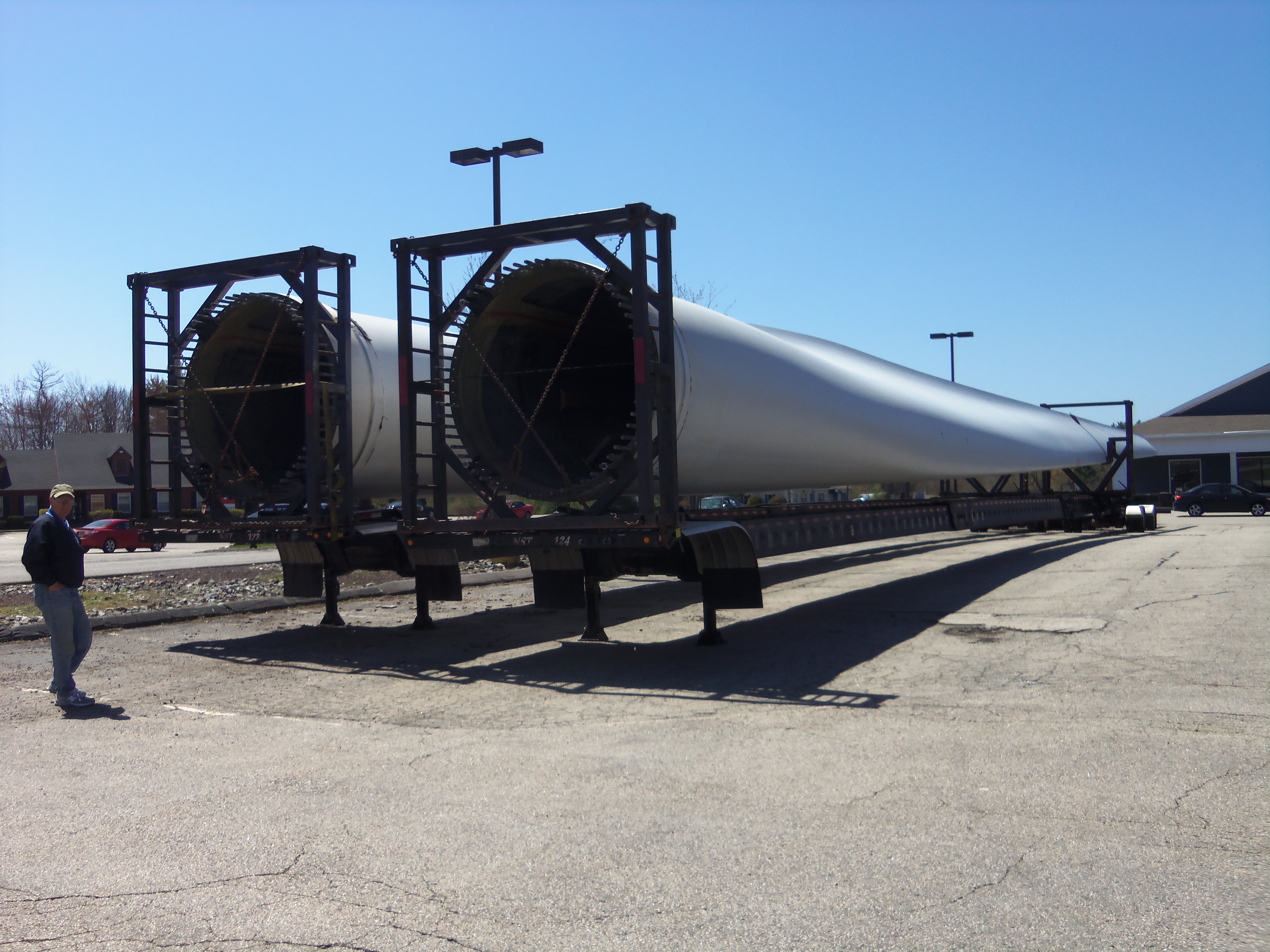
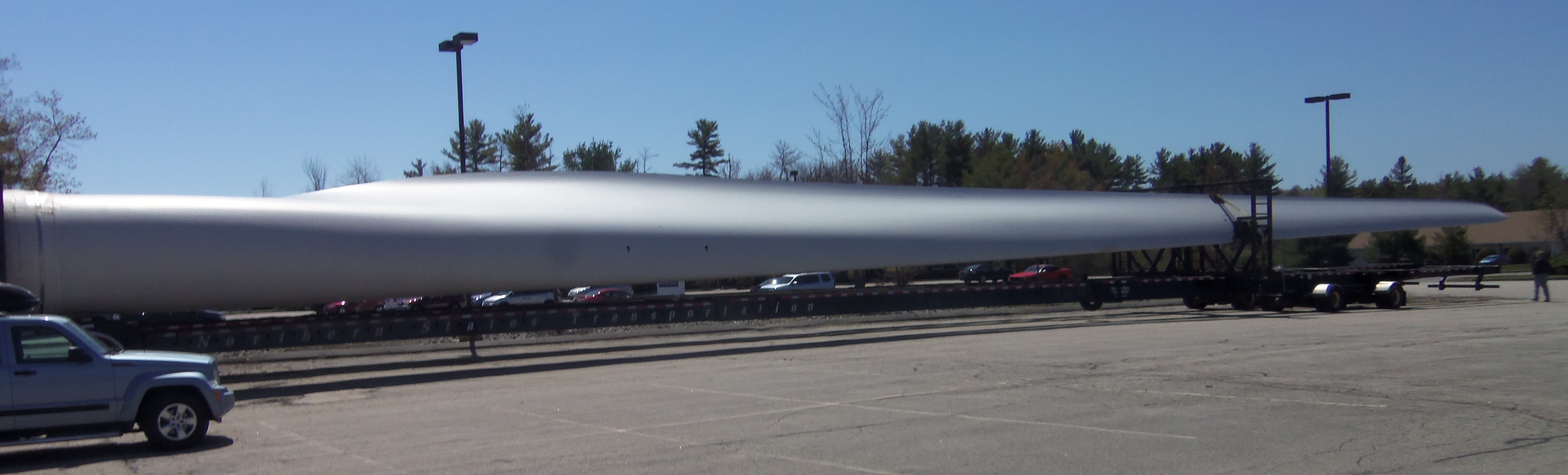
Several months ago, while driving on Interstate 95 to Boston, a remarkable view caught my eye. Headed in the opposite direction was a very long trailer, one at least three times longer than the usual tractor-trailer rigs. A few miles down the road, I glimpsed another. And then a third.

They were blades for wind-powered electrical generators being erected atop several ridges in Maine. Perhaps you’ve read some of the controversies erupting over proposals to build these “wind farms” in suitable locations across the country. But this was the first time I got an inkling to the size of each tower.

Earlier this month I came across two similar propellers, this time settled in a parking lot, no doubt waiting for a few more to join in a caravan. Even before being erected on a summit, they’re an amazing sight. Somehow, the gleaming sun on the metal reminds me of watching whales lolling in the ocean. Whales, you may recall, were the source of the oil used to illumine many homes in early America. They were another source of energy from New England.

100_8486

100_8490

Social status versus social value

You see the lists from time to time: America’s richest individuals or families.

You also see how proud people are about finding loopholes to cut their own taxes or lobbying for another advantage over the rest of the public.

Seems we’ve had it wrong. We should be according that respect to America’s top taxpayers. Yes, let them compete for the status of being the most generous Americans, the ones who step forward for their country. We could even break this out by occupation, for extra Top Ten lists. I’d even be in favor of having a monument in Washington inscribed with their names.

Let the rest of them be considered shirkers.