A PROSPEROUS TURN

Demand for wool in the first three decades of the 19th century shaped the boom years of agriculture in New Hampshire, at least until the invention of the cotton gin allowed for a cheaper clothing alternative – a condition that was accompanied by a changing American workplace and economy.

The brief but prosperous boom financed many of the Granite State’s landmark large farmhouses and barns as well as the nearly ubiquitous stone fences that are still visible, some in the most unexpected remote forests.

Pay attention while driving along country roads, and you’ll often notice stretches where each house seems to be an evolution among the others. I suspect that what happened was they were all built by one craftsman carpenter and his crew – perhaps itinerants who would stay for a season of erecting a house before returning home – who were invited back in another year to build another, each one to customized specifications. The chimneys, for instance, reveal a progression away from the massive central fireplace of the Colonial era to the use of multiple chimneys after the Revolutionary War – something that has me thinking of how much firewood these houses must have consumed through a winter.

Kodak10 080

It’s possible, of course, that the carpenters and masons and others came to live in the neighborhood as well. But one thing I feel certain: the resident commercial farmers, faced with the demands of their flocks and fields, did not have the time or perhaps even skills to build houses like these.

Kodak10 084

Kodak10 073

Kodak10 075

Kodak10 079

Kodak10 087

Here are some of the fine examples found in a village along a ridge in the town of Deerfield, a neighborhood known as South Deerfield. There are more, I should mention, than I could capture in this outing. Meanwhile, I’d like to know more about the site of the popular Mack Tavern, with its fiddler’s throne to protect the player from the wild dancers.

QUEEN SLIPPER CITY

The train station, perched at the side of downtown, includes Amtrak's Downeaster service to North Station in Boston, in one direction, and Maine in the other. (That run stops in Dover, New Hampshire.) There's also MBTA's Purple Line into Boston.
The train station, perched at the side of downtown Haverhill, Massachusetts, includes Amtrak’s Downeaster service to North Station in Boston, in one direction, and Maine in the other. (That run stops in Dover, New Hampshire.) There’s also MBTA’s Purple Line into Boston.

New England’s waterways are dotted with historic mill towns. The Merrimack River alone could boast of the water-powered industrial centers of Manchester and Nashua in New Hampshire as well as Lowell, Lawrence, Haverhill, and Amesbury downstream in Massachusetts, along with Newburyport and its harbor.

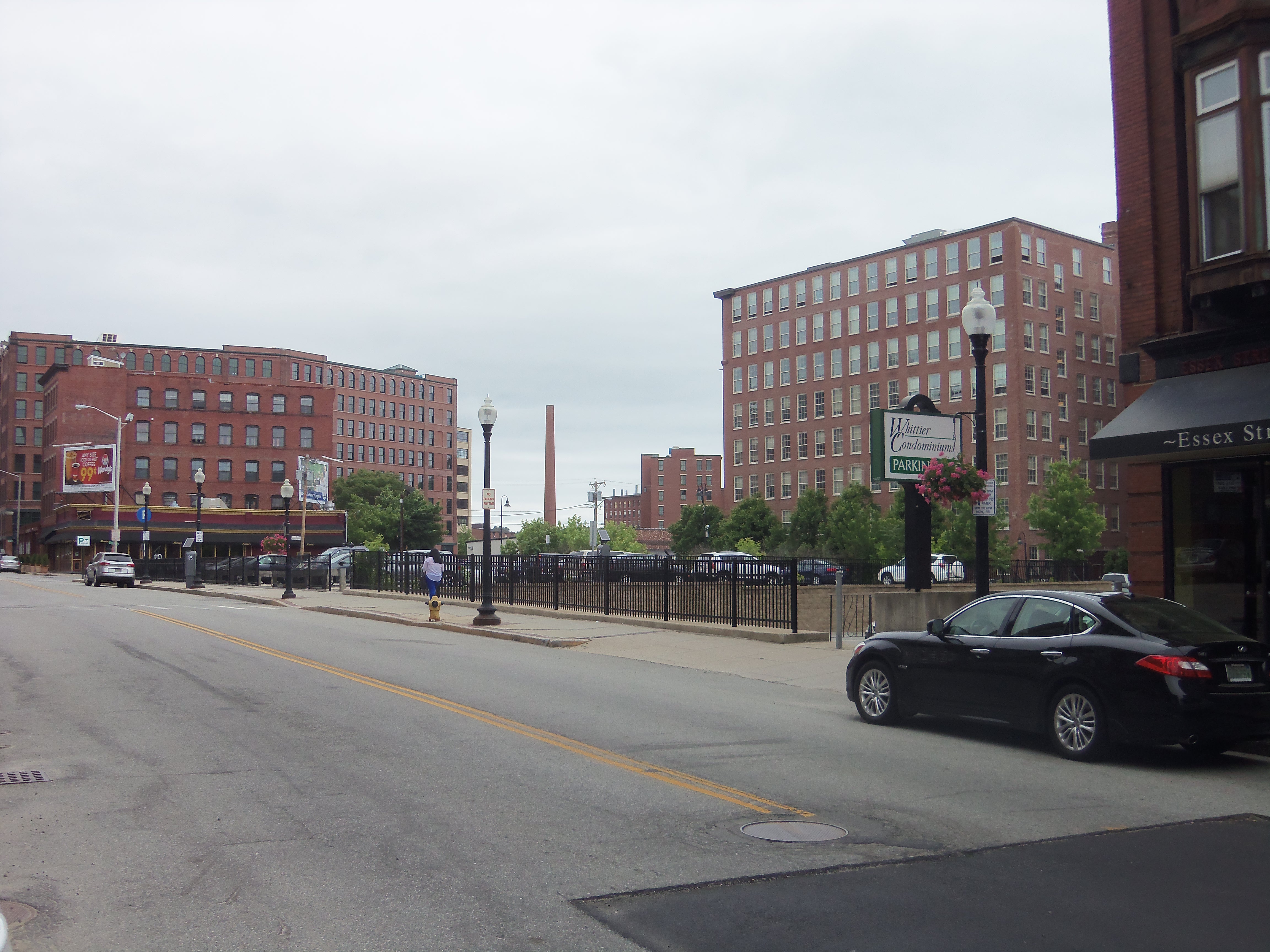
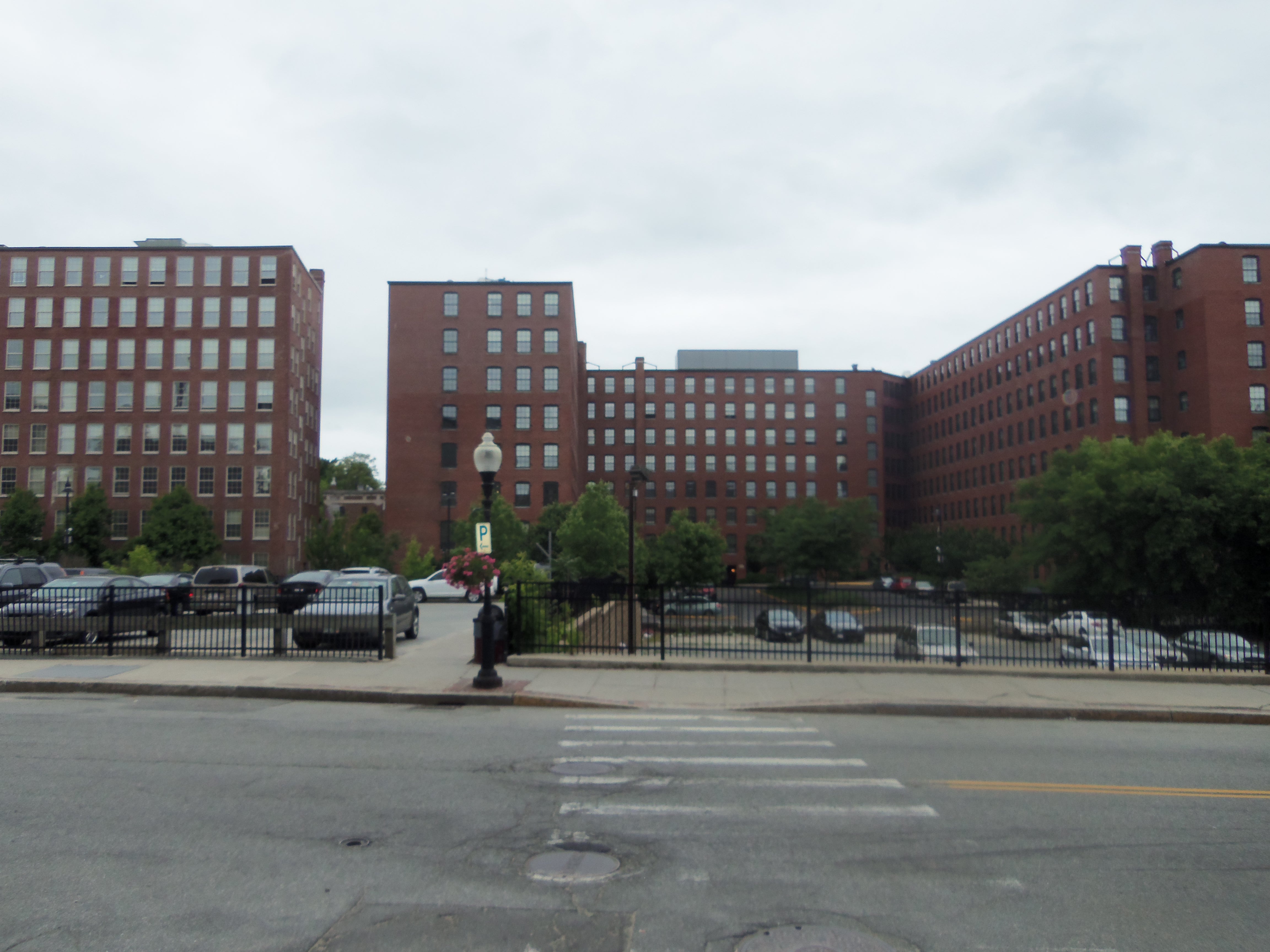
Some of the warren of old mills remains, including buildings converted to offices and housing.
Some of Haverhill’s warren of old mills remains, including buildings converted to offices and housing.
Catch the view of the distant church in the gap.
Much has also been razed, often for parking lots.
Here's a bit of scale.
Here’s a bit of scale.

While textiles were the focus of much of New England’s mill output, the power was applied to other products as well. Haverhill, for instance, emerged as a center of shoemaking, by 1913 producing one of every 10 pairs in America and earning it a whimsical nickname of Queen Slipper City. Its earlier commerce rested on woolen mills, tanneries, shipping, and shipbuilding.

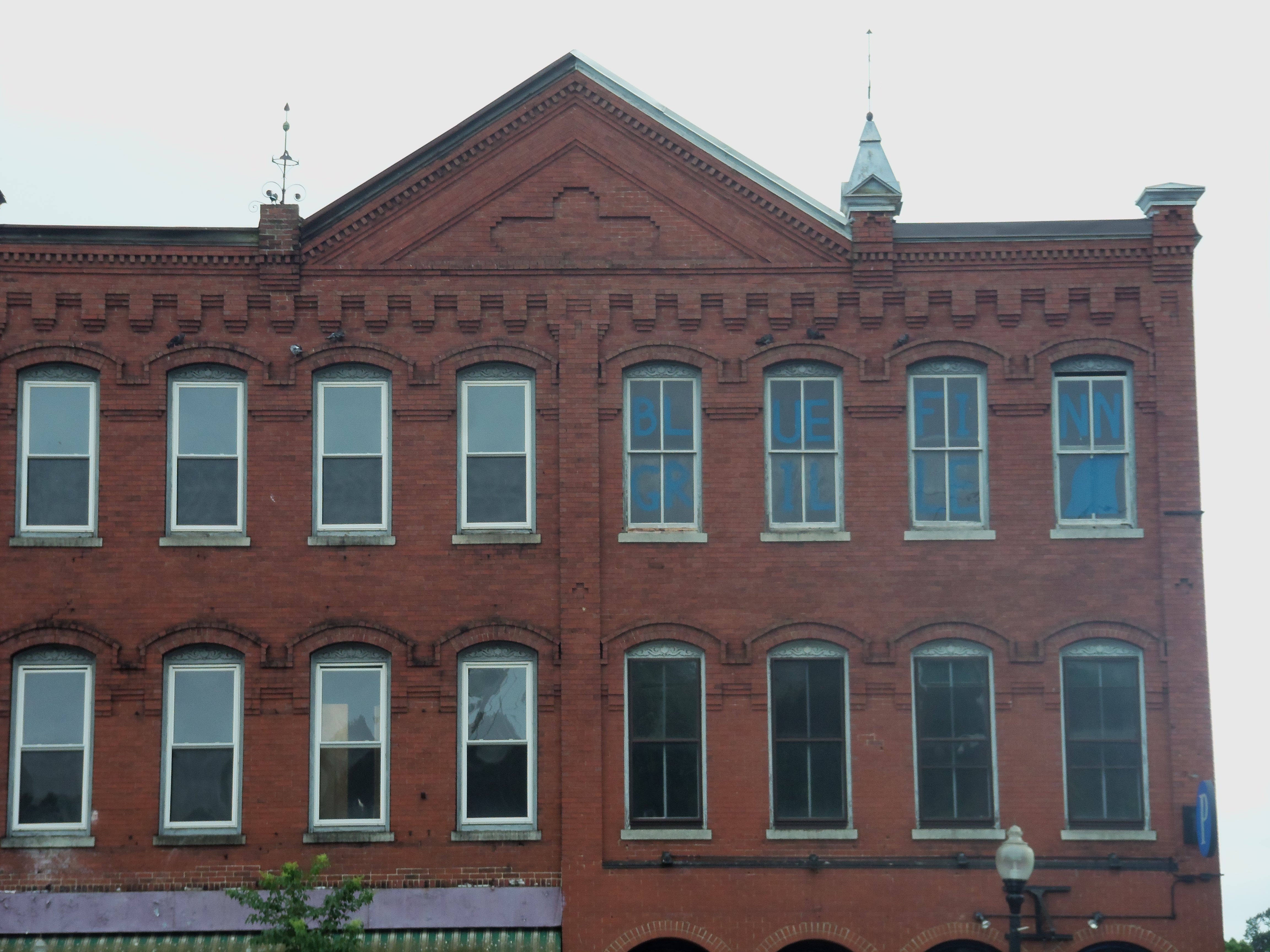
Downtown details.
Downtown details.
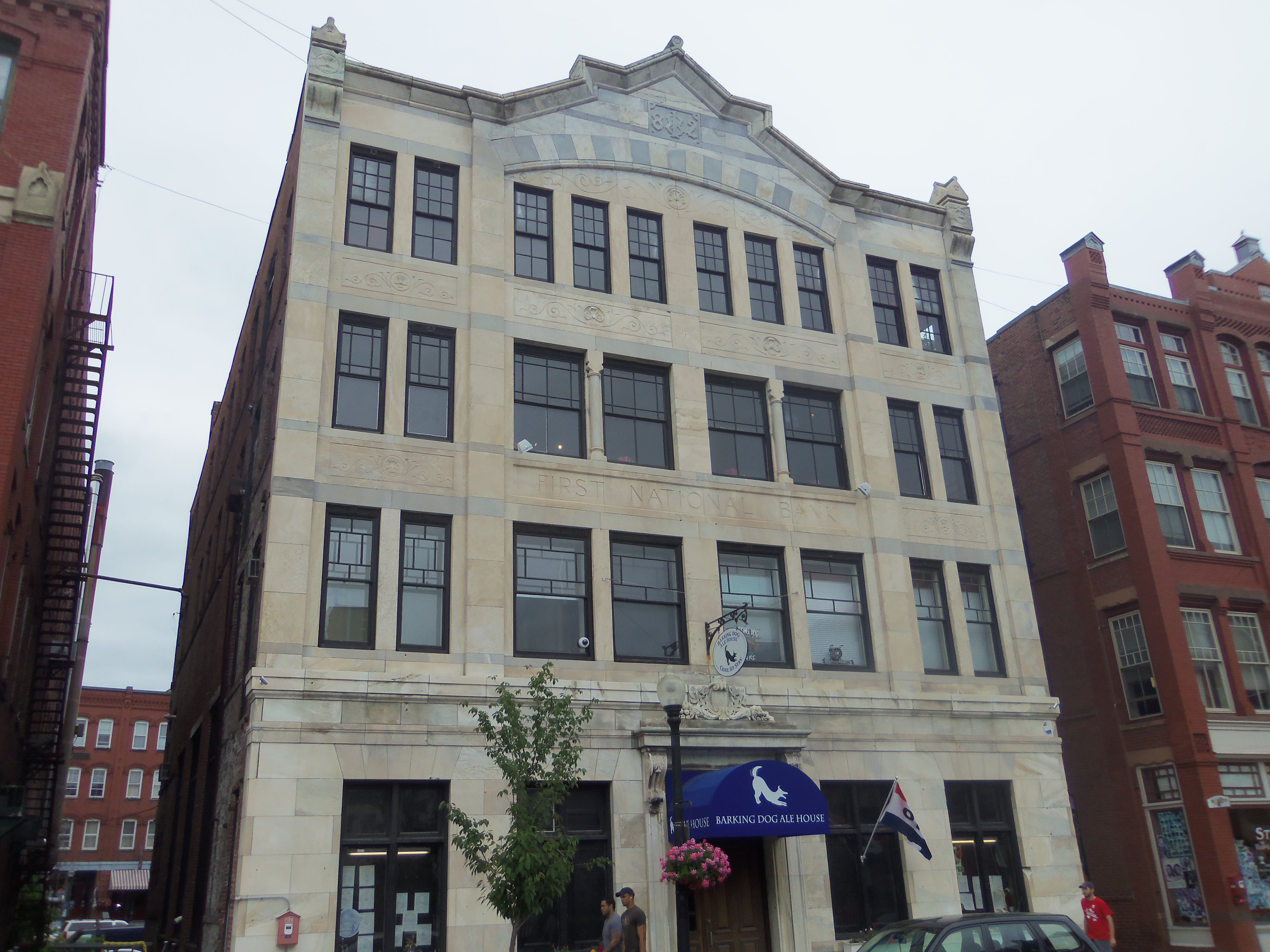
Still impressive.
Still impressive.
In those days, every building could be a "block."
In those days, every building could be a “block.”
Facing the train station, a reflection of earlier prosperity.
Down the street, around the corner.
Not everything was brick.

Like many of these once industrial centers, the city has been struggling to adapt to new directions and refit its legacy of old structures.

By the way, in Yankee style, it’s pronounced HAY-vril and is today a city of 60,000. But the river still runs through it.

The river flows toward the Atlantic.
The river flows toward the Atlantic. The tides fluctuate widely here twice a day.
The railroad crosses from downtown and then follows the river upstream to Lawrence. It's a lovely ride.
The railroad crosses from downtown and then follows the river upstream to Lawrence. It’s a lovely ride.


READERS, READERS, WHEREVER YOU ARE

Are there many readers outside New York City? When it comes to literary fiction, at least, the majority of the work often seems to be set in the City, and maybe that becomes a self-fulfilling prophecy.

I do love the fact that so many subway riders are also transit readers, though, and maybe that plays a big influence in the book reading populace. Ditto for taking the bus.

But I’m always baffled by the question, “Who are your readers?” I like to think they come from everywhere, and from all walks of life.

And just who are you?

The marketing crowd, of course, likes to peg a genre to a demographic. Chick Lit is a prime example, which in turn created Hen Lit for an over-29 female readership. Romances we can guess. Maybe even the many strands of Sci Fi.

But I still like to hold out hope for a more diverse core of readers for my own work, including the new books appearing at Smashwords. Am I just being naive?

Heavens, is it really Boomer Lit? I’d hope not to be so limited.

FINANCIALLY SECURE?

This was one of the big items that used to appear in the personals ads. The lady wanted a gentleman who was “financially secure.” But what did that mean in practice?

For some, I suppose, it was a seven-figure portfolio … or better.

For others, maybe someone who held a steady job or was supporting himself? Or maybe could simply pay his half of the rent?

Of course, it was ultimately a personal perspective.

So how would you have defined it?

REVISITING THE PERSONALS

Finding yourself single after the dissolution of a marriage or the death of a spouse is bewildering, at best.

The loneliness and grieving can be nearly unbearable, and emerging from that into some kind of social scene is, well, a lot worse than high school ever was.

Trying to find the right place to meet appropriate potential partners is no less challenging. You hear all kinds of suggestions, from health club to Laundromat, and all of that’s problematic. These days, as a male, I’d look at a yoga studio, just saying …

Another of the complications is the fact – well, it was a quarter-century ago – that the available women were concentrated within the bigger cities, while the corresponding men were an hour or more away, beyond the suburbs.

In the time since then, a number of online dating sites have appeared, and I’ll let others relate their adventures and successes or failures.

But when I was available, the personals ads began to flourish. Out of necessity, I suppose. They even had their own free booklets, like TV listings.

Coincidentally, around the time I remarried, there was a blowup at my newspaper when the publisher went livid over a personals ad where one hopeful had described himself in opposite terms to the usual cliches. (He touted himself as fat, lazy, unemployed, and the like, as I recall.) It was enough to get me and now-elder stepdaughter (and fellow writer) to start reading the Boston Sunday Globe’s more varied ads for insights in the ways people perceived themselves or tried to portray their desires. Usually, they churned out short resumes full of contradictions or things only others could adjudge. “Beautiful” or “handsome” was common, usually preceded by “very,” but that’s something purely for the viewer to decide, thank you.

At any rate, a few entries would stand above the crowd.

One, for instance, described herself as a “Land’s-End kind of gal,” and you really do get a good sense of her in those five words. (We gave her ad a B+ or A-.)

The all-time winner, though, was along these lines: “Happy blue-eyed plumber in search of articulate, well-poised woman to bring (something) into my life. Children a plus.”

He alone could say if he was happy, and “blue-eyed” certainly told the reader about looks. “Plumber,” meanwhile, indicated responsibility and economic status. As for children? Few novelists deliver as much with such economy.

The ad, we noticed, ran just once.


WHEN LEADERSHIP GOES WRONG

Leadership is a fascinating subject, not just the source of many intriguing biographies but also corporate case studies and political histories and military campaigns and religious movements and … well, feel free to add to the list. We’ve all been in places where we’ve worked with admirable leaders, as well as places where we’ve suffered – perhaps even leaving in despair.

Outstanding leadership is, of course, a rare and wonderful occurrence. Mediocre is, by definition, the norm. And then there’s the kind that worms itself into position and sets about doing destruction.

Lately, I’ve been reflecting (again) on the last one. Not just inept, but destructive. I can work around one, but the other one makes for an impossible situation. Think Moby Dick.

It doesn’t always start off as badly as I’ve portrayed. Sometimes the individual begins gangbusters, doing everything right, before something goes seriously wrong. The person may simply burn out or lose interest. Conditions may change, so that the fit no longer works to the organization’s advantage. (Corporate organizational consultants have elaborate charts of the qualities needed for a startup versus a maturing company, or one shifting from private ownership to a public stock offering or the reverse.) Sometimes the person is fine for when everything’s going smoothly but has no ability to adjust for necessary – and often painful – restructuring, especially when layoffs and shutdowns are involved. Or there may be a buried demon that is let loose somewhere along the way, perhaps triggered by a divorce or death or temptations such as greed or power-hunger or sheer arrogance or flawed leadership techniques such as bullying and abuse or deep-seated insecurity or an untamed ego or, well, again the list goes on. Feel free to add or amplify. This, too, is a source for many great works of literature, operas, plays, and movies. The dark side comes forth.

My big question is whether an organization reacts in time to save itself, and what steps can be taken before it’s too late.

One of the first signs of trouble is the departure of key personnel, often lower-level individuals on the front line – or at least a failure to hear their complaints without retaliation. Sometimes it’s flight at some of the highest levels. After all, their jobs are at stake.

Usually, however, the awareness comes later.

The New York City Opera, for instance, appointed a new CEO whose brief tenure was disastrous. His flamboyant, extravagant vision for the company sent it straight for the cliffs, and the trustees’ decision to terminate his reign ultimately came too late to prevent the train wreck. This was a company, we should note, founded by visionary leadership that continued through several administrations. RIP.

I’m thinking, too, of situations where one of the top leaders engages in clandestine conflict – often backstage, one-on-one building alliances – that’s ego-based to the detriment of the organization. Commonly, the player lacks an appreciation for the culture and values of the organization and seek to turn it toward his or her own goals, including self-power enhancement, regardless of the trustees’ projections. Removing such a toxic manager, however necessary, produces ill feelings and misunderstanding all around, especially when the others are prevented by legal constraints from speaking openly of their underlying reasons.

Sometimes I think it’s a miracle organizations get anything done, top to bottom or, more accurately, bottom to top. There’s far more to leadership than barking orders, for sure, or undue frugality. I’d put mutual understanding high on my list of leadership qualities.

How about others?

~*~

I looked at something similar – good bosses and bad – back on June 28, 2013. To take a look, just click here.

CULTURE SHOCK

It had been ages since I’d gone to the cinema multiplex – you know, the kind in the vast parking lot beside the mall. Usually, when we go out for a movie, it’s an art house in Concord or a volunteer-run series at the Music Hall in downtown Portsmouth.

But Wes Anderson’s latest, The Grand Budapest Hotel, was showing, and we figured we’d better make it there fast. No telling how quickly anything that quirky, formalistic, and savvy would be playing. (As we juggled our schedules, we realized it would have to be Monday night, overriding another activity on my itinerary – as we discovered, if you’re going to hit the big-box of showrooms, that’s the night to do it. We practically had the rectangular cavern to ourselves.)

I’ll leave it to others to lavish praise on the witty plotting that continually turned in unpredictable yet seemingly inevitable developments; the impressive casting and stylized acting; the precise cinematography; or the marvelous interweaving of actual sites in Germany (the hotel interior was actually the atrium of a defunct department store), miniature models of varied scales, and special effects to create a sense of fantastic and delightful artificiality. Anderson, as his fans know, is a moviemaking genius with a voice and vision all his own. (For one engaging detailed look at the roots of the story, click here.)

For me, though, the outing also invoked a series of culture shocks. Now that I’m “retired,” income’s tight, I’ll admit. I’m spending much less than I did before, and gasoline’s toward the top of my out-of-pocket budget. So the current ticket price (go ahead and laugh, you debonair rounders, when I tell you it was $11 apiece for three) made me gasp silently. (I know a good Greek restaurant where we could have dined out for that.) (I’m I really turning into this?)

From my end, it’s hard to take the very interior and decor of consumer society reflected in these big-chain outlets. It all feels plastic, cake-frosted, impermanent, unnatural. No one would want to linger in the vast lobby (what’s the point, anyway?), and no matter how plush, the showing rooms are – well, showing room sounds like something you’d find in a funeral home, which may be a good parallel, except that in much of the country, the mortuaries are usually in some amazing Victorian mansions. Nothing cookie-cutter about them, unlike these concealed warrens. None of this matches what I consider a theater or concert hall or even a house of worship, the kinds of places I prefer to assemble with others.

The third shock came in viewing the trailers and commercials. I’m still offended to be bombarded with big-screen ads after paying what I consider to be inflated ticket prices, after all, but to be hit twice with a promotion for a new computer game was especially egregious, especially with its pseudo-documentary interviews with its “creators,” a handful of pretentious nerds claiming social value for violent nihilism. I’m sorry, their world vision leads nowhere but destruction.

Actually, it was the amplified violence repeated in the trailers as well that most aggravates me. What in the American psyche so fosters terrorism of this scale? What justifies the reveling in gore for so many (and at such a price, even before we get to the price on our psyche)? Here’s the road that deserves a sermon of hellfire and brimstone, indeed. Wake up, folks, will you?

No wonder I prefer intimate, small-scale, gentle, playful, European or indie productions! They, in contrast, have soul and reality.

Anderson, I must confess, goes well beyond the small-scale criterion, but he earns the right to do so. And he’s generous to those who contribute to the effort, from the visual artists to the payroll accountants. One of the things that kept going through my mind as we were watching, actually, was an awareness of the lavish investment he was expending in the process and the question of whether he’d ever make it back. Well, maybe it wasn’t any greater than those of the futuristic trailers we’d watched beforehand, but still … Hollywood and Las Vegas have more in common than I’d like.

Maybe their biggest gamble is in making works that demand to be seen on the big screens rather than on our laptops or TVs via Netflix.

If you were a moviemaker or investor, what would you do? Or, as a film buff, what are you doing now?

EARLIER OWNERS AND THEIR IMPRINT

Every time we undertake another repair or remodeling project with our old house, I’m reminded why I don’t do it myself. Yes, I’ll assist our carpenter/electrician or even keep an eyeball on the plumbers, but the earlier work we encounter always presents something inexplicable.

When we were stripping the walls and ceiling of the kitchen, for instance, Rick looked up and said, “I don’t like that.”

“Don’t like what?” I replied, looking at the weird angles of the two-by-fours running to the ridgeline. I could have as easily said, “Now what?”

“The roof’s not attached to the walls,” he replied. Oh? We both calculated it had been that way eighty years or so, however miraculously. “I’ll do what I can to strap it down.”

It’s a long list, actually, of guys who thought they knew how to fix things. But they weren’t pros or even skilled. Makes me wonder about a lot of the construction guys at work today. So I’ve become ever so grateful to turn to people who are truly capable. The best ones are worth every penny.

FROM QUAKER CULTURE TO JANE’S CLAY PUPPETS

Continuing this month’s survey of Books Read, here are a few more entries:

  • James Walvin, The Quakers: Money & Morals; Jean R. Sunderlund, Quakers & Slavery; Barry Levy: Quakers and the American Family. These three volumes, tackled together while purging my spirituality shelves in my lair, present a fascinating examination of Quaker economic systems in history. Walvin approaches the rise of Quaker wealth and capitalism in Britain, especially through the networks of traveling ministers, apprenticeships, extended families, and so on. Of course, within three or four generations we had the phenomenon of much of those families leaving the Society of Friends and, later, the companies themselves being acquired by larger corporations. Sunderlund examines the resistance in Philadelphia Yearly Meeting to the abolition of slavery, finding it more intense in some quarters than in others – but most intensely entrenched in the yearly meeting’s hierarchy itself. While he ponders the events that allowed the yearly meeting to turn in the 1750s, he does not calculate what I sense might be the most obvious: the wealthiest families, which were most likely to own slaves, were drifting away from Friends. Combine that with the deaths of the previous generation of wealthy leaders who remained Quaker, and you have the possibility that persuasion had less to do with the transformation than we might hope. Levy, meanwhile, raises the model of Quaker farming as an underpinning of the success of Friends as an institution across multiple generations. He suggests that the families that were least able to set their children up on their own farms or businesses were also the least likely to see their children find mates within the Society of Friends, and thus marry out. He also observes that in Quaker marriages, the husband was not the authoritative head of the household, not in the model Calvinists followed. Rather, a marriage was subject to the women’s meeting, shifting the authority to the women elders. This is a powerful aspect of the women’s meeting I’ve not previously seen articulated, and one that could be greatly advanced.
  • Christian Pessey & Remy Samson: Bonsai Basics: A Step-by-Step Guide to Growing, Training & General Care. A lovely little book (yard sale find) that may very well convince me not to undertake what would obviously become another compulsive activity.
  • Andrei Codrescu: Whatever Gets You Through the Night: A Story of Sheherezade and the Arabian Entertainments. More about the royal brothers and their problems, ultimately, than the ostensible subject. Gets lost in scholarly insider jokes and footnotes and socio-economic/political sidebars. Quite disappointing.
  • Jane Kaufmann: Unframed. A marvelous coffee-table art book autobiography of a popular New Hampshire ceramic artist and her life’s work. Great for endless inspiration, especially in keeping a light yet acerbic touch.

100_6848

FROM SYMBOLS TO MAKING A DIFFERENCE

Continuing this month’s survey of Books Read, here are a few more entries:

  • Mary Douglas: Natural Symbols: Explorations in Cosmology. This is one volume that has perplexed and confounded me ever since I picked it up in 1983 in Dupont Circle. Part of my difficulty is in her compression of symbol and ritual, and another part in her use of African tribal anthropology to illustrate some theory. What I take away from this is that there are conventions in any society that enhance or facilitate actions that benefit both the individuals and the collectivity. When the experiences of individuals are paramount, there is little way of expressing them across the collectivity; when the collectivity is paramount, the individual may be crushed. Divide this individual/collectivity plane by another she calls grid/group and you get what I see in the collectivity as the faith community (group) or the totalitarian/bureaucratic regime (grid). Here, in the grid, the empowered individual may be the elite leader who moves people as pawns, while in the group, the individual may be … the mystic? If I interpret her right, groups may form at the fringe of society, while grids instead become the majority or norm. Whew!
  • David Burnie: Light. An Eyewitness Science illustrated book, this one gives me a clearer concept of scientific thought on light itself. Apart from a timeline of discoveries from the time the Quaker movement emerged up to the present, the bits leave me wondering just what I might incorporate into the idea of metaphor … and how.
  • A. Monroe Aurand Jr.: Early Life of the Pennsylvania Germans. Pamphlet.
  • Plain magazine. Nine issues Rachel received on Cushing Street. Lovely periodical that would likely have been better as a blog, if only they weren’t so neo-Luddite! Yes, I remain fond of hot type and all. The Barnesville connection made the issues especially pertinent to me as I reflect on the moves that landed me here.
  • Charles E. Fager: A Man Who Made a Difference: The Life of David H. Scull. This biography of a 20th century Friend made an interesting counterpoint to the Plain strand, although perhaps just as economically distant from the modern mainstream. Scull was able to do much of his far-reaching work within socially conscious organizations because of the freedom his small company gave him, thanks in part to his equally committed business partner. But that road, demonstrated by the cusp of the computer revolution in printing, Scull’s business, has changed everything. What are the alternatives for young Friends today?
  • E.F. Schumacher: Small Is Beautiful: Economics as if People Mattered. Like Muddling Toward Frugality (above), this classic is both dated and visionary. The devastation of globalization – on American wages, for starters – and the emergence of the Internet throw many of his strategies into disarray, yet the underpinning arguments of wrong focus and limited resources remain intriguing and relevant.

100_6840