Miscellany, one way or another

Who am I, really? What do I want to be remembered for?

Raccoon as a Trickster, a local Native twist.

Why be clever?

“The distance I felt came not from the country or the people; it came from within me. I was as distant from myself as a hawk from the moon.”— narrator in James Welch’s Winter in the Blood set in Montana

A viral carousel.

Quaker by degrees. Turn up the heat?

Quaker vagabonds were Dharma bums, too. The itinerant ministry proffers its own humor.

Things I learned in two years of college French? Le is pronounced luh.

As a youth, I admired crystals grown from supersaturated solutions. Deep blue copper sulfate was my favorite.

I never expected a film literature course under Harry Geduld would influence my poetry as much as my college writing class under poet Dick Allen. But it did: the clash of thesis and antithesis producing an unanticipated synthesis in reaction, especially.

When I first began reading contemporary poetry (for pleasure, independent of classroom assignment), he sensed that often the poem existed as a single line or two, with the rest of the work as window dressing. Now I read the Psalms much the same way, for the poem within the poem, or at least the nugget your or I as the psalmist is to wrestle with on this occasion. Psalm 81, for instance, has both “voice in thunder” and “honey from rock.”

I’m past the bitterness, the years – all the lost potential.

Brace for the intensity of submitting your writing

If you’re not a booklover but still think your story would interest tons of readers, let me tell you, Forget it.

An editor can tell immediately when somebody’s manuscript is from a non-reader.

~*~

For other wannabes, the big test comes in submission of a manuscript. Typically, the first step is in approaching small literary journals, but be warned the rejection rate is steep. When I began, it ran to about 20 rejections for each piece accepted. And that went for just one of the three to five poems that went out in each submission. And that was for established, recognized poets.

Another place to start is as a contributor to a local newspaper, covering local public meetings and the like. At least your work will appear in print or the equivalent.

Still, when I was submitting poetry this way, I managed to get more than a thousand acceptances. I have deep gratitude for the devoted editors and publishers who encouraged me, back when. We need more, should you want to step up.

I think, too, of all of the envelopes, clean photocopies (once that was acceptable), postage stamps, time involved researching addresses. It got pricy.

When I was actively submitting to the journals, I could never predict who would accept what, no matter how long I’d known a publisher or how carefully I had examined the publication.

It was a quirky process, this exercise of seeking homes for personal work. The reactions of editors and readers is so idiosyncratic and varied that the same poem could be considered too intense, by one, and not raw and bloody enough, by another.

~*~

The bigger step came in trying to land full-book publication. More was at stake, considering the costs, especially in a marginal niche like poetry.

As for fiction?

Approaching literary agents was generally a black hole. Few even bothered to return the self-addressed stamped envelopes. Book publishers, ditto.

I had some nibbles, even so.

Even with a few non-literary manuscripts, I was repeatedly running full force into brick walls.

And then ebook opportunities came along. It still requires self-promotion in search of a readership. So here we are.

~*~

At this point in my life, I’m backing off from the cutting edge, wherever that is. Hate to admit I’m also out of the loop and haven’t kept up with literary journals. As for the hot celebrated novelists? I don’t recognize their names. Of course, they don’t recognize mine, either.

The real challenge for both of us is encouraging others to read as an essential part of human understanding. Since you’re reading this already, I’m assuming you’re already active in that commonwealth.

Stay the course, please!

Are they really vain expenditures?

Upon graduation from college, in my social-activist period, I wondered how American society could possibly afford High Art while so many went hungry and homeless – domestically as well as internationally. Then I began to see everywhere a desire for expressiveness – in every ghetto, the ghetto-blasters and Playboy, spreads, graffiti and blues bands. To say nothing of the influence of professional sport, to which nearly every ghetto youth seems to aspire. (And more than a few others.)

So opera and museums and other “Establishment” operations came to lose their exclusivity in my vision. Extravagant expenditures in those realms are overshadowed by big-league athletics sports for similar reasons and then by military budgets across much of the globe.

See how much each person needs to reach into the realms of thought and imagination – the spirit; anything less reduces our existence to nothing more than economics, impoverishing everyone in the society.

So I noted.

By the way, Versailles still offends me.

Where are they now?

In the hippie circles where I lived immediately after graduating from college, I remember visiting one couple’s apartment on the second floor of a former Victorian carriage house, not that it was in any way chic. They had one room that had benches or modest pews around the four walls, something I now see as resembling a Quaker meetinghouse interior.

Their reason was the small group they welcomed to study the works of Armenian mystic George Gurdjeff (c 1867-1949). He’s best known for his book, Meetings with Remarkable Men, published in 1963, describing his visits in remote mountains and deserts mostly, places he paid homage to eccentric and often aged holy men of varied stipes.

Looking back at my own life and people I’ve met, though, I’m not sure his were any more exceptional than many I’ve known. Maybe they were just a bit more eccentric.

It’s a thread running through most of my work, actually.

In my relocations around the country, I’ve lost touch with 99 percent of them, but do wonder how the rest of their lives unfolded.

Here’s a sampling.

  • High school classmates and other youths from our church.
  • Fellow commuters and faculty from the new Wright State University.
  • The other residents in my two dorms in Indiana, especially the ones who show up in Daffodil Uprising.
  • The other residents of the hippie farm in New York’s Southern Tier or my Hawley Street digs in town. See Pit-a-Pat High Jinks.
  • The yogis of the ashram and those who came as guests. (Yoga Bootcamp.)
  • Ex-lovers over the years. (Blue Rock, Braided Double-Cross, Long-Stem Roses in a Shattered Mirror.)
  • Colleagues from the public policy research institute at Indiana University. One of the leaders did go on to win the Nobel Prize in economics. As for the others?
  • Fellow poets and writers along my way.
  • Fellow journalists and other newspaper workers. I’ve come across a few and read of others, but mostly they, too, have faded from sight. Eight papers in all. (Hometown News.)
  • Quakers I’ve experienced in nine yearly meetings.
  • The staff as the media syndicate where I worked, plus newspaper editors in 14 states, back when I lived in Baltimore.
  • Mennonites and Brethren in Maryland.
  • Neighbors around the Jacuzzi at Yuppieville on the Hill, Granite State.
  • New England Contradancers in Greater Boston and across New Hampshire and southern Maine.
  • Greek Orthodox in Dover. (What’s Left.)
  • Voices in Revels Singers in Watertown outside Boston.

Trying to trace down even a few of them has been frustrating. Some have shown up in news reports that led me to them, fleetingly. Many of the women have taken their husband’s surname, which becomes a barrier. Facebook has led to some from my high school years, but beyond that I am surprised by the number of “friends” who are inactive at their profiles or other folks who have no online presence at all. And then there are ones I’ve come across at Find-a-Grave.

It’s been quite a cast in my zig-zag journey to here.

By and large, though, I’m seeing how short we’ve come in regard to the lofty goals we once professed. My heroes, especially.

~*~

That said, you can find the novels they inspired in the digital platform of your choice at Smashwords, the Apple Store, Barnes & Noble’s Nook, Scribd, Sony’s Kobo, and other fine ebook retailers. They’re also available in paper and Kindle at Amazon, or you can ask your local library to obtain them.

I never realized how much I was surrounded by Greeks

For whatever impulsive reason, I ended my first published novel, Subway Hitchhikers (now revised into Subway Visions) in a Greek family’s restaurant in Indiana. In a town I I’ve dubbed Daffodil, which shows up in the title of the next book in the series., in fact

At the time, I saw it as emblematic of East Meets West, especially apt considering its Tibetan Buddhist twist.

Little did I know, once I picked up the trail again not quite two decades after that publication, of the ways Greek-Americans interacted with my life, even in the Midwest.

Consider these tidbits:

My best friend’s mother was delighted by her neighbor’s repeated explanation, “Athens! She is beautiful. The rest of the country?” A spitting sound I could never ever spell out was accompanied by the open palms of both hands coming down side by side from overhead.

His other best friend was Greek-American, someone of a philosophic outlook who wound up living in my circle in Upstate New York after getting out of the Army. Yeah, some hippies were veterans.

Later faint details of a landmark restaurant passing into a new generation much like the one in the novel, still in Daffodil.

In the Pacific Northwest, discovering souvlaki on our forays to the University District of Seattle.

Back in Northeast Ohio, the Greek bakery in a small storefront surrounded by houses on a quiet street six or seven blocks east of our home.

In Baltimore, “All the pizza’s made by Greeks,” which seemed wrong – where were the Italians? And, in my salesman role on the road, “All the diners are owned by Greeks.”

In New Hampshire, the Athens restaurant downtown – popular but, to my senses, bland and tired – in contrast to one of my favorite takeout places where we ordered for the office – the menu that introduced me to gyros.

Add to that the cathedral’s big Glendi, which sent food to the newsroom in gratitude for our coverage, or the little frame St. Nicholas church I’d pass on one route to and from the paper.

One of our older coworkers, a photo lab tech, was Greek – kind, smiling, though I got to know little else. Later, one of the men I worked more closely with in the composing room was half Greek. His name, Perry, was after his grandfather, Pericles.

All of this fleeting, fragmentary, but coming together in once I moved to Dover and its annual, free-admission Greek Festival. From there, I picked up Greek dancing and the liturgy of the Orthodox faith, not that I converted. It still enriched my Quaker Christian strand.

And then there was Davos, in Watertown Square, a block down the street from my weekly choir practice. The restaurant was expertly run by Hispanics after its founders moved on.

It’s an element I miss living on this end of Maine. The closest Greek restaurants are in Brewer and Waterville, both blissfully satisfying.
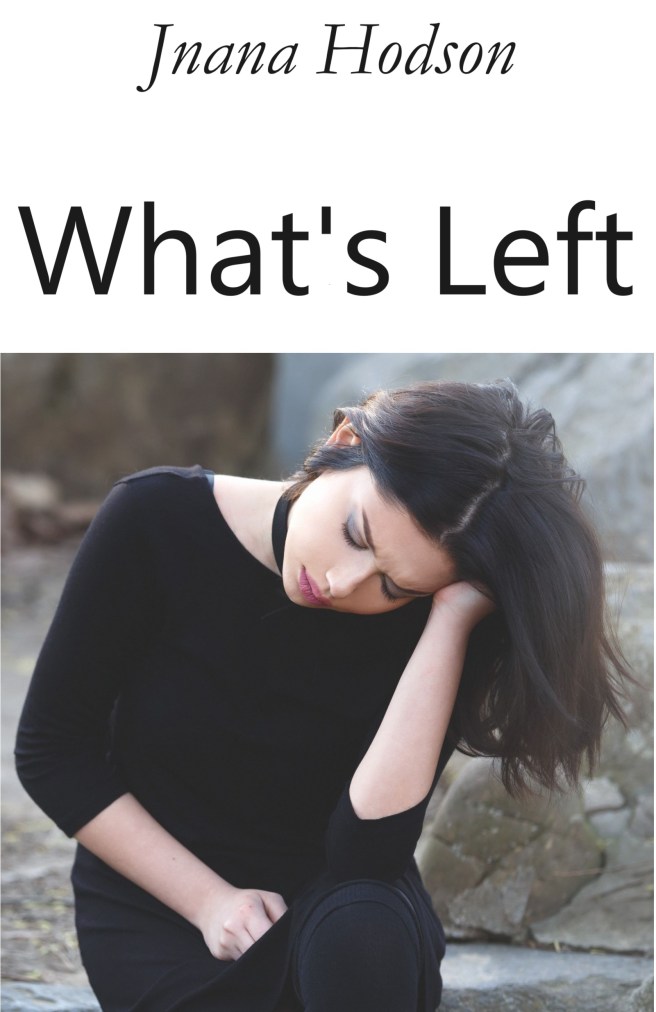
For more of what they present, look to the Cassia’s World category here at the Red Barn or to the novel, What’s Left, which is available in the digital platform of your choice at Smashwords, the Apple Store, Barnes & Noble’s Nook, Scribd, Sony’s Kobo, and other fine ebook retailers. It’s also available in paper and Kindle at Amazon, or you can ask your local library to obtain it.
 

Along with the emergence of a personal voice and style

Preparing my collections of poetry for release, as well as the shorter chapbooks appearing at my Thistle Finch editions blog, has been eye-opening, especially after spending so much time concentrating on the novels.

A lot has changed in my half-century at this. At first glance, my work has seemed to shoot off in every direction. But then, in spite of that, commonalities appear. Some of them, to some extent, apply to both the prose and poetry.

Despite all of the changes in my life and the differing approaches of my writing that accompanied that, I believe some underlying qualities run through my output.

Here goes, mostly from notes to self from way back and up:

  • No tolerance for fluff. Anti-romantic. Playful twists are another matter.
  • My quest for accuracy has invoked sharp focus – despite the blur and whirl of my own life.
  • I’ve relied on flashes, gathering. Like snowfall, curiously. A burst of storm, however brief or long the season.
  • Surrealism & absurdity can be more accurate than what’s seen on the surface.
  • Jagged and leaping make sparks, akin to my Kinisi here at the Barn.
  • As for what makes my work unique? What makes me unique? (My niche?)
  • In much of my writing, I’ve mapped organic geo-history, the overlapping energies of a locale and its spirit(s), as truthfully as I can, however fragmentary the result. Personal relationships, including marriage, hover within these landscapes, even as their own physical places as well as spiritual, influencing and influenced by the larger ecosystem. I try to comprehend this within a concern for the larger, more timeless harmony (Logos).
  • My investigation of invisible vibrations of specific landscapes has led me to cherish alternative cultures that embody healing energies – Native practices, Amish, Mennonite, Quaker, and so on – in contrast to our increasingly rootless, violent, unstable society at large.
  • An awareness of the wonder of the universe and an appreciation for our own unique places within it. Out of that, roots, a radiance of peace, and the sustaining nurture of a community of kindred souls.
  • Mine is a unique, distinctive name reflecting my originality (or eccentricities) in bridging many diverse currents. My writings, as I see them, are tightly compressed, radiating clarity, and highly polished with a raw edge.
  • What’s my trademark, my signature touch?
  • Starting with poetry:
  • Distillation. Compression. Radiance.
  • Lean and polished lines.
  • An aversion to formal forms.
  • A rejection of poetry as a hidden code requiring an interpreter.
  • A preference for allowing the images and details to speak for themselves.
  • Delight in allowing the individual reader’s interpretation to unfold on its own.
  • The land and the girl / spiritual landscape / the girl in a spiritual landscape. Somehow, they overlap.
  • An unexpected snap in each line. (Thus, lines long enough for something to happen.)
  • Silences as positive openings.
  • Writing as a means of discovery and deepened memory, more than to embellish or escape.
  • As a journalist, my touchstones have been Accurate, Informative, Useful, and Entertaining. I wonder how those apply to poetry, too.
  • To honor life and its wellspring.
  • Writing as an act of gratitude and humility.
  • To be audacious without subterfuge or scrabble or sleight-of-hand.
  • To be enterprising without deception.
  • To be daring without falsification / ruse / trickery or bombast.
  • Much of my writing emerges as an attempt to record and investigate the Hidden Way as it has opened and shaped my life. Often unconventional, prompting experimental inquiry, this unfolding has led me to its ancient roots and traditions, which in turn provoke contemporary responses.

And the fiction? You can add:

  • That aversion to formula or genre, especially when it comes to marketing.
  • A preference for allowing the images and details to speak for themselves.
  • I write to discover, and to remember, more than to embellish or escape.
  • As a newspaper editor, I have often found daily journalism to be better written than many of the novels and other books that crossed my desk.
  • An awareness of the artifice of linear, rational exposition and development. How do we get beyond that?
  • Deep Image is not confined to poetry.
  • Life as an experiment. So much variability with the basic laws and given conditions.
  • I’ve relied on flashes, gathering. Like snowfall, curiously. A burst of storm, however brief or long the season. Or even confetti or a ticker-tape parade.
  • I’ve preferred discovery to fabrication. Accuracy to cleverness. Mandala engagement over private code. What is brought forth in each individual reflecting on the icon, from deep personal experience, rather than the artifact itself.

Well, that’s how I’ve defined my efforts over time. Sometimes the results do startle me, all these years later. And some of my results come closer to my ideals than others, not that I’ll fault those, either.

~*~

You can my works in the digital platform of your choice at Smashwords, the Apple Store, Barnes & Noble’s Nook, Scribd, Sony’s Kobo, and other fine ebook retailers. Or you can ask your local library to obtain them.


Not every lover finds roses comforting

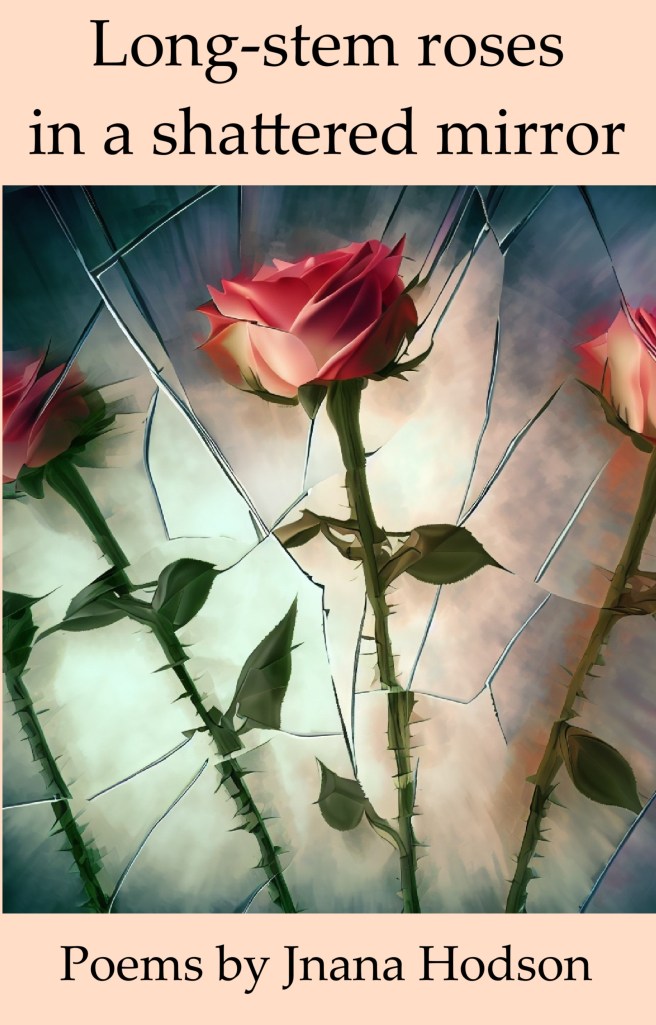
In support of that statement, let me offer Long-Stem Roses in a Shattered Mirror, my collection of poems released to the public today.

Think what happens when a hot relationship goes belly up and everything you trusted turns painful.

These poems arise in a brutally honest reevaluation of those interactions, as one of the lovers insisted on at the time, as well as the larger hopes and desires.

Many of the poems appeared in small-press literary magazines around the globe, but this is their first outing complete.

I have come a long, long way since, perhaps because of lessons I learned in these earlier relationships.  The poems remain intense, vivid, and powerfully moving, even at my age.

For my series of passionate roses, check out my collection in the digital platform of your choice at Smashwords.com and its affiliated online retailers. Or ask your public library to obtain it.