Do you understand  a Carlos Williams kind of morning?

Or even one along Puget Sound?

Slow rain outside, misty, foggy, nothing pressing to do, you just want to stay abed a while longer – or return after a leisurely hot shower. Maybe there’s some activity in the next room or down the hall, but it doesn’t matter.

Reminds me of a visit to a neighboring college back in Indiana, when I cracked open my poetry course assignment to an appropriate new vision – one of several breakthroughs that October weekend, actually. Savor another cup of coffee, reflect, recharge. You need those, at least in some proportion to the rest of your goals and life mission. Even if an ingrained Protestant work ethic guilt tries to kick in.

The fog around the island also reminds me of Washington state and visits to friends on the other side of the Cascades mountains. The same smoky indolence.

Do you have any memories of a special time or place of moody experiences like these?

Among our best guests in Dover

Once the renovations are finished in our old Cape, we’ll be looking to pick up where we left off in Dover, back before Covid interrupted travel and entertaining.

In no particular order, among the guests we remember fondly:

  1. Primary election volunteers who often slept on our floors, including a Congressional chief of staff, a British journalist, an authority on smallpox and anthrax, and Muslim college students from Detroit.
  2. Chinese college students doing volunteer internships.
  3. The quirky, queer, Quaker comedian and performance artist and Bible scholar. Seriously.
  4. The retired economics professor and Friends committee colleague.
  5. My usual roommate at Yearly Meeting sessions.
  6. My best friend from my high school year, despite my living on the wrong side of the tracks.
  7. My former landlords in the Happy Valley.
  8. The other Quaker among Baltimore Mennonites and his wife.
  9. The Passamaquoddy traditional healer and his apprentice.
  10. My goddaughter, most recently from Germany, and any of her friends, including the one who grew up to become mayor of a notable Maine city.

Who have been among your favorite guests?


A few memorable camping adventures in my life

I’ve mentioned the impact of my rogue Boy Scout troop on my life via hiking. Camping was related. We used homemade square tarpaulins – three rows of muslin our mothers sewed together that we then dyed and waterproofed.

Here’s the general idea for pitching a trail tent.

We called them “trail tents,” though “tarp tents” seems to be more universal. They could be set up in any number of ways – a two-sided triangle with the front open was most common, using a second one as the ground cloth – or in good weather we could even roll our sleeping bags into one and stretch out in the open.

We took pride in our primitive camping abilities.

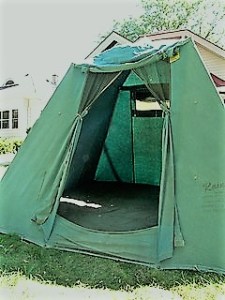
Our vintage umbrella tent was like this, with the poles inserted along the ridges inside.

My family, on the other hand, had a clumsy and often smelly “umbrella tent,” so named for the way you had to set it up from the inside and then remove the aluminum center post – well, they’re now called “cabin tents,” and apparently more flexible.

I inherited the tent and used it for many of my escapes in the Pacific Northwest, my complaints aside. It got a lot of miles over the years.

The result in either case was some memorable opportunities to get closer to nature. Among them:

  1. Family summer vacations at Indiana state parks, especially Spring Mill with its limestone caves; Natural Bridge in eastern Kentucky with its old railroad tunnel at the base of a mountain with a stone arch at the top; Mammoth Cave in Kentucky; and Lincoln’s Old Salem in Illinois.
  2. There was also a Florida trip we shared with a Chattanooga family Mom and Dad were fond of from his Army-Air Force days. At age 12, it was my first exposure to the ocean and a Southern belle a year or two older than me. Our trip back included a night 17 miles back from the highway in Okefenokee Swamp in Georgia, where we were surrounded by masses of mosquitoes, more than a few three-legged deer (the result of encounters with ‘gators), and raccoons that could open the doors to the porches of the camp headquarters and then raid the top-slider Coke coolers. Let’s say simply we heard a lot of eerie sounds in the darkness and escaped with our lives once the sun rose through the Spanish moss.
  3. My first time in a trail tent was shared with another neophyte. We proudly set up our tent, tying the front line to an Osage orange tree – I remember the strange color when we split firewood. Alas, a storm blew in during the middle of the night and pulled up some of our stakes. I rolled enough of the ground cloth around my sleeping bag to get through the night. Not so, Jackson. He nearly froze and his bag the next day must have weighed a hundred pounds. After that experience, I always checked the wind direction before deciding where to raise the tent.
  4. Another Scout outing, remembered vaguely, was in May or June in a farmer’s woodlot. It simply felt magical, nothing like a designated campground.
  5. Our troop joined one or two others in the summer at a site in Lake Vesuvius State Park near Ironton, Ohio. This time we used wall tents, but it was still primitive. The park had the remains of an early stone blast furnace, and we spent a day in rowboats exploring the lake. One fall, we returned to plant trees in a strip mine. I’ve hated that form of mining ever since.
  6. Out-of-state hiking trips also included overnights, usually two. I especially remember those of the Lincoln trails and others around Lexington, Kentucky. And there was the near-perfect night in Indiana when we rolled out under the stars only to be interrupted at midnight and having to hustle our gear under a nearby picnic pavilion when a harsh storm blew in. And then the rangers showed up and scolded our scoutmasters. But the next morning, and for much of our drive home, we saw tornado damage.
  7. Roan High Knob, at the end of our week on the Appalachian Trail, turned into a festive array of unconventional trail-tent setups. It was like a camel caravan had moved in. At least until the big thunderstorm and repeated deluges.
  8. Later, as an adult, there was a week circumnavigating the Olympic Peninsula, an event I celebrate in a longpoem.
  9. Also in Washington state, a week I spent in the North Cascades – where poet Gary Snyder, especially, wrote extensively as a forest fire lookout. Silver Star Mountain was especially memorable and worth a return with my then-wife.
  10. Another week in the North Cascades included time at the base of Mount Shuksan and Mount Baker. Washing my dishes in the small river, I recognized gold flecks in my bowl – not enough to pan, if I could, but the valley had been the scene of a big gold rush once upon a time. I also noticed that the river level kept rising through the day, a result of melting snow and glacier ice upstream, up above me.
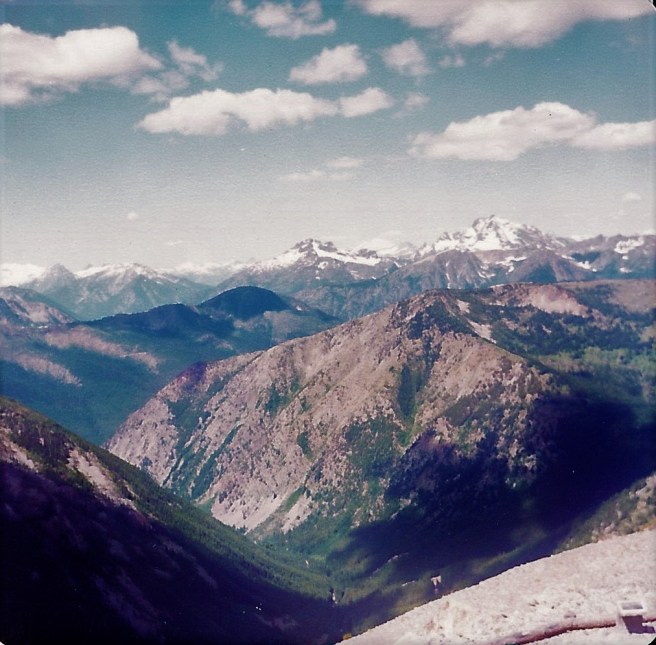
Imagine opening your tent flap and seeing this. I did, in the North Cascades.

Curiously, I haven’t camped since 1980, though there was a week I spent in a spartan, bare-bone cabin near Lake Sabago, Maine, in October ’99. That’s when I learned to canoe … and to steer clear of the middle of the water when it’s just me all alone.

My dream routine? Pre-Internet?

For decades, I dreamed of getting free from the demands of the newsroom – meaning any paying 9-to-5 job – so I could concentrate on what poet Gary Snyder aptly dubbed the Real Work.

That goal entailed something resembling financial independence, which was hardly likely on a journalism income.

As for 9-to-5? It never fit the places I was employed, sometimes straight salary for 60- to 70-hour weeks, and even when I’d left management and joined the union, it was typically nights and holidays or a double-shift on Saturdays.

I had hoped for a breakout via a bestseller book, and some of my non-fiction projects might have turned the trick, though I found it difficult to respond rapidly when I was tied down by other time-consuming obligations.

The closest I did come in those years was a year’s sabbatical I gave myself between jobs back in the mid-‘80s, when I submerged myself in drafting what later emerged as my novels, after much revision and the openings finally provided by ebook publication.

One thing I learned from that experiment was that I couldn’t continue at that pace – I required more balance in my life. My bank account wasn’t the only thing that was depleted.

One of my annual exercises after that involved setting goals for the year ahead, usually by season. The categories included things like Home, Relationships, Creative Projects, and Quaker Practice – I’m starting to see a forerunner of the Red Barn, eerily – but also had me thinking about how my daily life might look if I ever “made it” as an independent writer.

Part of the impetus was a fear of letting my life just kind of ooze away. I suppose it goes back to some of the sermons heard in my youth, the ones about time being God’s gift to us.

In response, how much could I rely on a tight daily routine, starting with an early morning rise for meditation and then hatha yoga before a light brunch and maybe an hour with the Boston Globe and the local paper followed by a big block for writing and supporting activities?

That thinking was countered by a recognition that I couldn’t fit everything I desired into straight days, so I also played with chunks of time staggered through the week – Topic A on Mondays and Wednesdays, for example, with Project K late on Wednesday.

And then, I still couldn’t fit everything in.

After I’d remarried, my wife caught one sight of one of my schemata and reacted with scorn. She saw so much daily reality I wasn’t including, such as cooking, cleaning, gardening, time for others, and even myself.

Now that retirement has finally provided the independence I sought, I’m having to admit I still haven’t achieved that ideal, intentional scheduling. Instead, so much has revolved around big projects like the novels and random to-do lists.

Still, it built upon the bones of daily Spanish lessons and half-mile swimming and a weekly commute to Boston for choir practice, in addition to Quaker worship and committee work.

But then Covid hit, followed by the move to Maine.

Quite simply, I still haven’t hit on the balanced pace. Maybe now, that the last book’s in place? Or maybe after I stop blogging intensely?

The biggest surprise for me in all of this is how much the Internet has changed the picture. I want the early quiet of those early hours for my writing and revising. What happened to the meditation? As for regular exercise? The nearest indoor pool is in Canada. Or for spreading out with a newspaper? I do most of my reading online, even books, no matter how much I love ink on paper. Even interacting with others occurs largely via email.

One thing I don’t feel is “retired,” but I will say in all of this I feel more engaged than ever.

Naturally, that won’t stop me from tinkering with a routine. I’m sure whatever I come up with will be far superior than what the nursing home would arrange.

How do you arrange your days and weeks? Any secrets to share?


A few life lessons

Pack light, run, get out of the way.
I learned that in Boy Scouts.

Much later, that you have to take care of yourself first
before all the complications in whatever role as a parent.

Much less the seed catalogue
midterms or finals.

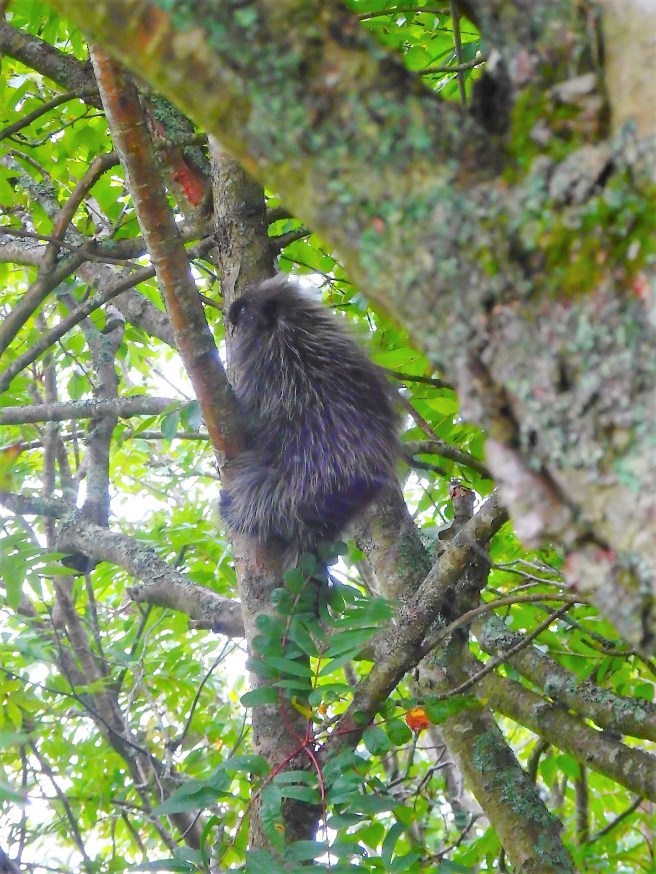
Porcupine climbing a tree at Quoddy Head State Park. Seems to embody a few life lessons too.

A few things I had hoped to do with Friends Meeting but never quite got around to

The position of clerk in a Quaker Meeting is akin to being president or chairman, except that you’re not the boss. Historically, it was more like being clerk in a courtroom, recording decisions from a judge in the bench above – in this case, Christ or, if you prefer, Light. For Friends of a less Biblical bent, things get more tangled and less focused, at least my perspective.

A Meeting in the Society of Friends, as we’re more formally known, whether of the open, traditionally “silent” worship like mine or of the more widespread pastoral “programmed” variety, has a presiding clerk as well as a recording clerk for its monthly business sessions, as well as a clerk for each of its committees. The Monthly Meetings are then grouped in neighboring Quarterly Meetings, which gather four times a year and have a similar structure, and are then joined together as regional Yearly Meetings that have annual gatherings – and that’s it for hierarchy. There’s a lot of work to do, just as there is in any family.

In my strand of the Quaker world, we don’t have a pastor but we often expect the clerk to fill many of the functions, sometimes everything except preaching or praying aloud on Sundays. I was detailed those expectations in an article published in Quaker Life magazine. In theory, you’re more of a moderator. In reality, you’re the first person the others turn to when a light bulb is out, the key to the door’s missing, or the fire alarm’s going off in the meetinghouse after a power outage. As for real emergencies?

As I’ve observed, there’s a lot of burnout, usually after two years.

I tried to pace myself accordingly in the six years I served as Quarterly Meeting clerk and the five at the head of Monthly Meeting as well as the nine or so I was a member of the Yearly Meeting’s Ministry and Counsel committee.

Along the way, I’ve come to admire some amazingly skilled clerks as well as pastors, priests, and rabbis in the wider community. Few of us, I should note, are really trained in this matter of dealing with people or institutions, and most of us would rather be fine-tuning theology of one sort or another.

~*~

As I entered retirement, I felt a curious softening in my personal Quaker identity. Part of it was a consequence of finally having lived with children, in addition to a spouse’s input. Ours never did run along the lines of a Quaker Meeting, as I had once idealistically envisioned. (I would like to be able to go back to interview the now-grown children of a few families I had known who proclaimed “Jesus is the head of this household” to discover how well that had worked, usually in rural settings.)

By the time I left full-time employment, I realized there was no previous period in Friends history where I would have fit in comfortably. I love the fine arts too much, for one thing. Nor could I go Plain today, though I had once flirted with it: the Plain dress and speech need to be part of a community, not of a lone ranger seen only as an eccentric or even scary. For a while, my beard was along the lines of Amish and Brethren, with no mustache, but once I had married, my wife found that look too severe.

I’ve rounded some corner into now. Wherever that is.

~*~

Lately, I’ve been sharing with you some reflections as I’ve been comparing my original plans for retirement with what’s actually happened in my life in the decade since leaving full-time employment. The review has included Quaker service as well.

Even before retiring, for instance, I had hoped to send out annual thank-you cards and letters, recognizing Friends for their service. Too often, that goes unacknowledged but still expected or even subtly demanded. I also wanted to invite the clerks and the other officers, such as the treasurer, and their partners to a big dinner, probably a cookout in our Smoking Garden in early summer. I envisioned something similar for the charter school board where my wife was chairman. Alas, these never happened.

Well, our big parties there had pretty much faded from the schedule as the years progressed and other demands crept in. We are hoping to resume them in our new locale, once the renovations and our full relocation are in place.

Something more ambitious was what I termed the Light Project. Prompted by questions asking, exactly, what Friends believe theologically, I had found myself connecting the dots in early Quaker thought and found myself facing an alternative Christianity, one they dared not articulate fully in the open. I’ve presented my take in four booklets you can download at my Thistle Finch blog, and I would love to hear your insights and reactions.

I had expected to be spending more time following up on these foundations, both in journal articles and traveling around the country to lead workshops and discussions, but Friends have had more pressing realities to contend with, as we found springing from the Trump administration and now Covid. On my end, revising and releasing my novels also deeply engaged me, bringing with them a feeling of personal satisfaction and accomplishment.

So, for now, my Light Project has rather fizzled out. Perhaps the release of my next book, a history of Dover Meeting and a wider counterculture in New England, will revive the Light Project, too.

~*~

Other unfinished business on my heart involves outreach, attracting like-minded souls to our legacy. Having a booth at community fairs was a start, as was an open house, but I was hoping to do more with the campus center at the neighboring state university, perhaps guiding a weekly “worship sharing” event or Quaker Quest series, as well as visiting more widely among other Friends Meetings and retreat centers, in a tradition called intervisitation.

And then there was hosting the monthly Poetry in the Meetinghouse series I mentioned earlier. It may have even been part of a cycle of weekly events that included folk music concerts, films and discussion, and a lecture.

Oh, my, the last item reminds me of something I had hoped to revive from the local religious leaders’ fellowship – their Cochecho Forum. Look up Bill Moyer’s Genesis project, which aired as a series on PBS, to see how I wanted to launch something similar through DARLA. It would have been exciting.

~*~

Well, revisiting all of this reminds me of an old Quaker adage, and perhaps find comfort in it: “Be careful not to outrun thy Guide.”
Some things I thought I’d take up in retirement but didn’t

Looking back on my pre-retirement visions, I’m facing the fact that much of what I had anticipated has instead fallen by the wayside.

Here we go.

  1. Meditation: First thing in the morning, just like the ashram. Instead, I go pretty straight to the computer and start writing or revising. The clarity of those early hours is treasured for creativity, rather than the wee hours of my earlier years.
  2. Hatha yoga: Along with chanting, hymns, or even Bible study that I anticipated in the calm of early morning. Nope, none of these have even made into the afternoon or evening, either.
  3. Fasting, mauna observance, retreats: Again, this would have sprung from my ashram roots. Fasting had been a one-day-a-week routine – no food, rather a restricted diet. Mauna was a period of non-speaking, which could initially be very difficult before turning liberating and enhancing. The idea of getting away from it all for a week at a time definitely deserves renewed consideration.
  4. Tennis: I never have figured out the scoring, but there were a few friends who seemed willing to teach, if I ever had time, so, hey, why not? . Alas, fate intervened and they were no longer able once I was open.
  5. Bicycling: My original regular-exercise option, this was about to take off (pardon the pun) just about the time our younger daughter decided she wanted her long-neglected, high-quality wheels to join her in Greater Boston. Here, I had just paid to have it tuned up and ready, too, and even purchased a helmet and lock. Admittedly, all those gears – which we didn’t have back when I was a kid – were rather intimidating.
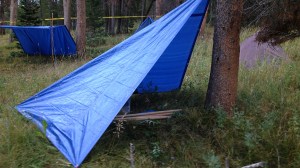
  6. Camping: I had purchased a tent and stored it in the loft of the barn, but when I finally pulled it down, it wouldn’t open – the weatherproofing had melted over the years.
  7. Hosting a monthly Poetry in the Meetinghouse series: There would have been a featured reader followed by an open reading.
  8. Travel: This fell away largely because of our budget but also because of the other things impinging on my time – the writing and revising, especially. Destinations would have included the annual Friends General Conference, writers’ conferences, Tanglewood concerts, as well as a return to the Pacific Northwest and then on to Alaska. There might also have been England, Ireland, Scotland, Alsace, and Switzerland, for genealogy. Italy, for opera and cuisine. Spain, Morocco, Japan, utter curiosity. Macedonia and Greece, retracing the trip my wife and elder daughter made a few years ago. More likely is visiting Quebec City, New Brunswick, Prince Edward Island, and Nova Scotia, all neighboring my current home.
  9. Boston weekends or midweek jaunts around New England: Again, mostly budget, even when it involved little more than an Amtrak senior-discount ticket. I could add visiting old friends around the country.
  10. A regular deep-reading routine: I am a booklover, after all, but am not checking off a book or two each week, much less one every day or two.

~*~

There are some other, more general, things I could add, such as taking up a social activist role after all those years of being stifled as a journalist, or specifics, such as getting serious about getting back to making and baking bread, as I did in the ashram, or forcing bulbs to bloom in the depth of winter.

And I likely won’t ever introduce my wife to the mountain laurels in full bloom along the Merrimack River at Newburyport, Massachusetts, or the springtime wonders of the Garden in the Woods in Framingham, west of Boston, now that we’re centering ourselves at the far eastern fringe of Maine.

One item especially amuses me – “second home (mountain lake or Maine island)?” The turns in our budget wound up ruling that out, but I am living on a Maine island now. You never know what might happen when you start sky-lining.


She was truly one of a kind

In reflecting recently on the Quaker tradition of creating memorial minutes for “weighty Friends,” I was surprised that one example I had never posted was of another clerk of our Dover Meeting. She was struck down by a particularly virulent, fast-moving cancer, and it’s hard to me to see that nearly five years have gone by since her passing.

There’s much more that I could tell, but the approved minute will give you a good sense of her vibrant character.

Jean V. Blickensderfer

November 11, 1946 – June 16, 2017

Among Dover Friends, Jean was the flash of gold in the morning, a welcoming soul others naturally confided in, a faithful worker who eventually filled nearly every organizational position – from children’s teacher and treasurer, to co-clerk and finally presiding clerk.

Raised Unitarian-Universalist in Methuen, Massachusetts, she came to Friends in the early ‘80s after she and her first husband, Dean L. Davis, had settled in Eliot, Maine, and were seeking the right church for a family that included daughters Thaedra May and Sarah Joy. They were quickly entrenched among us.

Jean was twice widowed.

She married Dean the day after his graduation from the Maine Maritime Academy in 1967, and then managed their home during his long assignments at sea. During his interludes ashore, they built their own post-and-beam house on the banks of the Piscataqua River and could often be found boating, sometimes to visit other Quakers upstream, or on his motorcycle, which they rode to Meeting in good weather. He died in a freak automobile collision in 1992, an accident his wife and daughters survived unscathed.

In 1998 she married Del Blickensderfer and worked as his partner at Del’s Service Station until his passing of lupus in 2006.

Deeply grateful for the mentoring she received from seasoned Friends, Jean was a stickler for Quaker process and, over time, became the memory of the Meeting’s business itself. She sought to walk a line between holding her tongue and being direct, when needed. A witness to the movement of Christ in our midst, Jean’s infrequent vocal ministry could be powerful. Her skills as a professional typist assured the Meeting’s minutes were of archival quality and, combined with her business-school training, led to the Blue Books for committees and their clerks detailing their responsibilities. She was particularly fond of drawing on the Advices and Queries from London Yearly Meeting’s 1994 edition of Quaker Faith and Practice as guideposts for our own action. An avid knitter, she took comfort in seeing others do needlework during our business deliberations, their patience reflecting the work before us. In time, a midweek knitting circle became what she called a “wicked good” time of refreshment, nurture, and fellowship.

More pressing obligations had precluded her attending yearly meeting sessions, a “bucket list” item she resolved to achieve. All along, she warmly welcomed the wider world of Friends to Dover.

Other delights in her life were yoga, visiting with neighbors, shopping and dining with dear friends, walking the beach, doting on her Pomeranian Sumi, and especially being with her grandson Jonah. His living in Albuquerque, New Mexico, did not prevent her from accompanying much of his childhood and youth, from celebrating birthdays and holidays to attending his piano recitals to cheering him on in mountain bicycle races, whenever she could.

In all, her presence, generosity, and deep and lively spirit were a gift.

With loved ones at her bedside through the final days of her cancer, she passed at age 70, peace and grace abundant.

APPROVED by Dover Monthly Meeting July 16, 2017, Charles Cox, clerk

 ENDORSED by Dover Quarterly Meeting July 31, 2017, at North Sandwich, Erik Cleven, clerk