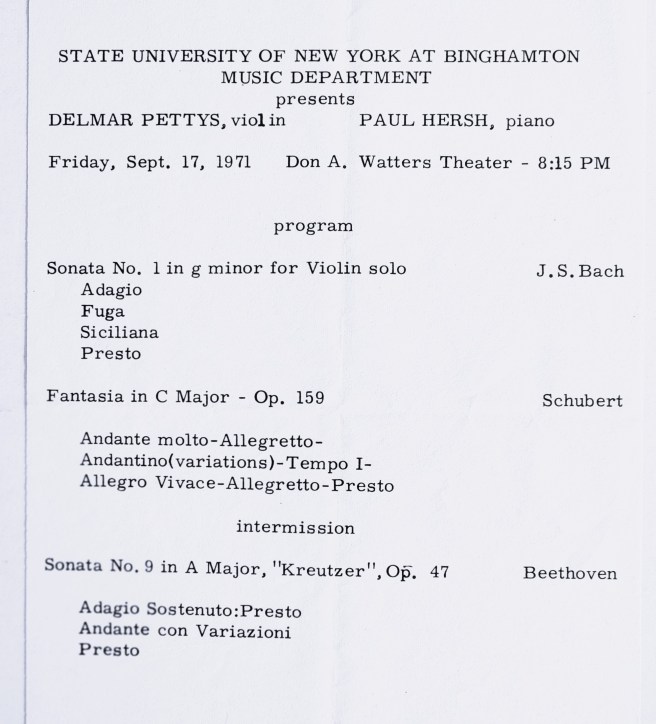
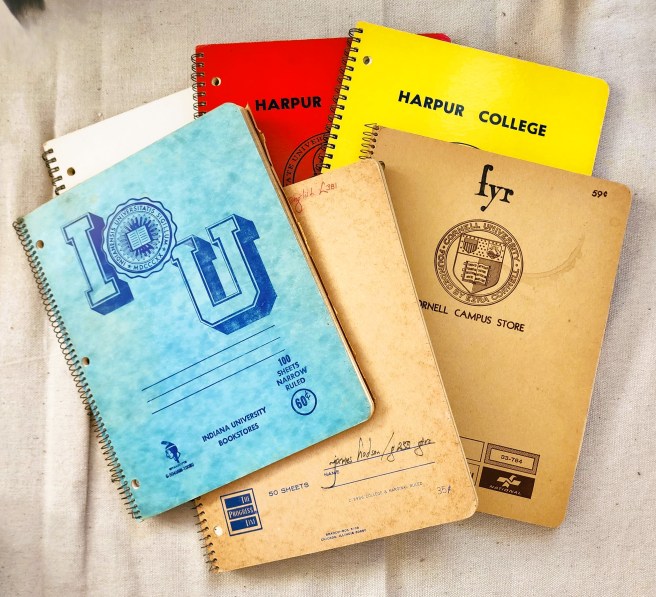
Sounding so dated now

RETAIL THERAPY: used books or classical/jazz/folk CDs.

WHAT IS YOUR FAVORITE HOTEL? To date, Omni, Providence, Rhode Island. Yes, over Boston, Chicago, and New York.

I’LL KNOW I HAVE IT MADE WHEN: I can rent a cottage by the sea or a mountain lake. Or I have grandchildren.

WHAT IS YOUR CURRENT PROJECT? Creating an author’s website and blog.

WHO WOULD YOU MOST LIKE TO INVITE TO DINNER? My agent or publisher. If only I had one.

UPCOMING: Retirement.

Notes from a Yule tree search in the woods

The tree the kid wants ain’t natchural! At least not the ones we’ve cut from the wild.

What we find in the woods are typically lopsided, with the growth mostly to one side. And they tend to be more open than full, which can have its own appeal when it comes to adding ornaments.

Not that she perceives that on her arrival from the metropolis.

She’s always been challenging and demanding.


In our longest nights

How long the day now? Our shortest is a mere 8¾ hours of visible sun if the clouds permit, barely a third of the 24-hour cycle.

Where I live, we’ve now reached the earliest sunsets. They’ll be inching later by the solstice.

Enjoy the long nights, then. Perhaps by a fire but especially in sleep. Or even out, bundled up, viewing Northern Lights and meteor showers.

Where is today’s local communication and shared identity?

Unlike many localities, Eastport has a fine newspaper, one that appears twice each month. It covers much of Washington County in Maine and Charlotte County in neighboring New Brunswick, Canada.

You get a good sense of the place from its pages. I can’t say that for many of the newspapers I’ve seen across the country, even when they were big moneymakers.

Living in out-of-the-spotlight localities, I’ve been sensitive to the nuances of each landscape and the people who inhabit there, not that I’ve often found them reflected in mass media outlets.

It’s not just newspapers or, for the most part, TV, though Northern Exposure did create the sense of one, especially with Chris Stevens as the disc jockey on KBHR radio.

I do sense that the lessening of local identity reflects the loss of local economic power centers, largely through corporate buyouts. The pharmacist no longer owns the drug store, nor does the local bank have its own president. The newspaper is part of a chain, as are most hospitals these days. The list goes on.

As I’ve explained, for many years, despite the arcane business structure in which advertising rather than sales of copies provided the bulk of the income, hometown newspapers were cash cows for their owners – who, in turn, paid their reporters and editors minimal wages.

The resulting management practices – reflecting those of surrounding corporate retailers and manufacturers – have put news coverage at risk, endangering both the communities and democracy itself. How will they, like the reporters and editors, survive?

Oh, yes, the big box stores – especially Walmart – rarely bought advertising space in the local paper, even while they squeezed the smaller retailers out of business. I remember one year when an economic downturn put five of our ten largest advertisers out of business.

~*~

Social media posts by amateurs may fill some of the gap, but there’s no substitute for fact-checking and other accuracy. Reporting and writing take time and devotion, not a given when you have a real job and family vying for attention.

And if you’re out there solo, who’s going to back you up when the topic at hand gets nasty? As it does, when corruption seeps in.

Anybody else feeling crushed?

From a Scroll of Improvisation

The premise: So much of my writing has resulted from distillation, revision, compression, and concision, often as a matter of collage or thesis/antithesis/ synthesis opposition and release.

The pieces of this scroll, in contrast, are envisioned as longer, free-flowing outbursts without structure or topic, a matter of simply letting the writing stream where and how it will. Perhaps my Dialogues are my closest antecedent, although I could throw in Ned Rorem’s journals or John Cage’s diary or Keith Jarrett’s solo improv concerts. I like the story about one of those performances, where Jarrett came out and sat for some time, unable to begin. As the audience grew restless, someone called out to the stage, “D sharp!” or some such; the pianist turned, said “Thank you,” and began.

While I anticipate these to emerge as prose, their spirit should be poetry. Whatever the key or time signature.

~*~

To start slowly, or even slow, with a single note. Not even a chord. A word or two, cryptically without context. Sit in place, melting.

Where was I, then? Or you?

De Tocqueville set out to define America, that is the United States, as some overriding commonalities. What conceit, though I suppose we might do the same regarding Europeans, as if Italians and Danes resemble each other in many ways. Yes, I boldly spent a week on the Olympic Peninsula followed by a couple of years digesting the place and its peoples. More recently, the decades of investigating New England have proved more elusive. Even my native Midwest is far more varied and nuanced than I would have suspected. Explore the world? My focus becomes more and more this place I inhabit along the Cocheco.

The falling water, splaying on rock below. The mills. My own small tract, now covered with new snow. Birds at the feeder. Skittering.

What do I know of anything? Of anyone? Just who am I, and how did I ever arrive here, with this woman and her daughters? All these squirrels and buried black walnuts.

Each shell, a note. Each snowflake, another. Cry out, unheard against the wind.

Yes, follow the money

Here, should you be curious, is the conclusion of my working paper about the future of publishing as seen about 50 years ago.

~*~

As I wrote at the time:

Another aspect is that many publishers have turned toward the textbook market, which is basically a monopolistic. As a result, textbooks are generally high-priced, & in hard-cover, which increases the cost.

It is cheaper for many libraries to buy the soft cover edition (if it is sewn & not glued) & to have their own binding put on than to purchase the over-priced, & profitable, hard-backed version. hard published guarantee a market of say 2,000 over two or three for the university (or

This takes us back to the early days of publishing (ie, pre-Industrial Revolution) when readers would buy their book in paperback & have their own, often elaborate, bindings secured at their own expense & taste.

Books in the mid-1700s in England were often published by individual bookstores & sold exclusively at there. Of course, this was a period in which the realm of lettered men numbered only a few thousand in the country. Have we returned to this kind of situation, in our own unique way?

Book clubs: eliminate the middle men: find an audience.

Distribution again. Is there sufficient range of former students & others so aligned that we could years for the students of these students? We could distribute informally, at a lower cost: we could have an official cost, with a built-in mark-up, bookstores. (IU charges Workshop an additional 50 cents for special ordering a book: we could do it cheaper.)

~*~

Storage & secretarial: additional infrastructure costs.

[There was nothing more here.]

~*~

To sell to students, we must keep the cost below 5 cents a page (or 2½  cents where pages are around 5 ½ by 8 inches .2 .5 cents) to beat many Xeroxes; in some places, the machines cost 10 cents.

But our recent experience in MAXing our newsletter at a cost that  rivals off-set presses makes me wonder if we beat pirating.

On the other hand, potential pirates must first be able to get their hands on the original material before it can be copied. Hence, some publishers may be planning to sell only library editions, in a fancy hardback, from which students & scholars will make their own copies at a lower cost. Maybe it takes us on to cheaper ways for publishing our own material, with the additional hope that a second photo-copying may be of such low quality that the user depending upon photocopy sustems will require two to four impressions a page, with careful glueing afterwards, to reconstruct the original in his own reproduction. This implies a non-photocopied original.

~*~

No labor union in this visual can guarantee a creator a decent return on his labor.

[And this was way before AI].

~*~

In drawing these diverse thoughts and problems together, it seems that the problems of distribution & the declining base of broad areas of literate concern go hand-in-hand. The rise of increasingly specialized audiences has failed to acknowledge the changing economics of publication & distribution, or the increasing difficulty of policing artistic property rights.

Linked with this has been an author’s work (Xerox, magnetic tape), which with it the paradox of filling specialized markets while undermining the very royalties that make it possible for most artists to work at all in these specialized endeavors. To reap the just rewards for his own labors, the artist is now required to seek means to reproduce & circulate his own work at lower cost than is possible for the pirates — a situation that I would assume, by definition, is impossible. However, there may be a can guarantee any artist a decent living, nor a thoughts together, it seems increasing ease of pirating carries few strategies left to the artist by which he can circumvent the pirates. These are a few areas of our concern.

~*~

What are the that artist/editors can form legal co-ops to ensure the protection of their own property rights?

What are the possibilities & realities that artists/editors can form legal coops to ensure the protection of their own legal property rights?

~*~

One solution to the royalties problem could be derived from the action taken by musicians to deal with the spread of recorded music, especially on the airwaves. (We must remember that through most of the thirties, the radio networks, at least, were required, by either competition or internal decree, to rely upon only live music; changes in the economics of radio, however, brought about an onslaught of use of music.) The musicians formed two unions — ASCAP, or the Association of Songwriters, Composers, Artists, and Performers, and a rival BMI, Broadcast Music Incorporated; collect a flat fee from every station in the plays any of their works. Since policing the airwaves or relying upon station logs to determine music has been played would be prohibitive & encourage stations to falsify their records, a station plays a flat percentage of its gross or a negotiated fee, I’m not exactly sure which — but it pays that amount covered by the organization or plays nothing but its records. The collected fee is then divvied among the members.

The musicians had earlier formed the Fund or Performers Trust Fund or some such organization to counter the original inroads of records the creation of live music throughout the country. The funds collected on recording sessions (beyond the performer’s royalty) go into a fund that is distributed across the country to support concerts in the parks & so on.

A similar fee could be imposed upon all photocopying machines in the country, based on the assumption that every machine will be used at least once to copy material that is covered by copyright. The amount of the fee could be based upon the amount of usage recorded by the machine (Xerox, for example, keeps tabs on this), or on the amount of special supplies like ink or paper purchased.)

The collected fee could then be distributed among special groupings to support, physical science, and fine arts/literary journals. Poetry & fiction, by way of explanation, already receive some support from the Coordinating Council of Little Magazines, backed by National Endowment for the Humanities funds.

Although there would be the obvious difficulties in determining who would get what, at least somebody would be getting some return on their labor & a source for encouraging the unknown writers, the unknown researchers, could be established.

The courts, in several recent decisions, have said in effect that the decision is up to the legislatures and not the courts. Pending Congressional legislation would allow libraries to make one obviously not alleviate the difficulties of selective piracy.

This is where my ramblings end now.

~*~

Or so I said a half-century ago.

~*~

My, if I only received minimum wage plus interest for all the hours I’ve put into literary writings since then, I’d be rich.

You can find my works in the digital platform of your choice at Smashwords, the Apple Store, Barnes & Noble’s Nook, Scribd, Sony’s Kobo, and other fine ebook retailers. You can also ask your public library to obtain them.

Getting around the bottleneck

Here’s more from my working paper ”Thinking Thru the Future of Publishing” from 50 years ago. Your may want to substitute “email” or the like for “photocopy.”

~*~

As I wrote at the time:

Good Soviet writers, boxed out of publication at home by the official writers’ union, produce Samizdat or “self-published” editions that are hand-copied or mimeographed and passed under the table, sometimes as novels & volumes of poetry that sell for $50 or so a copy & are surreptitiously sold on street corners, often at personal risk from hand to hand.

Cheap photocopying opens an easier means of doing the same thing.

~*~

A turning point: How do we turn these obstacles to our advantage? How do we plan our strategies around the status quo?

~*~

As hinted earlier, the adventurous writer is often boxed out of circulation, as commercial and even university presses contend there is no money for poetry or fiction when they make no deep effort to nurture what they have. There is also a problem that there are generally few bookstores, & that more than 25 percent of all trade books sold in the nation are sold in the NYC area, where about 5 percent of the national population lives. It should also be noted that throughout much of the rest of the country, the bookstores that do exist are generally of a general sort, with very few stores devoted to special interests. Thus, it should be no surprise that San Francisco should be a major center of poetry, since there are a number of bookstores specializing in poetry there & PUBLISHING THEIR OWN SMALL editions.

In political science we face the same problem: It is very difficult to circulate to potential audiences. The high cost of most publication excludes small-circulation working papers, in most situations, altho Workshop is an exception. (And even here, the case is limited.)

To get into the professional journals requires time (delays of six months to a year being not uncommon), often followed by rejection. In addition, there are often the high costs (again) of typing & mailing, & the common need to revise to fit the particular styles & needs of specific journals.

~*~

Unlike many of the little magazines publishing poetry & fiction, which are often a personal thing carried out by an individual editor at his own expense for several issues, until the venture collapses under continued losses, the social science field appears to be frequently supported by professional associations or the prestige of particular schools. (Altho PG informs me this is not always the case; cf, Policy Studies Journal.)

Given the increasing appearance of photocopy “rip-offs,” will subsidy of artists/researchers become increasingly necessary?

In recent years federal money has helped to underwrite a number of little mags. Given the increasing use of photocopy subsidy of artists become increasingly necessary?

~*~

NN has mentioned that in chemistry, at least, a number of highly specialized journals are now being circulated & stored on microfiche. The approximate cost is 25 cents, altho the user must have access to a $200 reader. However, as NN points out, this should not be a problem for scientists willing to pay $600 for a calculator.

While scientists may possibilities of progress such as this, microfiche does have the disadvantage that it must be read at the reader: one cannot curl up in a cozy chair to read it by the fireside.

Also, because of its small size, the ability to steal such units becomes increasingly easy, unless libraries install elaborate request & check-out procedures for its use. (Use of the Lilly Library, with its padded doors, electronic locks, page users cards left in the stacks wherever books are removed, may be a good indication of the type of system necessary to sharply prevent theft.)

~*~

In poetry at least, for those few interested “in the feel of typescript,” one alternative is to issue single poems in broadside form, on large sheets carefully printed, using fine art paper & limited editions. Such versions, suitable for framing signed by the poet, often cost between one and 10 dollars.

Special editions of books can be arranged the same way, as collect items. be enthusiastic over the systems & group can be arranged the same way, as rich collector’s items.

~*~

On another hand, limited experiments have been performed in which groups of poets or novelists have banded together to get works into print. By forming a cooperative, in which a number of participant/patrons each contributes $200 or so to a common kitty, which is used to ensure the publication costs, the underwrite the costs of production until sales have replenished the kitty. A set of common pool rules is established, in which any one member can recoup his share of the fund at the time he decides to withdraw from the effort. A common committee is established to determine which works should be published.

In one case, a group of fiction writers in NYC have operated this way to produce a series of novels that have been distributed by one of the publishing houses (Dial?). So far, all of their volumes have sold out in the first edition, somewhere in the range of 8,000 to 10,000 copies.

In the other case, a group of poets in Minnesota, headed by Robert Bly, a widely respected & published poet, have banded together to issue a series of low-cost Minnesota-area poets, many of whom generally unknown. Because many of these writers do not yet have enough solid material to fill an entire volume on their own, the volumes have often been split between two or more poets. are young & generally unknown.

The circle has found enough of a market, including cultivation of high school libraries in the state, to make ends meet in their project.

~*~

The potential exists for such a method among the Public Choice circles. I do not know what the legal situation concerning such an arrangement would be, but we can discuss that. I would assume that we would have to set up some sorts of arrangements outside of the university structure if we were to operate in this manner. I don’t know.

~*~

Stay tuned for next week to see where this thinking leads.

You can find my works in the digital platform of your choice at Smashwords, the Apple Store, Barnes & Noble’s Nook, Scribd, Sony’s Kobo, and other fine ebook retailers. You can also ask your public library to obtain them.