Getting started at the paper — my early work

In the initial job description, if there had actually been one, I would have been doing some basic reporting, including the lead for Crossroads, the weekly religion tab section we ran on Saturdays.

I was also working nights and weekends, including one Saturday or Sunday night when I wound up in the copy desk slot rather the rim after Belcher handed it over to me after he had had it with superiors’ memos. We finished pasteup with one minute before the 12:30 deadline. I’m a whiz.

My basic schedule seems to have been day shifts, 10-7 tues-fri, then late weekend Saturdays while Gil’s in slot. So I do scrub work on advertising-driven special sections and love it … He’s appreciating my willingness and flexibility … he asked about weekend slot, “Kent was in Sat.” and then asked if I was comfortable there, adding he has plans … so things looking good (did new TV listings logo last night, it’s OK) …

One reporter’s husband had Keogh as his PhD chairman at IU… turns out Rash is the top man in his field in the country, yet one more humble Quaker in my exposure.

In retrospect, the early office was more conflicted than I recalled … my erratic hours did give me most Mondays off …

Kent’s big dream, with me being assigned much of the effort, was a weekly outdoors tab to be called Action Northwest. At this stretch, it was still in the early planning stage.

Essentially, I was learning the local ropes first.

~*~

From Spiralbound Cascadia with commentary.
 

So clear it could shatter a heart

The first three cuts on my first Joan Baez album (acquired in ’62 or ’63) were classic folksongs – “Silver Daggers,” “East Virginia,” and “Fare Thee Well.” Along with a few others, like “Wildwood Flower,” they exhibit a very moving quality that comes not so much from directed words (as in “calf with a mournful eye”) but from a sum that arises outside of the text.

The lyrics themselves are dry, compressed. The songs are best sung emotionally flat, with a childlike beauty and comprehension (or lack of it). Above all, there is a kind of detachment that makes the whole thing even more touching or eternal.

From Maynard Solomon’s album liner notes: “A remarkably compressed love story. … In its four short verses loom enough tragic characters to populate an 18th century novel … the haunting and mysterious opening verse, with its claim of historical authenticity and its foreboding of personal bereavement. … Perhaps its beauty comes from its biblical connotations, for the imagery of the closing verses is related to New Testament descriptions of the Last Judgment, and the song ends with a quotation from Mark (XII,20) – ‘Till all these things be done.’ … The seemingly obscure and disconnected text is emotionally fused. … Like many another favorite from North Carolina and its neighboring states, [it] has the strange quality of rejoicing as it laments, exulting as it weeps …”

I did not yet know my family roots in North Carolina, but I have taken this, internalized, as an ideal in my own writing that has followed, not that what’s followed has manifested that way over the years. Think, too, of how her material changed.


Off into another swirl

My journal entries from the Yakima years weave together — or more accurately jump among — a half-dozen major fronts in my life. In revisiting these in the upcoming postings, we’ll focus on one front at a time, hoping to gain a little more context of what was happening at the office, at home and my marriage, in the great outdoors, in my literary efforts, in my spiritual life especially as a Quaker, and with a grab bag of extras. The result will mean overlapping the chronology in advancing the timeline, but it’s the best I’m coming up with.

I should introduce Yakima, however briefly, by noting it’s the name of the River and Valley, the County, the City, the Avenue. Sometime after we left, the tribe and its large reservation altered its spelling to set itself apart from all of these other usages. They use Yakama, rather than Yakima. Fair ‘nuff.

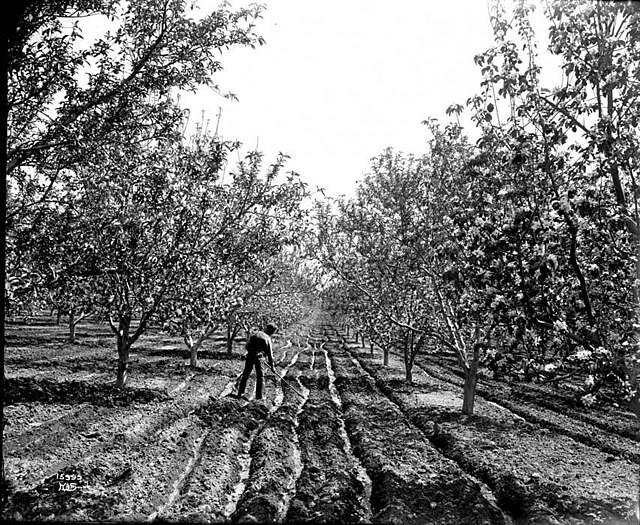
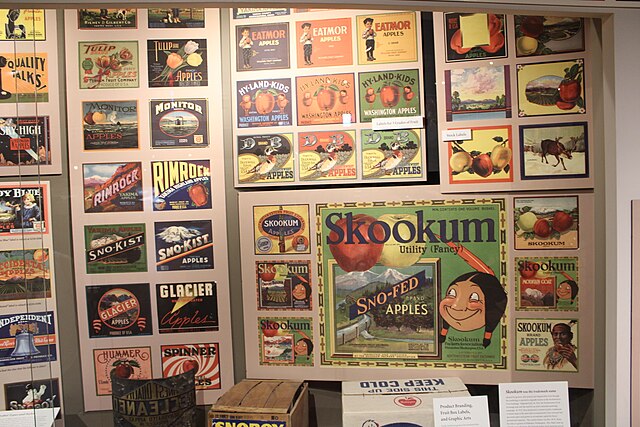
Hardly anything grows without irrigation, so water becomes a significant consideration. The economy is principally agricultural — a fifth of the apples sold in the U.S. are raised there, with another fifth in Wenatchee County to the north. Peaches, pears, apricots, cherries, and plums are also prominent, as well as hops for beer brewing, barley, hay, and, after we left, wine vineyards. Cattle, sheep, and horses were the primary livestock, and logging was also a major industry.

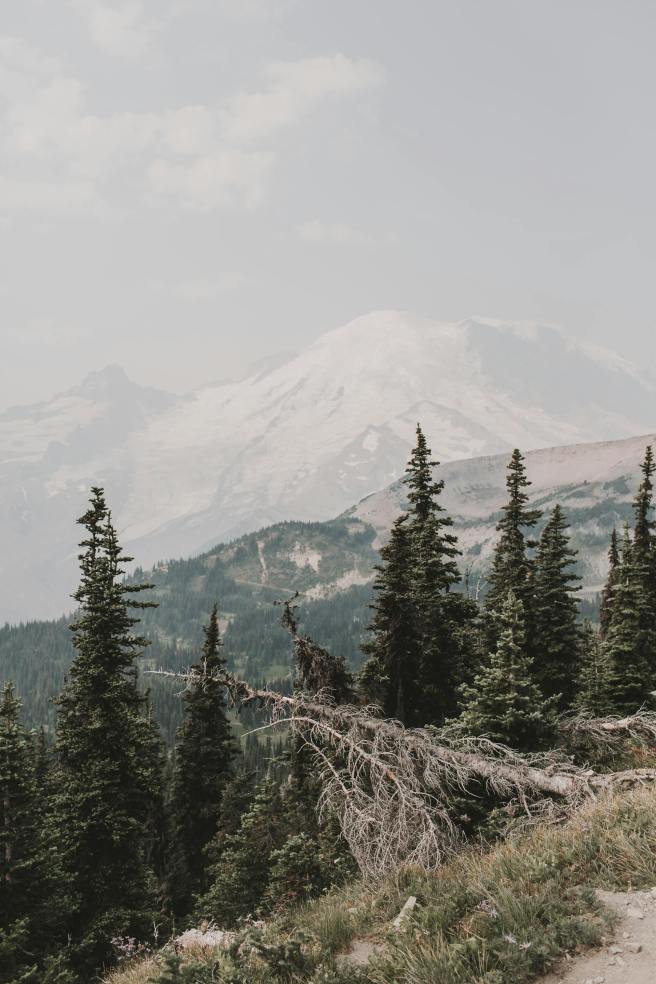
It was unlike anyplace I had ever been before. Amazing photo by Tom Fisk at Pexels.

Getting used to the arid landscape was a challenge … “like living on the inside of an ashtray,” as I read somewhere, describing another interior Far West scene.

The big snowy mountain to the west, which we could view almost everywhere, was Mount Adams, which we initially confused with Mount Rainier, which was visible from a few points.

Steve Groom via Wikimedia Commons.

Politically and socially, it was conservative, yet participated in a high level of collective action. Perhaps it was pragmatic more than ideological at the core.

~*~

Produce, produce
clear dry air
and everyone a gardener

 I just hope this elation lasts.

~*~

Here goes!

~*~

From Spiralbound Cascadia with commentary.


One thing I did note was things I threw out in the move

It’s amazing how much piles up in a short time. As they say about moving every five years to get clear of unneeded possessions? Here’s what went out in this relocation.

  • Newspapers pages from places I almost worked.
  • Notes to myself.
  • Narrow neckties, worn-out belts.
  • Love letters and photos.
  • A wooden finger. Yes, that one.
  • Rough drafts and manilla folders.
  • Torn-up mat board.
  • Crayons.
  • Cardboard boxes, wrapping, and stuffing paper.
  • A half ream of employment rejection letters.
  • Topographic maps of Monroe and Lawrence counties, Indiana.
  • Also, Catskills trails maps, Upstate New York.
  • Day campers’ cartoons of “Fat Steve.”
  • Duplicate copies of my college journalism or the embarrassing mistakes.

~*~

As I also noted:

After three months of unemployment, dejection, and waiting, we’ve made it … to Yakima, WA.

No Friends Meeting, but perhaps someday … Lord will make a way

~*~

From Spiralbound Cascadia with commentary.


The notebook covers themselves frame a story

As my Bloomington/Daffodil entries in this presentation became grouped by subject, rather than chronological order, we lost a sense of the progression of the notebooks themselves. Take a look now.

  • 18, Cornell Campus Store, 90 sheets, kraft cover. Undated. The Cornell spiral-bound lined volumes have wide margins, 3½ inches. My, how I loved those wide margins! Such luxury! Poetry drafts, early ashram experiences. A few bits saved for possible current poems now.
  • 19, Cornell Campus Store, 90 sheets, kraft cover. Undated. Let me repeat, these Cornell spiral-bound lined volumes have wide margins, 3½ inches. More poetry drafts, early ashram experiences. A few bits saved for possible current poems now. (How is it I had a stash of these varied campus notebooks?)
  • 20, Cornell, 90 sheets. Undated, except one entry in late November. “Swami Jnana-Devananda into winter: ashram.” Mostly quotes: Zen, Ginsberg, Hutterites, etc. Includes Swami’s return from first India trip. The onset of my ashram residency. 23:XI:71
  • Vol 21 Winter ’72: ashram. Begins with our first week-long seminar. Some really bizarre group action, both from the guests and the staff. includes trip to Ohio for Grandma’s funeral; she died June 21
  • Vol 22 summer ’72, ashram, and well into autumn. More tracings in the water / into Sannasyn, 8:VII:72 11:45 am.
  • Unnumbered red cover stenographer book, mostly October 1972. Includes trips to New York City and Binghamton.
  • Vol 23? Starts 23:XII:72 and ends with leaving ashram.
  • Vol 24? Miscellaneous, though where the pages fit in is uncertain now:
  • 24, Yellow Varsity. Has inner cover His Holiness Sri Swami Jnana-Devananda in the middle of Erewhon 22 January 1973. So my ashram residency ended earlier than I recalled …
  • 25, green Indiana cover, beginning 19 February ’73 in a Bloomington visit, then turning into the first of the Fostoria series. Some overlap with the previous volume.
  • 26, hunter green cover, beginning December 1973. Filed out of sequence, opening with many Tibetan notes. Three-inch left margins.
  • 27, blue IU (Aristotle’s Inc.), 23:III:73 on inside cover
  • 29, hunter green, 17:I:74, Fostoria. By now I’m dating the entries, in one of the new styles (colons or periods, depending). National Blank Book Company Holyoke, Mass. Wide margins!
  • 30, BGSU, 24:VII:74, Fostoria. Verge of marriage.
  • END OF CRATE 1: the plastic milk carton cubes, which were so handy in all of my moves from place to place and then turning into instant bookshelves later. Remember those?
  • 31, Hunter Green cover, begins 18:X:74 Another wide-margin notebook. Glory be!
  • 32, avocado green Penrite 4 Subject Divider Theme Book, 98 cents, 2409 W. Second St., Marion Indiana 46952. Undated entries, mostly stabs at verse and a few other notes in closing up in Fostoria and traipsing on to Bloomington. The last three divider sections remained blank.
  • 28, green Campus twin-wire, 59 cents, product of Mead Corporation, Dayton, Ohio. Out of order.

This does have me wondering if you saved any of your college notebooks or the like in your life journey to wherever you are now. What souvenirs have you kept? Or what have you intentionally discarded? Perhaps even with regrets later? Photos, letters, cards as well?

By the way, I hate to think what a spiralbound notebook costs nowadays.


First, to wrap up the Bloomington sojourn

“If thee needs anything and cannot find it, just come to me and I’ll tell thee how to get along without it.” — Etta Macy, Owen County, Quaker, in “Indiana’s Self-reliant Uplanders,” National Geographic, March 1976.

It’s something I’ve heard from others later, across the country.

~*~

Oh, my, one of my favorite off-the-cuff poems of all time wasn’t by the poet I’ve long attributed it to but rather our dear colleague, Richard Pflum. To wit: “In the garden / the women are pacing to and fro / speaking of fellatio.”

I stand corrected.

Reacting to an attack on “just folks poets” by an Iowa staffer in Kayak, criticizing those he looked down on in circles of poets who didn’t aspire to greatness but rather preferred comradery and “goodness.”

“All American poetry today sounds the same,” to which Paul Solyn replied, “not if you listen to it.”

“There aren’t any memorable lines in today’s work,” was equally glib. What was he expecting, advertising slogans? By the way, as one poet told me, “The lines I in my work I find most memorable, other readers don’t.”

[Gee, I found nothing about packing up everything or loading the U-Haul or farewells. Guess I was just too busy.]

~*~

Gleanings from my spiralbound journals plus commentary from now. . 

Northwest, Pacific Northwest, at last

The first of my extra-long spiral notebooks was a, Citadel, 8-by-12½ medium ruled with a 3-inch wide margin.

Begins on the new moon, 28 June 1976, “as we await our future.”

We were back house-sitting on Harrison Lake, just a sliver of that moon against caps of rosy storm clouds over the hardwood hills at the end of the water, one of a series of lakes backed into the first of the “Brown County mountains.” Elsie Sweeney’s palatial contemporary temple overlooked everything, facing the sunrise. [She was a spinster philanthropist from the Cummins diesel engine family.]

Also:

Nervous about job interview, Center for Law and Poverty. Bought new pants (fancy but I can live with them) and tie. Actually, for Yakima, if that works out but will do the dry run with this.

Indianapolis more active, dressier, cosmopolitan than I’d seen it before. The director was pretty mellow, surprisingly so. The job was $9,500 to $10,500 a year, with four-weeks’ vacation. I would have to develop contacts, write my own material, edit, etc. Doesn’t look too bad, if Yakima doesn’t come through. Some PR and video work, too.

Fourth of July fireworks in Woodsville, after worship in Waynesville earlier in the day. Different corners of the state.

The Quaker meetinghouse in Waynesville, Ohio, in a 1937 photo by E. Schrand and J. Mitchell via Wikimedia Commons.

Waynesville Quakers — Miami Monthly Meeting. The house of worship was built in 1810, during Madison’s administration. It originated with South Carolina Friends (Quakers) who nearly all relocated north in reaction to slaveholding. Many came first to Waynesville and then moved on within western Ohio and all of Indiana. Miami Monthly Meeting held their memberships until new meetings were established, resulting in Waynesville’s being the largest monthly meeting in all of Quakerdom by 1805 and explaining the large size of the house, with three rows of facing benches (the ministers and elders’ gallery). It’s the oldest meeting west of the Alleghenies. (A detail that may allow Friends in Tennessee some leeway.) The meeting was central to the Underground Railroad, I was told.

Worshiping there was a fine way to spend the Fourth of July 1976, the bicentennial of the nation.

Do note, the Underground Railroad was founded and organized in the South.


Followed by limbo

Feeling of hopelessness, of inutility, a faith-draining thing. This waiting, suspension, is costly: can’t send any poems out (mss), we don’t expect to be here long. Kat can’t sign up for summer school, we need the funds and must be prepared to run. Plus the energy lost sending our job applications, etc. the money in samples and resumes (a quarter each) and postage. “We’ll be back to you in a week,” the liars, so polite.

Waiting for mail that doesn’t come, telephones that do not ring.


And then the whirlwind

Weir Cook airport, same rotunda where I departed on my first-ever flight (the Florida Easter). Put together the details for the Yakima trip yesterday afternoon.

Sentimentality now about Daffodil/Bloomington. Figured out what’s bugged me: everyone is so slow — the farmer syndrome.

Is the Waynesville Meeting working its magic again? (The Fostoria job came through after I worshiped there …)

Can we afford the move ($1,000 loan from my parents?). Will all of our goods fit into an 18-foot U-Haul?

Washington state newspapers seem to have the fanciest letterheads: color print jobs, imaginative graphics. A good sign, it seems.

Bill and Mig stopped in Chicago, hoping to see his brother still alive. Instead, Bill arrived in time to conduct the funeral.

The interminable earwash of airport lounges. Last time I flew American to the Northwest was breaking up with Nicki.

Bob Suter’s advice: “Don’t stick your finger in front of any turtles”

Long trek at O’Hare to new international section — Customs and all the rest — not much traffic, empty inside — airlines share the gates — glassed-in halls within halls — was beginning to wonder if this flight was going on to Japan or if I had the wrong gate designation …

Midwestern farming towns, seen from the air: two parallel tracks cut through: one the highway, the other the railroad tracks Can hardly tell which is which, shining in sunlight: white concrete, white gravel, plus white blazing roofs.

2½ more hours to Seattle

Over central South Dakota, at 35,000 feet the outside temperature was minus 59 — Centigrade!

Flying over Billings, Helena, Great Falls — echoes of that futile trip to lure Nicki back … my first Far West exposure …

~*~

The sky scudded over from there. Only gray below me. But then, at one point, I looked down at something incomprehensible and amazing.

Rainier from above by Feed Me Paper at Wikimedia Commons.

Yes, we had flown directly over Mount Rainier and its glaciers.

~*~

As for the rest of the trip?

Don’t think things today could have gone much better. Spent six hours with Kent, the m.e. Lunch with him and Gil, the assistant m.e. (who was critical of some of my layouts with Marcy’s photos … and one pic I should have cropped). Gil telling about almost grabbing rattlesnakes beside lost golf balls … sluggish, unmoving bastards, sez he …

Good meeting with Human Resources, too. (Is the department always headed by a woman?)

A short meeting before I left. Accepted the offer, $260/week … more than double what I had been earning …

Sounds like I’ll be doing mostly editing, special sections and weekend news, as well as lead articles for Crossroads …

[I should note that this flight was also at my own expense. If the job had not come through, we would have been screwed.]


Back home

Received a letter from Indianapolis, no dice, as if everything were working with Divine plan …

Maybe they didn’t like my looks? You never know.

Indianapolis? I’d just as soon live in Scranton.

Got a few nice poetry rejection letters but mostly silence …

~*~

From my spiralbound journals, mostly. 

Some thoughts about the notebooks themselves …

As you’ve noticed, I fell into the practice of journaling rather haphazardly. At times compulsively, even. I started to say the “habit” of journaling, but it was rarely that effortless,

I was still in spiralbound volumes — eight years before a stretch of using hardbound sketchbooks followed by a return to spiralbounds before the hardbounds took hold a dozen years after the journal at hand.

No. 45, for those keeping track, was the first of the 8-by-12½-inch books I’ve truly appreciated. The added inch-and-a-half of length fit my hand and pen well, though not the bookshelves or the milk crates that generally wound up holding my journals.

Eventually, there were 17 of those in all, plus three fat softcover sketchbooks, 15 black-cover spiral sketchbooks, and three bargain thin hardbound journals nearly that tall. Thirty-eight in all, out of 200-plus. Why did that shape vanish from the market? Probably because I preferred them. I have long run contrarian to the marketplace, not exclusively involving my tall, skinny clothing size.

Somehow, I had thought that my legal-size notebooks started at the Cornell bookstore, but it now looks like my first ones were bought in Bloomington.

In looking up what’s called “legal pads” (as if the others are clandestine?), I find most today have shrunk to 11¾ inches height, though at least one exists at 8½ by 14 for those willing to pay a premium. And that’s not bound. As for filing those in storage cabinets? I’m not a lawyer nor a legal secretary. It no doubt requires special filing furniture.

~*~

The first third of the volume covered our final month-and-a-half in Bloomington, aka Daffodil, followed by my flight to the Pacific Northwest.

As I look ahead, I see pages that were used to draft and refine poems that found publication as well as other entries that more or less became fiction in my novel Nearly Canaan and the third novella in The Secret Side of Jaya.

I’ll skip over those in this series and instead look for the unexpected.


A few old newsroom notes

Reporter Jerry Handte, someone I saw as a grizzled old-timer. Threw the word “hardscrabble” at me in a story, one I didn’t know. Changed my perception of him.

AP’s middle-class conformity.

Contrived news stories, with formulated sentimental reactions: hippie story, Agnew story, dog or handicapped child story, medical/scientific breakthroughs, etc.

“Chimes,” the Evansville Courier’s wrap-up of church activities.

The Press won’t hire anyone else as long as it can slide by as it is.

~*~

The tug toward middle-class: security: keep job, get a degree, build retirement, home, house, and family. It’s gonna be so hard telling Mom and Dad I’m splitting.

I’m becoming like them: Don’t rock boat, don’t do deep fixes on stories, let it slide, why bother with better headlines and layouts, etc.