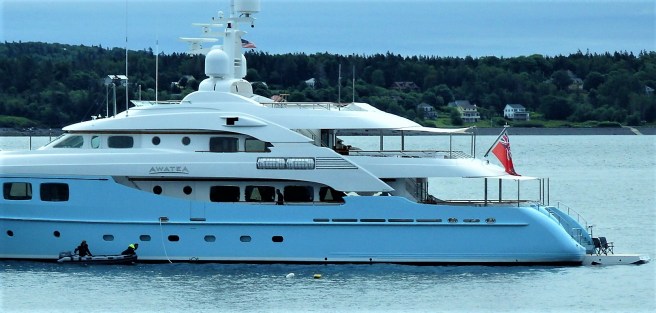
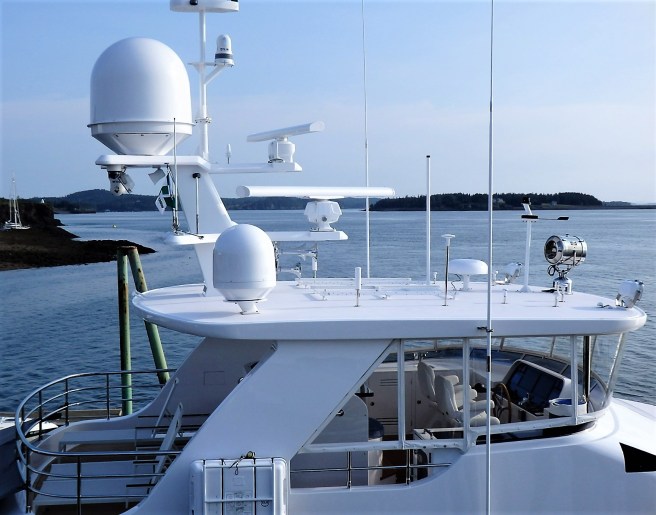
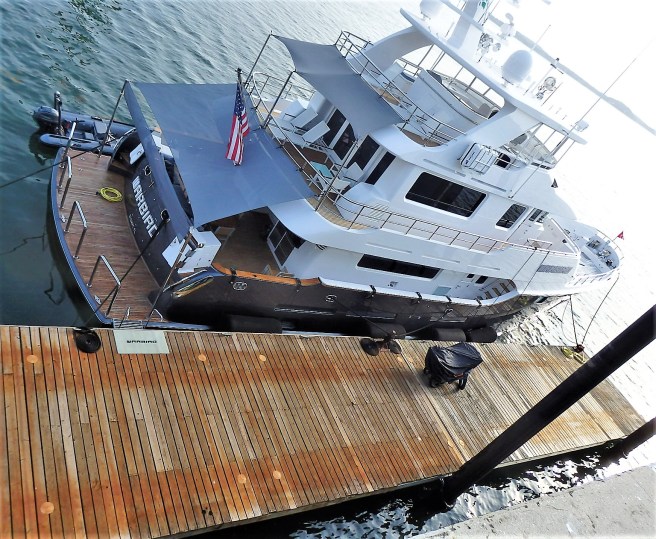
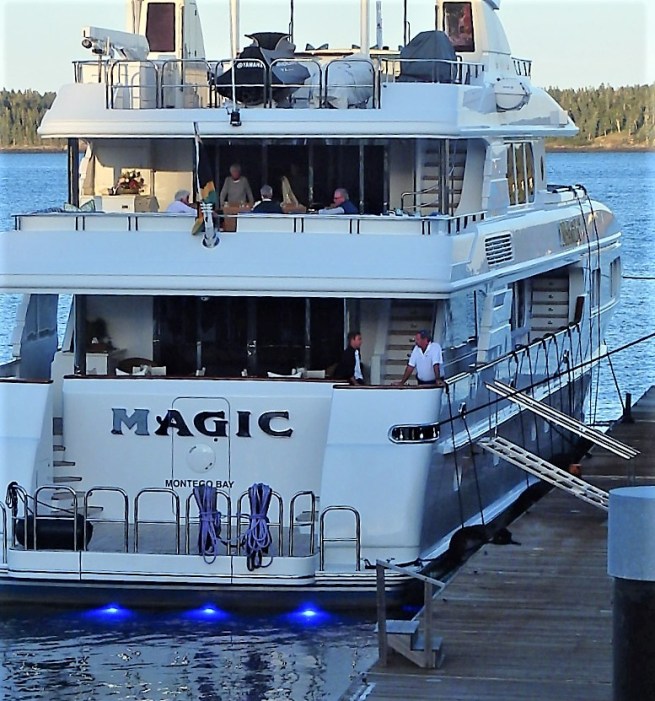
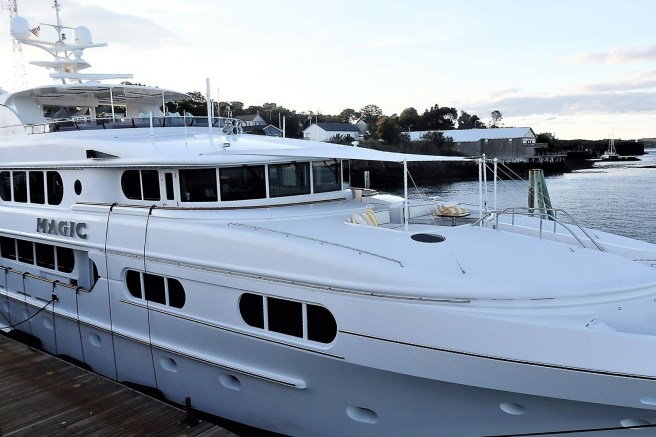
Each summer, a few superyachts make their way from the Bay of Fundy into Eastport and tie up for a night or two at the Breakwater pier downtown. They usually draw an envious gaggle, as well as pure curiosity and gossip.
I love the built-in love seat hidden by the pillar, although I wouldn’t mind one of those captain’s chairs for my workstation at home.The welcome mat was more for changing shoes to keep the interior clean. Note the bikes under the tarp, too.
Some of them even blog about their travels, referring to each other first-name only and touting the “good friends” they made in port.
Uh-huh.
Charters for $130,000 a week plus expenses and fees.It’s 130 feet long, holds ten guests in five room, takes a crew of seven, and cruises at 12 knots. The waitstaff was pretty impressive, even from a distance.Includes his and hers bathrooms in the master suite, a jacuzzi, and a gym.
Some are flagged in the USA, while others come by way of tax havens.
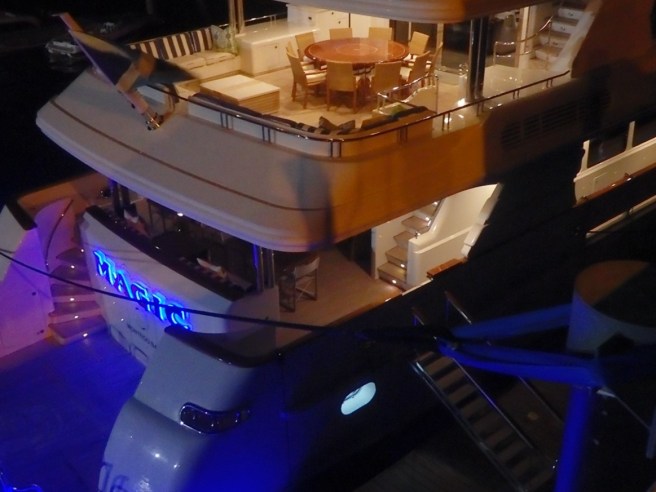
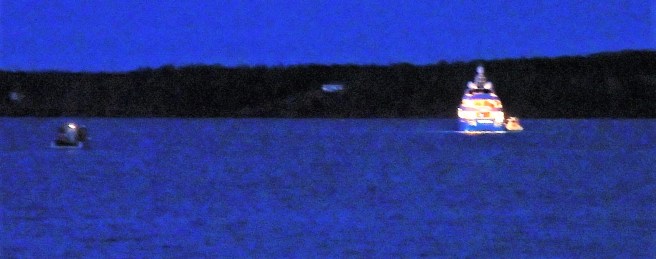
An evening cruise around the bay can put on the ritz.
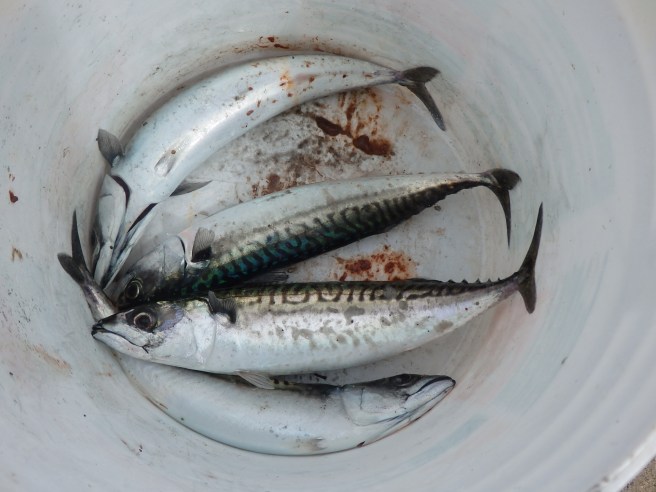
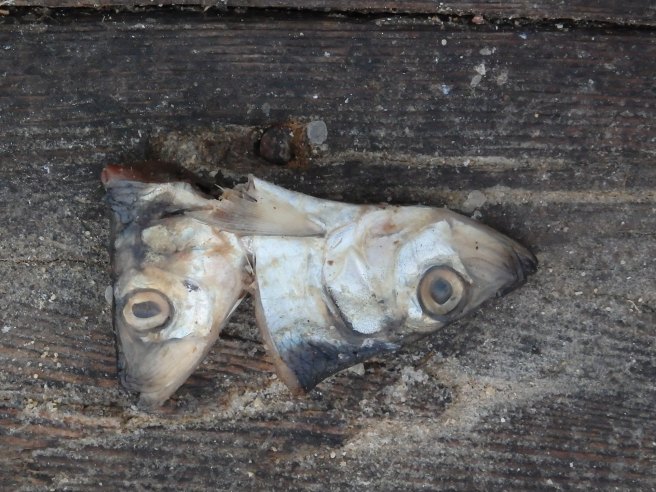
The humble mackerel – usually less than a pound apiece – is a popular fish caught around here. Its delicate nature means it doesn’t keep long, so for human consumption, it’s typically smoked for preservation. An oily fish, it tastes somewhat like salmon. More commonly, it’s used as bait in lobster traps.
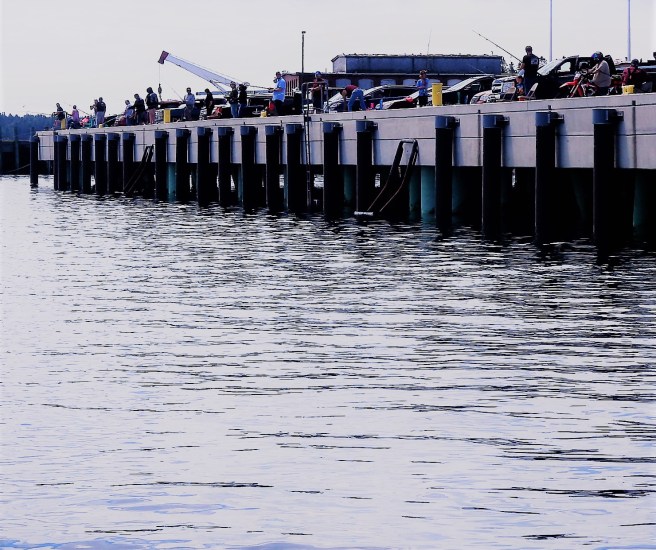
I think it’s a beautiful fish.The Breakwater is lined with fishermen.Two heads left on a pier, likely used as bait.
The Maine coast is 3,478 miles, not including islands. They raise the figure to 7,000 miles.
I live on an island.
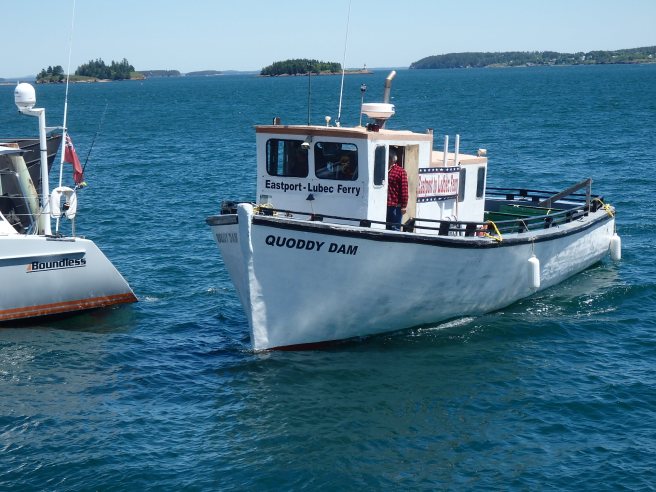
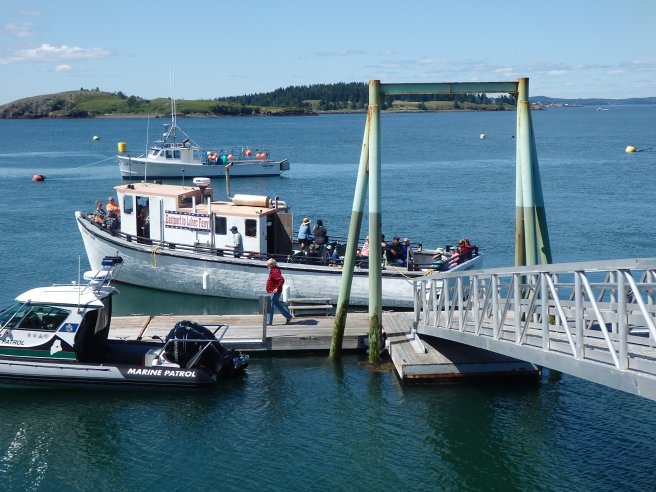
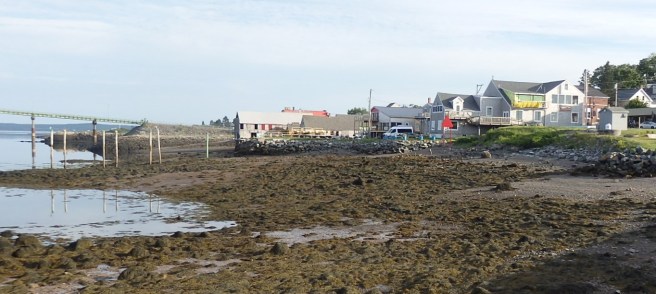
Just two miles away, as the crow flies, but an hour by land is the waterfront town of Lubec. One of the best ways for tourists to appreciate the coastal nature of Downeast is by taking the passenger ferry that runs between there and downtown Eastport. I promise you it’s much less crowded than Acadia.
We go down for a walkabout the town, a New Jersey-style pizza, and a sit in the brewpub’s beer garden. One day I watched seven gray seals cavort in the current. And then we catch a ride back, which runs along the other side of the channel from the one we followed down.
Folks from Lubec do something similar, including a stroll though Eastport’s art galleries.
Either way, you get fine insights the shoreline, history, and wildlife in a way you’d never get from land. There’s the Cargo Terminal, salmon farms, Roosevelt summer home, Treat Island. Maybe seals and eagles, too.
The ferry runs every two hours on Friday, Saturday, and Sunday, weather permitting.
The Quoddy Dam is a friendly little vessel, named as a joke about the federal project that was quickly jettisoned.
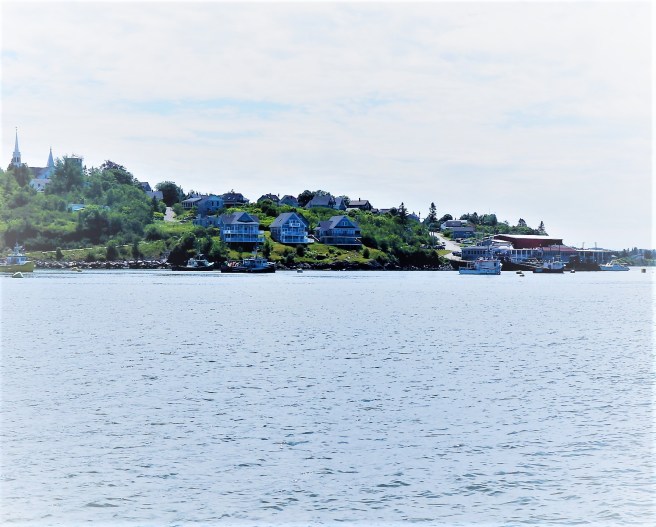
Approaching Lubec.
At the dock. Treat and Dudley islands are in the background, with Eastport sticking out to the right.
Getting to or from Eastport means driving through the Passamaquoddy’s Pleasant Point Reservation. And yes, I dutifully observe the 35 mile an hour speed limit. I also gladly pay the voluntary “toll” that helps fund the fireworks for the tribe’s annual festival. Besides, it’s a better bargain than a movie and, anyway, we’re all invited.
Having lived previously at the edge of the Yakama reservation in Washington state, I appreciate having an Indigenous population so close at hand.
Here are some things I’ve learned.
The first time I heard of the tribe was through a traditional healer and his apprentice who were our house guests maybe a dozen years ago back in Dover. And ever since, thanks to his warning, I never disrespect a mockingbird. Could that be why I’m still here?
The tribe generally proclaims itself as “people of the dawn” or even “keepers of the dawn.” I’ve already posted that the dawns around here – the first light in the USA – are unique and full of wonder. But the tribal name’s root reflects the importance of fishing in their culture – “pollock-spearer” or “those of the place where pollock are plentiful.”
Traditionally, for most of their 10,000 or more years, they summered in settled villages around the coasts and tributaries on both sides of the St. Croix River, where they harvested shellfish and worked the deep waters. In winter they dispersed inland, where they hunted large game.
Today their centers are Sipayak (the Pleasant Point Reservation adjoining Eastport), where 2,005 members are enrolled; Motahkomikuk (Indian Township an hour to the north), 1,364 members; and Qonasqamkuk in New Brunswick, 206. There are also uninhabited tribal tracts inland.
Economically, on-reservation families have a much higher poverty-income rate compared to Maine overall. The tribe is making efforts to improve income. A blueberry enterprise, a maple-syrup operation, and vacation sites are among its new directions.
About 500 people speak its Algonquian dialect. After a steep decline in numbers over recent decades, efforts to preserve and reclaim its use are under way. It is being taught in the elementary schools.
They’ve long been considered first-class loggers and woodworkers, as well as excellent basketry artists.
In 1993 the state banned the use of the word “Passamaquoddy” by businesses, products, and activities without the written authorization of the tribe. Those using it before that date, however, were exempted.
The tribe is one of four comprising the Wabanaki Confederacy today.
Joe Clabby’s two excellent histories about Eastport and the Passamaquoddy vicinity delineate seemingly endless governmental mismanagement, mistreatment, and betrayal of the tribe and others in Maine and the nation – even when its members have served with honor in the world wars. One entry, relatively minor in comparison, hits home for me. In 1950, longtime “Indian agent … Hiram Hall allowed the state to charge the Passamaquoddy Fund $8,000 per home for home construction (the homes are worth only $2,500.)” Not that it ended his career.
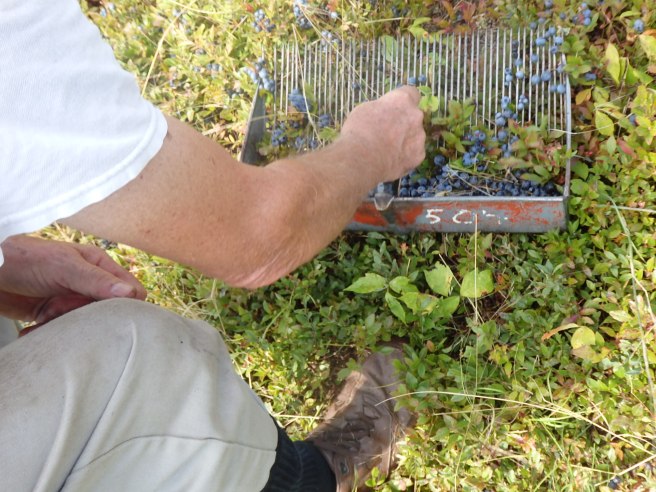
The handheld rake was invented in 1910. I can’t imagine trying to pick large quantities of blueberries without it.
What’s harvested by the ton in Washington County is not just blueberries, but wild blueberries – lowbush, laced with small pellets of complex, concentrated flavor, rather than the big, juicy, cultivated highbush kind.
What grows here, I’ll argue, is tastier and richer than the more coddled kind I had previously known and even grown.
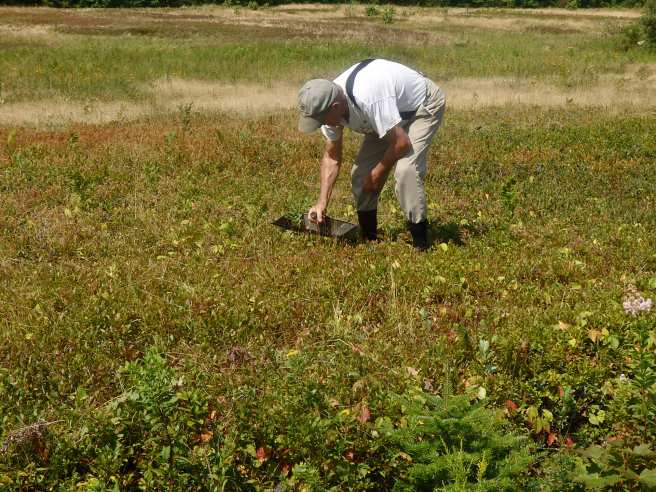
As you can see, traditional picking can be backbreaking work. But old-timers tell you it delivers better berries than the newer mechanized harvesters do.
Maine has a near monopoly in the production of the wild lowbush berries in the United States. Neighboring parts of Canada are also of note. Still, the output is only a fraction of what’s harvested from the domesticated highbush farmers in other states.
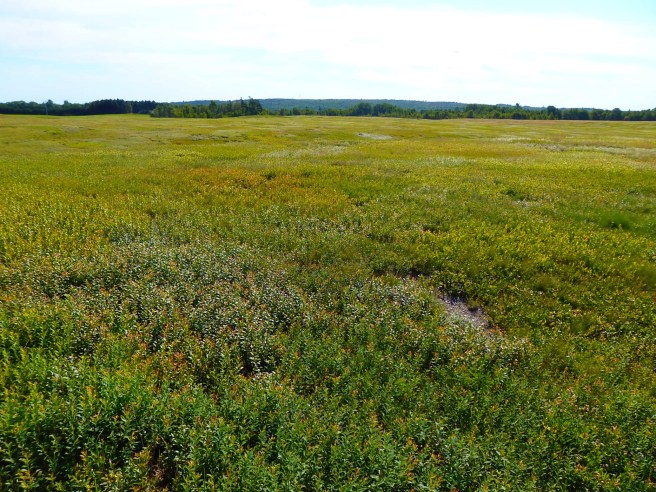
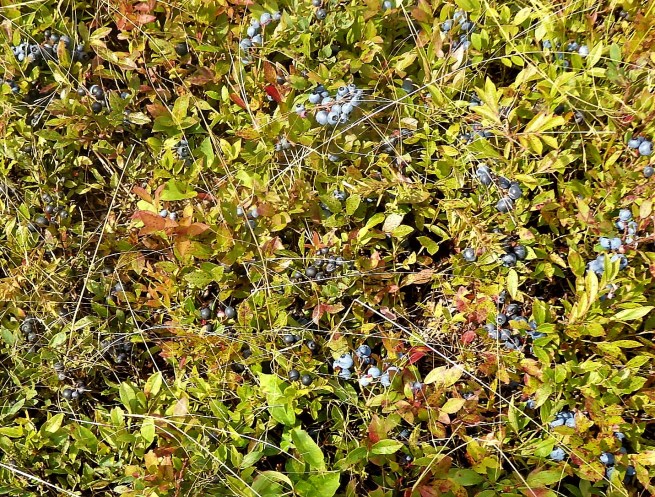
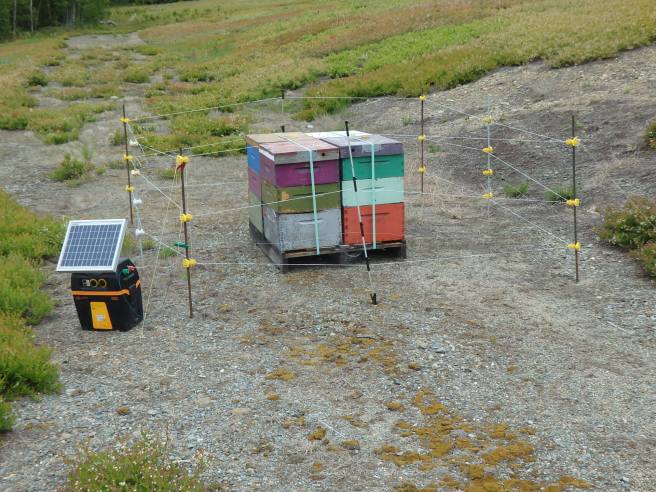
You can drive right past a blueberry barren like this and not know it’s loaded with ripe fruit.Here’s what a stop to look reveals.For a few weeks each spring, clusters of commercial honeybee hives are placed by the hundreds throughout the barrens. The electrical fencing is intended to keep bears out.
Just so you know.
What’s your favorite kind of berry? And your favorite way to eat (or drink) them?
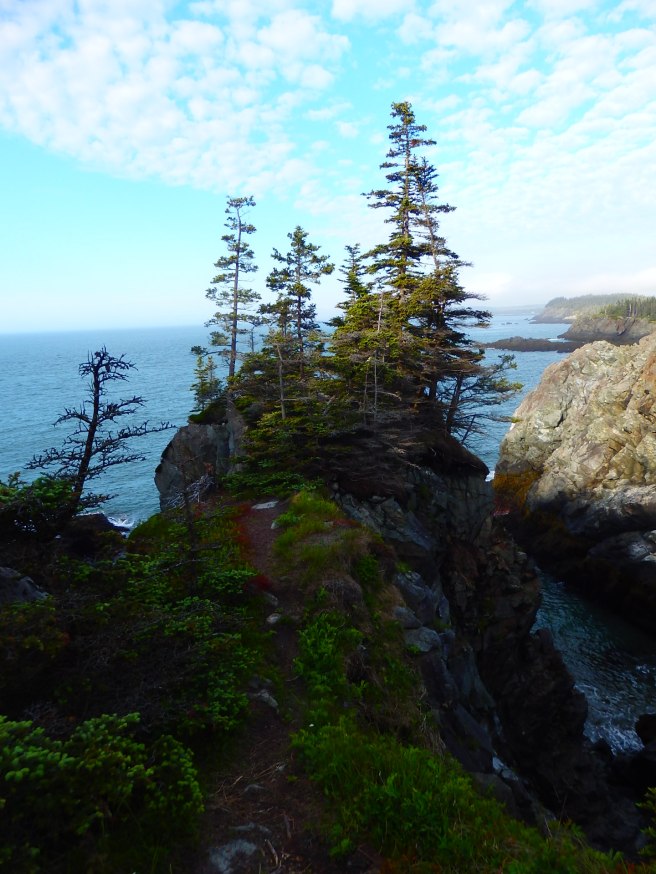
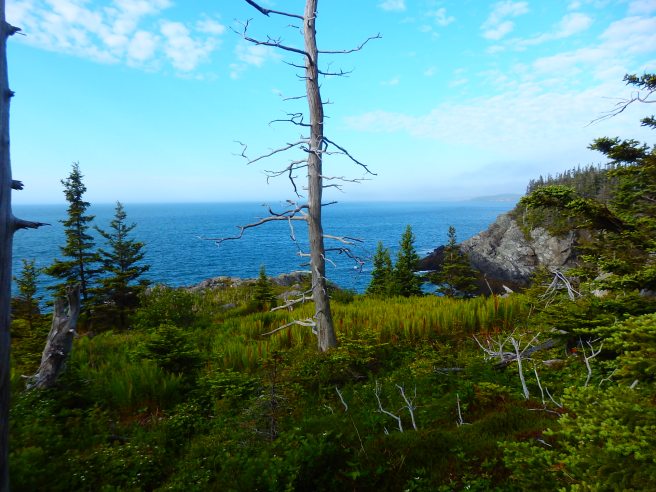
The day I shot these, I encountered only one other person in two hours … and that was just as I was leaving. Admittedly, I arrived around 7 as a foggy dawn lifted and then listened to a mournful foghorn in the neighboring Bailey’s Mistake cove much of the morning. How could I not be elated?
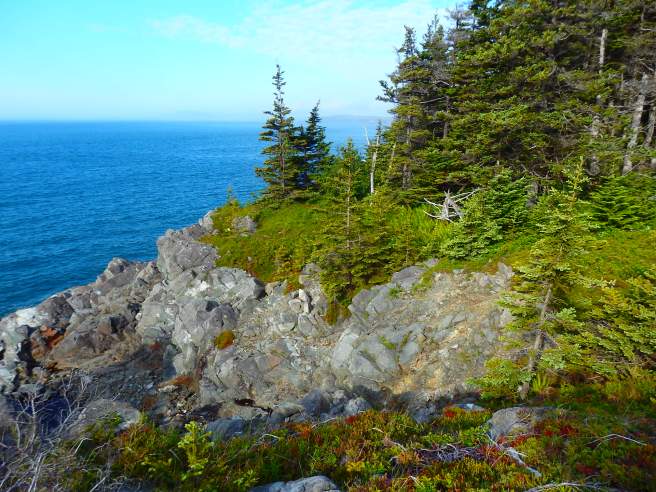
In 1988, the Maine Coastal Heritage Trust secured the property now known as Boot Head Preserve, saving it from a planned 35-lot subdivision and instead opening it to public enjoyment. It’s a gem that includes coastal hiking, a cove with a cobble beach, and an arctic peat bog.
Promise me you won’t tell anyone else.
Just six-tenths of a mile from the parking lot, the trail opens out on this.
And this.
And passes beside wild iris.
To this.
And this.
And then this.
It really does need a soundtrack of the ocean’s endless crests striking the rocks below.
Unlike the two most photographed and visited lighthouses around here – East Quoddy on Campobello Island, New Brunswick, and West Quoddy in Lubec, Maine, both of which have been featured here at the Barn – the remaining lighthouses I encounter locally are small-scale. They’re beacons, all right, but to call them houses may push the definition.
You be the judge. Here they are.
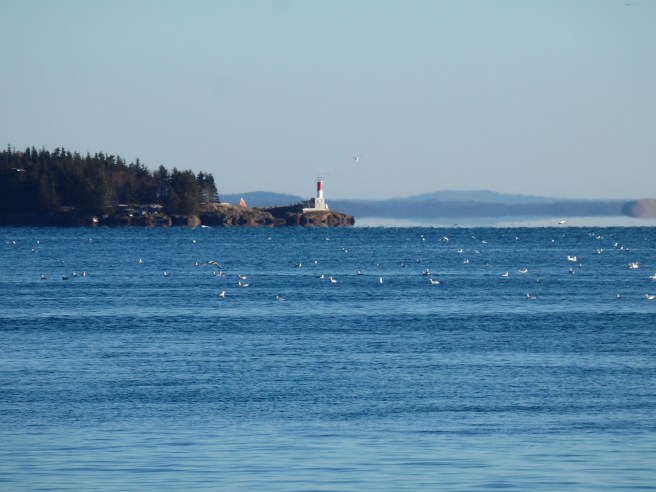
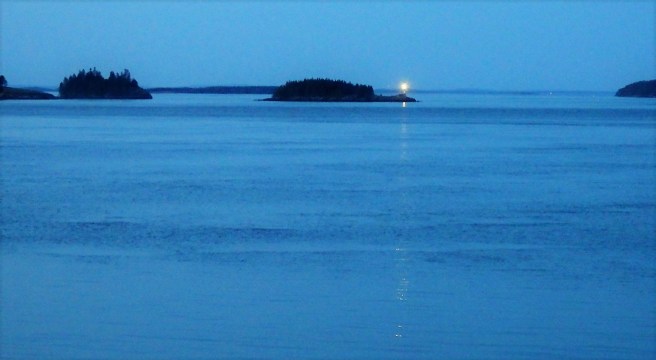
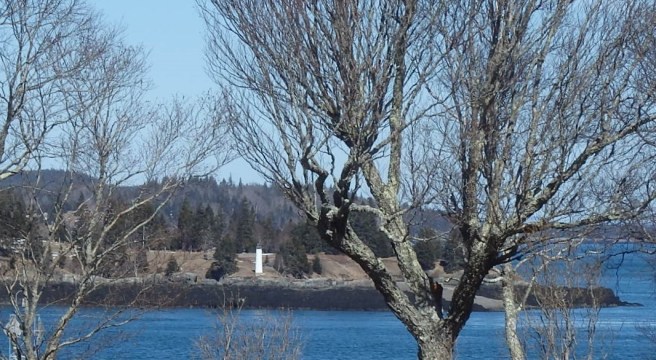
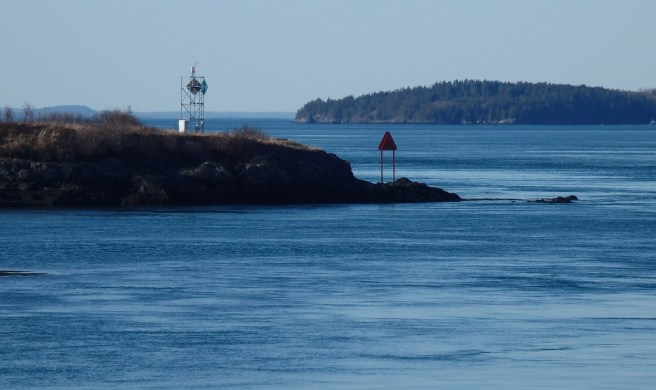
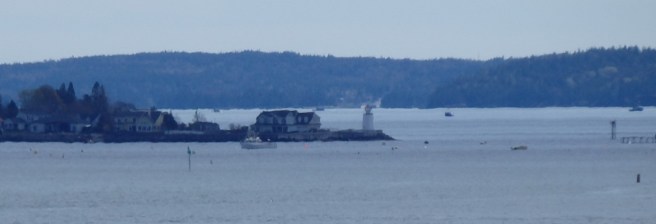
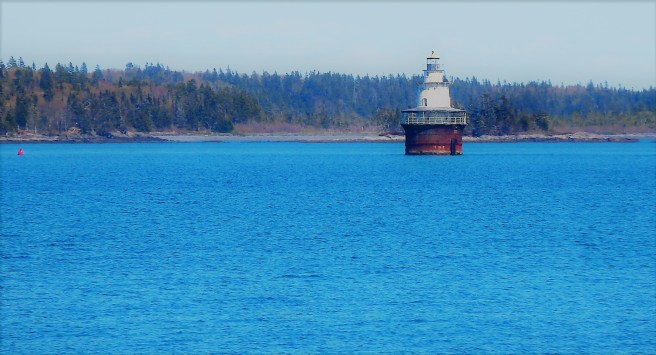
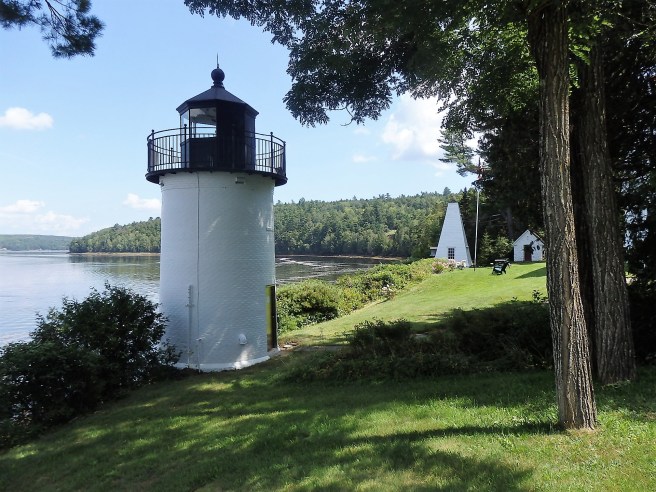
Cherry Island Light, New Brunswick, is the one we see most clearly. It’s an 18-foot-tall tower with a white flash every five seconds. As a lighthouse, it was first built in 1824.And at night it does this.Deer Point, New Brunswick, is a 20-foot tall tower with a two-second red flash every 10 seconds. The famed Old Sow, the largest whirlpool in the Western Hemisphere and second largest in the world, is just off its shore.Facing Deer Island, the Dog Island Light in Eastport flashes white/red every five seconds. As you can see, it’s no longer a house, much less manned.The Pendleberry Lighthouse, or St. Andrews North Point Light, in New Brunswick is glimpsed here from Robbinston, just up the Maine shoreline from Eastport.A “sparkplug” or “wedding cake” design, the Lubec Channel Light can be seen framed by the bridge from Lubec to Campobello Island from points in Eastport, though never this distinctly. I shot this in South Lubec, where it stands 53 feet above Mean High Tide and emits a flashing white signal every six seconds.Whitlock Mills Light on the St. Croix River in Calais is the northernmost light in Maine. It’s on private property, and I’m grateful to the owner who allowed me access. The second tower has both a bell and a foghorn. I find this 25-foot tower, despite its small size, particularly charming.






 Jnana's Red Barn