
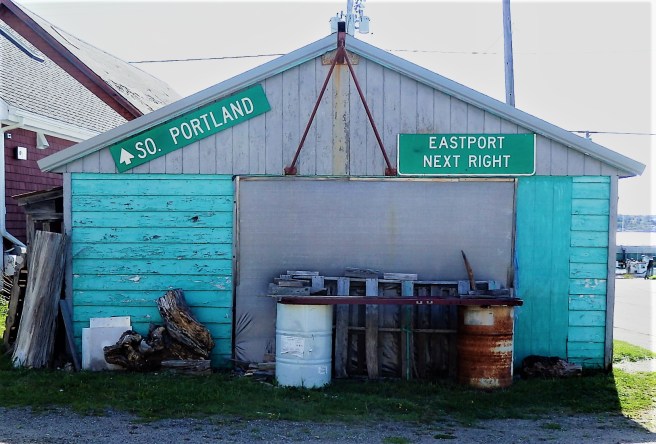
Please respect the sign
You never know what we'll churn up in cleaning a stall
A revival of Indigenous languages, which were long suppressed by federal policy, is gaining momentum where I live in Way Downeast Maine.
For one thing, the Passamaquoddy are now teaching it in their schools.
For another, their words are pronounced in ways that transcriptions into Latin-based letters don’t quite capture. There are simply sounds that my ears miss entirely and my tongue and lips will never manage to enunciate properly. How humbling!
“Passamaquoddy,” for instance, is pronounced more like “peskotomuhkati,” meaning “people who spear pollock,” reflecting their ocean hunting skills.
Linguistically, the Passamaquoddy language works differently than do European languages with their subject-verb-object constructions, and reflects an alternative way of comprehending the land, waters, and skies where we dwell.
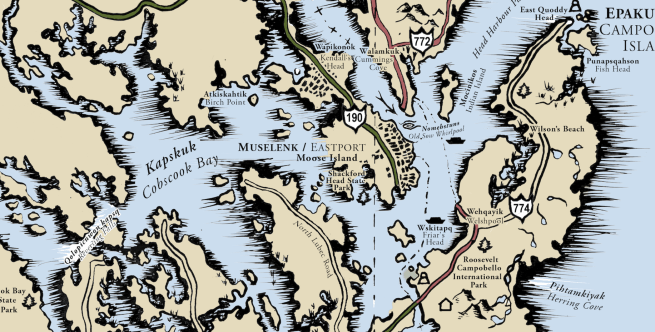
The latest edition of the Tides Institute’s Artsipelago map of communities and sites around the tidal waters of our corner of Maine and neighboring New Brunswick, Canada, now includes Passamaquoddy names in addition to the more familiar English, Anglicized, and French ones.
To my eyes, this adds another dimension to our awareness of the landscape and its legacy.
How do you see it?
When last summer ended, I proclaimed it my best one ever – in part because there were no complications from an employer or romantic upheavals. Instead, it was filled with new adventures, explorations along the Bold Coast and out on the waters, introductions to fascinating characters and geezers (both positive terms, in my estimation) who live here at least a goodly part of the year, plus a sequence of fascinating artists in residence combined with local painters and photographers and their galleries as well as a world-class chamber music series by mostly resident performers. Whew! And, oh yes, I had plenty of time to devote to a new book and setting up posts for this blog. I even got a new laptop, which meant importing and tweaking everything.
This time around has simply amplified everything.
The temperatures are generally cool on the island – often ten degrees less than what’s happening on the mainland even just seven miles to the west – so I rarely suffered from sweltering. On the downside, heritage tomatoes are rarely found here. Remember, in Dover I lived on tomato-and-mayo sandwiches from the beginning of August into October, some years, though in no small part due to global warming. Even so, the ocean temps here are too cold and the currents too treacherous, for any swimming, though inland lakes and streams provide a welcome alternative.
Well, that’s only half of it. Summer is when Eastport comes into its full glory. The streets are swarming, like a big party. To think, I’m experiencing the ideal of summering on a Maine island, combined with a lively artistic dimension! Never, in my wildest dreams, would I have expected that.
But all good things must come to an end.
Three-quarters of the Eastport’s population is what Mainers call Summer People. Now they’re mostly going-going-gone and we’re on the verge of getting back to our more essential state, something akin to a ghost town.
Not that we go down that easily.
This weekend featured the annual Salmon Festival, a delightfully low-key event highlighting local musicians, galleries, and crab rolls served by the senior center and Episcopal Church on Saturday and salmon dinners on Sunday, as well as tours of the salmon farms at Broad Cove.

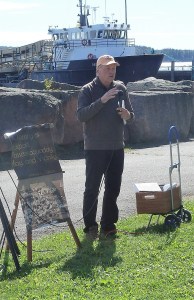
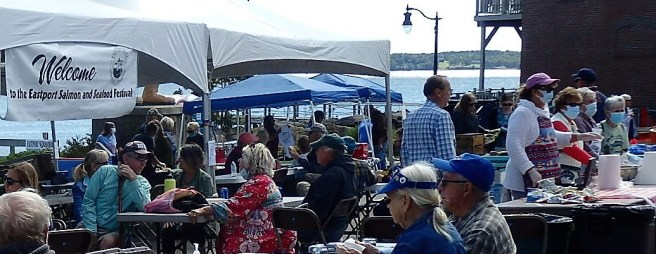
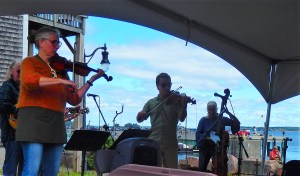
The event honors what was once the Sardine Capital of the World in its current incarnation as a center of aquaculture in the form of salmon.
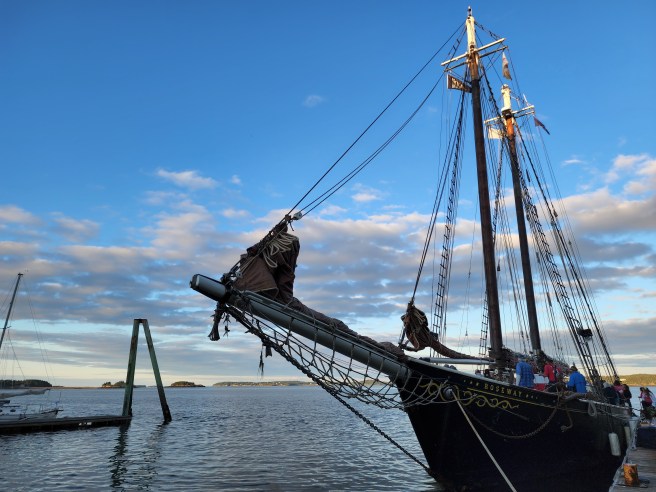
But it’s also a prelude to next weekend’s blowout, the Pirate Festival.
On Saturday, a mini-flotilla, armed with water balloons and squirt guns, sailed down to invade neighboring Lubec. Next week, they’re expected to return the favor, all in good spirits.
What’s made your summer special?
Popped into the Chamber of Commerce the other afternoon, thanks to the Public Restroom Inside board set up out on the street, and immediately found myself awash in pirates.
They were assembled for some kind of banquet, which I later learned was one of the fundraising murder mystery dinners in advance of our pirate festival.
I can report it was well attended.
Some distances from Eastport to wherever:
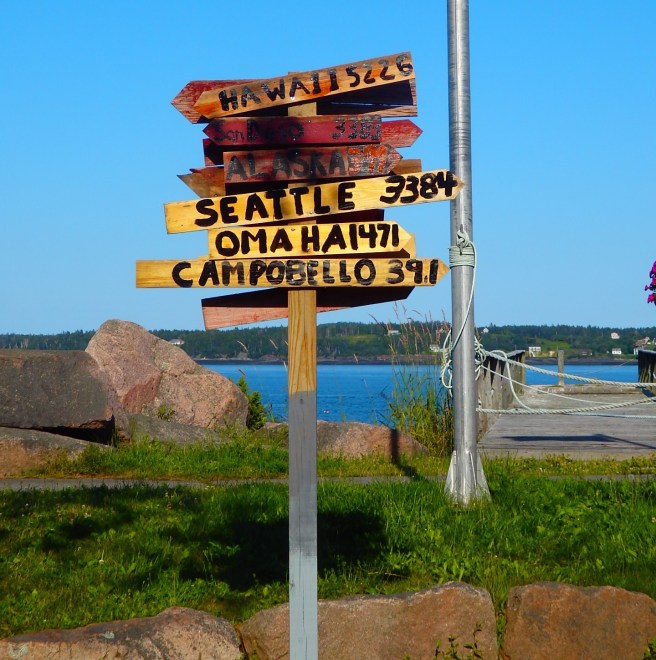
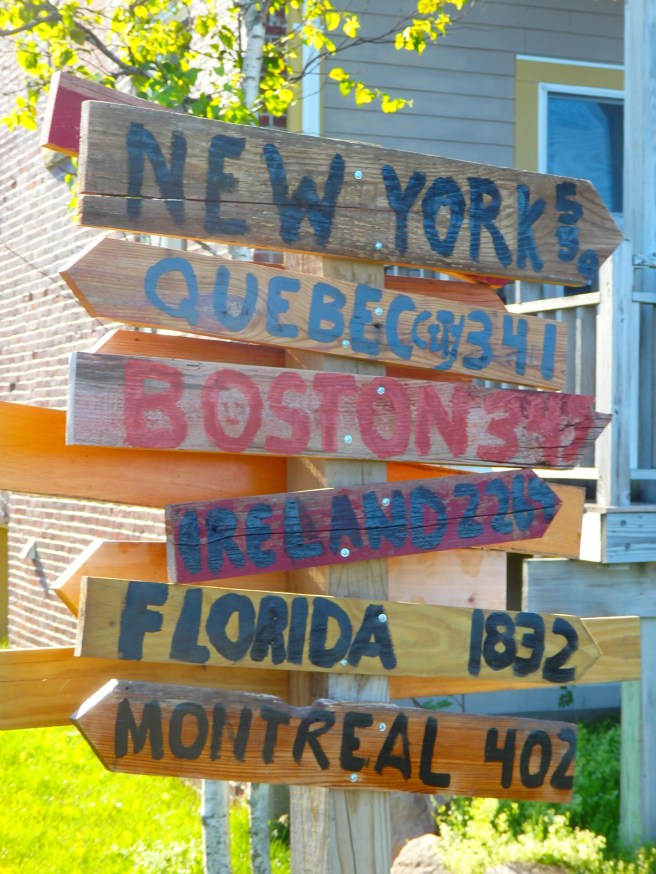
While driving from Eastport to Lubec, kind of in the neighborhood, as it were, I got to thinking about how far you could get from one point to another in the same hour elsewhere. Sometimes, it led to a lot more options.
Where could you drive in an hour from your home?
As I detail in Quaking Dover, my history of New England’s third-oldest permanent settlement, the odds against success for early European settlers were nearly overwhelming.
It wasn’t just the English, either.
The French made their first attempt just up the coast from Eastport, where Samuel de Champlain selected an island in what’s now called the St. Croix River at the western edge of the Bay of Fundy or, more specifically, its smaller Passamaquoddy Bay.

The famed explorer was working for Pierre Dugua de Mons, a noble and Protestant merchant who had been given a fur trading monopoly in New France by the king.
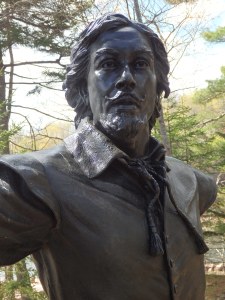
In 1604 the expedition set about establishing a fortified trading post on the security of St. Croix Island and its tidal currents.
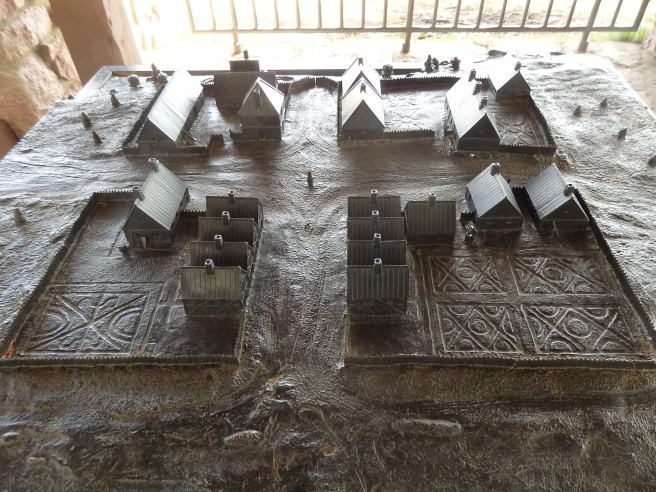

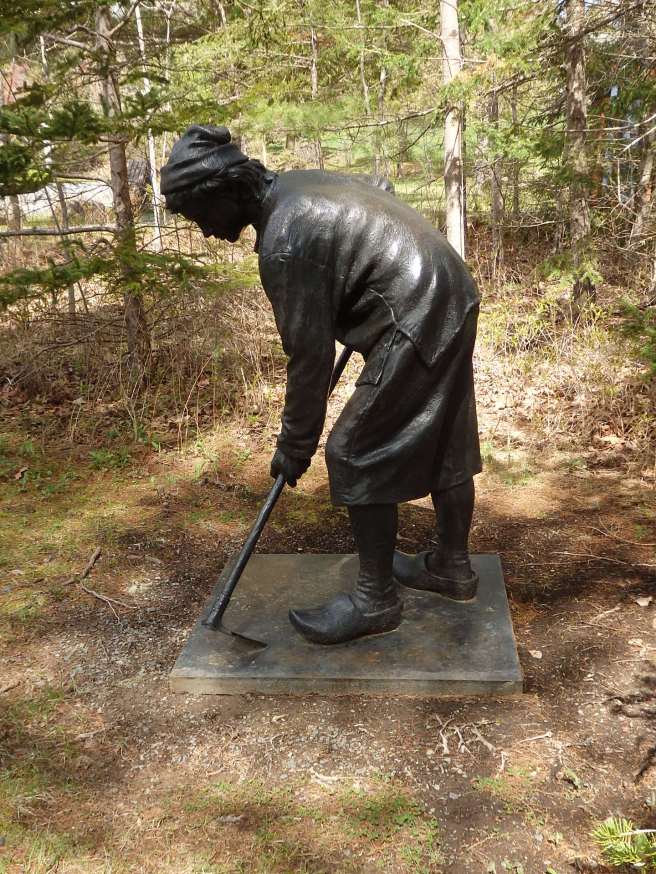
And then they settled in for the winter, ill prepared for harsh conditions that buried their compound under three feet of snow and iced in the river, cutting them off from fresh water and game.
The lack of fresh water, especially, was a fatal flaw in their plan.
By the time spring arrived, 35 of the French expedition’s 79 men and boys had died, many from scurvy. The remainder survived largely because the thawing river allowed Native Passamaquoddy to arrive and trade nutritious food in exchange for any remaining bread and other goods.
After the colonists’ health improved and ships brought new supplies and more men from France, they abandoned the island and relocated to what would become Port-Royal, Nova Scotia, soon the center of L’Acadie, or Acadia, a large and contested province of New France.
In 1607 the English then made two attempts of their own in the New World. Their Popham colony at the mouth of the Kennebec River in Maine fared no better, while the Jamestown settlement in Virginia managed to hang on.
In 1608, Samuel de Champlain successfully founded Quebec City along the St. Lawrence River. What we know of the St. Croix Island experience comes largely through his journaling.
Quite simply, we could have been speaking French here, had someone thought about drinking water earlier in the game. Or perhaps simply been listened to and respected.
~*~
Sculptures at the St. Croix Island International Historic Site, Red Beach in Calais, Maine, are by Ivan Schwartz, Studio EIS.
Maybe I just didn‘t notice, but I don’t recall noting so many quirky sides in the other places I’ve lived. Maybe they’ll pop out when I review my old journals.
Still, there are things in Eastport I hadn’t anticipated. For instance …
 Jnana's Red Barn