I’m really looking forward to tonight’s reading

If you’re a musician or writer or some other kind of performance-potential artist, you probably find being part of an open mic event invigorating. Not just because you get to air your own work and see how it fares on exposure, but also because you’re amid so many kindred spirits.

Tonight has a kind of hybrid version — six featured published writers at the wine bar downtown — and it is creating a buzz in our small community. Each of us gets about 15 minutes in the spotlight, as well as a book-signing and chat time afterward.

I’ll be reading a chapter from my new book, Quaking Dover, one that details a remarkable but often overlooked outburst in early New England, the bohemian colony called Merrymount. I had settled on that excerpt, a side I hadn’t yet presented in my presentations, before realizing how appropriate it is for this weekend’s ArtWalk festivities, many of them reflecting Pride awareness.

So, here we go … just as the summer season is beginning in our oceanside setting.

This is a great place to enter the twilight zones

Here in Way Downeast Maine, many dawns would blow you away, at least if you’re awake in time.

It’s not just when our closest star comes into view but also the vast unobstructed sky over the bay and the ways neighboring Campobello Island interact with the growing light.

As I’ve been finding – and you’re seeing in some of the photos here at the Red Barn – much of the glory occurs in what’s officially the twilight zones, defined by how low the sun is below the horizon.

These zones are otherwise known as dawn and dusk, apart from Rod Serling’s once upon a time spooky black-and-white TV episodes.

And these are longer and more pronounced the further away from the equator they are.

I’m on the 45th parallel, halfway to the North Pole and its days of endless summer light or winter darkness. Meaning our twilights are much longer than what happens in most of the rest of the continental U.S.

Checking our local weather forecasts, I’ve noticed a few unfamiliar terms but not looked into them until recently.

The first is astronomical twilight, which I’ll skip over this round. It seems to apply mostly to the Arctic and Antarctic.

The second is nautical twilight, which apparently has its origins in the era when mariners used the stars to navigate the seas. In clear weather, most stars are still visible to the naked eye but also, finally, the horizon. You need artificial light to do much of anything outdoors.

Around here these days, it begins before 3:10  am Daylight time – or what would be 2:10 Standard. The wee hours, no matter how you slice it.

The next stage is civil twilight. It’s brighter, enough to mean artificial light may not be required for outdoor activities. Only the brightest celestial objects can be observed by the naked eye. These days for us, it’s around 4 o’clock. Yeah, 3 Standard time. Still really early for most folks.

And finally sunrise, about a more than quarter to 5.

That’s an hour and a half of magical natural light.

I think it’s why most people around here are up and about early. Even in winter, the roads are busier at 5:30 in the morning than 5:30 in the afternoon.

Of course, the reverse happens every evening.

The shifts also produce what’s called the Golden Hour, when sunlight turns warmer and softer. Or, in my thinking, buttery and magical. I place it mostly as the hour before sunset, especially when the light shoots in horizontally.

As well as the Blue Hour, when only a few stars or planets are visible. Painter Maxfield Parrish exploited it to the hilt.

During the day, much of our sunlight is reflected from the waters back into the sky, something many classic Italian painters explored as well as more modern artists here today.

So how’s the natural light where you are?

Have you ever been to Acadia National Park?

Maine likes to tout itself as Vacationland, and Acadia National Park is definitely a star attraction. I know people who gush that it’s their favorite place ever. Not that I’d go that far.

Still, let’s consider:

  1. With four million visitors a year, it’s among the 10 most popular national parks. Most of them crowd in during the prime summer months.
  2. The official version has the park being named after Arcadia, a region of Greece that it supposedly resembles. New France, however, referred to eastern Maine as Acadia before being expelled by the English in 1763. In their migration, some of those Acadians became known as Cajuns down in Louisiana. I’m siding with the French here, despite my fondness for Greek culture.
  3. It was the first national park established east of the Mississippi and encompasses 47,000 acres, mostly on Mount Desert Island. Not that there’s any desert, it’s just wild. Additional, less well-known tracts are on Schoodic Peninsula (my favorite) and Isle au Haut as well as smaller islands. And a fourth of the land total is privately owned but under easements and similar arrangements.
  4. With 108 square miles, Mount Desert Island is the biggest island in Maine and the sixth largest in the contiguous United States.
  5. The park has 158 miles of maintained hiking trails spanning mountainous terrain, panoramic views, rocky Atlantic shoreline, mixed forests, and lakes. Former carriage roads are also popular with bicyclists.
  6. There’s a private trolley service for those who’d prefer to view the scenery more than the traffic jam.
  7. Backcountry camping and overnight parking are not permitted, but there are campgrounds and lean-tos for those who plan well ahead.
  8. French explorer Samuel de Champlain gets the creds as the first European. He encountered the place in September 1604 when his boat ran aground on a rock. He applied the name Isles des Monts Deserts, or island of barren mountains, to the bigger scene. Well, some are pure rockface.
  9. In the 1880s, the island became a summer retreat for Rockefellers, Morgans, Fords, Vanderbilts, Carnegies, and Astors who built elaborate vacation dwellings they called “cottages.” Many of those were destroyed by a vast wildfire in October 1947.
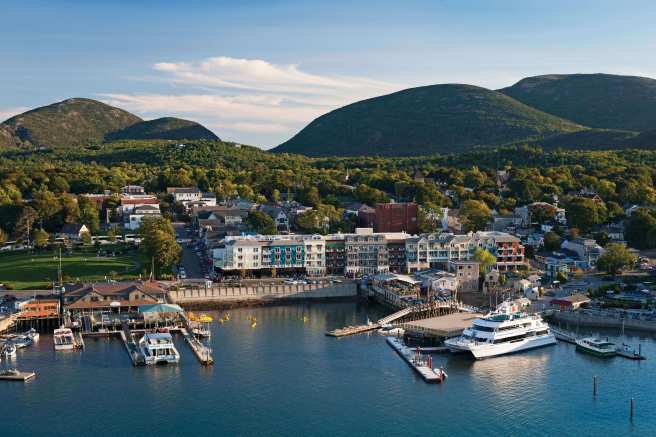
  10. Its principal gateway is Bar Harbor, a city of 5,000 full-time residents that swells with summer people and their second homes, tourists, and often a big cruise ship or two that add several thousand more people to the crowd. Be warned that parking is at a premium in high summer.

For more adventurous souls, let me suggest exploring two hours to the east, to the Bold Coast, for a less spoiled alternative.

One site, three successive forts in colonial history

Coming to Colonial Pemaquid’s state-maintained historical site in Maine, I wasn’t prepared to find this.

It was far more than the wooden palisades found across much of early New England. It looked to me far more like something out of Scotland or a Monty Python movie.

This wasn’t even a reproduction of the first fort there, but rather the second.

The first was Fort Charles, built 1677 after the village had already been destroyed. That fortification was overrun and destroyed by the French and their Native allies in 1689.

Most of the usual attention to warfare between the English colonists and the Natives focuses on King Phillip’s war, which heavily impacted southern New England. Much of the heaviest toll, however, happened in the decades after that when the tribes allied with the French to the north. Those outbursts afflicted northern New England, including Dover, New Hampshire, for decades later.

That’s where Pemaquid, fortified to hold the Maine at the edge of English claims in the New World, comes into play with my story, Quaking Dover.

Dover was often on the frontier of English settlement, a thin ribbon along the coastline but barely reaching inland and thus nearly impossible to defend, at least much north of Boston.

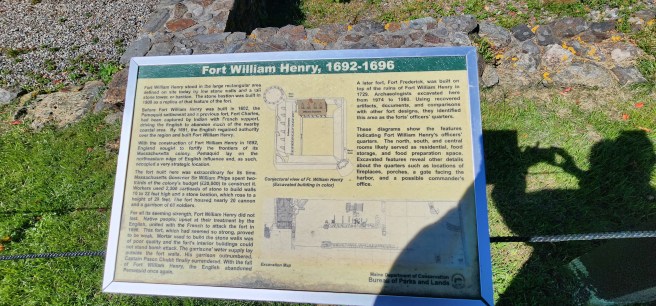
Once the English did reclaim this stretch of Maine from the French, the New Englanders built a new, second fortification, Fort William Henry, erected in the large rectangular area defined on the site today by low stone walls and a tall stone tower, or bastion. The stone bastion you see was built in 1908 as a replica of that feature of the fort.

As Maine’s online documentation explains, before the second Fort William Henry was built in 1692, the Pemaquid settlement and the previous fort had been captured by the French and their tribal allies, driving the English to abandon much of the nearby coastal area. By 1691, however, the English regained authority over the region and built Fort William Henry.

(I am fascinated by the tenacity of those who kept returning despite the costly odds.)

As you will find, with the construction of Fort William Henry in 1692, England sought to fortify the frontiers of its Massachusetts eastern district. Pemaquid lay on the northeastern edge of English influence and, as such, occupied a very strategic location.

The fort built here was extraordinary for its time. Massachusetts Governor Sir William Phips spent two-thirds of the colony’s budget (£20,000) to construct it. Workers used 2,000 cartloads of stone to build walls 10 to 22 feet high and a stone bastion, which rose to a height of 29 feet. The fort housed nearly 20 cannon and a garrison of 60 soldiers.
(Note that the costs were born by the New Englanders, not the British Crown.)

For all its seeming strength, Fort William Henry did not last. Native people, upset at their treatment by the English, united with the French to attack the fort in 1696. This fort, which had seemed so strong, proved to be weak. Mortar used to build the stone walls was of poor quality and the fort’s interior buildings could not stand bomb attack. The garrison’s water supply lay outside the fort walls. His garrison outnumbered, Captain Pasco Chubb finally surrendered. With the fall of Fort William Henry, the English abandoned Pemaquid once again.

(If this were fiction, I can’t imagine what to do with a name like Captain Pasco Chubb. Especially as an Englishman.)

Well, that’s an official account, one I for now I find no reason to quibble with. What does change my earlier perspective, however, is Fort Frederick, erected in 1729 and dismantled in 1775 to keep it out of British occupation in the Revolutionary war.

It never faced hostilities with the Natives, which seriously makes me reconsider a much earlier reoccupation of Maine by English settlers, something I had largely ruled out before 1763, the end of the French and Indian wars. Now see that’s not quite accurate, though it still seems to apply Downeast, where I now live.

So much for these confessions of an amateur historian.
Flowage


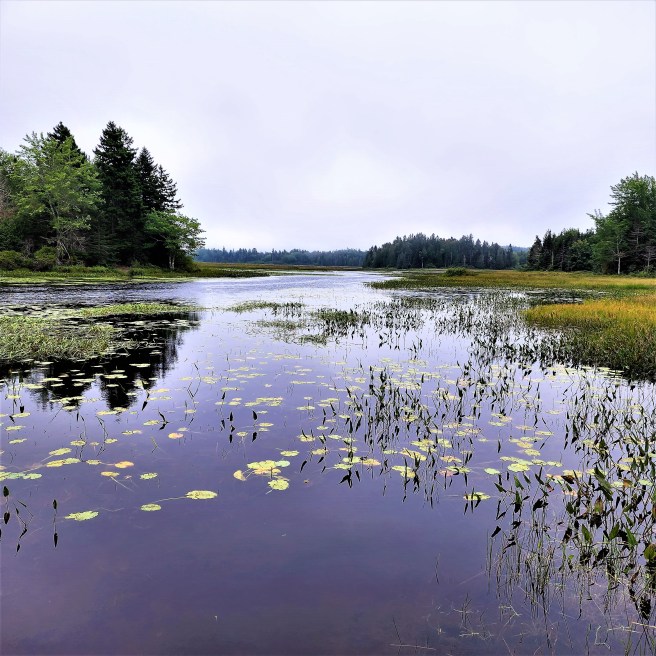
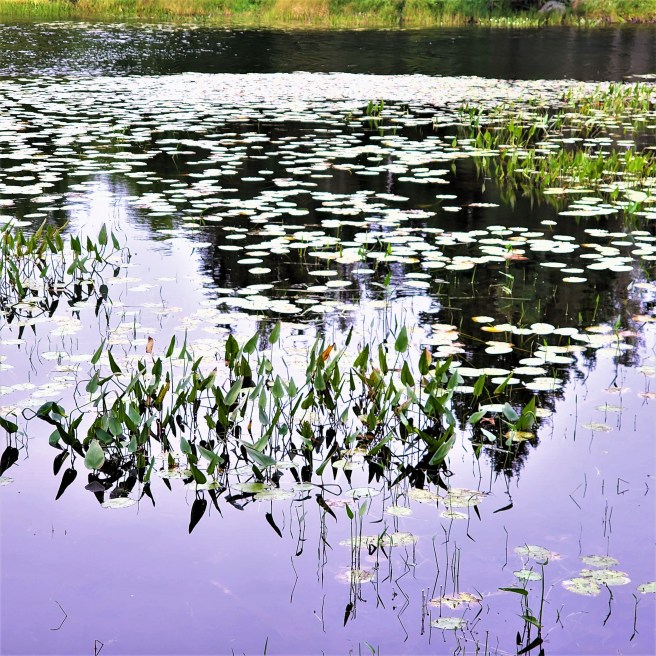
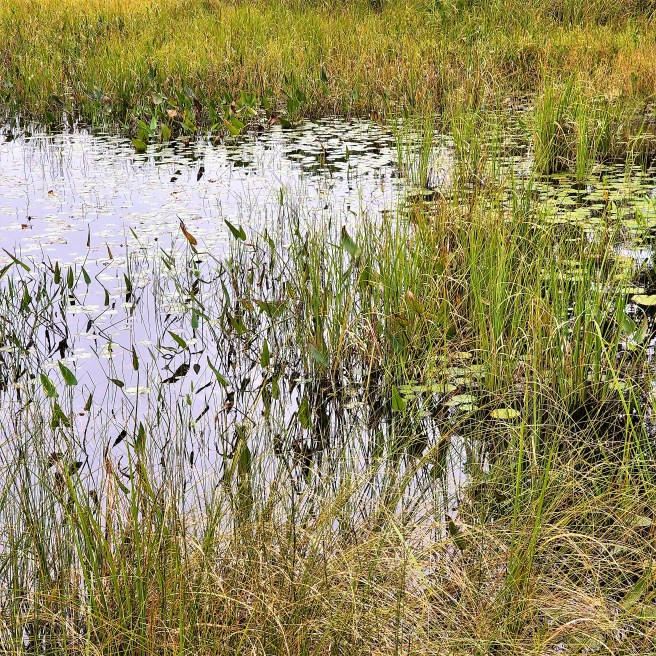
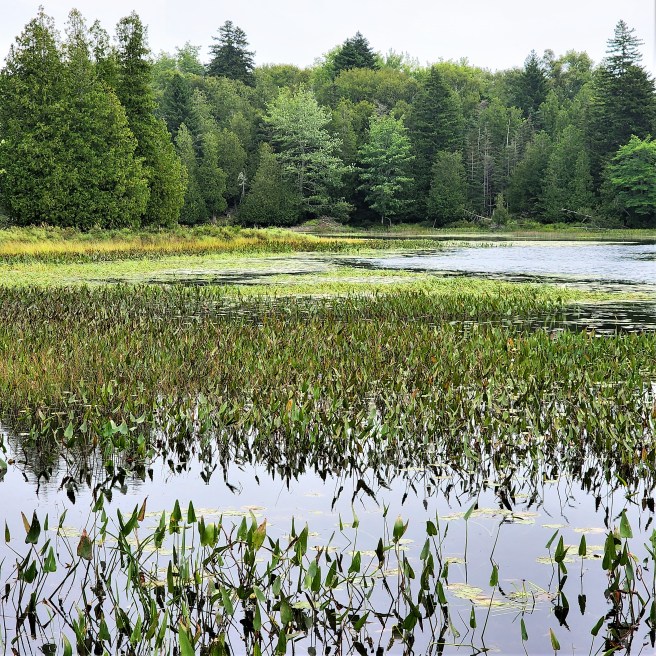
Streams passing through Maine forests often open out into a wetland known as a flowage, a flooding typically caused by beaver dams or other impoundments. The resulting broad habit is crucial to waterfowl production, and also provides for excellent kayaking, canoeing, and fishing.

These shots are all from one spot. Note the beaver lodge in the last one.


The next steps

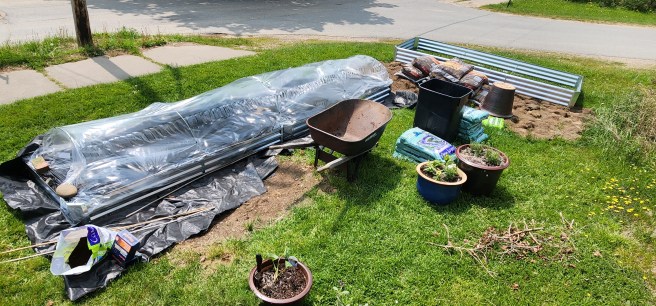
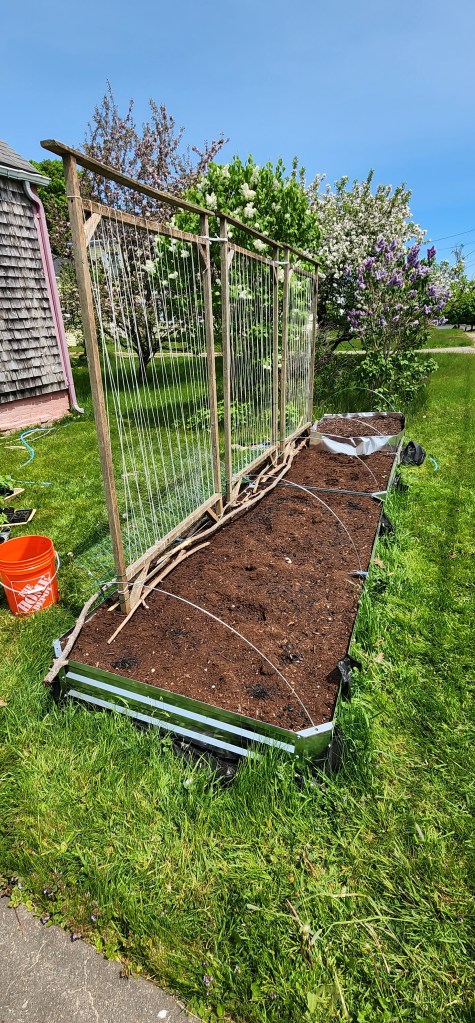
Filling the new beds with clean soil atop a landscape fabric and cardboard barrier against weeds and the tainted ground below takes shape. Our planting season here naturally runs late – early June still had overnight low temperatures in the 40s. So transplanting seedlings is running on schedule.

The plastic is to help warm the soil.

The upright frames are for peas, which will probably continue to produce through the summer, thanks to the cooler temperatures. Tomatoes, though, will be tricky.

The biggest challenge will be deer, as you’ll see.