the mailman didn’t leave the stack in the hallway, as I had worried, but rather held it to give to me today (twenty-four pieces, which included one personal letter to me, from somebody amplifying on our Seventh-day conversation in North Carolina, or as he pronounces it, Nor’car’l’na, a personal letter to Iowa from another in Pennsylvania who must have his addresses mixed up, I’ll forward adding my own greetings; three magazines; my union newspaper; six bills; unsolicited junk including offers of wild credit lines if I accept more I’d be rich if I could reach the right country without extradition
Tag: Life
Places I’ve enjoyed dancing
Look, I never have figured out what passes for “popular” dancing, but I am grateful a few forms of folk versions have come to my rescue.
I could mention those times I’ve been moved while watching others dance, like at the Tinowit on the Yakama reservation or maybe at a ballet, but this list is places where I’ve done the steps, too.
- The Rockwells’ apple barn in Barnesville, Ohio. My introduction to contradancing, despite my initial resistance.
- Scout House, Concord, and VFW, Cambridge, Massachusetts. Mecca. The latter was also known as the Rocket House, ‘cuz of its mock-up Nike missile out front.
- Town Hall, Nelson, New Hampshire. Mecca again. Plus the legendary sloped floor.
- Dublin Academy, New Hampshire, for Bob McQuillan’s CD release party. I wound up waltzing with an Amelia when I mentioned the tune we were dancing to shared her name, she said calmly, “It was written for me,” back as a toddler.
- Town Hall, Bowdoinham, Maine. Always fun and lots of kids out on a Saturday night out.
- Town Hall, Kingston, New Hampshire. Smokey of the band Old Wild Goose shucked fresh oysters at intermission one night, and I really pigged out as most folks turned up their noses, not knowing what they were missing. This was November, and the shells were fattened to perfection. There was another night somewhere when he was both the caller and musician, who knows where the rest of the band was, but everything certainly was fun.
- City Hall, Dover, and the Oyster River Band, bringing with it memories of times when they starred in Madbury and Lee and even the Kittery, Maine, Grange Hall.
- The Star Grange, Greenfield, Massachusetts. They dance wild out there in the Pioneer Valley. Plus I thought I was engaged to be married, and she was a great dancer. Whole other story.
- Our wedding, Dover, New Hampshire. The reception featured national treasures Dudley and Jackie Laufman at their best, getting even beginners moving elegantly on the old one-room schoolhouse floor.
- Greek festivals at the Hellenic Center in Dover and a big tent at St. Nicholas in Portsmouth, New Hampshire. Feels great learning a new talent, even at this age.
~*~
Gee, how could I overlook the big Ralph Page Legacy Weekend at the University of New Hampshire, Durham, just a dozen or so minutes from us? Maybe because it’s always on the Martin Luther King weekend, when my schedule is pressed by other demands. This gets serious.
When flights intersect or move on
Just what was I thinking? Was this supposed to be a philosophy class moment? A reflection on time versus space? Or fate versus free will? No wonder the paragraph failed to take root in my novel What’s Left.
History is filled with unique moments when something flashes up and takes hold. Or a singular intersection of trajectories appears in the universe of motion.
~*~
The novel, by the way, has many of these situations, just as life itself does. We just didn’t need to get preachy.
I suppose this just might fit a story about baseball. Or think of football. The great play no fan will ever forget.
There are also those accidents, seemingly chance encounters, like the late-night crash that kills Cassia’s grandparents or the avalanche that claims her father. A few moments one way or the other, and her story would be much, much different.
I was more likely reflecting on those seconds where you have to make a decision one way or another. Say something. Do something. Yes or no. The beginning of a romance, for instance, once you’ve introduced yourself. Uttered the joke that could have as easily fallen flat.
Can you recall a significant moment in your life when something had to happen right then — or never at all? One with no second chances? Please share it! Be bold!
~*~
Ten highly overrated virtues
- Success.
- Wealth.
- Physical fitness.
- Assertiveness.
- Cheerfulness. Enthusiasm.
- Obedience.
- Reverence.
- Confidence. Self-esteem.
- Optimism.
- Patriotism.
~*~
Not that I’m arguing for sloth.
What virtues do you find overrated?
Maybe it’s not really news but it counts
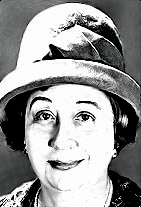
In my novel What’s Left, Cassia’s aunt Nita writes a daily newspaper column focusing on local people and their real interests. It’s not all that different from CeCe Cobb’s in my earlier novel Hometown News, but Nita’s is far less corny and far newsier.
In Dayton, where I grew up, it was Marj Heyduck of the Journal Herald. Her mug shot on her daily column featured a new hat each week as a signature touch. And in Cincinnati, it was TV host Sally Flowers.
But I can think of others who just seem to know everybody.
Does your community have a local voice? A minor celebrity or just a naturally curious friend of all?
As a zealous professional
so pleased entering my apartment to see everything tight, still in place, no vandals, though the temperature was 89 degrees, apparently the maintenance crew had come in and set the thermostat at 80 to get the radiators going and then left while ignoring repairs to one of those single joy-stick faucets that takes an eight-dollar washer kit to repair, I know, because the three-dollar one I bought had the wrong kinds of springs and plugs and doodads, and none fit
A few random notes found while cleaning up
- Everything was going too fast to keep up and has only gotten worse.
- Have I always been trying to get by on the cheap? To my own impoverishment?
- “Higher truths” an interesting concept.
- Falling icicle at the mill crushed a parked car.
- Momento Mori: “Remember you must die” or “You are mortal.”
- Language has a terroir in it … a taste of the earth and its blood.
- By coincidence, reading “The Last Temptation” during Great Lent.
- How radical to see individuals as the foundation of society, rather than the state, which has been unstable, often with military imposition to the next.
- Facing too much of a good thing.
- Flatbed Ohio was my original title for the poetry collection Rust and the Wound.
Maybe it does run in the blood
I heard it twice, miles apart: “I have retailing in my blood.”
Both headed family businesses – one, a supermarket chain, the other a small-town restaurant.
The grocer worked with three of his brothers and a brother-in-law, though another brother instead became a respected physician.
The restaurateur worked alongside his only brother and their wives.
Both enterprises were founded by their fathers.
It’s a lot like the family enterprise in my novel, founded a few generations earlier.
Do you know anyone like that?
~*~
My novel is available at the Apple Store, Barnes & Noble’s Nook, Scribd, Smashwords, Sony’s Kobo, and other fine ebook distributors and at Amazon in both Kindle and paperback.

High hippie by degrees – nobody fully fit the stereotype
By the end of ’68, the counterculture phenomenon was metastasizing from San Francisco’s Haight-Ashbury and nearby Berkeley into pockets across most of the country and even Europe. As August of ’69 proved, it was sufficiently established in the East to draw together the unanticipated throng at Woodstock.
Much of the transplanted activity existed at the fringes of college campuses, as I experienced in Bloomington, Indiana, and later Binghamton, New York. For me, growing up in Ohio, I would have rather attended hip, beat Antioch in Yellow Springs, but the finances were way out of our consideration. So a state school was my destination, and at the time, Indiana as an out-of-state student was nearly as reasonable as in-state for me in Ohio. And a bit later, to my surprise, how yesterday Antioch began to appear once I was near the East Coast.
The searing experiences shape what I describe in Daffodil Uprising and then Pit-a-Pat High Jinks. And as I continue to repeat, hippies came in all varieties – and still do. There was no standard-issue, card-carrying member, but each was one to some degree or another. Nobody completely fit the hippie image.
As someone who became addicted at the onset of adolescence to classical, opera, and folk music, I was already passionate about an alternative to commercial entertainment, which was what rock at the time really was. I was one who lamented deeply when Bob Dylan went electric. Sold out, so it seemed. I had the long hair and blue jeans and bell bottoms. I was against the war, tried a few hallucinations, loved sex when I could get it, which wasn’t often.
And then I encountered yoga, which led me to give up meat, alcohol and drugs, and sex for the life I detail in Yoga Bootcamp – and yet, curiously, this was when I felt the most hippie in all of my awareness.
Keeping track of a big cast
A multi-generational family tale like the one in my novel What’s Left can lead to a lot of characters, and keeping them all straight can be a problem.
My plot line takes a few twists that minimize their numbers, but when you get four generations over time, it’s bound to create a challenge, no matter how hard you try. Sometimes it helps to stick with somebody who knows everybody, when you’re circulating through the crowd.
When reading a big book, do you have tricks for keeping track of the individuals? Anything you’d like to share?
~*~

 Jnana's Red Barn