Some things I miss about Dover

It may be a small city, but even so, it was home. And much larger than where I’m now living.

So some of what I miss?

  1. The over-the-fence or across-the-street conversations. Especially the guy stuff. Tim, Mark, Jack, Mayor Bob, that circle, especially.
  2. Recycling. I feel guilty putting it all in one bag. Unless the volunteers regroup after this Covid thing.
  3. The indoor pool. Not just the physical exercise of swimming, but the banter with other swimmers and the lifeguards.
  4. The Quaker Meeting and Greek circle, too. Not just older folks, but meeting the babies who have come along in the interim.
  5. Our garden, even though it was a lot of work. It was even visually pleasing.
  6. That leads to glutting out on fresh asparagus for nearly a month in late spring.
  7. And heirloom tomatoes, with tomato and mayo sandwiches for the better part of two months come high summer. (Downeast Maine is too cold at night for them to mature.)
  8. A range of dining options, not all of them in Dover. We weren’t far from neighboring communities. Not just ethnic, either. LaFesta Pizza would be a prime example of taking a specialty a step extra.
  9. The Amtrak as an escape to Boston or Portland. Not that I had used it that often, back before Covid, but I had plans.
  10. Dishwasher, clothes washer and dryer. Without the renovations on our new old house, it was a return to a primitive era for me. The two nearest laundromats were an hour away, in opposite directions.
Before hearing the sales pitch

my list: Desert Boots so I’ll have a very comfortable pair of shoes at the office, but it turns out that the original kind are impossible to find, and pricey but rather than being upset by that fact today, I found myself intrigued by the hunt, I’ll just keep watching and waiting a jaunty rain-repellant windbreaker to replace the decade-old one my now ex-wife gave me which I’ve never really liked, color or cut, even when it drew favorable comments, it just wasn’t me or a dressy raincoat as in a London Fog, I still wound up buying some nice, and essential, overdue items, including winter boots the old L.L. Bean muck-luck style, but fun and necessary for a New England winter now I can mud it up with the best of the locals and keep my head up and a new wallet as for the Japanese robe or pea jacket very nice cut but still more than the one at the sporting goods store), not yet a consumerist, yrs truly in comfy new wraps

Writing versus real life

There are many reasons I spend so much butt time at the keyboard, as poet/novelist Charles Bukowski once compressed the practice.

I’ve examined some of them elsewhere, but what I’m circling back to today is the necessity of bringing some kind of order to the seeming chaos of what happens to each of us in “everyday life,” at least through the lenses of my own encounters.

What emerges is hardly objective, no matter my training in objective journalism. If anything, I lean on the hopeful side of history. The side we see as progress, even in the face of the clouds of doom.

Long ago I crossed a threshold where I couldn’t move forward without drawing on so much that had accumulated before then. I think of it as turning the compost, to give it air and enrichen future crops, worms and all. Yes, those blessed red wigglers. Or wrigglers, depending on your spelling.

Am I self-deluded? Or is my practice of writing one of prayer, even in the face of so much hopelessness?

What is life, anyway, apart from what we experience subjectively?

So here we are, all the same.

Keep writing, those of you in this vein. No matter the outcome.


When sardines were big

Eastport’s economic glory days were when the city was the Sardine Capital of the World.

They’re small herring and abounded in the waters around Eastport, where they were easily caught and delivered straight to the cannery atop the wharf.

Here are some related facts.

  1. Napoleon Bonaparte helped initiate the canning of sardines, the first fish to be so preserved.
  2. Packing in Maine took off from Eastport in the 1870s and peaked around 1900, with 75 plants, mostly along the Downeast coast. The first sardine cannery in Eastport started in 1865 but failed to reduce the moisture in the cans, leading to a sharp, unpleasant odor. Its owner returned to Portland and found success with baked beans. Others in Eastport improved the process.
  3. The workforce was largely women, with blurring hands and sharp knives or scissors expertly packing the small fish into cans – as crowded as sardines, as the popular expression went. Their hands were in cold seawater, year-‘round.
  4. Eastport also cranked out the cans and lithographed labels.
  5. The fish were packed in cottonseed oil, soy oil, or upper-end mustard sauce.
  6. The world’s biggest sardine cannery jutted 250 feet out from the shore at the entrance to Shackford Cove.
  7. Home refrigeration doomed the industry, making fresh cod, haddock, and other fish readily accessible.
  8. Sardine tins were part of soldiers’ rations during the world wars.
  9. The discarded fish parts were used to make fertilizer, while the scales were transformed into pearl essence, a shiny coloring used in many consumer products.
  10. Vintage sardine cans and labels are collectors’ items.
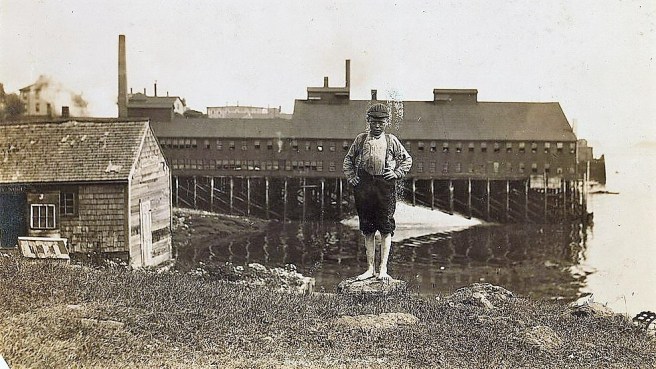
Eastport’s sardine canneries were also centers of child labor, as photographer Lewis Wickes Hine documented in August of 1911. Above, Fulsom McCutcheon, 11, was a worker at the covering machines. The world’s biggest sardine cannery extends behind him. It was about two blocks from my house. 
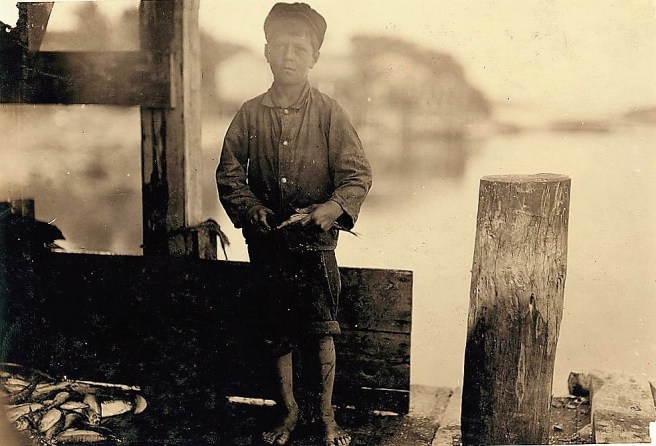
Hiram Pulk, 9, cuts sardines at the Seacoast Canning Company’s Factory No. 1 in Eastport. “I ain’t very fast – only about five boxes a day. They pay five cents a box,” he was quoted. Both photos from the Library of Congress collection.


The Bingham connection

After discussing Maine’s unincorporated townships, I need to add that there are a lot of variants – 17, if I’m counting right. Among them are the BKP, BPP, NBKP, NBPP, and WBKP designations – translated as Bingham’s Kennebec Purchase, Bingham’s Penobscot Purchase, North of Bingham’s Kennebec Purchase, North of Bingham’s Penobscot Purchase, and West of Bingham’s Kennebec Purchase.

So just who was this Bingham guy?

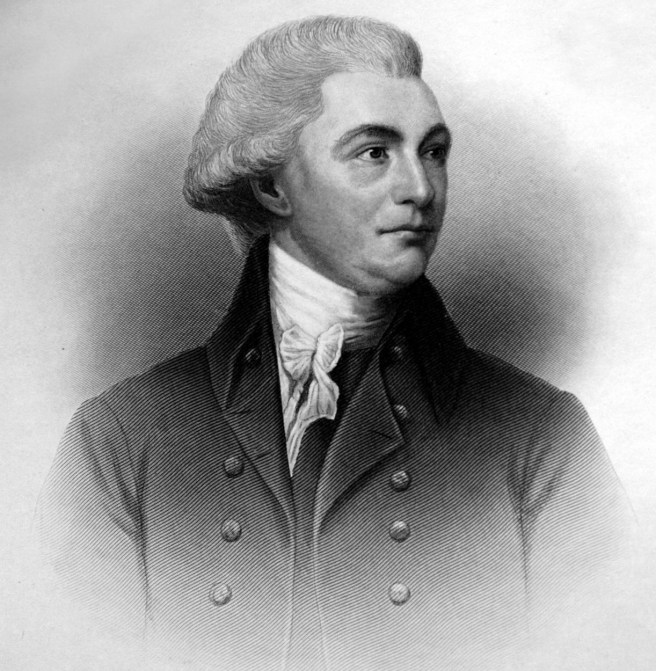
In short, he was William Bingham, already a wealthy Philadelphian when he became filthy rich via privateering during the Revolutionary War. He was also a statesman and U.S. senator who parlayed his riches into vast land purchases, as noted above but also including upstate New York, where Binghamton, where I’ve also lived, was named in his honor.

Got it?

Quite simply, Bingham owned two million acres in Maine, making him land rich but cash poor.

His agent in Maine, Revolutionary War Gen. David Cobb, was responsible for laying out most of the roads associated with the Airline Highway (now eastern State Route 9). And when Cobb retired in 1820, John Black, agent for Baring Brothers Bank in London, felt that lumber was the wealth that would provide his boss the needed profit. There were further complications as well as marriages, but you get an idea how Baring township in the Moosehorn wildlife preservation got its name.

Cobb did, however, build a great house at Gouldsborough and soon faced some harsh realities that he notated between 1795 and 1800.

First, the land and climate of eastern Maine were not and are not suitable for farming. He noted that “those who come to view the country … have as frequently returned almost blind by the bites of flies and mosquitoes. You have no conception of the hosts of these devils that infest the thick forest at this season.”

More critically, he found “the great body of the people of this country possess no regard to the rights of private property,” calling them ” vicious inhabitants who disfigured its landscape. Every inhabitant here is now a trespasser, a plunderer. They live by it, and therefore they will not cultivate the finest soil in the world. They’re not doing this is the chief cause why the reputation on the country has been damn’d. If the people who live by lumbering are indulged in cutting the forests wherever they please, they will have but little … appreciation of the soil.”

For the record, the soil itself wasn’t nearly that rich.

But continuing, in his estimation, “The greater part … follow lumbering and fishing … and they are very intemperate, very lazy and very poor. It may be said in truth … the majority of the inhabitants are drunkards.”

There are those, of course, who would question whether much has changed since.

Or, as is sometimes said of Eastport, it’s a drinking village with a fishing problem.

Do you understand  a Carlos Williams kind of morning?

Or even one along Puget Sound?

Slow rain outside, misty, foggy, nothing pressing to do, you just want to stay abed a while longer – or return after a leisurely hot shower. Maybe there’s some activity in the next room or down the hall, but it doesn’t matter.

Reminds me of a visit to a neighboring college back in Indiana, when I cracked open my poetry course assignment to an appropriate new vision – one of several breakthroughs that October weekend, actually. Savor another cup of coffee, reflect, recharge. You need those, at least in some proportion to the rest of your goals and life mission. Even if an ingrained Protestant work ethic guilt tries to kick in.

The fog around the island also reminds me of Washington state and visits to friends on the other side of the Cascades mountains. The same smoky indolence.

Do you have any memories of a special time or place of moody experiences like these?

Beloved saintly Tess hear my confession

because I haven’t really known how to shop for myself expertly I’ve hated selecting birthday or Christmas that is, excepting books and records and a few groceries I’d like for myself you’d think spending would be a simple if you had enough cash and my dependable depression reflected insufficient variety or sassy style on the racks here but price tags on anything I desired conveyed, As I learned, kid, look, you aren’t worth anything as far as your job and life are concerned and maybe if you stole from dying widows or threw single-parent kids into the street, you’d be rich and then honestly, most men still dread shopping so what do you really want in gift wrapping?

A few things that peeve me royally

Look, don’t make me elaborate. Here are a few, in no particular order.

  1. Getting stuck in traffic
  2. Having my plans derailed
  3. Overly loud music or TV or movies or mufflers
  4. Not being able to make out the dialogue or lyrics. Along with people singing way out of tune
  5. People cutting in line or who who can’t count the limit in the express checkout
  6. Stupidity of all sorts, but willful stupidity most of all
  7. Arrogance
  8. Lateness or just not showing up, as promised
  9. Lying and cheating
  10. Abuse of authority slash power or gross injustice in general

Your turn!  Lay it on!