You know, the changing photo that keeps appearing when you log in. The calculations have no idea, really, of what I like or don’t. My sensibilities are far more complicated than its simple “mountains” or “seashores” calculus.
In one photo, for instance, a single bright-colored backpack at the bottom of the scene threw off the entire wilderness message. It looked like trash. That sort of thing. I didn’t like the particular photo for that reason, but I loved the bigger landscape.
It’s like living with a painting and one day you finally observe something that becomes a flaw. You loved it up to that point. And then?
It’s a binary switch rather than a scale of one-to-ten.
For now, I’m finding some comfort in that, sensing they still aren’t outsmarting me.
Living in places where firewood is readily available – unlike, say, Manhattan or the Arctic Circle – has made it relatively affordable to heat by a wood-burning stove, at least when we’ve had one. (Let me repeat, it’s high on our renovations and home improvement list.)
OK, my Eagle Scout training left me quite aware that green wood – that is, freshly cut – burns inefficiently, unlike wood that’s had time for the sap and related moisture to dry out. That said, here are some other points.
Seasoning can take as little as six months, though old-timers prefer at least a full year. Or more, if stacked in a way that allows sufficient circulation to avoid rot and fungus.
Softwoods – generally conifers like pine, juniper, spruce, and cedar but also including poplars – ignite easily and burn hot, but they don’t blaze long. They also have a lot of creosote, which will need to be cleaned from the chimney as a housefire hazard.
Hardwoods – maple, oak, hickory, ash, and birch – are denser and burn slower and longer, and while they release less immediate heat, there’s also less smoke and they add up as a layer of radiantly hot coals.
All firewood has creosote, so annual chimney cleaning is recommended. Some sources say every two cords. Chimney fires are especially vicious.
In colonial New England, a house typically required 40 cords or more of firewood a year. Imagine cutting, splitting, and stacking all that – even before bringing it indoors.
Salvaged wood – such as lumber, poles, and fencing – often contain preservatives that release hazardous vapors as they burn.
Destructive insects and plant diseases can be spread when transporting firewood more than a few miles from its source. That’s why it’s illegal to import firewood into Maine. Now I’m wondering about the guys from Maine who delivered to our house in New Hampshire.
A cord is a stack 4-by-4-by-8 feet of standard 16-inch wood. Many stoves, though, require a shorter log.
Do you really get a full cord when it’s delivered? I’ll spare you some old jokes.
Favorite woods include apple and tamarack/larch, both for their aroma and a clean burn that leaves little ash.
As for air pollution? I really don’t want to go there. It could be a Tendril all its own, once we find the right tech geek to sift through the varied reports.
The train derailment in East Palestine, Ohio, has me mentally revisiting a part of my landscape from forty years ago.
At the time, I lived two counties to the north but was a member of one of three old-style Quaker Meetings in Columbiana County, where the accident took place. So I was down there at least once a week most of the year. The county was a mix of industrial and suburban, especially where it bordered Rust Belt Youngstown, and rural Appalachia along with touches of New England. One corner abutted the Ohio River and West Virginia.
The rail line in the headlines was like those running through a small city where I had worked in another corner of the state, a place I call Prairie Depot in my fiction. And East Palestine itself could be adjacent to the city at the core of my novel, Hometown News.
Churches included Mennonite and Brethren, in the peace tradition, as well as Evangelical Friends at the other end of the Quaker spectrum.
Retracing the terrain via satellite maps, I was struck by how much I’ve forgotten, even parts I had known fondly. Others were pretty gritty, even back then.
From a distance now, it’s like encountering a ghost in a haunted house I thought I’d left behind.
As his Canadian colleagues keep asking Eastport’s leading skipper, “When are you getting a muffler?” Meaning on his boat, the Ocean Obsession.
From our house, they often sound like propeller airplanes. Without looking, I can tell when the fishing fleet is venturing out, often before sunrise these days.
On the other hand, we rarely hear sirens, highway traffic, or aircraft.
Bangor, Maine, has about the same population as Dover, New Hampshire – 30,000-plus.
But it’s the center of a wide region and has the spotlight to itself. In fact, though I live a 2½-hour drive away, it’s the place we often turn to for what many folks take for granted.
Here’s some perspective.
It’s where the Penobscot River meets the ocean, so historically it was the world’s leading producer of lumber, which was floated down from the North Woods, milled, and then packed on ocean-going ships.
Well, that did lead to Old Money, which can be seen in the remaining stately homes and churches built by lumber barons in the 19th century.
The river also separates the city from Brewer, which adds another 10,000 or so to the metro population and provides some of the services and products we seek.
Not just the mall and big-box stores, though some of them do deliver way out to our fringe of the state. Don’t overlook new auto dealerships and their service departments, either. Well, we do have one dealer out here in Sunrise County, but it’s not Toyota.
The vast Northern Light Eastern Medical Center on the bank of the Penobscot River is the hub of an integrated health system spanning much of the state. Frequently, that means this is where your specialist is.
Bangor International Airport. It’s where you have to go if you need to a commercial airline connection or are meeting an arrival.
Media. Starting with the Bangor Daily News and Maine Public’s studio.
University of Maine in neighboring Orono. Well, its impact spills over into downtown Bangor, should you be looking for funky.
By the 1880s, Bangor was also a leading producer of moccasins, more than 100,000 a year. Should that be a footnote?
The downtown was struck by major fires in 1856, 1869, 1872, and 1911 – the last one destroying the high school, post office, custom house, public library, telephone and telegraph companies, banks, two fire stations, six churches and a synagogue, about 100 businesses and 285 residences.
Yeah, this is the big day for roses and chocolate and those mood-drenched candlelight dinners. Let’s put it all in some perspective.
Historically, it overlaps an ancient three-day Roman festival that included drunkenness, nudity, sacrifices of dogs and goats, and slapping by goatskins intended to heighten fertility. It was something the early church tried to deflect by invoking Saint V.
As for the saint? The bio gets mysterious. Did the man really exist? Or was it eight?
The oldest printed card, 1797, cited a day the sender desired to “be your Valentine.” Whatever that meant.
The Quaker Cadbury chocolate company introduced the Valentine’s Day heart-shaped box in 1861 but failed to register the design. Copycats soon piled on.
About a billion cards are sent for Valentine’s Day every year, second only to the 2½ billion at Christmas.
Nasty cards have also been part of the tradition. Ever get a “vinegar Valentine”? Anyone else intrigued?
It’s big business – by one count, $27 billion pre-Covid, with candy – mostly chocolate? – the biggest gift, followed by cards, roses, romantic dinners, and, for ten percent of recipients, jewelry. Not that you’re limited to just one category. And I’m not sure if the ranking is by the quantity of each one or by the amount spent.
As for that jewelry? Much of it takes the shape of engagement rings – with six million being presented on the day every year.
In Japan, women are expected to give the chocolate.
Teachers receive the most cards, maybe because children age six to ten, exchange the three-fifths of the cards overall.
So far, I haven’t found perfumes, love potions, or aphrodisiacs on the list.
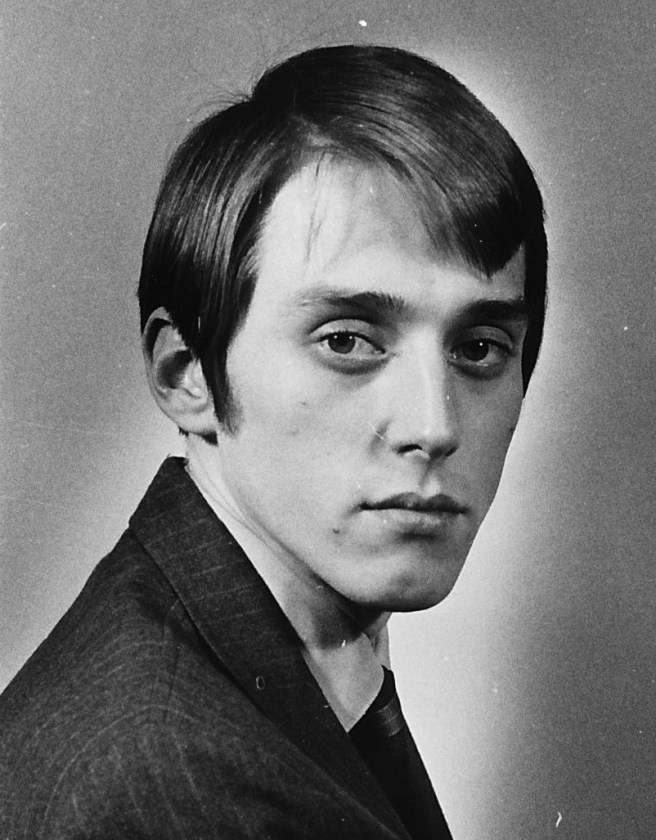
Yeah, a big Seven Five. Amazed I’ve survived so long, considering much of the stress and upheaval earlier.
The achievement comes with a burden of feeling I’ve failed to accomplish so much of what was expected of me – even without appropriate resources or support – as well as an amazement at the twists my life has taken along the way.
Perhaps that’s a generational issue many of my peers feel. Please weigh in.
Meanwhile, the serious political crisis in America’s future leaves me feeling utterly terrified. Quite simply, we failed to preserve the republic, with the assault coming not from a Commie left but rather by the know-nothing, no-saying, me-first, destroy-it-all right – those who would conserve nothing, despite the label they cling to. Along with their superrich allies.
Let me admit that at one point in my development I would have claimed to have been a Goldwater Republican. These folks are way to the right of that, like the hoards that destroyed Rome. Yes, ready to sack and ravage. Could they be the dreaded zombie hoards awaiting in the ultra-wacko wing?
I was amused recently by a Project Runway Junior’s challenge that had the teens trying to define themselves (blame my beloved elder stepdaughter for my even watching the streamed series). How would I have seen my core at age 14 or even 17? Quite simply, I’d say we were all so confused.
So here I am, once again pondering how we ever wound up in this state.
Me, back as a cub reporter.
Personally, it’s been what I’ve seen as a zig-zag journey, building from what I heard in a poetry reading by John Logan in the very early ‘70s.
Much of what evolved in my encounters can now be found in my novels and poems, though my last third – and most fulfilling – years are yet to be expressed, apart from flashes here at the Red Barn.
In short, I’ve moved far beyond my expectations of things like Paris Review and the haute literary scene or some upper middle-class comfort.
There were 25 years in my native Ohio, most of them early but with two returns to other corners, one in my 20s and another a decade later. But they ended in ashes.
To my surprise, there are 42 years in the Northeast, 36 of them in New England. Well, technically Maryland isn’t quite Northeast but as Eastern Seaboard, I’ll include it.
Throw in four years in the interior Pacific Northwest, four in southern Indiana, and a season in eastern Iowa.
Plus a childhood I’m finally admitting was dutiful, not “happy.”
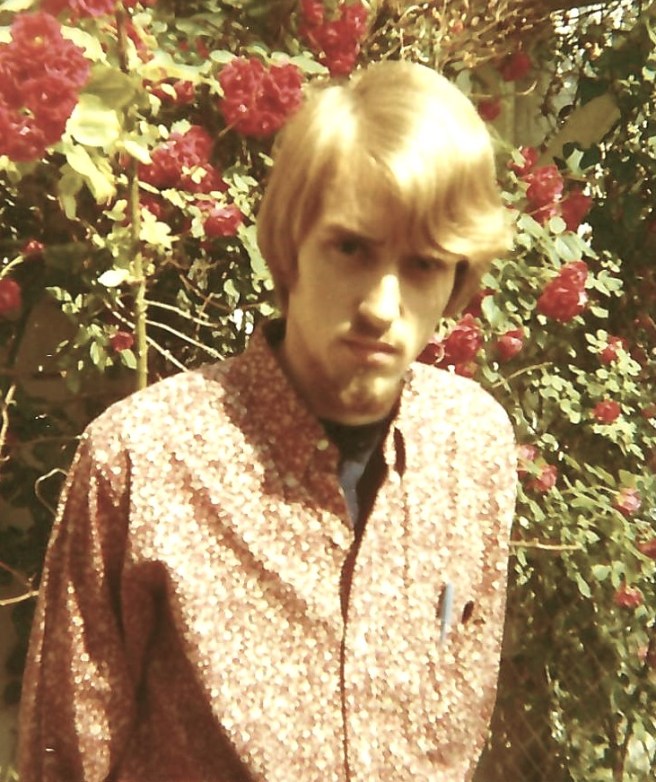
Two years later, between southern Indiana and Upstate New York,
Many people my age find themselves living more and more in the past. I, in contrast, want to live more and more in the present – having dug out through so much of what has guided me here, to the easternmost sliver of the continental U.S.
When I’m 80, I will have lived half of my life in the Northeast.
Unless another twist pops up before then.
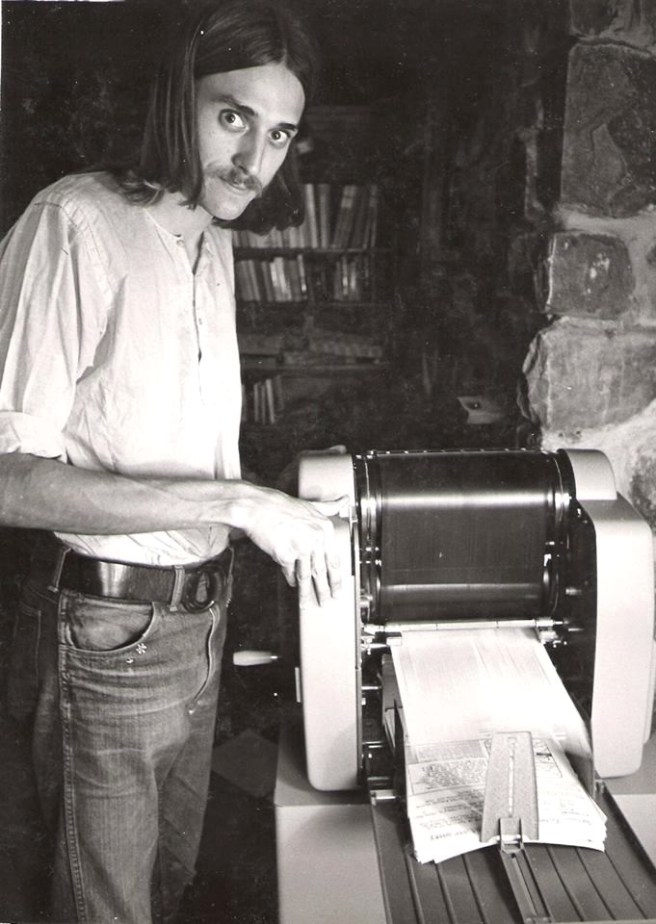
And two years after that, as a young yogi running a mimeograph printer.
Quite simply, to make truth subjective muddies the water and likely denies the existence of any external standard of measurement. Or, from another perspective, to impose “my truth” will quickly make everything unreal. End of argument, if you must.
Or, for perspective, Donald Trump manages to negate the rest of us and all science. The world becomes flat, OK? And insanity rules.
In contrast, the concept of a universal Truth exists as a perfection outside of our individual perceptions. It’s something to reach for. You know, the way one and one is two, no matter what. (Except, maybe, in some higher mathematics that nevertheless remain rigorous.) It’s the basis of logic, so without it, everything is illogical. You know, one Truth. As in either/or.
I do wonder if that imposes a monotheism, even when coming from Greek philosophers. One God rather than some chaotic, even neurotic, confusion.
To say, however, “It’s my reality” is far more on target.
Yes, “My reality” in contrast to “My truth.” I can buy that. Now we can talk. After all, feelings are real, even when they’re wacko. And dreams, however fleeting, are another reality.
Through that, too, I have come to recognize times when both sides in an argument are right as well as when both sides are wrong. Forget Aristotle here.
For now, let me point you to my booklet Seeking After Truth, available for free on my Thistle/Finch blog.
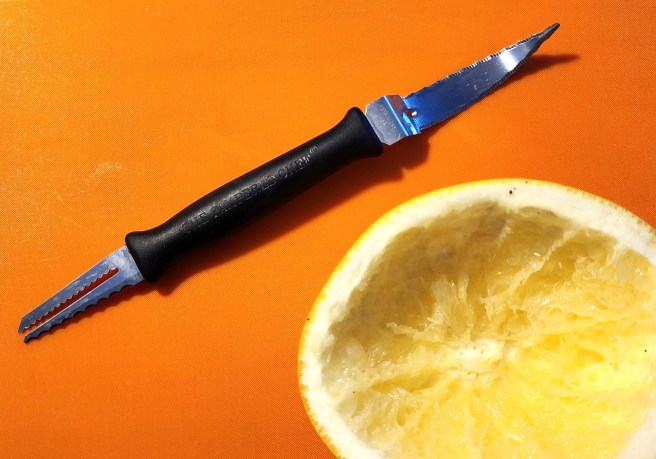
This very sharp two-blade knife, designed for use on grapefruit, has become a favorite of mine. As a Christmas present however many years ago it was intended as something of a joke. We didn’t have tons of extra room in the old place, and since the move, we’ve been seriously downsizing from that.
But it does the job so well it has made the cut, as they say.
 Jnana's Red Barn