CONTINUING SHADOWS OF THE HIPPIE EXPERIENCE

Look at a lot of the bikers or some of today’s teens and you can see they’re carrying some of the hippie legacy. The long hair, especially, and the desire to be as free as Gypsies. But something there doesn’t quite fit, either.

Too much military, for the bikers – the peace vibe ain’t there.

As for the teens, I don’t see the playful side that accompanied the late ’60s and early ’70s, along with all the desperation. Even the drug use seems different, maybe purely numbing rather than mind-expanding.

I’ve already mentioned some of the hippie streams I see continuing. But I haven’t said much about the darker side. I’m open for some suggestions and comments here. Feel free to weigh in. Anybody still picking up hitchhikers, for starters?

ESCAPE? OR ENCOUNTER?

A comment by Aaron James a few days back in response to my post “The Novel as a Time Machine” has prompted me to rethink my own expectations of literature, both as a reader and a writer. It was one of those elephant-in-the-room moments, actually, in which the most obvious thing can sometimes be the hardest to see.

Quite simply, when he said “a lot of people like to read as a form of escapism,” an alarm was triggered, based on a deeply engrained value from my formative years, the one that derided escapism as, well, unhealthy at its core and essentially fluffy. Looking back, I suspect the message was that escapism had the social relevance of sugar overload or a wild drunken night on the town. You know, it just wasn’t serious enough.

At a deeper level, I suspect the reaction also touches on the lingering historic distrust of the arts from my dad’s Quaker and Dunker roots, perhaps even some from my mother’s mix of Calvinist traditions (never mind Sir Walter Scott), and that’s even before we get to Tertullian and his critique of the “pagan” arts during the formation of the early church itself. You know, it all begins with assuming a role of another’s identity, something that’s simply counterfeit and a lie. (My apologies for way oversimplifying a marvelous line of reasoning. And, for the record, many modern Quakers are fine writers, actors, and artists.)

Still, as I was reflecting on Aaron’s comment, I had to admit how much I enjoy work that crosses from “reality” into a magical realm, one of fantasy or surrealism. I like to be taken places – or, as he hints, be given a sense of travel where exploring and learning are part of the sensation of the trip.

Is that escapism? Or is it encounter?

My inclination is to argue the latter. But does that make for a more rugged route? It even has me thinking about the “diet” we allow ourselves when it comes to literature – do we go vegan, for instance, or kosher, or out-and-out hedonistic? What’s “good” and what’s “bad”? And what’s simply another guilty pleasure?

THE NOVEL AS A TIME MACHINE

Anyone else wonder about the appeal of stories set in another century? Just what’s the attraction?

The future, of course, is one direction, a whole set of “what if” projections that for now cannot be tested against historical development. (Admittedly, Orwell’s 1984 certainly has become an exception in the years since I first read it, gee, was it ’64? As has the movie 2001.)

The past, however, seems to be the more romantic option, beginning with historic period romances and Westerns. I suppose it’s not that far removed from those who inquire of astrologers or palmists or mediums about their past lives, although what I’ve always found most fascinating there is how many people who do so claim to have been Cleopatra or Anne Boleyn or Helen of Troy or the like, rather than one of the common, suffering, exploited populace. No, the stories tilt toward royalty, court intrigue, the power struggles of the rich and mighty – the glittering elite far removed from everyday life. (Maybe that’s our fascination with celebrities, too, as if wealth and beauty leads to true love and happiness, not that it ever seems to hold over the long haul. In pure weight, tragedies trump over comedies.)

My wife sometimes jests that I would have been more at home in 18th or 19th century America, especially in a context of the Enlightenment, scientific advancement, and perhaps opera, along with a flourishing Quaker culture. (Never mind that the Quaker discipline of the time banned music and fiction as superfluous, vain, and untrue.) Again, though, the projection is toward a place of refinement, culture, and ease rather than the long, hard, physical labor of the masses.

So what, ultimately, is the attraction of historical fiction? Is there some time or place you’d willingly be relocated to, if it were possible, even if you could never come back? And, while we’re at it, what about the importance of location, even over time itself? Who and where would you like to be? Just what is it about other eras? Ah, the intrigue! To say nothing of the underlying connection.

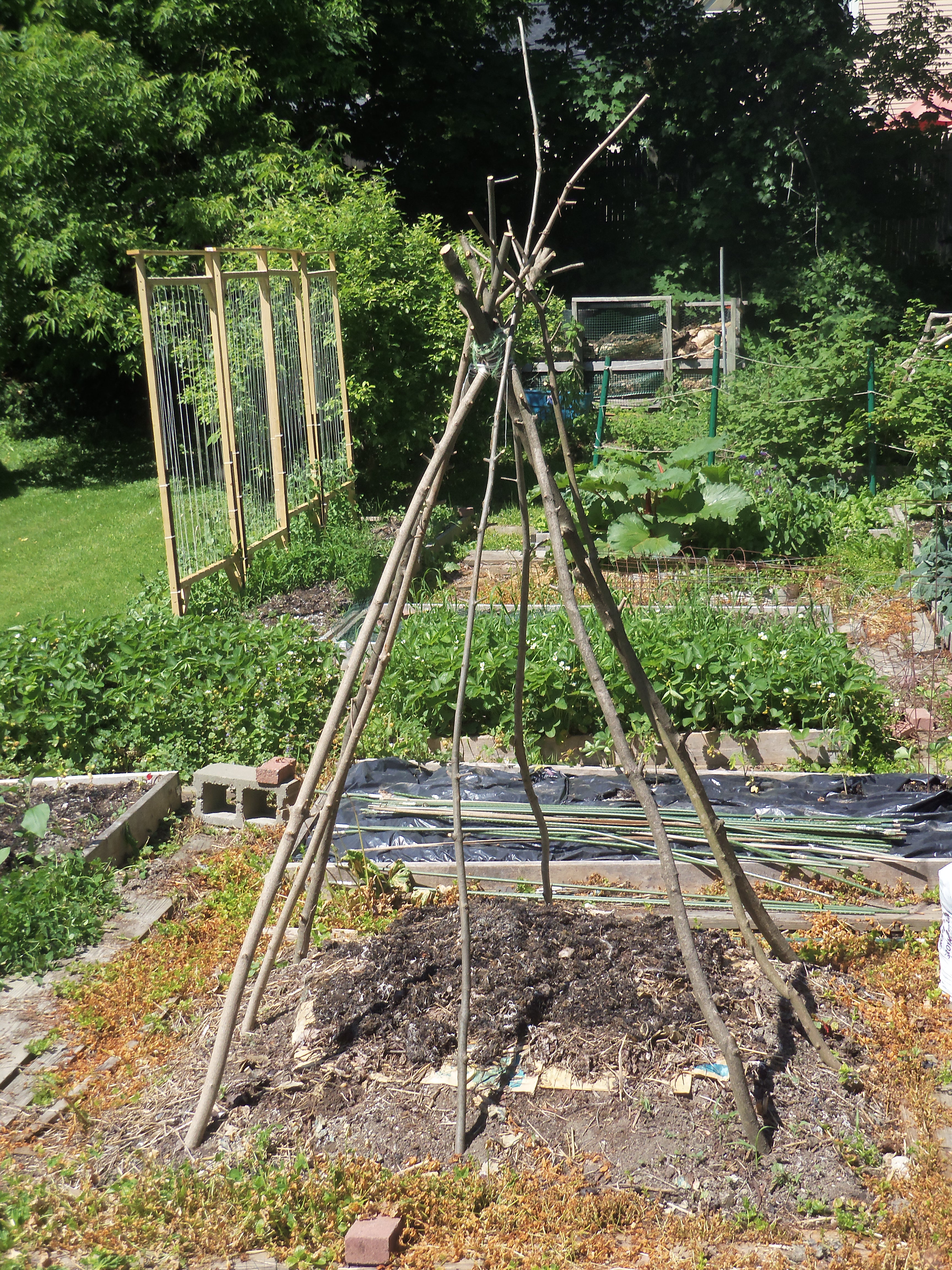
PEAS, PLEASE

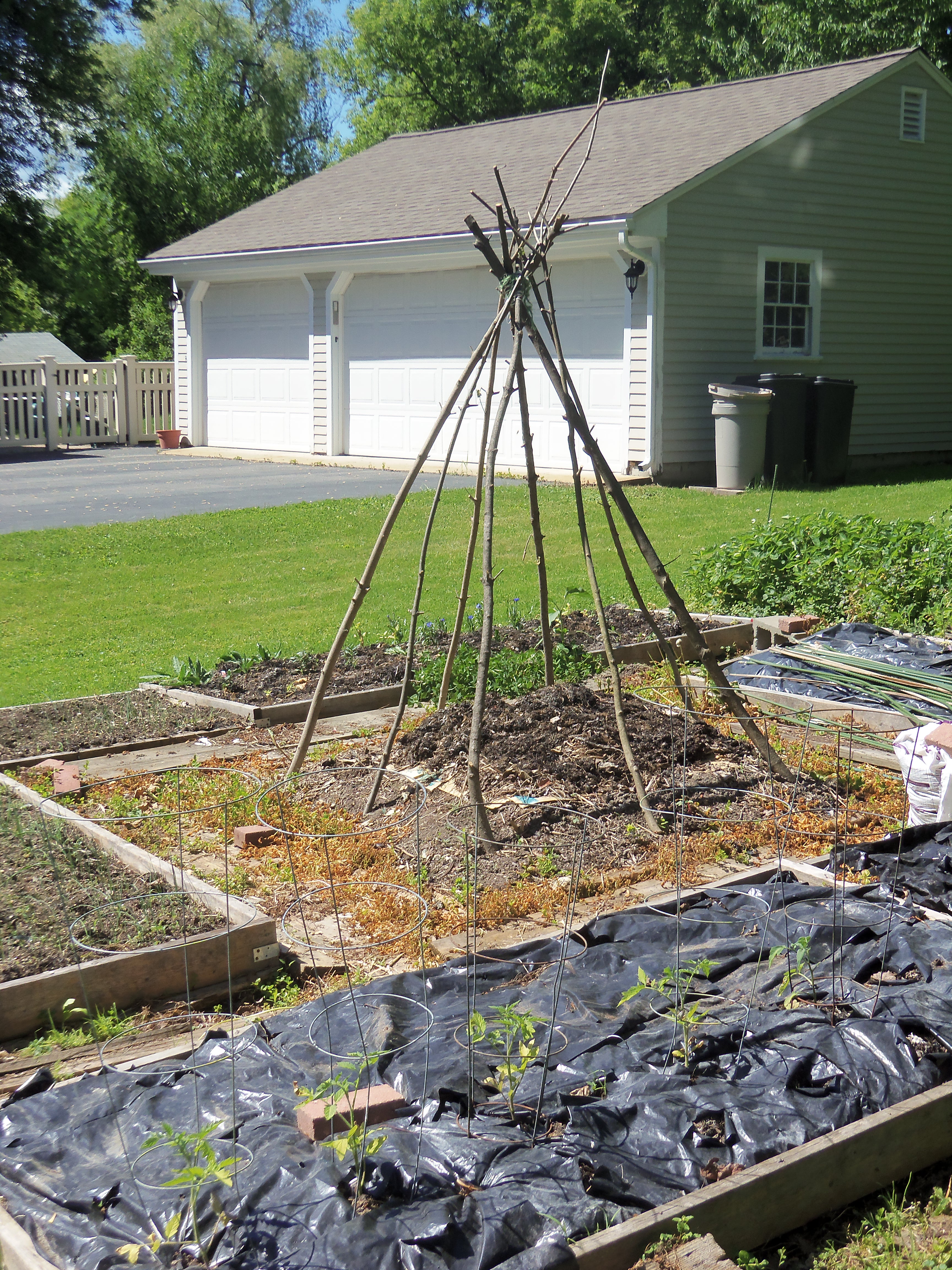
As gardeners know, growing peas can be a challenge. The vines like to climb and tangle ... and they get heavy. This year, thanks to elder daughter, a new design has appeared in our beds. It's quite elegant, I think.
As gardeners know, growing peas can be a challenge. The vines like to climb and tangle … and they get heavy. This year, thanks to elder daughter, a new design has appeared in our beds. It’s quite elegant, I think.
Here's a little perspective.
Here’s a little perspective.


VISUALS FROM THE HIPPIE ERA

Nobody, I bet, can think of the hippie era without thinking of wild color. Just try listening to the music without it. Or reading my Hippie Trails novels.

There’s the clothing, of course, as well as those incredible hand-lettered Fillmore concert posters, the Peter Max illustrations, and the record album covers. The old Rolling Stone weekly newspaper, from the years it was based in San Francisco. Maybe some hand-thrown pottery, macrame, or a paisley pattern or big brass belt buckle.

So what comes to your mind’s eye when someone says hippie?

What would you put on the list?

IVAR’S PAINT QUIP

I wish he hadn’t said it. My former landlord in the Yakima Valley, visiting us here in New England, remarked on how many of the houses he saw that were in need of new paint. That was before he saw ours, too.

Now, in this seemingly picturesque location, everywhere I turn, I see houses with peeling paint. Or worse.

I wish he hadn’t said it.

At least he said nothing about roofing.

FIRST, YOU READ

As long as I can remember, I’ve been a reader, thanks, especially, to a third-grade teacher who got it rolling and a fifth-grade teacher who extended the Landmark history volumes. Robinson Crusoe, Tom Sawyer, Gulliver’s Travels were all early triumphs. Curiously, Huckleberry Finn was easier at age nine than it was as required reading at seventeen; the second time around, the dialect was more difficult to handle. My general interests, however, soon veered from history to chemistry until the writing bug hit me through a very demanding high school sophomore year English teacher who drilled grammar so thoroughly we were diagramming 250-word sentences and arguing our alternative versions. She also solidified a tentative curiosity in my enrolling in journalism the next year, which wound up leading to my career path. In my senior year, when I was editor-in-chief of the high school newspaper, another English teacher confidently insisted, “You know why you write.” Followed by, “Yes, you do.”

In truth, I’ve never quite been sure what her answer would have been. I assumed she saw a desire to be noticed or appear important. But that’s not what I would have answered. I was, after all, a skinny intellectual in a school that valued football and basketball players. Moreover, my father’s side of the family – the ones I knew, since my mother’s parents had both died before my birth and the rest of her blood relations were in Missouri – had little use for either art or learning for its own sake. They were a practical, God-fearing people where a gift in language would be best employed as a preacher. (Lawyers were another matter.) Only after my father’s death did I learn he had once dreamed of being a sportswriter or the pride he took in my work as a professional journalist. When that flash connected with my grandfather’s saving copies of all of the Dayton Journal and Herald newspapers from the World War II era (“Someday they’ll be valuable”) and his mother’s lifetime of meticulous reading of the daily news could I finally perceive their approval in what I had come to see as a low-paying, and increasingly low-status,  occupation.

From them I also carry a deeply ingrained sense of social responsibility, one in which my personal relationships are often motivated more by duty than love. Here, then, my leap in concern from history to politics would seem natural. Little wonder the novels Animal Farm, Brave New World, and 1984 re-ignited a passion for fiction and what the written word can do. Politics is also the mother lode of journalism, especially for those of us who believe progress is possible through civic action. And so I might have answered Miss Hyle’s statement with, “I write to improve the world.”

~*~

(How audacious that sounds now, more than four decades later. How innocent, too.)

~*~

What she may have seen was unmistakable ambition – a desire to win for the sake of winning, apart from being noticed or appearing important, regardless of the game at hand. Winning as an act of self-affirmation. Winning as the reward for solving the puzzle faster than your rivals. With or without the laurels, trophy, or monument.

Secretly, though, there has been the hunger for a monument, the book in every home or library, the paperback cover in the supermarket and drugstore, the repeated praise in the New York Times Book Review section. Even, at one early point, the aspiration to have not just volumes of poetry and fiction but a play or musical on Broadway as well.

But then the plot thickened.

And how.

FRESH EGGS

Quaker 5 156

Buying “free-pastured” eggs from a coworker produced one of those Eureka! observations in our kitchen. Just look and you see how different organic or natural food can be. The yolks were bigger and brighter than anything we got at the supermarket. Tastier, too, which isn’t always the case with the back-to-nature examples.

The shells, I should add, came in lovely pastels, depending on the breed. The light green was my favorite.

And then he moved on, and so did I. Or maybe winter came first, with the annual drop-off in hen productivity.

Still, we see a difference in the free-range eggs we’re buying these days, rather than the supermarket’s own brand.

FINANCIALLY SECURE?

This was one of the big items that used to appear in the personals ads. The lady wanted a gentleman who was “financially secure.” But what did that mean in practice?

For some, I suppose, it was a seven-figure portfolio … or better.

For others, maybe someone who held a steady job or was supporting himself? Or maybe could simply pay his half of the rent?

Of course, it was ultimately a personal perspective.

So how would you have defined it?