So we can keep asking:
How soon before the Trump card turns into a Joker?
Or before the Apprentice tag takes hold?
Or before the whole deck’s cleared?
You never know what we'll churn up in cleaning a stall
So we can keep asking:
How soon before the Trump card turns into a Joker?
Or before the Apprentice tag takes hold?
Or before the whole deck’s cleared?
I’m always startled to hear people say they can pursue spirituality without any teacher or community. Nothing in my experience, as a yogi or a Christian, supports that. If you point to George Fox’s time of sitting “in hollow trees and lonesome places,” and his recognition that among the priests (and preachers) he consulted, “there was none among them that could speak to my condition,” and his eventual proclamation of discovering “the pure knowledge of God and of Christ alone, without the help of any man, book, or writing,” the fact remains that he was stimulated by that early dialogue and, once he’d experienced Divine Revelation, did not keep it to himself but was instead drawn out to others who were having similar transformations.
I would point, too, to the spiritual support he received initially from Elizabeth Hooten – whom I consider the first Quaker and who, incidentally, came across the Atlantic in her advanced age to Dover to minister among Friends here — and later from Margaret Fell.
One reason we need community to accompany our spiritual deepening and expansion comes in the ways it can counter tendencies toward self-deception, human weakness, laziness, or distraction. In the practice of our faith, we instruct, encourage, acknowledge, embrace, correct, inspire, comfort, guide – even rebuke – one another. These are matters the New Testament calls discipleship.
Lloyd Lee Wilson has reminded us there are no Quakers apart from the meeting, which is another way of saying each Friend needs to be part of this interactive dynamic. I remember my shock in picking up a book on leaders of the Confederacy and finding three Quakers indexed; “Impossible,” I muttered, until seeing in the text that all three had been raised in Quaker households but resided far from any meeting – and its corrective discipline – when the war erupted.
Try dressing Plain and adhering to Plain speech without a circle of Plain Friends at hand, and you’ll discover just how hard it is to continue even an outward practice. Maintaining a witness is no less difficult. Moreover, I find it’s hard to keep from being overwhelmed by the negative influences around us. Maybe part of the restorative answer is right in front of us all along – Society of Friends, plural.
Or in some other, similar circle.
A surgeon is more of an artist than an administrator.
There’s nothing to make me think he can lead a management team, much less a host of competing political and economic interests. Artists, after all, tend to act as soloists or move in small circles. An operating room remains a small stage or studio, all focused on one event, unlike the chaotic forces erupted in the Oval Office.
Before aspiring to the White House, could he show us how he’d function as a big city mayor? Or a small-state governor? Or even as a senator or congressman?
Let’s put this in context. An operating room is much, much smaller than the Pentagon. And the Pentagon’s only part of the Executive Branch.
Ben Carson’s not ready for prime time here. Not by a long shot. No matter how much we might like him.
By the way, his is the first — and the only — GOP bumper sticker we’ve seen on a New Hampshire car to date. This is turning into a first-in-the-nation presidential primary quite unlike any we’ve encountered before.
Only months ago, most of us assumed that the 2016 U.S. presidential contest was going to be a cut-and-dry Bush versus Clinton. My, how things have changed!
Most of the news focus since then has been on the crowd of right-wing and further-right Republicans jockeying for position as king of the hill, something that so far hasn’t turned into a new front-runner each week, unlike four years ago – but let’s not rule out the possibility if, or when, the Donald stumbles. So far they’ve all appeared to be untouched by the party’s turmoil in the House of Representatives, but a government shutdown could blow away their posturing rhetoric when it comes to real-life federal spending. Some intense and bloody drama may be about to explode on their political stage.
The Democratic side, meanwhile, has been relatively quiet, with Bernie Sanders steadily building enthusiasm as he stays mostly outside of the news spotlight. Many others, who fear he’s too far left to win national election, are now getting jittery over Hillary Clinton’s deleted emails controversy before committing to her campaign. How damaging are the charges, anyway? For them, the possibility of a Joe Biden run is tantalizing, especially as he is cast as a centrist candidate – and likable insurance for the party in light of the allegations or other troubles brewing for Hillary. As Stephen Colbert says, Everybody likes Joe.
The one other candidate who keeps generating excitement is freshman Senator Elizabeth Warren, but she has flat out nixed running this round. But don’t rule her out of the calculations. Just look at Damon Linker’s argument on today’s online edition of The Week: Anybody but Hillary: The case for Biden-Warren 2016. He makes a fascinating case.
At the moment it’s possible to view this as a political marriage made in heaven, especially if you consider recent meetings between the two. Any thoughts?
The thought hit me the other morning: The Donald’s the new Palin!
Doncha know? Just listen and compare. See how they move.
And then ask: Hasn’t he gone rogue? Or pure maverick?
Could they even work as a team?
And to think, it would counter the sexism label he’s attached to himself.
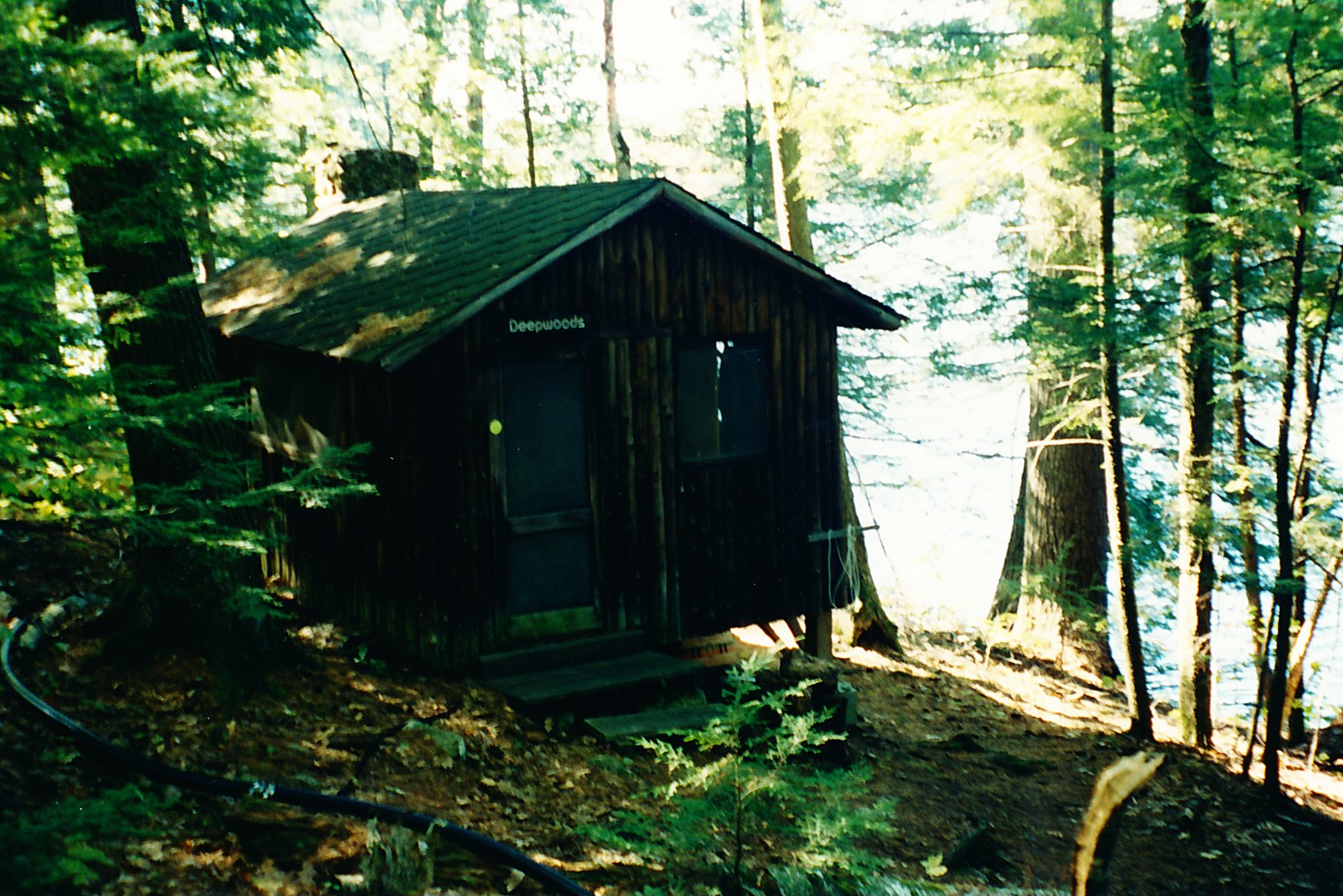 Spending a week this time of year in this cabin gave me a taste of Thoreau at Walden. Some of the nights were quite icy, even with a wood fire beside me.
Perhaps nothing separates us from earlier generations of Quakers more than our love of arts and entertainment. It’s not just that our frequent references to music, fictional stories, and visual arts would have perplexed or even annoyed them. Especially as part of our vocal ministry during worship.
Rather, these were simply forbidden as vain or even useless. The focus was on piety and humble service.
Pleasure for its own sake? We wouldn’t have been members back then, period.
~*~
And now I find myself envisioning some of Peter Milton’s wonderful lithographs in which earlier generations of artists watch from the balconies or wings of the scene unfolding. I often have that sense of the past watching us — and that includes in our Quaker circles.
As I reexamine just what happened to the hippies and conclude that the movement continues in many strands we now take for granted or simply overlook, I am nonetheless struck by a reaction in seeing a number of men who continue the look. Their long hair and threads may fit the style but for the most part they exude an aura of loser. Or, worse yet, a bum.
Sometimes it’s the cane they need for walking or an indirection or their lonely gaze. Missing a projection of derring-do or colorful theater or cool leadership, they instead seem to be more in need of a handout than any extension of underlying comradeship. In the height of the outbreak, back in the ’60s and ’70s, we often found ourselves pooling resources and abilities, perhaps just for a communal dinner or a party or a rally. There was an unstated mutual responsibility. Here, I feel only one-sided need. Never among them do I see someone I’d consider for a roommate, if I were still single.
Let me add this doesn’t fit all of us older guys in beards and long hair. But we have come through quite a lot over the decades, personally and as the carriers of a vision, to make me feel more like a survivor than a victor. For the most part, it’s been rough. Some of us did find ways to pay the bills without abandoning the style. Some have done it in the inner city, while others kept truckin’ on in a back-to-the-earth mode. Some have evolved into something, uh, higher. More mellow, peaceful, even wiser.
My own experience in the past year of growing out my remaining hair into a ponytail has brought its own perspective. It never seemed to tangle like this, for one thing.
Simplicity = enough = balance.
Or we could start with an unbalanced state, where many if not most of us seem to be, and work backward. How much is enough, after all? And so you simplify.
I also like the aesthetic equation (when it’s all in balance):
Elegance = simplicity = beauty.
It all adds up. Satisfaction.
When you’re ready.
When the Donald brags about being a successful executive, a little context helps. He heads a private company, without any real risk of board intrigue or challenge, and is valued, by independent observers, at $3 billion to $4 billion. We won’t even get into his near bankruptcies.
In contrast, Carly Fiorina headed an $57 billion company that was No. 35 on the Forbes most valued brands list. A company with $109 billion in sales and 302,000 employees. Oh, yes, one that weighed in at No. 19 on the Fortune 500 list.
Want to talk about management insight, then? Especially in a truly competitive world.

