We’re reflecting on so many people we encounter, in person and their stories as well as in the news, and so often there’s a kind of lunacy involved. That, or plain tragic fate. I wouldn’t even call it bad luck.
Makes us question if anyone’s normal, whatever that is, or makes us see our own irrational failings and emotional struggles as nothing in comparison. (Yes, we still want to be better than those poor unfortunates.) As for paying the bills and that sort of thing – getting to medium income would be nice – though even that is beyond the range of possibility for many.
Lately, in revisiting the program booklets of so many musical performances I’ve attended over the years, I’ve been wondering whatever happened to so much of the rising talent I heard – the soloists or opera singers who never made it to the top, and that’s just one front.
Authors and journalists, too, as the written word has receded from the public spotlight. (No, Fox News anchors are not journalists, and that’s part of the problem.)
Makes me wonder if I’ve been looking at the whole world wrong. Maybe we should begin with an assumption of insanity somewhere in every psyche and work from there. Maybe that was the best part of the hippie outbreak, letting that side somehow out of the box. Dunno, but it was lively.
Of course, it also means looking into the dark side of life, if it’s possible to do so and not become engulfed in evil. That part’s scary.
And here we are, wishing everyone Merry Christmas.
Working on my novel What’s Left, had me exploring unfamiliar terrain when it comes to writing itself. Here I was, after a lifetime in newspaper journalism and a shelf of experimental novels and volumes of poetry, now drafting and revising a new work that was unlike anything I’d done before.
The details, for the most part, felt right, as did the structure. I’d eased into a voice in which Cassia could relate her progress, with the verb tenses of past events repeatedly changing back to the present, the way people do in speaking. The opening pages and final chapters actually excited me. But something bogged down along the way in-between. Not that it wasn’t good; it just wasn’t … well, something.
Much of my awareness as a writer has regarded the matter of style. How crisp, sharp, polished, muscular or sensual, even musical are the pages? In literary circles, that would ask just what in particular gives a specific writer a unique signature or sound, but my background originated in my high school years when I discovered the dictates of newspaper style — the strict rules given journalists for uniform spelling, story structure, word choices, and so on, matters that essentially create a uniformity or even anonymity in voices. Anyone want to mention Hemingway at this point?
With What’s Left, though, the word that kept popping up for me was tone. It was somehow just a little off.
Thinking of it in musical terms, I’m always surprised at what happens when our choir changes the tone of a piece by moving it up or down a half-step or so. It becomes brighter or more melancholy, for instance, as well as easier or harder for us to sing, depending on how it presses our vocal ranges. Well, this is also looked at as a matter of pitch. And it can make a world of difference.
With my novel, I slowly realized I didn’t want it to sound too much like a novel — I wanted it to be more an overheard conversation. As I also found, that can be tricky when we’re looking at a stack of old photos or family history.
~*~
In the family, Cassia’s great-grandfather Ilias would have known food like this. A plate of cooked snails with tomato in Crete, Greece. Served in the town Agia Galini. Photo by Helentr via Wikimedia Commons.
~*~
Now that the novel’s finished, I’m reflecting once more on the basic of tone. One definition calls it the attitude of a writer toward a subject or audience, and I’m seeing how it’s been both in my case. Over the course of the revisions, the subject mutated from her father to his photographs and, finally, to the experiences of Cassia herself. In addition, her position shifted from her telling of looking back on her discoveries to having her tell of them as they occurred — in effect moving the center of gravity of the story well into her early teens. That, in turn, changed my attitude toward the audience.
Tone, as the definition continues, can be formal, informal, serious, comic, sarcastic, sad, and cheerful, among many other outlooks. Well, where her voice got younger, I did find her bursting into outrageous, delightfully irrational lines that have become some of my favorites.
My thinking about tone was also stimulated by things my ex-wife, a painter, had repeated about the necessity of tone in visual art — something many artists seem to lose sight of (sorry about the pun) as they work. Here it’s the contrast of lightness and darkness, in color as well as black and white — highlights and shadows. Squint your eyes and see if everything blurs into one. It’s still an important parallel to the written word.
So in my novel the tone would need to be colloquial. In the draft and early revisions, Cassia’s mostly the reader. But in the final draft, it’s largely her father. My attitude toward the subject has definitely changed, as has hers.
There’s also the attitude toward details. In fiction, to establish the contrast of lightness and darkness, it helps to keep many of these suggestive, open to the reader’s imagination — unlike the specifics demanded in journalism. Think of having shadowy areas where things can move about in the background without interrupting the action at hand.
In another shift, as she began voicing questions in place of flat-out statements, the reader just might start arguing with Cassia (not me!) — or even to say to herself, “I remember something similar” or “I’m glad that’s not how it happened with us.”
~*~
Since her family’s involved in the restaurant business, we can change our perspective slightly. Finding the right tone is something like deciding what kind of meal you’ll sit down to. A picnic, for example, is quite different from one with white linen on the table or from a quick lunch of burgers and fries.
As for something at home? It helps to know who’s coming.
Do you ever have the feeling when you’re reading or listening to certain discussions that you have little idea what’s going on?
The kind that hinge on knowing certain figures being referenced, for starters?
I could point to overhearing the lifeguards gossiping about their plans for the weekend or last Friday’s party, or even some of the slang they’re using. Fair enough.
These days, now that I’ve been out of the news business nearly eight years, it can happen even when people are discussing political developments or pop culture celebrities. Yes, I’ve curtailed my awareness there – too many other things to work on.
With other people, I’ve commonly missed social cues, leading to awkward situations or much worse. Add to that my lack of hands-on ability in home repairs and other domestic necessities, even before we get to high tech or digital gaming.
And trying to remember people’s names and faces has always been a challenge.
Oh, my, this confession hurts – but I have witnesses. And it’s not even where I thought this post would begin.
Look, I’ve been considered a rather intelligent guy all my life, one with a broad range of inquiry of an interdisciplinary type. Something of a geek, actually, who loves classical music and opera and the great outdoors but labors as a wordsmith.
But here’s where the twist kicks in.
Too often when I’m reading an article in, say, the New York Review of Books, I’m feeling flummoxed. No, I haven’t read most of the books or even authors being discussed, the subtleties of the argument are eluding me, I have no background on the time or place or conflicts under consideration. And they’re being raised like it’s something every real thinker should already know. Yipes!
It’s happening again as I read a collection of conversations and correspondence between Gary Snyder and Julia Martin. I get the mentions of other poets, yes, though some of the talk gets pretty technical. But when they wander off into Buddhism, it goes way beyond my many readings, and then there’s a whole library of ecological and goddess philosophy volumes they invoke, all unknown to me.
Once again, I’m feeling stupid. Not just humbled but speechless.
Perhaps I could turn to my beloved musical experiences, but even there, I’m a rank amateur. Yes, I often baffle those around me when I mention a certain composer or performer, but put me in a circle of real musicians, and I’m again overwhelmed. I can’t even tell you what key a piece is in when I look at a score. Just wait till they get really technical.
Well, I do have some specialties, beginning with Quaker theology and history, but even there I’m a rank amateur compared to the pros, meaning college professors.
The fact remains that I believe these things are important, even if I can’t remember details like the title of a poem I truly enjoyed or the import of particular yoga luminaries.
Maybe in wanting to know it all, at least on some corner of the intellectual frontier, I’m left knowing very little.
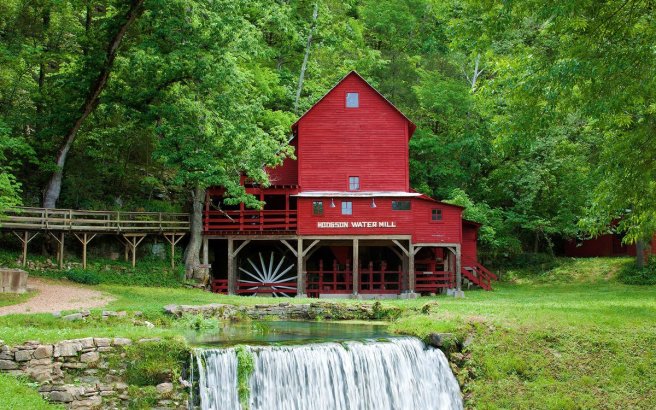
In my novel The Secret Side of Jaya, she encounters an old-fashioned, water-powered gristmill when she and Joshua relocate to the Ozarks.
Turns out that the best-known mill in the Ozarks is named after some of my kinsmen who settled near Sycamore, Missouri.
Here are some facts.
~*~
The Hodgsons were Quaker millers in Guilford County, North Carolina, before heading north in the 1820s. At one time two cousins, both named William, had mills there. The Missouri line descends from one. I descend from the other. (For the family line before that, see my Orphan George blog.)
For a while after leaving the Piedmont region, that line of the family briefly spelled the surname the way I do. Then they reverted to the original, with the “g” in the middle.
A grain mill has graced the site at the foot of a bluff on Bryant Creek, Missouri, since 1837. The current three-story mill was built in 1897 by Alva Hodgson, who mostly worked alone on its construction.
After 1909, Alva imported top-of-the-line French buhrstones from the Pyrenees Mountains and installed a turbine to provide electrical power to light the mill and surrounding buildings. The electricity also ran a half-dozen sewing machines producing overalls in a neighboring general store.
Alva Hodgson also purchased the site of the Dawt Mill near Tecumseh, Arkansas, in 1901 and rebuilt that mill in 1909. Today it continues to grind grain. It’s also a full-time resort with three restaurants, a concert venue, and float trips.
The Hodgson Mill left Hodgson hands in 1927.
Until its purchase by Hudson River Foods in Castleton, New York, last year, the Hodgson label was still a family-owned operation.
At the time of the purchase, the company’s headquarters and production facilities were in Effingham, Illinois. The milling was still done in the Ozark Mountains of Missouri.
In addition to its signature cornmeal and unbleached flour, products include whole wheat pastas, breakfast cereals, bread mixes, pancake mixes, wheat bran, and pure cornstarch.
Principal competitors include Bob’s Red Mill Natural Foods, Nature’s Path Foods, and Spectrum Foods.
In the final revision of my novel What’s Left, the voice and direction of the story changed greatly. For one thing, it became much more Cassia’s own.
To my surprise, some of the material about her father lost its urgency or importance. Here was one passage that would be refocused and condensed:
The crucial turning point comes, she says, just before Baba arrives here. Tara’s always defended her own space — what she perceives as her essential freedom — and as long as he could accept that, they could spend time together. At heart, though, he’d require more commitment than she would offer, but this once, knowing he’d be headed to the monastery, the situation forced him to take that out of the equation. He had to admit he had no idea what would follow his cloistered withdrawal from the world, and demanding a commitment he couldn’t return at this time would be unrealistic and unfair. That insight, in turn, gave both of them a rare freedom space to concentrate on the present rather than planning an ironclad future together. We can enjoy the next few months together, at best, and they could take everything at that. It was the healthiest — and most rewarding — relationship he’d had. Neither was clinging to the other.
~*~
When it comes to relationships, individuals can vary greatly in their needs and expectations and what they can provide for their partner.
Would you feel comfortable in a relationship like this? For how long?
~*~
In the family, Cassia may have had food like this. Halvah and nut-cake at Mario restaurant, Monolithos, Santorini. (Photo by Klearchos Kapoutsis via Wikimedia Commons.)
A curious set of emotions has set in for me. As much as I love living in Dover, I feel myself separating from it. There’s a sadness, as well as the excitement of new adventure ahead, though we have no idea exactly how soon.
Next week? Next month? Next spring or summer? We don’t know yet.
We had enough surprises in trying to buy this place, in what seems a life ago to me.
So I anticipate a crush of time-consuming work ahead in packing and then unpacking our goods, as well as the rounds of changing address and establishing new connections, and that in turn has me hesitating to step up to volunteer for tasks in the groups where I’m a member. Yes, I’m distancing.
It’s happening at home, too.
Moving around the garden, for instance, when we realized we wouldn’t replant garlic bulbs this fall, not here. Or looking at my fern beds and asparagus patch, knowing I’ll definitely miss them.
Or facing household breakdowns, which seem to be multiplying. You know, let repairing them become someone else’s problem. They probably wouldn’t like the color of paint we use, anyway.
Things we’ve never really liked about the house itself but somehow accepted now are acknowledged as irritants. That sort of thing.
I keep thinking we could easily pour another hundred grand into this domicile, if we had that much, but it would never be want we really want or, at this point in our lives, fit what we need.
This all feels so strange, given that I’d settled into a kind of familiar lazy comfort with things.
One of my annual practices around now used to be crafting a seasonal itinerary for the coming year, one that included goals for each of the major components of my life – Writing/Creative, Quaker, Relationships, Household – that sort of thing. It was kind of like budgeting, but with a focus mostly on time and dreams.
Closely related was a consideration of what kind of schedule I wanted to follow once I retired or somehow otherwise achieved financial freedom. You know, maybe having a bestseller novel break out to fund it all.
The one thing I realized each time I attempted the planning was that there would never be sufficient time for everything I deemed important. And, as my wife pointed out, there were a lot of mundane tasks I wasn’t even considering.
Looking back, I’m rather embarrassed by what I’m seeing. One thing for sure is that little of my life since retiring is anything like what I had anticipated. I had no idea how much my stamina and self-discipline would be flagging. During the earlier thinking, blogging wasn’t even on the horizon nor was choir or daily swimming. (Well, the latter two are currently off, given Covid.) I’m still not meditating or doing hatha yoga daily, either.
Much of the time has been taken up with the self-publication and promotion of my novels as ebooks, and later, with the deep drafting and revisions of What’s Left, which in turn prompted drastic reworking and even renaming of my earlier fiction. Releasing those in both Kindle and paperbook at Amazon last summer came as a HUGE relief. In many ways, I felt I was done.
Or almost.
What I wanted to do was reshape my daily, weekly, and even annual routines. What are my goals and dreams now? What do I need to do, too, to maintain a suitable living situation? Some of it was even reexamining my self-identities and lifestyle. Well, before I retired I had hoped to take a retreat at a monastery or some such to ponder these bigger issues. Was this now the time?
Instead, I glanced at what I want to do here on WordPress in the coming year, and that prompted several months of heavy writing and scheduling of posts. You know, clear the deck, for the most part. Frankly, it’s been more time-consuming labor than I expected, no matter how much I enjoy doing it.
The thought even crossed my mind: What if I stopped blogging altogether? What would I do with the free time? (Would that leave me feeling retired?)
The latest unanticipated turn, though somehow fitting into this refocusing, has arisen in the joint decision to downsize and relocate. It just might lead to a time of isolation and retreat for me, too. We’ll see how things shake out.


 Jnana's Red Barn