AN IDEA NOTED EARLY

Not long ago, I came across this note to myself:

“Story idea: paragraph or two, repeated … one or two words changed each time, till the end provides an entirely new view.”

It’s old, probably from the mid-’70s, and yet has become the basis of several series of my poems from the last decade.

In a way, it’s also the basis of my novel Hometown News, although the repeated sections and their variations are much longer than single paragraphs.

Works for me. Wonder what else I’ll turn up.

~*~

To learn more about my novels and poems, go to my page at Smashwords.com.

EVERYONE’S FROM SOMEWHERE

In the aftermath of major disasters, the wire services run a list of victims, something I used to think was to inform the editors of local newspapers of potential links to their own circulation area. But then my boss told me to run them.

“Why?” I asked. “We don’t have that much space for wire news.” Meaning national and international stories.

“Everybody’s from somewhere,” he answered. And I soon learned how true that was.

In fact, here in New Hampshire, we’ve come to expect a Granite State angle in almost every breaking story.

Small world, indeed.

ESTABLISHING MY CREDS

Longtime visitors to the Red Barn are likely aware that I spent four decades as a newspaper editor – experiences that feed into my latest novel, Hometown News.

It’s meant working nights, holidays, and weekends – rarely on a schedule matching the general public’s. And it’s always meant “working under deadline,” where an internal clock is always racing to finish the task on time (or else!). In addition, it’s also given me some insider looks at the surrounding world itself: having a celebrity standing a dozen feet behind your back is just another regular occurrence. (For the record, they often look quite different than they do on television.) Even as a cub reporter, I saw dead bodies, got inside the county morgue, checked out small plane crashes, met ex-movie stars, faced some stiff competition from the pros on the rival paper. Looking back, I sense how often I was in over my head and wonder how I ever survived.

These experiences have also fed into the Red Barn’s category of Newspaper Traditions, where I’ve written about:

  • The best newspaper ever” The glorious final days of the New York Herald Tribune were like no other newspaper. Nothing like fighting hard to the bitter end.
  • Chancing Upon a Profession: Glenn Thompson’s influence hit me, among many others, in one medium-sized city. He had a knack for finding talent.
  • Hot Type: In the days before phototypesetting and then digital publishing, newspaper production was a highly skilled craft. Here’s an admiration for the long gone masters.
  • Living Under Deadline: When your career hangs on meeting deadline after deadline, with no room to spare, you begin to live differently from other people.
  • The Art of Writing a Headline: Trying to steer readers to a given news report with just four words can be a real challenge. Take it from a pro.
  • Editing Obituaries: Announcing someone’s death and funeral arrangements can be more precarious than you’d imagine. This post, one of the most popular at the Red Barn, became a WordPress Freshly Pressed selection.
  • Four Measures: Just what makes “news,” anyone? Here’s one take.
  • Police Calls, 10 P.M.: Well, there is some behind-the-scenes banter, even when calling the cops.
  • One Phone Call Too Many: And then sometimes the facts get in the way of what looked like a great story.
  • Local, Local: How you define “local” news can backfire when it comes to your readers. Especially when it’s boring.
  • Bias: Sometimes those who accuse journalists of being biased should first look at themselves in the mirror.
  • The Shrinking Page: Like many other products, the newspaper page has been shrinking. It’s about half as wide as it was when I entered the trade.
  • The Human Imprint: Not too long ago, the editors and publishers were well-known public figures.
  • Objectivity, for Starters: There really were some strict standards and practices.
  • Windy City Perspectives: The tower of the Chicago Tribune holds some special memories for me.
  • Painful Neutrality: Again, maintaining a discipline of objectivity comes at a personal price.
  • Free of the Entourage: David Broder was the best of the breed. I wish I’d said hi.
  • End of the Line: One of the last editors who put a personal stamp on a paper was David Burgin. Maybe that’s why he was always getting fired.
  • Get Out of the Way: Real reporters are invisible observers. TV’s imitation inserts itself on the story.
  • You Read It Here First: Plagiarism has always been a dirty practice. Here are a few examples.
  • Reality Check: When it comes to seeing “liberal media,” some people fall off the far right of the world. The one that’s still flat.
  • A Logical Conclusion: The more conservative the nation’s editorial pages become, the more circulation declines. Think about that.
  • Death in the Afternoon: The newspapers published in the afternoon once had the blockbuster circulation. Here’s why they vanished.
  • Beware of Unintended Consequences: There are times embarrassing things slip into print. Lewd expressions, especially.
  • Beware of Survey Conclusions: Marketing research can lead to bad choices. It helps to put the findings in perspective before taking action.
  • So Much for Romance: And then there was the reporter’s lament as he returned from covering a large singles’ mixer.

I invite you to visit or revisit the postings, especially if you’re new here. And I promise there are more ahead.

~*~

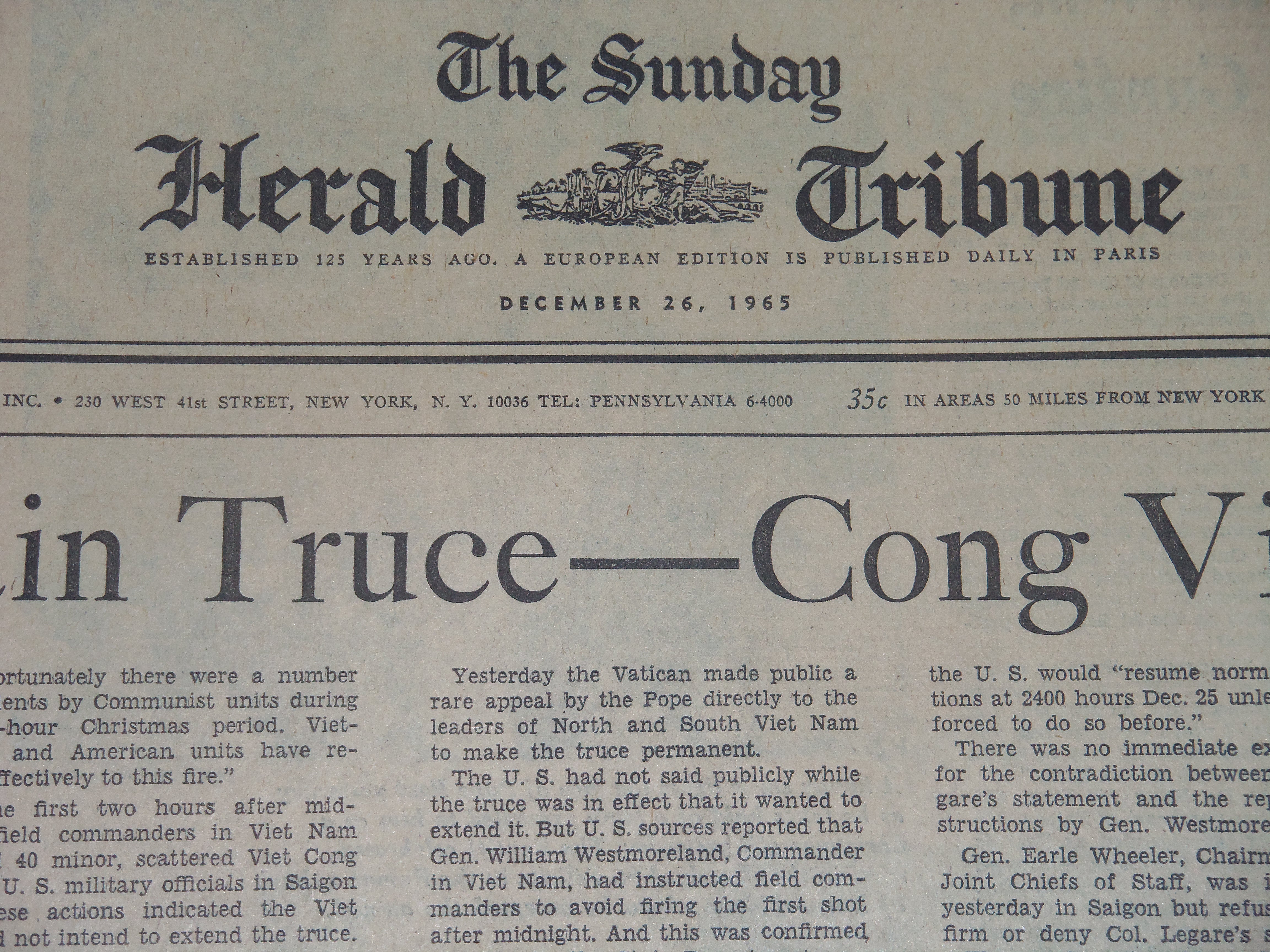
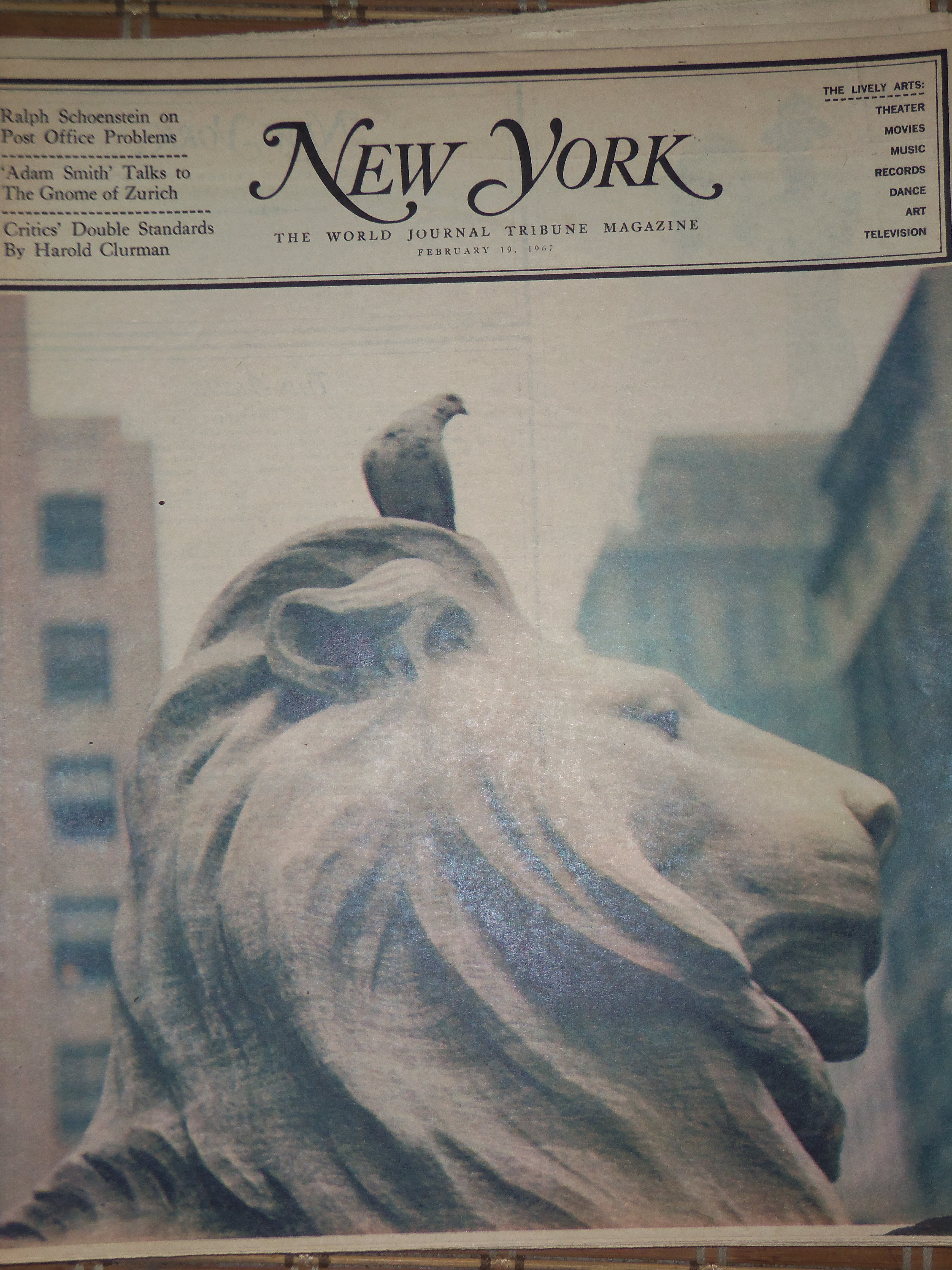
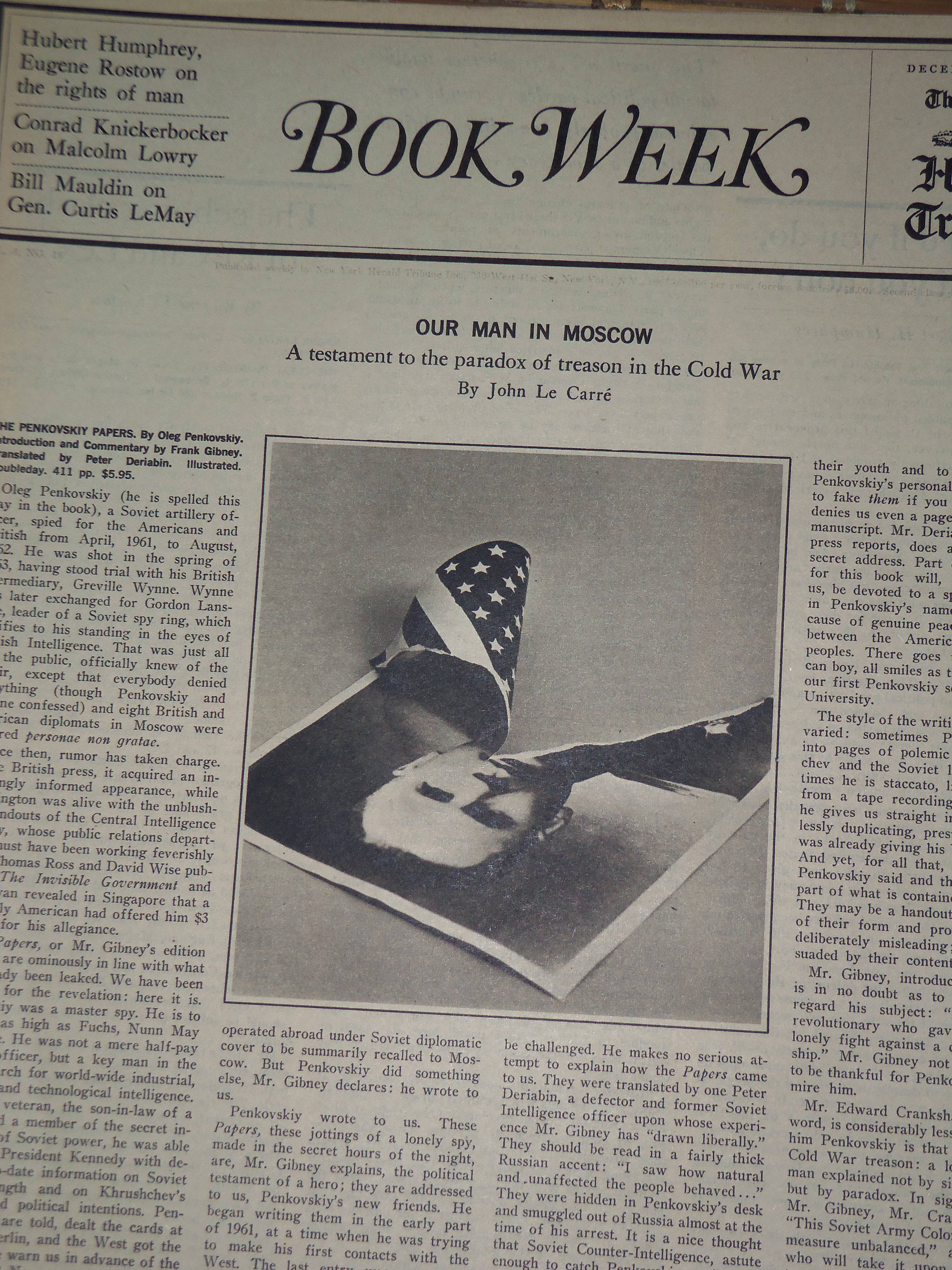
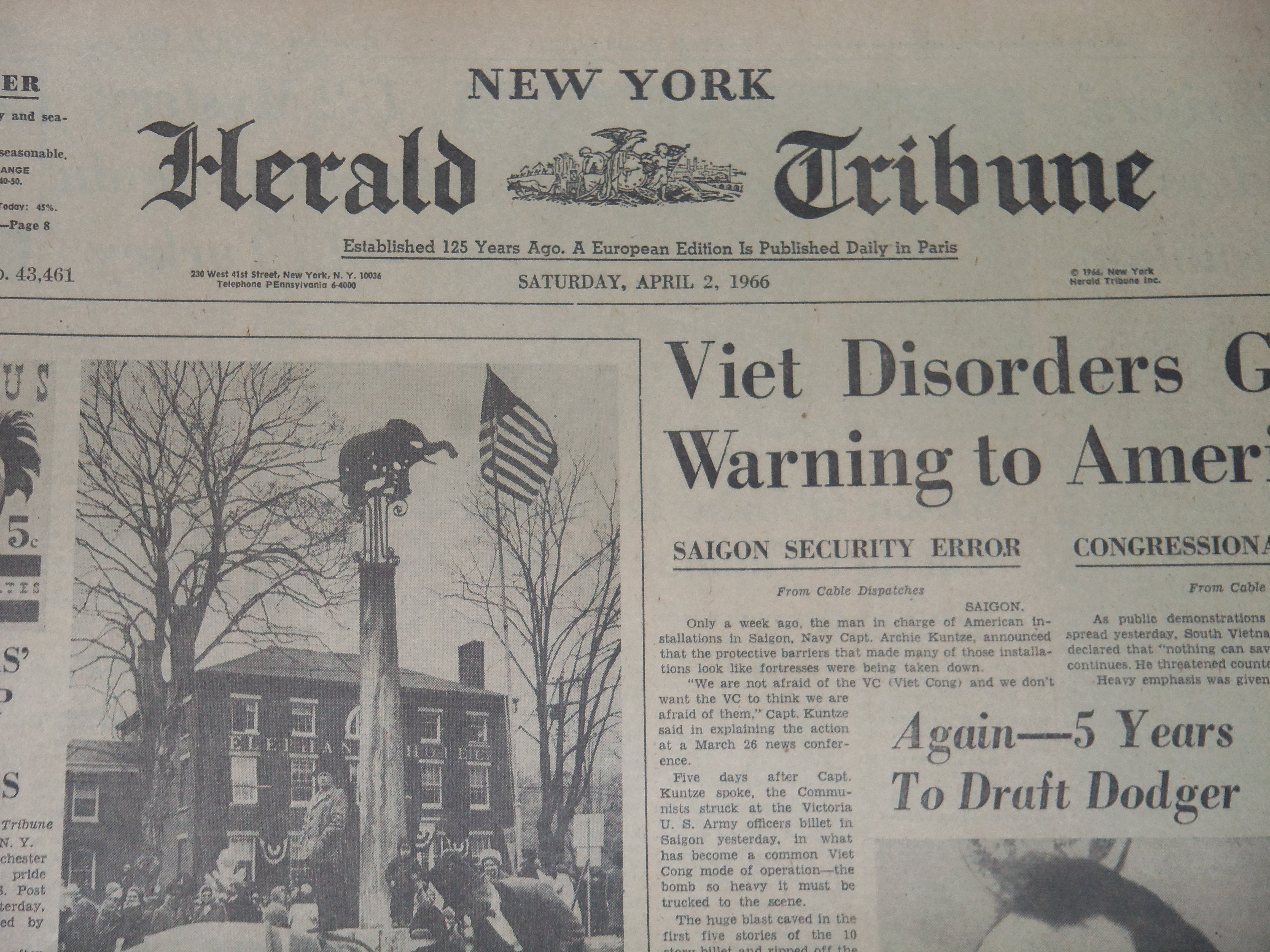
While we’re at it, here are some pages from the New York Herald Tribune’s final years, when it established itself in my mind as the most elegant and exciting newspaper ever. (Remember, I was still a teen and a budding journalist.)

The daily edition.
The daily edition.
And Sunday.
And Sunday.

Among the Trib’s legacy was New York Magazine, which originated as the Trib’s Sunday glossy magazine. It was classic. And Book Week reflects a time when books were really important, at least in the eyes of the informed public.

The Sunday mag.
The Sunday mag.
And the books review section.

~*~

Not all of the exciting journalistic action took place in Gotham or Fleet Street or Chicago’s competitive shootouts, though.

Much of the most dedicated and innovative work emerged in small communities in the heartland where a few individuals could make an obvious difference. That’s the story I explore in my latest novel. In some ways, it’s Tom Peters’ Pursuit of Excellence meets Dilbert on steroids. It might even resemble some places you’ve labored.

 ~*~

To find out more about Hometown News or to obtain your own copy, go to my page at Smashwords.com.

AFTER THE TRAGEDY

Here in New England, the battle for control of the Market Basket supermarkets remains the biggest news story – but with a storybook twist. Rather than ending up as another soulless corporate bottom-line victim, there’s been a resurrection.

The bitter DeMoulas family feud finally led to an agreement less than a week ago in which the Good Guy (aka Arthur T) buys out the other half for roughly $1.5 billion. Ownership stays here at home. And, yes, there have been cheers all around in this remarkable alliance of stakeholders – managers, workers, loyal shoppers, and their communities – against the faction that fired the Good Guy and his visionary leadership.

The boycott held through August. The parking lots were vacant. Workers saw their hours cut. Some managers were fired … and now they’re back.

There’s almost a party atmosphere in the stores, but nobody’s slacking. Managers began showing up to work at midnight just an hour after reports of the agreement surfaced. Suppliers offered to deliver goods directly to the stores, rather than the distribution center, to speed the restocking of depleted shelves.

Many details remain to be ironed out, and a lot of damage will take time to repair. But at least there’s also a rainbow.

AN UNFOLDING GREEK TRAGEDY

For past several weeks, the hottest news story across New England has been over what will no doubt be a textbook case of how to kill your own golden goose in corporate America.

The business is a family-owned chain of 71 supermarkets that has somehow managed to carve out the region’s highest profit rate in a notoriously thin-margin field while simultaneously paying its workers more than its rivals — along with profit-sharing and bonuses — while keeping its prices well below those of the other grocers. (You can imagine, for one thing, that the pilferage that undermines many groceries is nonexistent at Market Basket. Its workers are loyal, at least to the executive responsible for the success — a man who seems to know not just each of them but their family members as well.) Add to that a great deal of flexibility for store managers to respond to customer requests and you can understand the wide variety of ethnic foods found on the shelves; consider the fact that our local Asian restaurants choose to buy their tofu supplies at Market Basket rather than the wholesalers, and you get a sense of how that policy pays off all the way around.

In recent years customers have turned in droves away from the competition, and their loyalty is palpable. Lately, I’ve found parking spaces are always available right by the front doors of those underpopulated stores, unlike Market Basket, where the parking lot and aisles are always overflowing.

Given the win/win/win realities of the still growing Market Basket chain, nobody was prepared for the directors’ decision to ax its successful president. Well, half of the board’s decision.

The half that wasn’t prepared for the impassioned backlash from the public or its own workers, who have essentially shut down the operation.

The board’s decision, as far as anyone can see, was based more on lingering bad blood in the Demoulas family that had previously erupted in a notorious 1990 lawsuit that nearly forced the sale of the company, this time apparently heightened by greed. Seems there’s  a $300 million reserve fund, for one thing.

But if the side that ousted Arthur T. Demoulas and his top aides thinks it can manage the company better than he did, it’s produced no evidence to date. Indeed, each day brings another public relations debacle that has gone unchallenged and signs the victorious side of the board is unaware of what’s happening on the streets. Brand loyalty, as the lore goes, is priceless. And it’s hard to win back. If they’re hoping to sell the chain, its value is plummeting by the hour. How often, after all, have you seen managers and workers stand together in solidarity as they are now?

The daily drama is not subsiding.The region’s newspapers, led by the Boston Globe, have been covering the details thoroughly, and I’ll point you in that direction.

For now, there are the petitions to sign and emails to send.

Here’s one example that was sent to the independent board members:

~*~

Dear All,

I have shopped at Market Basket for 30 years. I appreciated the low prices as well as the availability and quality of ethnic foods. When I learned that the employees were also the highest paid of any grocery in New England, that cemented the choice. I’ve barely walked through the door of a Hannaford or Shaw’s in 15 years.

Yesterday, I went to my local Market Basket, but only to sign the petition and cheer on the workers. I then I bought my groceries at Shaw’s and planned a trip to Costco.

You have had a business model that serves customers, employees, and owners. That this model would be thrown over for no discernible reason except personal animosity and greed is beyond me. I do not know or care if ATD is a good or terrible human being. I do believe he is a supremely competent one. He has run a business that gives customer the lowest prices, employees the highest compensation, and  the owners considerable profit, while maintaining zero debt and ensuring the stability of the company. I have paid close attention to every news report I can find to see if there was any substantial reason for ATD”s removal. Nothing I have heard or read has indicated that new management has better ideas, or for that matter any ideas at all. That, in addition it cared so little for the loyalty and dedication of its employees that made the model work is the final straw.

You’ve lost another customer.
MAKING TIME FOR THE WORK

As I said at the time …

There’s no denying the importance for a writer to have a physical space where the work-in-progress can be left out in the open, safely behind a closed door, between sessions. Where there’s no lost time putting everything away, only to have to bring it out again in order to resume where one left off. This doesn’t have to be a dream space, either.

But making time for writing is even more crucial. Being able to get a thought or line down on paper, while it’s fresh. Of finding large blocks of time to engage in the interior dialogue of characters as they emerge amid your daily errands and nocturnal dreams. (Like babies or demons, they possess you.)

I’m not alone in finding my practice of writing becomes part of a larger juggling act, especially when I’m already working fifty-hour weeks as a professional whatever somewhere else. Especially when those hours are outside the “literary” field altogether. Then there are the needs of a home life to contend with, and, in my experience, a faith community, too. For instance, I’ve found that as long as I’m employed as a full-time journalist, my off-duty hours leave me only enough hours to (a) write and revise or (b) focus on submissions and correspondence or (c) attend and give readings and other public events; but there is no way to do two of the three (much less all three) in the same period.

On top of it all, the work takes as long as it needs. Or, like the old-house syndrome, every repair or renovation project will require at least three times more time and money than you budgeted.

A PROSPEROUS TURN

Demand for wool in the first three decades of the 19th century shaped the boom years of agriculture in New Hampshire, at least until the invention of the cotton gin allowed for a cheaper clothing alternative – a condition that was accompanied by a changing American workplace and economy.

The brief but prosperous boom financed many of the Granite State’s landmark large farmhouses and barns as well as the nearly ubiquitous stone fences that are still visible, some in the most unexpected remote forests.

Pay attention while driving along country roads, and you’ll often notice stretches where each house seems to be an evolution among the others. I suspect that what happened was they were all built by one craftsman carpenter and his crew – perhaps itinerants who would stay for a season of erecting a house before returning home – who were invited back in another year to build another, each one to customized specifications. The chimneys, for instance, reveal a progression away from the massive central fireplace of the Colonial era to the use of multiple chimneys after the Revolutionary War – something that has me thinking of how much firewood these houses must have consumed through a winter.

Kodak10 080

It’s possible, of course, that the carpenters and masons and others came to live in the neighborhood as well. But one thing I feel certain: the resident commercial farmers, faced with the demands of their flocks and fields, did not have the time or perhaps even skills to build houses like these.

Kodak10 084

Kodak10 073

Kodak10 075

Kodak10 079

Kodak10 087

Here are some of the fine examples found in a village along a ridge in the town of Deerfield, a neighborhood known as South Deerfield. There are more, I should mention, than I could capture in this outing. Meanwhile, I’d like to know more about the site of the popular Mack Tavern, with its fiddler’s throne to protect the player from the wild dancers.

THIS OLD HOUSE DISILLUSIONMENT

One of the downsides of owning an old house is an awareness of just how expensive any repair is. (And it’s always more than you’ve planned.) Add to that just how many repairs are needed. (Remember, most of them are for things you don’t even see.) And that’s before we get to any upgrades.

The awareness has also afflicted many of my dream-house observations, especially when I’m nearing the ocean. Where I would have admired a stone retaining wall under construction or a long pier from a private boathouse or deck to the mooring, what I now see is dollar signs. Often, more than I would have made in a year. It’s crushing.

It can make you wonder what people do for that kind of income. Or what kind of wealth they were born into. Or how long it will last.

One thing I know is that fishermen used to live in some of these coastal communities. But not anymore. Not by a long shot. Some of them live closer to me.


CHANGING STYLE, CHANGING TASTE, CHANGING DIRECTION

Driving any of my back routes to the beach, I pass impressive houses that have views of the water. Often, they’re old estates reflecting established money. Some are infused with history. Some are large, with four or more chimneys. Others are cozy cottages with four-season porches.

For much of my life, I would have dreamed of owning such a place.

Lately, though, there’s been a sea-change in my perspective. Part of it is no doubt my arrival at a point in life called retirement, although for me it’s been more a matter of culminating focus on the Real Work, as the poet Gary Snyder calls it. Another part of it has to do with stripping away all of the competing visions of where I thought my life might have been heading. The two dovetail, actually.

When I was starting out, I held often contradictory goals. As one date once admitted, she couldn’t decide whether I’d been in a corner office in a Manhattan tower or in an artist’s garret 10 years hence, and she wasn’t far off the mark, even before the ashram intervened.

Of course, the corner office and the house overlooking the water both assume a sizable income, and that was never in the offing for a journalist unless I somehow became publisher at a young age. Unlikely from the outset, but all the more so once the hippie movement kicked in.

Even so, as a writer, there was always the dream of the blockbuster novel that became a hot movie, but my work kept veering more and more toward the experimental while the publishing industry kept constricting. You get the picture.

You could add to that the possibility of a wealthy girlfriend or the talented one whose career took off big time, but both of those went up in smoke. Or whatever.

Come to think of it, the dream wasn’t just about houses. You could figure in the shiny cars, too, or a sailboat or global travel.

The vision, as it turned out, included an entire lifestyle. An exteneded family with a handful of my own kids, at the least, running around. Many friends and business acquaintances, along with political connections, all coming to stay in the guestroom or guesthouse. A fully stocked library with an impressive collection. An art collection, too.

What it didn’t include was the life I’ve wound up living. Much smaller scale. As a writer, what I really require is blocks of uninterrupted time and solitude. Let’s be honest. A studio can be not much larger than a closet, for that matter.

As for the big place? It would need household staff, for one thing. And a long list of handymen.

What I have instead is an old house and its barn in a small city, along with a common car with 250k on the speedometer. It’s more than enough to handle, even before adding the family.

On top of it all, I also have a shelf of books with my name as author.