LOOKING IN THE MIRROR OF BIAS

Those of us on the liberal side of the social and political spectrum like to think of ourselves as open-minded, which means the times we exhibit flashes of bigotry can be especially painful.

First off, we’re blind to it. Not us, right? But we do.

And sometimes we do it to each other.

An example comes in the gold cross a young woman decided to wear. She’s nothing along the lines of a Fundamentalist or even a committed believer, but she liked her grandmother’s jewelry and this particular piece. Difficult, though, was her experience of the reactions from her fellow college students and faculty, starting with their physical motion a step backward. Literally.

There were words that would not dare be said to Jews or Muslims or ethnic groups of any stripe – and assumptions that simply did not fit. In fact, there’s a presumption of right-wing positions accompanying an ignorance of the social-justice dimensions of other Christian communities and their actions. And there’s nothing of the nuanced theology that moves beyond the cartoonish criticisms we often hear.

For the record, Quaker tradition long frowned on any jewelry whatsoever as superfluous and vain. But I’m not wearing the distinctive Plain clothing of Quaker history, either. Now how would they react to that?

LACKING

outwardly, my ways were simple
even austere or ascetic

my modest apparel
considered drab or seedy

still I was becoming

wary of self-negation
that denies the sweet
Bread of Life

*   *   *

when John from Tri-State Megabucks phoned the office
to report the latest week’s winning number, he asked
in an attempt to be friendly, if I had my ticket in hand

so I replied, “no, it’s against my religion” and then
sensed a stupefaction on his end of the line
there might be another position on this business

O Holy One
keep me tender in reaching across differences
where a holier-than-thou attitude accomplishes
nothing more than standing in faith

*   *   *

if there weren’t so much insufficiency all around

the homeless, unemployed, imprisoned,
impoverished, illiterate

quickly overwhelm
apart from family and spiritual community

within my neighborhood
how little I alone can do
against needs deeper
than those seen

where any sense of great inadequacy provokes
a hardening wall

while judging myself harshly
reminded
to my own consternation
of how I’m lacking

Poem copyright 2016 by Jnana Hodson
To see the full set, click here.


STREAMS OF SEEKING IN FAITH

In the historical overview that forms the core of Seekers Found: Atonement in Early Quaker Experience, Douglas Gwyn casts his net wider than the circles in northern England of the mid-1600s who formed what we’ve come to know as the Seekers. What he traces is a broad undercurrent of radical faith from the outbreak of the Protestant Reformation, an alternative Christianity in which an Indwelling Christ or Inward Light is to some degree acknowledged and which, in turn, leads to rejection of many or all outward sacraments or ritual in worship. It turns out to be far more widespread before the Quaker movement emerged and gave it distinctive voice than I’d previously seen.

Frankly, as he focuses on seminal figures who advanced this thinking, I’m amazed that his brain didn’t simply explode. Remember, he’s following not just one person but many, all with flashes of nuance and insight that begin to overlap and also to diverge. Nothing is static.

Of course, we face similar problems looking at the counterculture movements of our own time. Just who, for starters, would we look to as voices of hippie thought and lifestyle?

When Gwyn remarks that “many of the Seekers-turning-Quakers … started out as hyper-Puritans whose idealistic moral absolutism made them unbearable to themselves and to those around them,” I feel an echo in my own hippie passage. Many of us seemed to be doing something similar. My, could we be intense! (That, along with the emphasis on “mellow.” Go figure.)

It also has me wondering about the spiritual starting point for many of the teens and young adults in our wider society today. Just where would deep conversation and inner growth begin? What are the driving forces in their lives?

Historically, the focus on events in England also leaves me sensing a gap in awareness of the radical advances in New England from the 1630s, exemplified in Roger Williams, Anne Hutchinson, and Samuel Gorton, as they prefigured those in England in the 1640s. I’m not faulting Gwyn here, since his thesis is on the forerunners and emergence of the Quaker movement, but it is a topic ripe for exploration. Let me suggest John M. Barry’s Roger Williams and the Creation of the American Soul: Church, State, and the Birth of Liberty (Penguin, 2012) as a starting point. The New Englanders, quite simply, seem to be ahead of their Old World compatriots. Maybe the British court records present a fuller picture, but until the end of censorship in 1642, we seem to have little else to go on.

It’s all a potent mix. When the first Quakers came to New England, they found fertile ground.

What Quakers added, according to Gwyn, was a means of putting that seeking into action within daily lives. It was a matter he views as apocalypse. Somehow, our hippie adventures never got that far, which leads to a whole new set of considerations.

~*~

More of my own reflections on alternative Christianity are found at Religion Turned Upside Down. You’re welcome to take a look.

ALL IN THE WILD

Being mindful of what’s right in front of us can always be a challenge. Here are 10 new items from my end.

~*~

  1. On the highway north, somewhere just before Tamworth, comes that first big view of Mount Washington. This time of year the crest is an eagle span of ghostly white spreading atop powder-blue ranges below. Sometimes another band of clouds resembling mountains stretches above, and all three sit below a blue band of real sky. Knowing what’s coming up simply heightens the anticipation.
  2. Back home, my rounds of outdoor spring tasks soon lead to the Smoking Garden. The bags of leaves stacked beside the barn as windbreakers will need to be moved to the big compost bin, which needs to be emptied first (though it’s usually frozen tight this time of year). Then there’s the hammock to reassemble, after being stored in the loft. Strings of twinkle lights will go up overhead, too. I’ll often take lunch here, though my wife finds the air too chilly. Not too chilly, though, to prevent us from grilling on charcoal.
  3. Yes, warm enough to grill a beer-can chicken (insert open can into bird, which you cook upright). Excellent, despite the stiff wind.
  4. Seapoint in Maine (town-resident sticker required for parking, May 15 to September 30, where the road ends at the ocean): trek out to the spit between beaches, hunker down in clefts between rock and sunshine for needed respite against wind. The restless blue ocean opens before me. A tease, awaiting summer.
  5. Woodpecker still has a splitting headache.
  6. Income tax time runs up against my professional life as a journalist. How much I hate waiting till deadline to finish something. Get it off, quickly, if you can.
  7. Need to find ways to keep my lair from becoming a chamber of static energy. Ditto, the loft of the barn.
  8. The leadership we’re seeing is a bunch of cowardly brutes.
  9. Once again, the moral issue of civil disobedience comes to the fore. For the record, regarding the Transcendentalist Henry David, it’s THOR-oh, not Thor-OH. And Nixon lawyer Charles Colson came to advocate some powerful moral guidelines for civil disobedience, after he’d repented – that is, “turned” – while imprisoned.
  10. What turns you WILD? (As in dreams and passions, secrets and fetishes. Am I really so orderly or repressed at this point? I’m clueless, apart from anger.)

 ~*~

It's our end of Dover.
It’s our end of Dover.


RIDGES AND RIVERS

Someday I’ll learn the identities of clouds. Buy the chart, memorize their qualities and forms, and then watch the flowing sky afresh. This is, after all, yet another strand of mapping.

From childhood, I’ve absorbed maps. Mind travel. Concepts augmented by photographs and writings, which have often furnished a sense a such familiarity that when I arrive in a new place, strangers stop me to ask directions, even on my inaugural visit. Foliage, waters, buildings, and people fill in the lines of his maps as they stretch toward some new border. But this move, with its desert, has been an exception. Nothing’s been predictable or particularly comforting. Besides, I experience a vague agitation when venturing to the edge of my known universe. If possible, when visiting new locale, I push out a few miles further, to determine what’s over the next ridge or river — or at least down the road — as if to anchor myself within some context, rather than remain at its periphery. Curiously, I feel more secure when placing that border at some shoreline or rise — countryside, at the least — rather than within seemingly endless tracts of housing, factories, stores, and pavement. Even a round earth has places where monsters may lurk. Gaps exist in any map. Consider the clouds. Everything is, after all, changing. Even that rock, where Kokopelli is sitting.

For more insights from the American Far West and Kokopelli, click here.
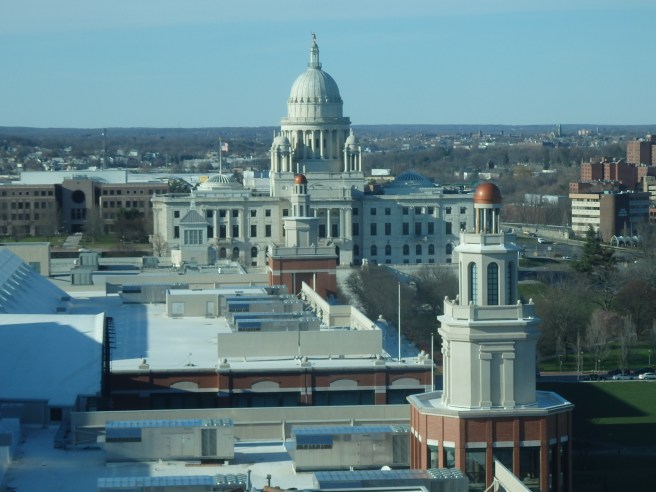
RELICS, IN TIME

1

along the edge
where river after river, cove and forking
confuse and disguise without end
each minaret has a name, often two

a badge
capped by a dome
a green-copper half-moon
above glass and the flash
or a triangular
arrowhead pointing to Heaven

the occasional towers standing in pairs
are to be read as eleven, rather than two
in the mathematics of waves

along Cape Cod, Cape Ann, Cape Elizabeth

2

token of peril
crag and sandbar

a warning
to welcome
a warning

acknowledging most shipwrecks
occurred within sight of shore

however deceptive the calm

3

a preference for lighthouses on craggy sites
to those on lawns or hillocks

still all stand

arrayed as white prayer flags along the coast
these relics, in time

all fall away

as we journey

Poem copyright 2016 by Jnana Hodson
To see the full set of seacoast poems,
click here.

AMONG THE SCATTERED SEASONS

WATCHING THE FLITTING flashes of my mind, I jot down notes. Many of them later prompt poems or a scene in fiction or a line of thought that later bears fruit.

Some fall by the wayside. Others find development decades later. Consider:

  • Seasons of flight.
  • Seasons of nesting.
  • Seasons of doubt.
  • Seasons of turbulence.
  • Anger, jealousy, hurt, fear.
  • Encountering the demons: the Dark Night journey, melancholy, depression, loss, etc.
  • Seasons of awareness: times when we’re more open to revelation that others. Our usual defenses are stripped away, and we leap into change or retreat into solitude. In the immediate aftermath of divorce, for instance, or a close death.
  • Times of dreaming deeper or in new ways.
  • Seasons of praise and assurance.
  • Seasons out of the spirit: war / greed / oppression and oppressing.

Add to these and amplify them as you wish.

~*~

Few are prepared or willing for total immersion in the Spirit. Especially when we’re feeling our lives are already full.

There is reason to fear falling into the hands of a Living God.

This is acknowledged, “Thank God for the good old Church of England. It’s our last line of defense between God and ourselves.” Substitute your own institution or practice, as needed.

Giving, with nothing in return. (So it so often seems … route for burnout.)

~*~

Moses and Aaron, confronting graven images:

  • Aha! They’re fleeing sleek Egypt, so visual – they instead use words, an entirely different focus for worship from the image-driven supplication in Egypt.
  • They leave civilization for wilderness, where certain words are carefully repeated.
  • On the lips, from the heart: What we know could become singing.

~*~

Or else simply rootless:

  • How do we reach out while being so fragmented?
  • A lack of continuity instills clinging.
  • How will our paths cross more frequently?
  • People come and go, and we make no effort to find out why.
  • Diversity is no strength unless drawn into the circle.
  • A phantom church, with no telephone listing.

Here we go, warbling.

~*~

Make sense, as you can:

  • A handcuffed person.
  • Movie night in the meetinghouse: double features, free popcorn: invite the homeschool crowd.
  • Opera orgies … Met broadcasts.

Yes, we want the cost-free pleasures.

The Hebrew lack of first-person personal pronouns – it’s not my house, but the house God has blessed me with or gifted unto me for safe-care.

~*~

For more Seasons of the Spirit, click here.


WEEDS ARE ALREADY RISING

Just a taste of what’s popping up. In case you were looking for a prompt.

~*~

  1. The amount of sunlight these days is equivalent to September. That equinox thing. But with snow and no foliage or even plain gray, the sensation’s quite different from autumn green turning golden and hazy.
  2. Spring rainfall turns our side yard into a glade. Are ‘gators next?
  3. So who do they resemble, these women in my life? Which movie stars? Which protagonists in fiction? Even before we get to the guys.
  4. On a walk about town, I stop at a bakery and pick up a selection pastries as a surprise for later in the morning. As my wife and elder daughter view me strolling up our street, they notice the box wrapped in ribbon and the way I speak with other pedestrians, and quip, “What a perfect picture of a guy a woman would want to have coming home.”
  5. How delightful, too, walking three miles on a leg of the Community Trail beside rapids and sparkling waters. No need to drive several hours to the mountains for a similar experience. Reminds me of my hidden retreat at Lake Massabesic, back when I was residing on Wellington Hill in Manchester.
  6. When I enter a house of worship, I close my eyes and feel the vibrations. Too often, the air feels leaden or dead, rather than welcoming, warm, filled with deep calm. Maybe I’m spoiled by so many Quaker meetinghouses and other sanctuaries of quiet heart-centered devotion.
  7. Suppose I’d wound up back in Dayton or Cincinnati, rather than moving on? The very thought has me feeling emotionally constrained.
  8. A reminder. Be authentic to your dreams, even in the face of the Greek chorus intoning, “Yay,” “Boo,” Ahh,” even “Mmm,” throughout. Much less Job’s friends in those periods of siege.
  9. What do we do with the superrich freeloaders?
  10. Internally, I’m still on Standard Time. How can it be so late already?

~*~

A view from Fourth Street, Dover.

IN THE DIMENSIONS OF DAILY EMPLOYMENT

Any workplace holds confidences you can never reveal. Not that you don’t want to expose company secrets. Then, considering the office computers, fax machines, and photocopiers, you realize they’re incapable of guilt. They simply do their job — and you might find that unsettling.

Whenever I do manage to tap genuine emotions regarding this employment, no one’s more shocked than myself. Take something as simple as a pane of glass between my desk and the trees outdoors. Even on my job in Appalachian mountains, I wanted a window. One the size of a book would suffice, although a picture view would be preferred. I’ve always appreciated a panorama, a sense of precisely where I fit into the weather of a particular day. Instead, I feel trapped underground, half-buried in regulations and routine. Only a band of natural light at the far end of the fluorescent-and-steel expanse hints of sun, moon, sky, or clouds — and even that aperture is tinted. Why are my hours on the job so cut off from the rest of life? “We may as well be coal miners in carbonized veins or muscular razorbacks sweltering in midnight foundries. Is it only the sun we miss? Examine the calendar. Check on the moon’s phase.”

I could just plot my escape. I am surrounded by desert. Trek there alone. Right to the heart.

He recall the words of another friend who spoke of the paradox of Zen Buddhist freedom: the very limitations the practice imposes also lead to an extraordinary freedom. An individual who’s free in the Spirit can be placed in prison and yet not be captive — persecuted and yet unbowed — denounced and still spotless.

The Dedicated Laborious Quest, as my Teacher taught, is a truly free way.

Free, yes, with the labor.

I pick up the phone and hear Kokopelli’s whistle. He wants us to get going. Then tells me of the dance where we’ll be playing.

For more insights from the American Far West and Kokopelli, click here.

PSALM VI

1

what blows
to kindle sunset and sunrise
sprouts wings on the field

is faith planting
for a harvest at the end

all these tough nuts to open
amid rest

*   *   *

each day
always more
bands of light

turn within
fields and currents

tempted by more as well as less, but first
those cries being born

*   *   *

crossing water
invites rest

answering the call to dinner

2

 when we are vanilla
           chocolate the strawberry
rhubarb and asparagus
a cake topped in cherries
sweet corn and trout
with apricots and peaches
the scallions, leeks, garlic
carrots, potatoes, yams
spiced pumpkin
whipped cream, fresh butter
applesauce with pancakes
a bowl of black walnuts
yogurt and sharp cheddar
            or baby Swiss
when we are sap returning to maple
when we are …

when we are snow peas or sugar snaps
            a pear or …
fordhooks or limas

3

I’ve had a taste of these things
Hindu Yogi
Zen Buddhist
Sufi
Amerindian
Mennonite, Dunker, Amish
Old-Style Quaker

all of them, with holy visions

Poem copyright 2016 by Jnana Hodson
To see the full set, click here.