CAN WE BREAK THROUGH POLARIZATION?

A pointed observation from the concluding chapter of Douglas Gwyn’s Seekers Found: Atonement in Early Quaker Experience continues to echo in my mind. After noting that religion and spirituality, East and West, are being traded on a world market, a situation itself that reflects today’s dominant mindset of global capitalism, Gwyn remarks:

Global economic integration today is leading to social and spiritual stagnation, much as the progressive political consolidation of the Roman Empire slowly stifled spiritual energies in the ancient world. As the superstructure of the Roman Empire became increasingly otiose, cynical, and corrupt, men of rank increasingly withdrew from public leadership to pursue private life and philosophical speculation.

This immediately had me thinking of the nastiness of the current political scene and wondering why anyone of sensitivity or kindness would want to be subject to the abusive public glare that’s become the norm today. Gwyn continues his paragraph with a confirmation of my assumption:

Similarly, as multinational corporate conglomerations engulf the globe, we find people of means withdraw into private life, esoteric beliefs, and financial speculation. In both periods, the masses are left to seek truth in a din-filled marketplace.

Remember, this was published in 2000, and I’d say the situation has only intensified since then.

It’s a troubling situation, even before we get to the polarization now stressing the nation and much of the world. Gwyn sees much of that polarization and its way of captivating its partisans arising over the question of gnosis – that is, of knowing – with both sides disagreeing over essentially Platonic and Gnostic orientations toward truth. Crucially, he sees both sides assuming “that the truth is some static entity.”

At this point, Gwyn turns the perspective: “If we return, however, to the Hebraic and Johannine Christian sense of truth as something enacted through faithfulness and love, these polarities become academic. We act faithfully toward one another as we enter honest conversation with one another.”

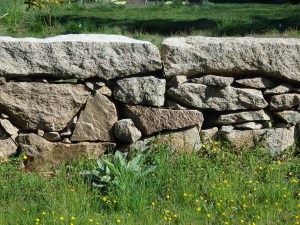
The immensity of that task, I’ll admit, fills me with despair. It’s not just religion, which is largely marginalized from the dialogue; the polarization rips across economic, educational, geographic, and political fields as well. Looking around, I feel I might as well be speaking to a stone. A Wailing Wall would be more efficacious. Retreating from the public sphere makes all too much sense.

~*~

Here, though, the example of Jesus also comes into play. He, too, retreated to the wilderness, but he also returned to the marketplace and spoke truth, forcefully and ultimately with love. Moreover, he was willing to bear the consequences.

Anyone else want to elaborate? We live in desperate times.

~*~

More of my own reflections on alternative Christianity are found at Religion Turned Upside Down.

GOING FOR THE GOLD … FOLIAGE

Being mindful of what’s right in front of us can always be a challenge. Here are 10 new items from my end.

~*~

  1. We’re well into the foliage watch. Weather plays into it, too. Heavy rain, followed by glorious clear. Or sunlight blazing against slate-gray clouds. As for the chores, in advance of winter? “I’ve been on my feet all day.”
  2. Each October I revisit the symphonies of Charles Ives. It’s not just his birthday month but also an acknowledgement of his deep New England roots. The annual tradition often leads to the symphonies of George Whitefield Chadwick and then John Knowles Paine. Inevitably, I wind up with the one symphony and the piano concerto by Amy Beach. Big, magnificent, often richly Romantic pieces, for the most part. Wish they were much, much better known by the public. (For more.)
  3. A stay-at-home morning: pad about, get some writing and reading in, finally shower and dress at 2 p.m. And then? Swim in the indoor pool.
  4. Am wondering what might have happened if I’d achieved “success” – at any number of points. I would have wound up moving along that groove the rest of my life, likely without exploring many of the other facets I now find overlapping.
  5. My third-floor lair and my loft in the barn are both tree houses!
  6. My wife resisted when I insisted on the dishwasher. How much she objected! My, my, how that’s changed! These days she even argues it can be cheaper than hand-washing the plates and flatware in the sink.
  7. We live close to the state university but partake of so little of its arts programming. Even now that we know where to park.
  8. Bought a new calendar but back home saw it was for the wrong year – this one, rather than next. Still, the illustrations are marvelous.
  9. To gain the reader’s trust is the central issue of each work. It’s how transformation through action across time connects.
  10. Degrees of Truth? Now this really gets complicated.

~*~

Stone angel in the city cemetery behind the Quaker meetinghouse.

THE SPACE OF ART

This time, flipping through a glossy magazine, I confess to myself a sensation I’ve often experienced in the realm of the fine arts. It’s a consciousness I first associated with the hush of large museums, a rarified atmosphere that could well be pressurized. There’s a degree of trespass, moving from the everyday world into this temple, and an expectation of awe.

The museum itself could be dedicated to history or natural science or even military technology. We speak softly, walk slowly, reflect and absorb impressions.

There would appear to be similarities to religion in the expectation of awe or the ephemeral. These are holy places, consecrated and set apart. They are cathedrals built to preserve sacred relics — not just any bones or works, then, but all those who have advanced the cause. There are rituals, as well, in the progression through exhibit spaces or the celebratory openings. There’s also a sense of the departed, as though wandering through a cemetery; here the memorial names are included as donors of objects, rooms and wings, or endowments, in addition to the artists or high priests themselves. But there are differences, as well: where religion has at its core what is eternal, timeless, and righteous in the eyes of God, art often strives for a sense of progression, which fosters curiosity, novelty, play, even a touch of shock or scandal. Where religion imposes ethical behavior, art frequently excuses or even encourages the practitioner in indiscretions. In both, though, there’s an expansion of one’s field of awareness, however brief, and a moment of personal renewal and refreshment before resuming one’s usual activities.

These spaces are not just those for visual reflection. A concert hall, playhouse, or theater has similar dimensions. We settle in, become quiet, and the house lights go down as the stage lights brighten. We show reverence and appreciation by applauding at appropriate moments. Newcomers are initiated in the customs.

Layers of wealth and breeding also appear. The institutions typically originate in noblesse oblige. The patrons reserve box seating or receive invitations to openings, private showings, or galas. Members and subscribers enjoy their own privileges. Smaller spaces, such as art galleries, chamber music settings, or poetry readings extend the experience. Libraries, as well, can be seen in this light. The sensation often recurs when I’m handling a thick, refined, costly literary quarterly — one printed on carefully selected paper and published with an eye for expert, balanced typography. (Sometimes the work presented becomes secondary to the presentation.)

We might speak of the thoughts and emotions that arise in these encounters. The space of art can be acknowledged in one’s own life, then. We observe, but don’t touch. We listen, but don’t speak. We’re voyeurs who do not taste what’s on a plate before us. Here, in public places, we visit our own private musings. There is an outward uselessness in it, ultimately. Time in these spaces does not add to our wealth, our table, or the usefulness of our apparel. It does not transport us physically from one place to another, although it may do that in our imaginations. What does happen is our moving from our animal roots into uniquely human possibilities.

For more insights from the American Far West and Kokopelli, click here.

A HUNDRED STEPS TO THE SEA

1

along the shoreline, the heads of two gray seals
bob and glisten

later, three seals together, lazy

and then, a dozen seals basking and lolling ensemble
twenty feet out
“you never see that”

while strolling a ribbon
between sand cliff and ocean

I try estimating one ladder or stairway
from the cottage above

later, two young wives
from Atlanta and Nashville
cute as can be
in their annual escape from their husbands

tell me they rent a place
just over the crest

109 steps        “Every year we count ’em
and they’re never the same”

against shoreline hammered every fifteen seconds
by a three-foot curler or six-foot breakers

judging by surf fishermen
at fifty- to a hundred-foot intervals

still, where the high apron of beach has been cut away
at high tide, I’m forced to remove shoes
roll up my pants and allow the surge to swell around me

it’s warmer than Maine
now after Labor Day

“Had I known, I would have brought my swim trunks”
“but it’s pretty rough, too”

hard to believe I’m walking on oysters or clams
the receding wave sighs
when I glance back at bubbling sand

another seal patrols the shore

when I see more of them in one day
than in all the rest of my life

2

comb jellies – white melting ice cakes
gelatinous to the touch
slightly resilient, like grapes
all over the place, where the water’s just been

scallops, they call ’em – open up in the water
like jellyfish (their relations
but these don’t sting

crab shells, a few mussels:
somebody’s eating well:
a decaying small shark

3

just three boats visible white specks
plus the freighter over the horizon

yes, 3 vessels
where yesterday
we saw none

wide open ocean

at my feet

would I rather be
kelp
or the indestructible
green rope
tossed from the sea?

sea spinach

4

just north of Marconi Station
keep thinking I hear jets
under the relentlessly crashing surf

many crab shells at the waters edge

some decaying fish up to two-feet long {cod
strands of spine
a gull leg and webbed foot

all to myself, step out and pee

a pair of footsteps
one going my direction
the other, approaching

above, beach plum like large blueberries

Marconi Station “you’ll know by the bricks”
knocked down to the Atlantic

but I see just one red cube and
way down the shoreline
what I think old pier pilings
begin moving as I approach
schoolchildren, field trips

the real debris appears as milk jugs
clear plastic bottles and cups, foam plastic coffee cups
and insulation, yellow nylon netting, multicolor nylon rope
a battered lobster pot, a child’s toy outboard motorboat
a cooler melted in one corner, stray firewood neatly cut
bottle caps, a large oil filter like a radar cover canister
(haven’t seen a condom yet), a black inner sole to a size
eight or nine shoe, pressure-treated lumber, nothing
too revealing so far, Glad bags, drinking straws
an aluminum shard barnacle embossed, a rusted horseshoe

4

as for cottage colors
on the bluff

gray shingles
blue trim

each one with a brick chimney
and fireplace romance

my wife contends a seaside cottage
should be plain, simple
something that can be blown away in a storm
without horrific loss

Poem copyright 2016 by Jnana Hodson
To see the full set of seacoast poems,
click here.

LOOKING AFRESH AT PRAYER

She was right, of course, about prayer. What happened, though, was that when the others heard “the only way,” they were unaware of how many varieties of prayer there are – and since they rarely if ever get down on their knees or lift their voices to the Divine One, they likely thought you were saying they were damned, closed out, lost! The challenge, then, is in encouraging them to experiment with prayer! Once they begin to hear of the old Friend in Connecticut whose practice was to pray daily for individuals in the Yearly Meeting (“I want you to know that at 7.15 every night, I will be praying for your daughter’s recovery”) or of longstanding prayer partnerships between individuals, such as the one former Yearly Meeting clerk Jan Hoffman has shared for two decades or so, then the invitation is more readily heard.

~*~

For more Seasons of the Spirit, click here.

LIBERALLY LIBRA

Being mindful of what’s right in front of us can always be a challenge. Here are 10 new items from my end.

~*~

  1. How quickly the sun goes down these days. How quickly, darkness descends.
  2. Even if I could read a new novel a day, in a year I could not catch up with a single week of publication. So many good writers! How on earth could I possible keep abreast of them? Recognize names, even? It’s hopeless!
  3. Every autumn I have to be on guard. Take my meds. Something in the air often takes me out, sometimes for a week or two, with something resembling “flu like symptoms” that remains a mystery to my doctors.
  4. Moonlight at the lighthouse: silvery on shimmering surface surrounded by smoky blue.
  5. Sometimes I look at the barn and think of Joseph Albers. All the paintings he made with only three colors, each one a square band within another.
  6. What a wonderful fall tradition, these potted mums! Especially since we have so few flowers left that can be cut and brought indoors. Even the green leaves must feel they’ve overstayed. There’s something tired, browning, even before any blight.
  7. Take care driving the back roads at night. Much wildlife’s out and about roving.
  8. End of the season at York Animal Kingdom comes sharply. The pygmy goats in the pen by the highway are gone, as are the Ferris wheel cars by the beach.
  9. The goldfinches have lost their yellow. How sudden and uniform their molting! Back to winter’s gray duster c0at.
  10. In our autumn foliage, one day can turn everything. Or even overnight.

~*~

It's all angles. I love strolling around town.
It’s all angles. I love strolling around town.


JUST WHAT, THEN?

In town, the side of one building has a ghostly paint on black brick. With difficulty I decipher

COMMERCIAL SALOON
T. MALLET PROP.
CIGARS NOW 5 c

across from the train depot and next to the OPERA HOUSE. Railroads, cigars, saloon, and opera all fit together in a remarkable calculation. Just where were women, besides up on stage?

What, precisely, mad the Far West so different? No family roots? It was all male: cowboys, loggers, miners, fishermen, soldiers, trappers. Even an orchard’s considered a ranch. You need only a few acres, Buckaroo. Where is my wife at this moment? Like Maya of Sanskrit lore, she’s a weaver. Like Maya, she had spun a web of entrapment. Maybe these open spaces aren’t really so open.

For more insights from the American Far West and Kokopelli, click here.

SEPTEMBER, THE CAPE

Wellfleet, at their grandfather’s

two perfect horseshoe crabs
adorn the table
of the uninhabited house
while he’s in Florida

in the fridge, Heineken dark
“your surprise” – available across the highway

Wellfleet and just think
oysters or the saltmarsh

sunlight breaks through
my desire to travel lighter than this
unlike the children

an array of silver cups, a blinding turn
the chameleon hiding nowhere
but itself or the air, last week:
“You don’t look happy these days”
also: “What do you want from me?”
how I wish I could answer the latter

pine / oak / locust scrub
“tick country”                        even the lawn

tiny green acorns
dry cranberry bushes, as part of the groundcover

in his yard                              }           in the house
sand everywhere                               the arranged ginger jars
the grass brown                                his collection
with pine needles                             Rookwood Pottery, at least
the book

patch of mussels, each one the size of a pea

round brick
worn by the ocean

of course if we lean back, even nearly at shoreline
the water’s over our heads

water taller than I am
is the problem

or water that sweeps you
off your feet in this ocean so clear
we see fish swimming past us – one
a striper two feet long, the other a cod,
halibut, mackerel – I don’t know fish, really
bigger than my daughter beside me
just days past twelve

what kind of life has this been?
with flashes of brilliance, just enough
remaining for harvest

her knife, sharp and long

sailing into the wind
repeatedly, returning and now
through the years

windowpanes
two over two
traditionally
live our lives

one, in a denim jacket
while the other, in a blue swimsuit
nap in clear breeze

I wonder how people fall asleep in the sun
in chairs, at that

Rachel, my wife, informs me of changes
how so much has overgrown now
she no longer sees the saltmarsh or cove
from the dining room, even traces
of Reenie’s garden have vanished

ever dutiful, busily Rachel thins hostas and day lilies
where Grandpa has taken an ax to their roots
“and I came to the Cape for this?” but the motion
grounds her in a way the surf grounds me

blue sky, blue ocean
warm water compared to Maine
choppy surf “knocks a child over”
happened once and now Rachel won’t
bring them back here but prefers
bayside, where the water’s warmer

I believe her, yet

when we walk the road to the Atlantic full on
she observes
overgrowth around cottages and houses
is often quite pronounced
to go with the windswept, cracked gray of dunes cabins
and the ever present shake siding

all night, all day
the highway mocks
the surf’s rhythm

in the swells with Megan, she snarls
“I thought you said it was warm”
“warmer than Maine!”
and laments the waves aren’t bigger
though they knock us off our feet and
fill our suits with small gravel
(viz Grandpa’s bathroom floor after her shower)

turning overcast, trying to spit rain
cool, too
no swimmers but three dozen surfers in one stretch
kids sledding on the dune cliffs
30 feet, maybe, the low spots
100 in others

a seal, faroff, away from the surfboarders
feel the sun now, too much on my face

wind and wind gong
fiddler crab and mussels
the saltmarsh tide turning
chalk and slate outside the general store

oak, pine, and locust trees
a mole scurrying along the foundation

all these beachcombers
tomorrow expect no one
after the weekend

“we’ll take you back”
the waves cackle and rage

will the kid ever learn, packing a whole suitcase for herself
(too much and still no swimsuit)
for a short trip?


morning water cold but great breakers,
a great workout, knocked over, body slams –
lose my trunks once, saved at the ankles
fortunately, out of season

surf calms but still choppy, very windy
a seal head appears, just briefly

Sunday morning, clearly the last swim of the season
a record amount of rain for the month
Hurricane Wilma decaying offshore
kicked up quite a show here

twenty-foot swells crashing on the rocks

Poem copyright 2016 by Jnana Hodson
To see the full set of seacoast poems,
click here.

ARISING OUT OF SILENCE

Another form of study we have found helpful is Worship Sharing, in which a topic is announced, a facilitator shares a brief (up to twenty minute) introduction, and then each person can respond out of the silence, speaking only once until all have shared and observing the other “rules” of vocal ministry: no direct rebuttals, space between messages, and so on. Thus, your original proposal could be turned into a series, “How To Meet God,” beginning with a session on experiences each person has had in encountering the Divine. A second session could examine varieties of prayer, in which individuals might begin to see the silence and social service as prayer, in addition to supplication, thanksgiving, praise, confession, and so on. Yet another session might examine ways of centering down for a better “sit” in Meeting (prayer returns here!). Each of the queries makes a good Worship Sharing focus, as does a carefully selected piece of scripture. Larry and Joanna Sparks, by the way, have prepared an excellent approach for group study of scripture, that requires the readers to sweep away their baggage and then to examine the text closely to see what it actually does say; a circle at Agamenticus spent six weeks on Jonah and felt they needed more time! Oh, yes, confession of our individual spiritual baggage and our initial religious training can also be useful Worship Sharing. Testimony about one’s spiritual journey to date has formed the basis for some Agamenticus Friends for monthly breakfasts at one family’s farm.

~*~

For more Seasons of the Spirit, click here.

OH, FOR THE CURIOUS TURNS

Why wait for the dust to settle? Here are 10 bullets from my end.

~*~

  1. So fine to curl up together in the hammock, even if we do require a blanket by this time of year. Good times, indeed, if we pause to catch them.
  2. Eighteen years later, I can still ask: Just who is she, really? Little is truly predictable. So much remains full of surprises.
  3. The joy of grilling continues. Pork chops and ribs, chicken, sausage. And anything beef goes so gloriously with our remaining stream of fresh tomatoes.
  4. The potted mums by the back door catch my breath each time I set forth. A few golden blossoms surrounded by a field about to burst out so starry!
  5. I thought the household chaos and clutter would greatly improve when the kid moved to college. I was wrong.
  6. Observing high school kids and realizing they’re so young! Compounded by recognition of how much unfolded when we weren’t much older! How did we ever survive?
  7. A parallel universe I could have inhabited. I’ve been grieving, so much lost, even while so much is gained.
  8. We’ve decided hard cider, rather than wine, can be a distinctive touch when we’re guests elsewhere or entertaining. New Hampshire has two producers we really like, and their work couldn’t be more different: North Country, in an old mill just a few miles away, and Farnum Hill on Poverty Lane on the other side of the state. As one friend described the latter, with great approval: “It’s apple champagne.”
  9. Barring a hurricane somewhere down the coast, the ocean around here can be warmer now than it was in July. Some of the best swimming happens now. Along with some of the best memories.
  10. Maybe there’s still time to harvest staghorn sumac cones and grind them into powder, like the popular Middle Eastern spice that goes so well on kabobs.

~*~

A widespread emblem of New England.