A musician’s insight on leadership

The question of just what a symphony orchestra maestro actually does led to an unexpected answer about leadership on a YouTube interview. According to the 59-year-old Paavo Jarvi, a conductor is essentially a teacher, regardless of the quality of the players. That, more than his artistic vision or temperament or divine inspiration or managerial skills.

It had me thinking about the best bosses I’ve had and realizing their excellence was as teachers.

How about you? What do you look for in a leader?

~*~

By the way, I was rather startled when I came across Paavo’s age. I still think of him as a “young” conductor, one of Max Rudolf’s last students.

He’s now the age Dr. Rudolf was as music director of the Cincinnati Symphony orchestra, a fine ensemble Paavo later directed for a decade before turning his attention to Europe.

A few life lessons

Pack light, run, get out of the way.
I learned that in Boy Scouts.

Much later, that you have to take care of yourself first
before all the complications in whatever role as a parent.

Much less the seed catalogue
midterms or finals.

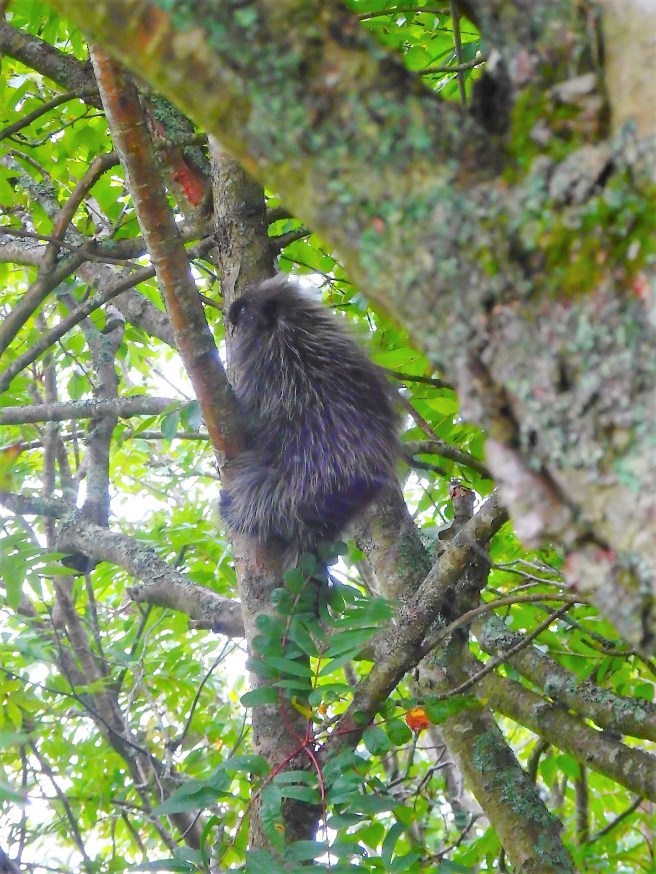
Porcupine climbing a tree at Quoddy Head State Park. Seems to embody a few life lessons too.

When Irish lights are shining

Living in New England, I’ve gained a fondness for lighthouses, an appreciation that has been heightened by my relocation to Way DownEast Maine. This state alone has more than 60 still in working order.

My research regarding the towers and their beams has, however, had me admitting that the bulk of the world’s most glorious examples are to be found on the rugged Atlantic coastline of France. Some of them resemble small castles, and many are built in grand style, no expense spared.

The English, in contrast, appear stuffy and uninspired. (Sorry about the pun there.)

What I wasn’t expecting was the discovery that Ireland also has some stunning examples.

If I ever get to the Emerald Isle, they’ll be high on my list of sites to visit.

What’s on your travel bucket list?

What a joy to be finally rehearsing together in person

I had no idea how we’d sound as an ensemble or even whether I’d measure up. Officially, I’ve been a member of the choir more than a year now, but all of that time, we gathered only on Zoom. We soon learned to mute ourselves for even the warmups, and our director did accomplish a miracle in taking our individual home-recorded stabs at two pieces and blending them into a virtual performance that wound up sounding better than we had any right to expect, especially considering my horrid best efforts. I simply assumed he used only the finest voices in his studio note-by-note studio wizardry while mercifully sidelining the rest of us or at least me. I wouldn’t say that any of the other pieces recorded before Covid really offered a clue of what we’d be like now.

So Monday night was a kind of debut for us, our return to weekly live, in-the-flesh rehearsals at the arts center, nary a laptop in sight.

When we sat down in our semi-circle, just 15 of us, I had reason to be dubious. For starters, like the population in general around here, our median age skewers topside. Voices do change as they age. For another, a small body like this leaves no room for error, each member is more exposed and requires more precise breathing than we’d face in a group of 50 to 80, as I’d been privileged to have before. Five individuals were absent, all with decent excuses. Twenty can make for a fine professional chorus, but we’re amateurs of varying degrees.

I’d already met one of the basses and knew of a third, the one who can hit notes four steps lower than I’ll ever manage even with a heavy cold. And then, praise be, I was introduced to a fourth section member. Go team!

We were all masked as a Covid precaution, but even after ordering special singers’ coverings, we had no idea how freely we’d be able to breathe and enunciate.

I didn’t even know how well I could follow our conductor. You get adjusted to different styles of leadership and expression. On Zoom, he was always trying to juggle a keyboard, a score, maybe a screen-sharing insertion or a recorded track, plus beat time and throw cues to the little squares at the top of the screen while we wound up a half count off the beat as a consequence of delays in transmission or electronic hiccups.

All that was now irrelevant. Taa-taa! The time of launch arrived. We got our first pitch and then the upbeat, and when we opened our mouths and uttered the first notes, everything melted gloriously. And that was just in warmup exercises.

When we turned to the pieces we’ve been practicing at home, we were joined by a pianist who had already impressed me with a recent recital. Our director could turn his full attention to leading us cleanly and expressively. Yes, his mask prevented his mouth from conveying the words, but not every conductor does that anyway.

There were rough edges and other imperfections, but there was also a palpable feeling of support through the presence of each other and a certainty that we can accomplish what needs to be reached in time for two concert performances a month from now.

It’s exciting. Making music with them was one of the big reasons I had moved to Eastport. I liked their repertoire, akin to what I’d done in Boston, and I like the fact I can walk to our performance space. Learning something new about music, my own abilities, and us as a community is invigorating.

What are you especially enjoying as we come out of Covid restrictions?
Truly, he is risen!

For Eastern Orthodox Christians around the world, today is Pascha, or Easter. Having already celebrated at midnight and into the wee hours of the morning, the faithful return for a late-morning vespers service where the Gospel reading is from John 20:24-28, the story of the disciple Thomas, “the Twin.”

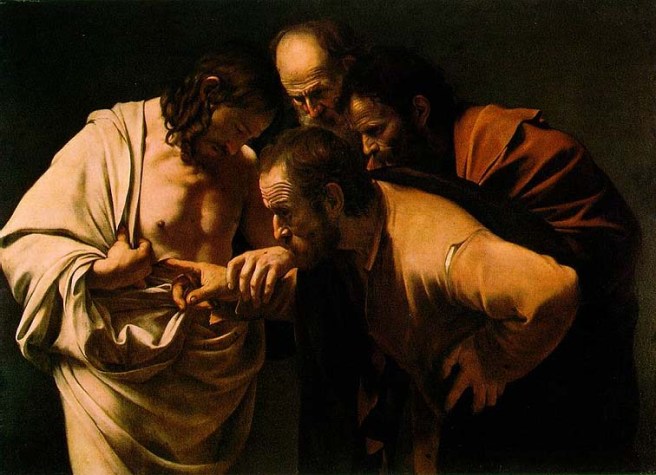
Painting by Caravaggio

Rather than relying on second-hand rumors, he demands first-hand knowledge.

Wisdom, arise!


‘Why look among the dead for someone who is alive?’

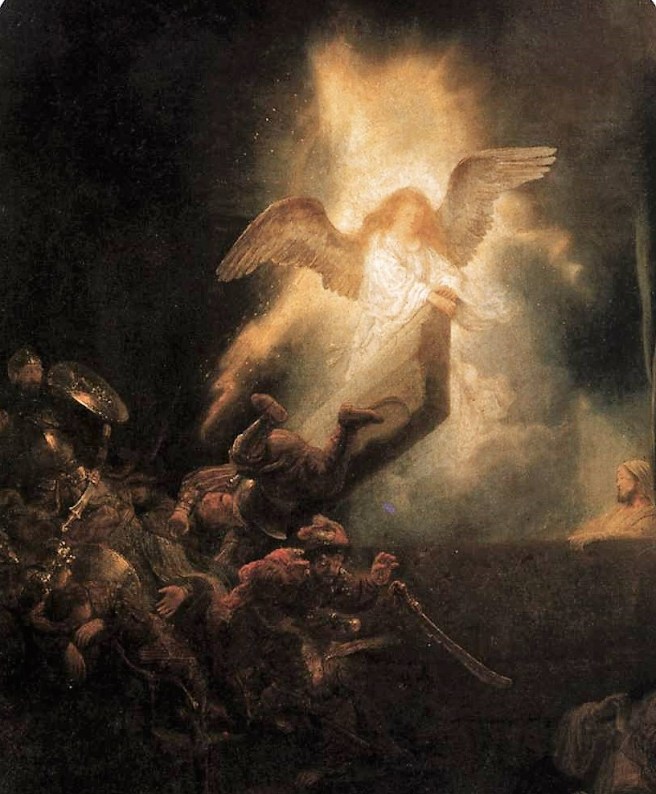
Rather than portraying the women disciples at the empty tomb, Rembrandt focuses on one of the angels and the world-changing impact of their message.

Luke 24, by the way, describes them not as angels, with wings, but rather as two men in shining garments or brilliant clothes or even gleaming like lightning, depending on the translation.

The words must have struck like a thunderbolt.


Remembering a dear Friend

One of the cherished traditions among Quakers is the creation of memorial minutes for members who have served the Meeting faithfully.

The minute is a unique document. It’s neither an obituary nor a eulogy. Rather, it attempts to candidly reflect the movement of the Divine Spirit in the individual’s life.

Here is a recent example.

Earl ‘Chip’ Neal

(December 9, 1945-June 25, 2021)

When Chip Neal brought his family to Dover from Maryland in 1978, they loved everything about their new home except the proposed construction of a nuclear power plant in nearby Seabrook.

He had been hired by New Hampshire Public Television to do a nightly news show, having worked his way up from entry-level floorman in a pioneering community college television station to cameraman at WETA in Washington and then director/producer at Maryland Public Television.

Across the Granite State he became known for the segments he produced and hosted on “New Hampshire Crossroads,” where spent many years traveling every corner of the state bringing unique New Hampshire features and people to a statewide audience. It was in one of those stories that he coined the phrase “Yankee yard.” His curiosity was sweet-tempered and non-judgmental. He also produced segments for the popular weekly “Windows to the Wild” outdoors adventures series featuring Willem Lange.

Although he attended the University of Illinois during the Vietnam era, he did not earn a degree until he worked at the University of New Hampshire for NHPTV. He graduated from college the same year his daughter, Amanda, graduated from high school.

He never aspired to go into management. Rather, he always preferred to be hands-on, something son James inherited.

That was reflected in the family’s old farmhouse near the Cochecho River, where they began rearing a few chickens, sheep, and honeybees. After aligning with the Clamshell Alliance opposing the Seabrook Station, he realized the activists he admired the most were all Quakers, and soon he, too, was worshiping in the old meetinghouse, along with children Jamie and Amanda, while his wife Nell continued at First Parish just down the street. Over time, as she felt her spiritual growth being nurtured more through connections with Friends, she, too, became part of the Meeting.

Their social life included visits by boat with other Quaker families living downstream or around Great Bay. Inspired by what he had read about the Amish and a “why not” attitude, Chip determined to try a barn-raising of his own, resulting in a merry one-day celebration that did, indeed, accomplish the task.

Chip was commissioned to create a private documentary profiling Silas Weeks, who had been instrumental in the reopening of the Dover Friends meetinghouse. The interviews, now available on YouTube, remain a touching intersection of the faithful lives of both Silas and Chip.

Many of the qualities of Chip’s spiritual life also infused his professional career. A fellow producer noted that Chip possessed a brilliant communication talent in short-form and long-form storytelling. He not only saw the heart of a story, he let it speak for itself, time and time again. Where most producers tended to interpret meaning for the viewer, Chip had the unending patience – and absolute stubbornness – to never let that happen in his work. Thanks to his relentless focus, firm discipline, and above all a fabulous sense of humor, time and time again he would dig down until he found the light of truth hiding inside the most humble to the most exalted story, and to let it shine like a diamond in the wide open, all on its own, available and meaningful to the viewer.

As he grew and matured, he more and more thought deeply and broadly about events and phenomena, all with a spiritual bent. Often, this led to rising in the middle of the night to write down his ideas and insights, sometimes as haiku with a snap.

He emphasized the necessity of being centered in the present, explaining, “Life is that thing you’re doing right now.” From that, he had an ability to view difficulties from the side and then provide helpful alternatives to the knot before us.

During his terms as clerk of Dover Friends Meeting, Chip would stand after the closing of worship with the shaking of hands and then, gazing around the room, say simply, “Thank you for sharing your spiritual journey with us this morning – whether spoken or unspoken.”

He loved serving as clerk and treasured Quaker process, especially taking sufficient time in our labors together.

The advance of Parkinson’s interrupted his service to family, Friends, and the wider world, but not his presence. He had often reminded us that in trying to reach a destination while sailing, one had to constantly make adjustments – tacking.

He was also fond of a Navajo prayer:

All above me peaceful,
all below me peaceful,
all beside me peaceful,
all around me peaceful.

He passed over peacefully on June 25, 2021, in the comfort of his wife, Nell.

Memorial minute approved by Dover Monthly Meeting, November 21, 2021

Remembering those lost in the waters

Fishing is dangerous, hard work, done in all seasons and kinds of weather. It’s also an inescapable source of livelihood for many families along the Maine coast.

The two stones in the Lost Fishermen’s Memorial in Lubec rise like waves beside each other, one representing fishermen from the Canadian side of the channel and the other, from the American side. Three flags fly over the site – Old Glory, the Maple Leaf, and the Passamaquoddy Nation’s.
The inscribed names of those lost since the year 1900 are mesmerizing – women and men, some of the surnames repeated. As people say respectfully, so-and-so has the sea in his blood, and it seems to run in families.
Maine granite sculptor Jesse Salisbury created the monument in 2016, and names have been added since.