WINDY CITY PERSPECTIVE

In 1922, the Chicago Tribune conducted an international architectural competition for the design of its new headquarters. The World’s Greatest Newspaper, as it proclaimed itself, could have erected a landmark modernistic tower envisioned by Walter Gropius and Adolf Meyer or an impractical giant lectern styled by Adolf Loos but instead went with a neo-Gothic bullet by Howells and Hood.

By the mid-‘80s, when I was employed by the paper’s syndication service, the grimy gray building was surrounded by many much newer buildings that resembled the glassy proposal the publisher had rejected. Maybe that says everything, in the end.

By then, though, the newsroom had definitely changed. Gone were the typewriters, long replaced by computer terminals and keyboards. Tours were guided through glass-shrouded catwalks overhead, where they could look down on journalists at work. I remember being fascinated to recognize there were four semi-circular copy-desks below me, each one ringed by copy-editors and a single “slotman” at the center, just as it had been when I started. I’d heard, too, that none of those seats were ever vacant long; this was a paper edited ‘round the clock for its many editions. But then I noticed that the editors on one of the rims were doing nothing except writing and editing photo captions. Nothing else for the entire shift. I’m sorry, but I’m used to far more variety when I’m editing. How did they ever stay awake?

Since we were really there to see two of our cartoonists, we headed for a set of elevators serving floors six through 32. And we were headed to the top, Jeff MacNelly’s suite, which sat just under the floor of microwave gear.

With his panoramic windows between flying buttresses looking out over Lake Michigan (you couldn’t tell where the water ended and the sky began that day), I wondered how he ever got any work done on his editorial cartoons or his Shoe comic strip.

One floor down, which Dick Locher commanded, was quite different. With its tiny diamond-shaped windows, the suite wrapped around the elevator and service shafts felt more like sitting inside a gargoyle.

At that point, one of my colleagues noticed a framed Pulitzer Prize on the wall. “That’s all it is? A piece of paper?”

Locher, who drew the Dick Tracy strip in addition to his editorial cartoons, had won two.

On the couch, MacNelly, who’d just won his third Pulitzer, grinned. “Yup, that’s about it. A piece of paper.”

WHERE, O WHERE

“Hey, you know your portrait’s hanging at Harvard?”

“Eh?” I replied, wondering what century the canvas would have evoked.

“No, it was the ‘60s. You were younger, of course.” And while a residence hall on the Yard was mentioned, I was too awash in wonder to catch the details. (Darn!)

Still, it stirs up the what-if musings.

At the time, Ivy League was completely outside my range of possibilities, beginning with finances.

Even so, here we were, one town over, a half-century later.

If only …

Or if they only knew …

THE DYING ART OF CARTOONING

Flipping through the latest New Yorker and admiring the cartoons brought a sense of loss, too. While the New Yorker and Playboy had long been the epitome of the art, paying the premium rates for work that matched the highest standards, almost every magazine ran cartoons, at least as fillers in the back sections. These days, though, hardly any of them do.

When I was in high school, the wit of fellow Buckeye James Thurber became a model, along with the Addams Family even before the TV series. And then there was Gahan Wilson’s mordant pen. But who’s come along, say, in the past decade to fill the ranks? Not in magazines, as far as I see.

Or in newspapers, where having an editorial page cartoonist was seen as a badge of distinction. (Except at the New York Times, of course, which abstained.) In the collapse of the second newspaper in most markets – and the elimination of afternoon editions – the ranks of those cartoonists have also been evaporating. Even before we get to the recent rounds of attrition.

It’s not a laughing matter.

BOTTLE FARM

Among those dim memories from childhood are Sunday afternoon drives, including one on a dull rainy day as we approached Farmersville. As Dad slowed the car, I heard an eerie panorama of tinkling glass and looked out over a seeming junkyard with large, black figures shaped from roofing tin, I suppose – witches, Indians on horseback, perhaps cowboys and the like – and many poles “like cornstalks,” as some have described, but with bottles instead of leaves. Plus, as I’ve read, a number of old church bells mounted somewhere, in addition to the bells of grazing sheep.

Yes, it was the chorus of sound that lingered strongest in my mind.

By the time we got a chance to go back, it had all been razed, declared a public health hazard, I remember hearing, because of the broken glass caused by vandals. Other stories suggested the orgies of motorcycle gangs instead.

One history I’d heard, that this was a relative of the late comedian Jonathan Winters, proved erroneous. The owner’s name was not Zero Winters, but Winter Zellar (Zero) Swartsel (1876-1953), an eccentric who turned his 22 acres into artwork fashioned from discards such as old bedframes and twisted wire. What I retain from that one day is far more cluttered than the clean photographs taken by Edward Weston.

It’s all lost, of course. How much it could have been an installation in some gallery will forever remain conjectural, but Winter was way ahead of his time on his multi-sensual approach to creation.

TALLY HO, PIMLICO

As I said at the time, I’ve been thinking about names. Especially place names. Take “Baltimore,” a name most of us use repeatedly and never consider. There’s Balty More, kind of salty. Or Balta moor, rather Mediterranean. The name itself sounds Irish. I know, they were English. But it sure sounds like Ballyhagen or . . .

Of course, not everybody pronounces quite the same. I was in Florida a couple of years back and we went out to a restaurant owned by a woman and her husband, who had retired from Tennessee and, well, got so bored with the retirement life they went back into business just to take their minds off the boredom. So, following the dinner, she asked us where we were all from and the first of my colleagues replied, “I’m from Los Angeles,” and she said, “Oh, that’s very nice,” and the second colleague replied, “I’m from Chicago,” and she said, “Oh, that’s a nice city,” and the third said, “I’m from right here in Florida,” and of course she had to ask what neighborhood, and then my fourth colleague drawled, “I’m from right outside Atlanta,” and naturally they had that Southern thing going right away, in ways we Northerners can never know about. Finally, she turned to me and I said, as some folks around here do, “Bal’mer.” All of my colleagues looked at me queerly. Bal’mer? Not Bal-ty more? But not that lady, no sir. Without missing a beat, she came back, “Oh! Merlin!” Yessirree. I’m from the state of Merlin.

But back to Bal’mer, which sounds like something you put on a wound. Especially a burn.

At one time, the name made sense. Unique, except for the home plantation, wherever that was back in the British Isles. Named for the good Lord Baltimore, and all that.

But it’s time for a change.

For one thing, there are so many other Baltimores around the country, we’re only the biggest of them these days. I mean, there are all of those West Baltimores, New Baltimores, and North Baltimores, and so on running around, who needs them?

Even the Baltimore and Ohio Railroad decided it was time to change its name to CSX or whatever. Even here, in the metropolis, we have problems confusing, as we do, between Baltimore City and Baltimore County.

No, friends, it’s time for a change. New and improved, as they say in the advertising business.

We could turn to the original names, but Fells Point just doesn’t ring quite right. And Jonestown just won’t work, not after the Reverend Jim and his little band of suicidals. Nor would Otterbein, with its sectarian overtones as a denomination that no longer exists, for that matter. Harbor City doesn’t quite say it. Our nicknames Charm City, Mobtown, Crabtown, and so on, fail us as well.

What I am proposing is Pimlico.

Yes, this is Horse Country. And Pimlico has a nice ring to it. Consider the crowd that does Paris and Rome each year. Would they ever say, “I did Paris, Rome, and Baltimore”? Hell, no. But now try “Paris, Rome, and Pimlico” and you see what I mean. Pimlico has the kind of sound to it to reflect our definite up scaling of the city. It sounds just a tad racy, too.

Say Pimlico it shall be.

Remember, when you see the shining college students outside your favorite supermarket and they ask you to sign the petition, do not hesitate. And remember to vote yes on Proposition Fourteen, to rename Baltimore City and Baltimore County. Either or both.

Then we call all unite in saying, with renewed vigor: “Tally Ho, Pimlico!”

If only …

BECOMING A CHARACTER

Everyone where she was from said simply, “Oh, that Anna! She’s a character!” But they’d never say why.

I met her long after she’d moved east, and sensed in her a deep spiritual presence.

Still, when it came to opening her memorial service, I couldn’t refrain from mentioning her identity as a character. What emerged in the next hour was quite a lesson.

Afterward, as I drove home from New Jersey, I embraced this mandate: we have the first 40 years of our lives to get our act together – and the next 40 to become a character. If we can. If we’re worthy.

HOT DOG BUNS VERSUS FRANKFURTER ROLLS

Once upon a time, or so it seems now, a girlfriend sent me out with orders to come back with hot dog buns, which is what I did.

But when I handed her the grocery bag, she cried out, “Oh, no! What are these?”

“They’re hot dog buns,” I replied ever so naively.

“No they’re not!” she insisted.

“But they’re what I’ve always had hot dogs on,” and they were.

She would not believe me, so off we went, together, to the supermarket.

“These,” she said, “are hot dog buns.”

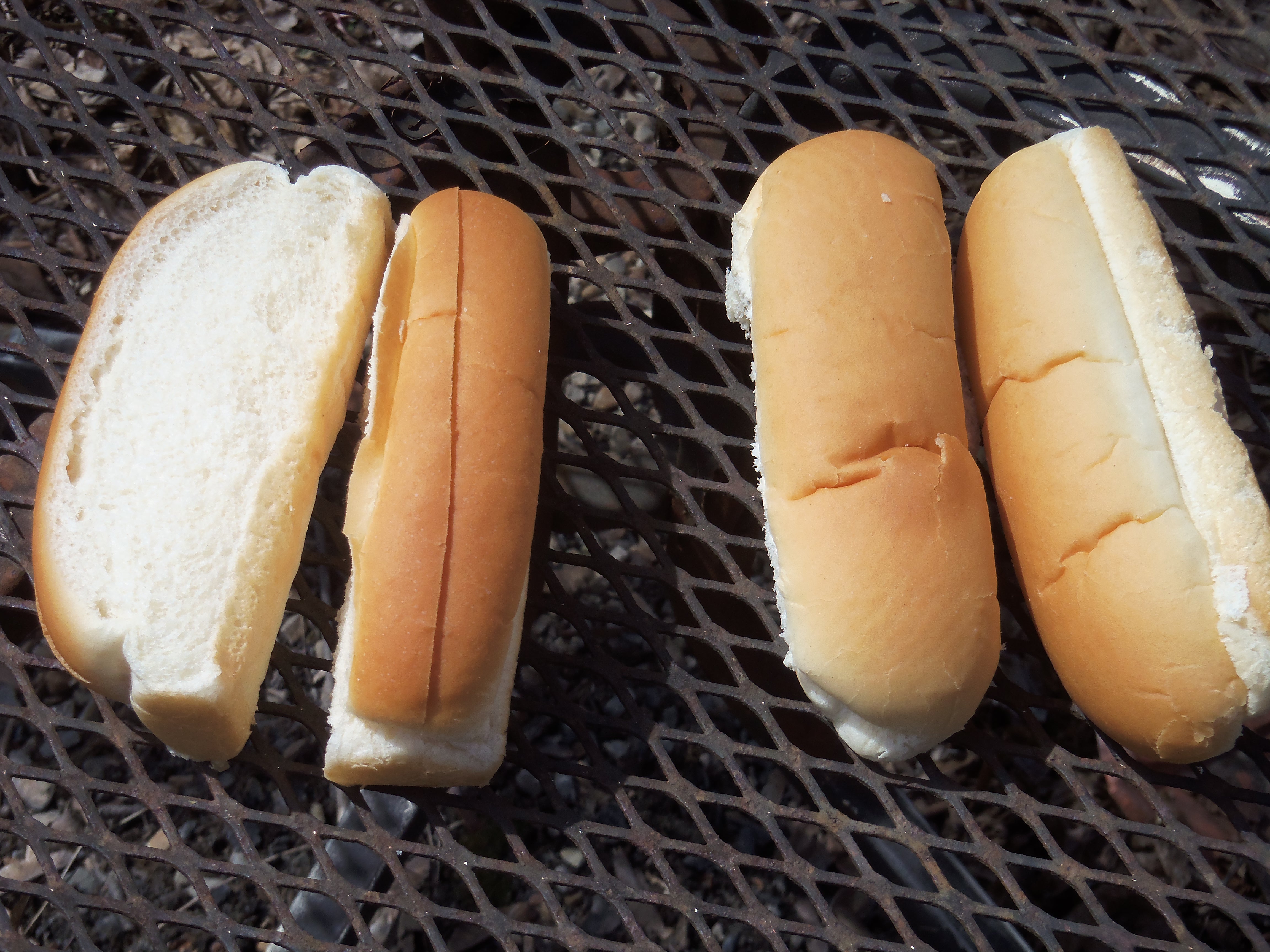
Asked to pick out a hot dog bun, which would you choose -- the ones sliced on the top, at left, or on the side, at right?
Asked to pick out a hot dog bun, which would you choose — the ones sliced on the top, at left, or on the side, at right?

They looked like a flattened loaf of bread cut in fat slices. The side of each “bun,” in fact, was without crust – naked, to my taste.

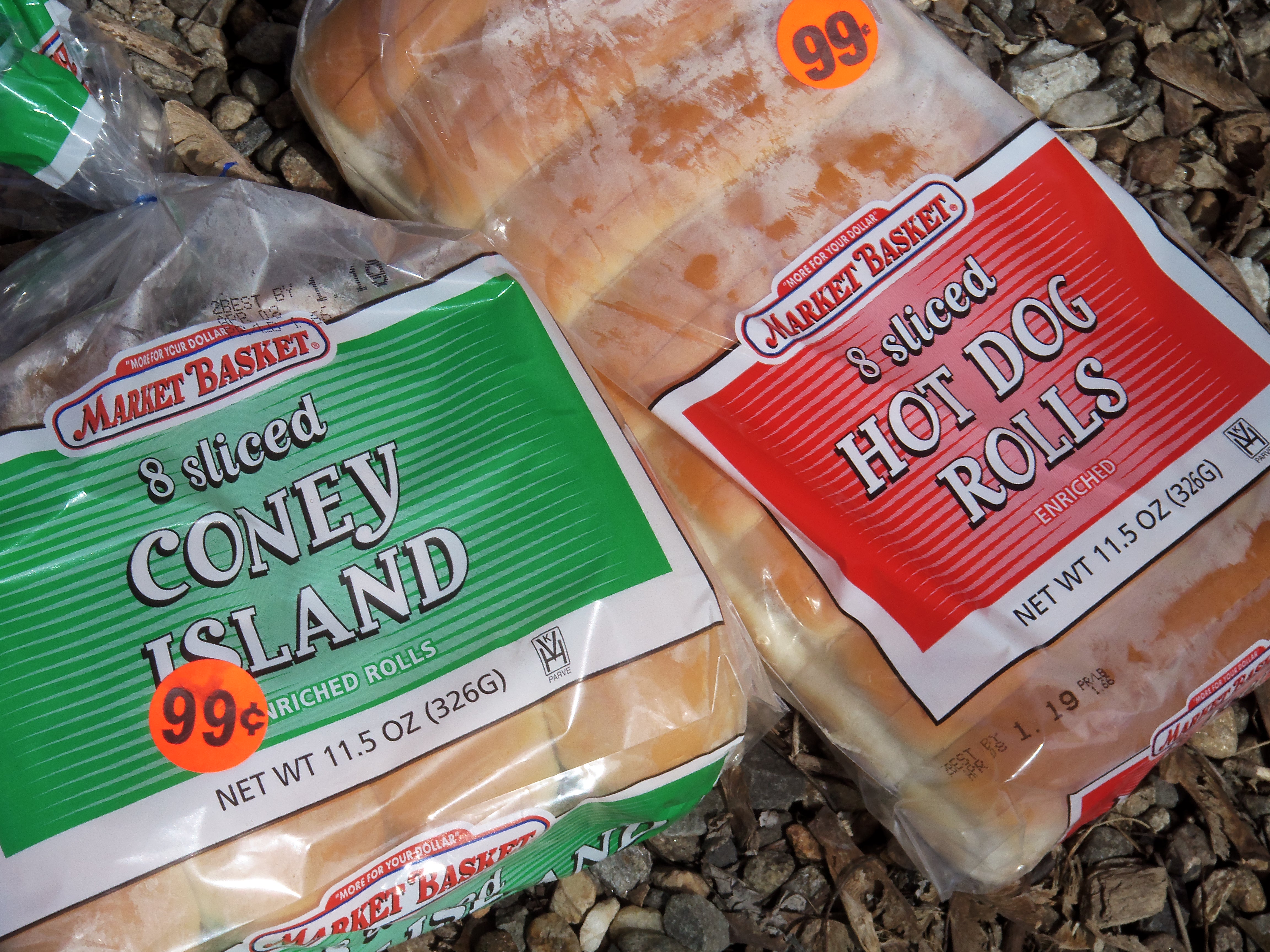
Pointing to another shelf, I looked at the kind I’d always known – the kind, that in fact, came labeled Hot Dog Buns. Hers, in contrast, were labeled Frankfurter Rolls.

Hmm, we both said without satisfaction.

She had, in truth, grown up in New England and lived nowhere else. And her idea of how to serve a hot dog was unique to the region. Not in something she considered a torpedo roll.

Ah, but the plot thickens. As I bought packages of each this time around, there was no Frankfurter label -- and the Hot Dog tag instead went on what my wife confirms are often called Frankfurter buns or rolls around here. As a further complication, we now have the term Coney Island, which confounds my elder daughter while bringing to my mind something completely different, a miniature hot dog where I grew up, often served covered with "chili." But that's a whole other story.
Ah, but the plot thickens. As I bought packages of each this time around, there was no Frankfurter label — and the Hot Dog tag instead went on what my wife confirms are often called Frankfurter buns or rolls around here. As a further complication, we now have the term Coney Island, which confounds my elder daughter while bringing to my mind something completely different, a miniature hot dog where I grew up, often served covered with “chili.” But that’s a whole other story.

This can, in turn, point to a lot of other regional distinctions. Whether you call a device a watercooler, a water fountain, or a bubbler, as we do here. Or whether you order a soda, a pop, or a cola. Feel free to expand the list. It can go on a long time.

Fast forward, then, to lunchtime at a national conference being held in Rhode Island. I sat down and joined a random group that included a handful of teens. One was from North Carolina. I pointed to the hot dog on his neighbor’s plate. He looked bewildered. “What’s it wrapped in?” he asked.

“Would you call it a hot dog bun?” I prompted.

“No way!”

“Oh yes it is,” said the girl from Connecticut. “It’s what we always use.”

You know where the conversation went from there. Yes it is, no it isn’t.

At least the college cafeteria knew to stock both Hot Dog Buns and Frankfurter Rolls.  As we all discovered.

Hmm. Maybe next time we have a crowd over and we’re grilling hot dogs, I’ll get packages of both – and then see which kind goes first.