Yup, home prices went through the roof in most of the country – but not here.
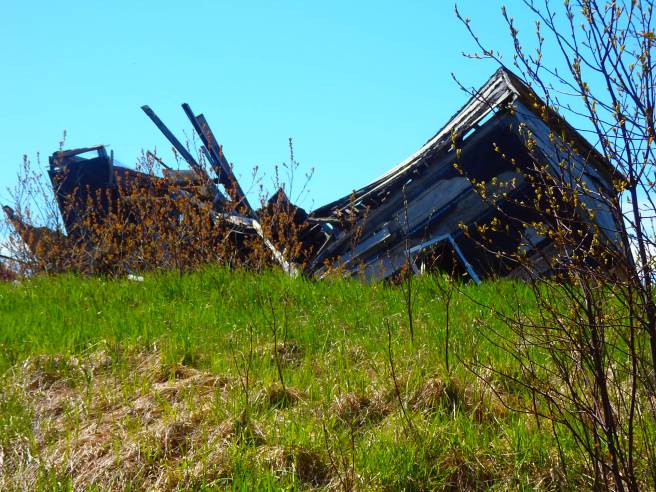
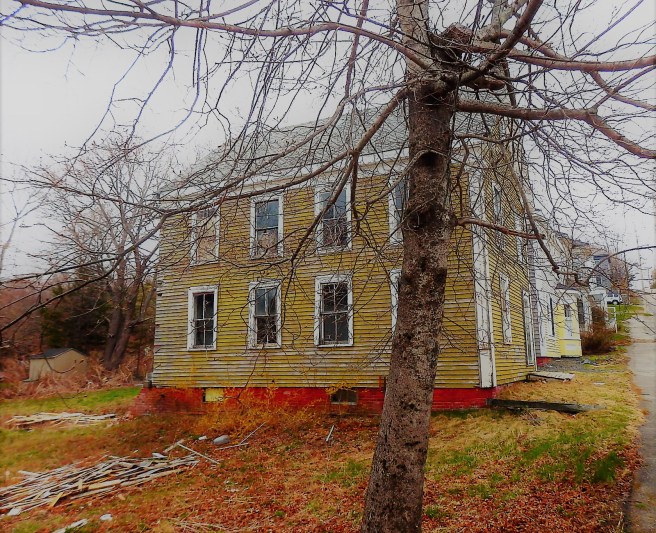
A common sight throughout Downeast Maine is abandoned housing in varying stages of decay. Seeing an old dwelling like that, your initial impulse is that somebody, somewhere, ought to save it. You know, live out in the woods, free from hassles, and all that. It’s gotta have a charming history, right? (Rusting trailers and mobile homes somehow get less sympathy, if any.)
Abandoned housing comes in varying stages of collapse.
Then reality kicks in. Most of these would cost a ton to renovate – and many are tiny. Insulation, plumbing, and wiring are only the beginning. It’s cheaper to start fresh, if you can. Jobs are scarce, often towns away, if you can find work, so unless you’re retired, that’s another strike. And if you are retired, you might check out far to the nearest doc or clinic. I have to wonder, too, why anyone would want to live that close to the highway and its noisy traffic, other than maybe getting priority plowing after a snowfall. As for the mosquitos and black flies?
Others might tell you it gets boring. No malls or big-box stores, much less neighbors or a real supermarket.
Even as a summer home, then, there are drawbacks. Wouldn’t you rather be on a lake or the ocean?
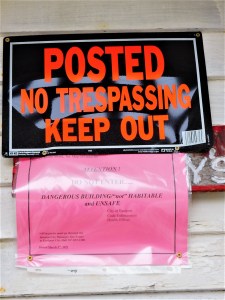
It’s not all out in the wilds, either. Eastport has three in a row here.Each with this notice attached, declaring a building dangerous, unsafe, and not habitable.
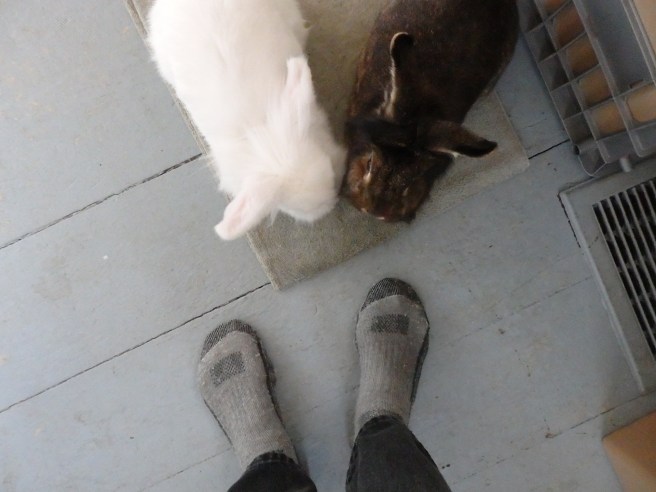
I get a lot of compliments on my gray messenger bag. It goes almost everywhere with me, containing my reading glasses, cell phone, camera, and emergency meds, as well as maps, notebook, and often reading. This is yet another of those accidental shots when I’m recharging or handling the said Olympus.
Once the renovations are finished in our old Cape, we’ll be looking to pick up where we left off in Dover, back before Covid interrupted travel and entertaining.
In no particular order, among the guests we remember fondly:
Primary election volunteers who often slept on our floors, including a Congressional chief of staff, a British journalist, an authority on smallpox and anthrax, and Muslim college students from Detroit.
Chinese college students doing volunteer internships.
The quirky, queer, Quaker comedian and performance artist and Bible scholar. Seriously.
The retired economics professor and Friends committee colleague.
My usual roommate at Yearly Meeting sessions.
My best friend from my high school year, despite my living on the wrong side of the tracks.
My former landlords in the Happy Valley.
The other Quaker among Baltimore Mennonites and his wife.
The Passamaquoddy traditional healer and his apprentice.
My goddaughter, most recently from Germany, and any of her friends, including the one who grew up to become mayor of a notable Maine city.
Don’t know about where you live, but in New England, the front door typically is rarely used.
That insight was confirmed when I was canvassing for the Census and we had to leave a notice behind when nobody was home. Often, the real door is the one at the rear of the house.
It’s a curiosity that reminds me of something I once read about Zen temples in Japan, which were initially copies of ones in China.
The Chinese loved symmetry, which the Japanese detested, and so when the imported designs were expanded, they grew to one side or the other. Many old New England houses also have many additions, most famously the connecting barn.
Well, for the record, our back door is where the action is, and it runs through a mud room addition from the kitchen.
Now I’m starting to think about trying to enter by the right door as a metaphor for life. Like maybe there’s a hidden key, even. The one others know about, but not you or me?





 Jnana's Red Barn